Brazil Macro Daily(Beta Mode)
Productivity Stalls, Mining Deal
Market Snapshot
| Asset | Level | Change |
|---|---|---|
| Bovespa | 196,132.00 | +0.20% |
| USD/BRL | 4.97 | -0.63% |
| EUR/BRL | 5.84 | -0.52% |
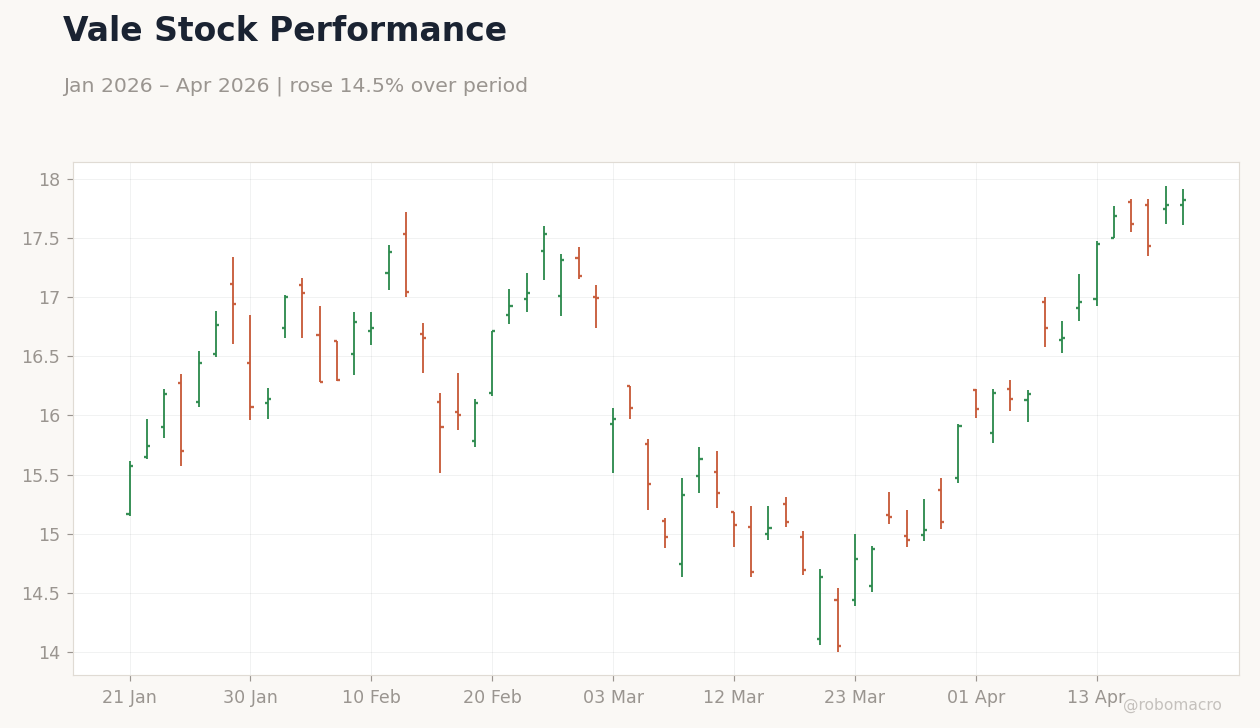
| Vale | 17.82 | +0.22% |
| Petrobras | 20.76 | +1.52% |
| WTI Crude | 86.33 | -3.66% |
| Gold | 4,808.50 | +0.04% |
| Bitcoin | 76,596.49 | +0.95% |
| Brazil Short-term Rate | 14.90% | -0.67% |
| Brazil Long-term Rate | - | - |
Prior Economic Events
| Data | Prior | Cons | Actual |
|---|---|---|---|
| No events available | |||
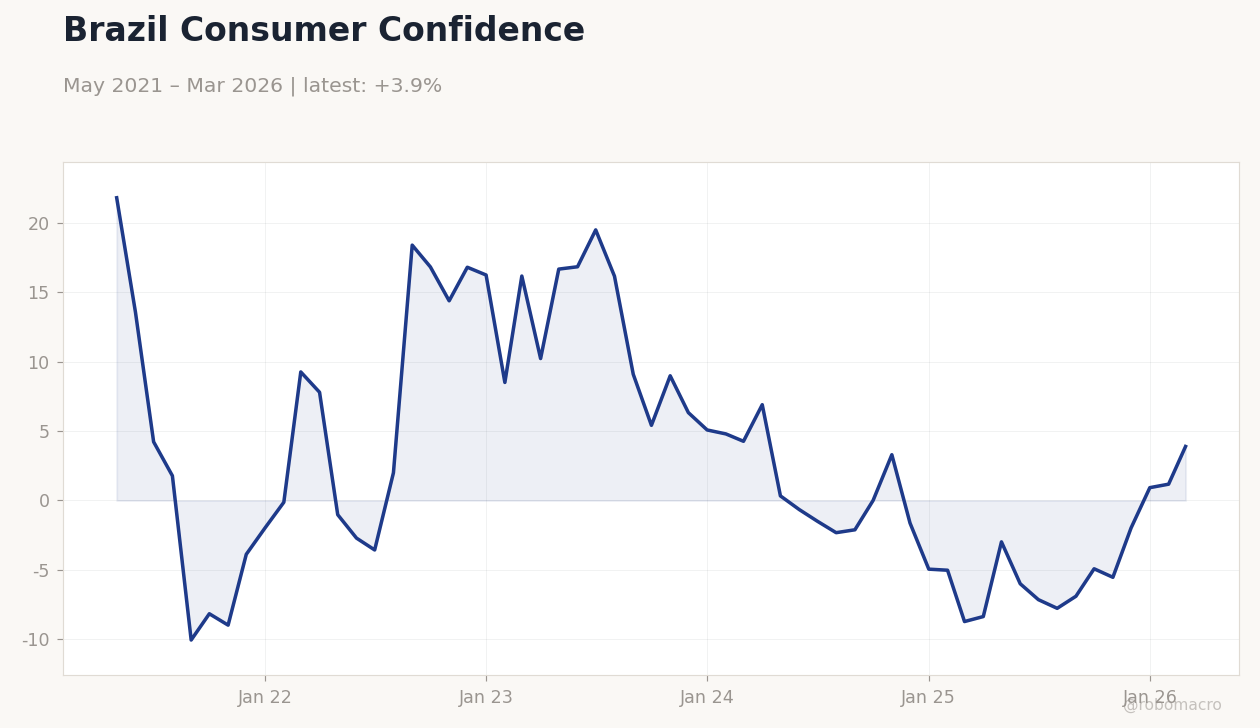 Brazil Consumer Confidence | Type: macro_line | Consumer Confidence Index: 3.892 (2026-03-01) | Range: -10.05–21.81 | Trend(6pt): 21.81,-3.563,9.091,3.297,0.9249,3.892
Today's Economic Events
| Data | Prior | Cons | Time |
|---|---|---|---|
| No events available | |||
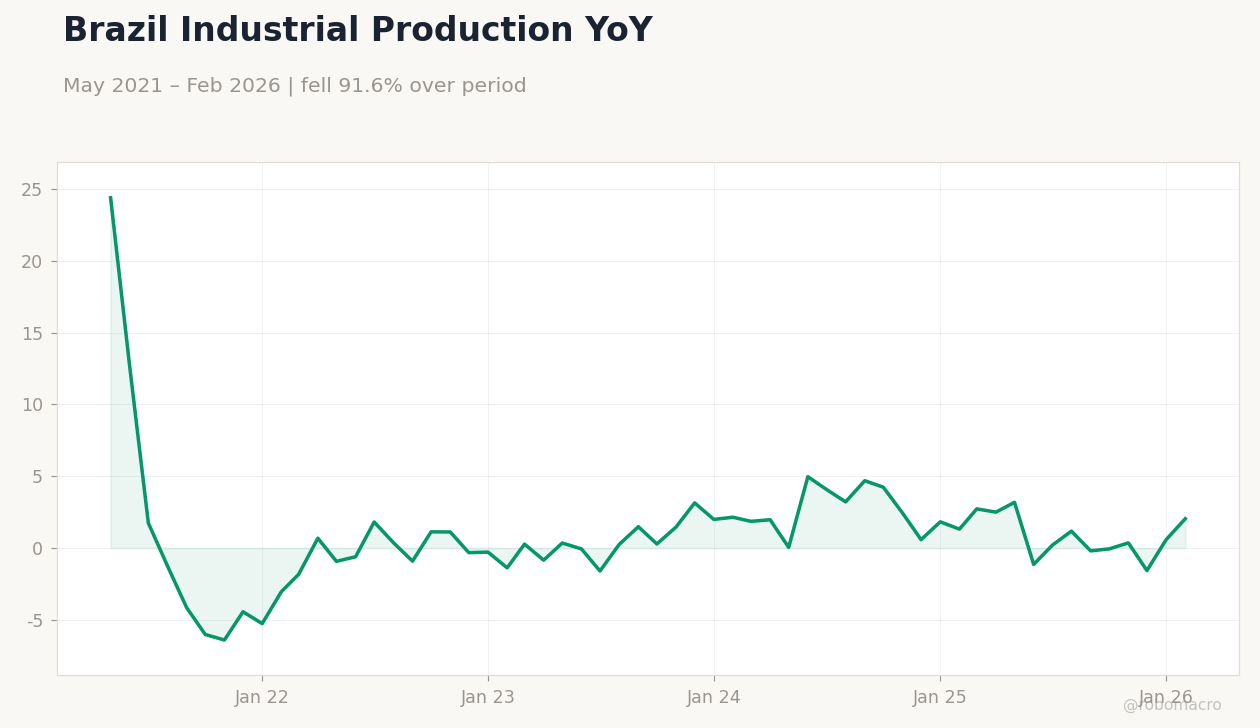
- Brazil's productivity seen stagnating amid slowdown, pressuring long-term growth outlook.
- US firm acquires Brazilian rare earths miner Serra Verde for $2.8 billion, boosting sector ties.
- Bovespa edges up 0.20% despite WTI crude drop, with Petrobras gaining 1.52%.
Yesterday's Recap
Brazilian markets showed modest gains amid mixed global signals, with the Bovespa index closing at 196,132.00 after a 0.20% rise, driven by strength in energy stocks like Petrobras, which climbed 1.52% to 20.76. Vale shares advanced 0.22% to 17.82, supported by stable iron ore demand despite broader commodity weakness. The USD/BRL pair weakened 0.63% to 4.97, reflecting a softer dollar against emerging currencies, while EUR/BRL fell 0.52% to 5.84.
Brazil's short-term rate dipped 0.67% to 14.90%, aligning with recent stability in Selic expectations. No major data releases occurred, but news of stagnating productivity highlighted ongoing economic challenges, contributing to cautious investor sentiment. WTI crude plunged 3.66% to 86.33, weighing on export revenues, though gold held steady at 4,808.50 with a 0.04% uptick.
Bitcoin rose 0.95% to 76,596.49, providing some diversification amid equity volatility.
The Day Ahead
The calendar remains light with no scheduled economic releases or events for Brazil, allowing markets to digest recent news on productivity and mining deals. Investors will monitor any follow-up on the Serra Verde acquisition, which could influence commodity-linked equities like Vale. Attention may shift to global cues, including oil price movements and their impact on Petrobras.
Broader fiscal discussions in Congress could emerge, potentially affecting bond yields. Without key data, trading volumes might stay subdued, focusing on currency pairs like USD/BRL. Overall, the quiet day underscores reliance on external factors for market direction.
Other Economic Notes
Brazil's productivity is projected to stagnate following a recent slowdown, as reported by Valor International, which could hinder GDP growth and exacerbate fiscal pressures. The $2.8 billion acquisition of Serra Verde by USA Rare Earth strengthens Brazil's position in rare earths mining, potentially enhancing export diversification amid commodity volatility. Foreign inflows favor Brazil as Latin America's top emerging market, per Seu Dinheiro, though Asian bourses lead global gains, signaling competitive pressures for capital.