Brazil Macro Daily(Beta Mode)
Markets Slip, Chinese Exports Surge
Market Snapshot
| Asset | Level | Change |
|---|---|---|
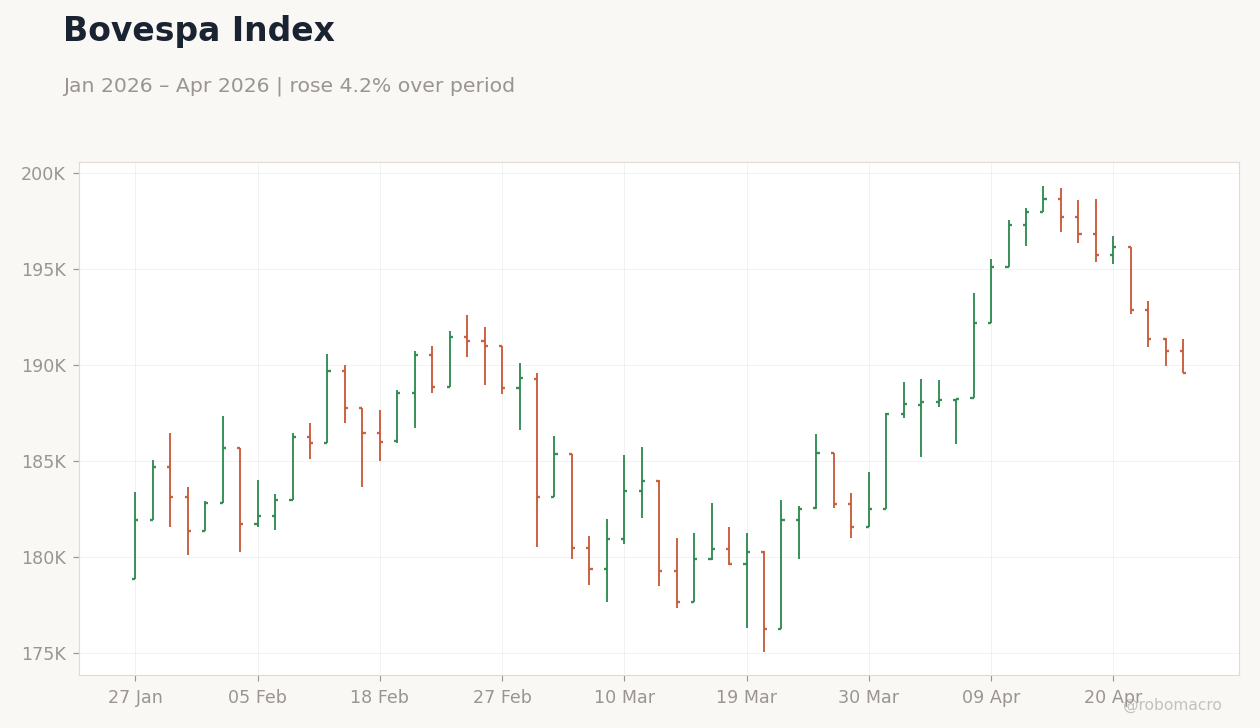
| Bovespa | 189,579.00 | -0.61% |
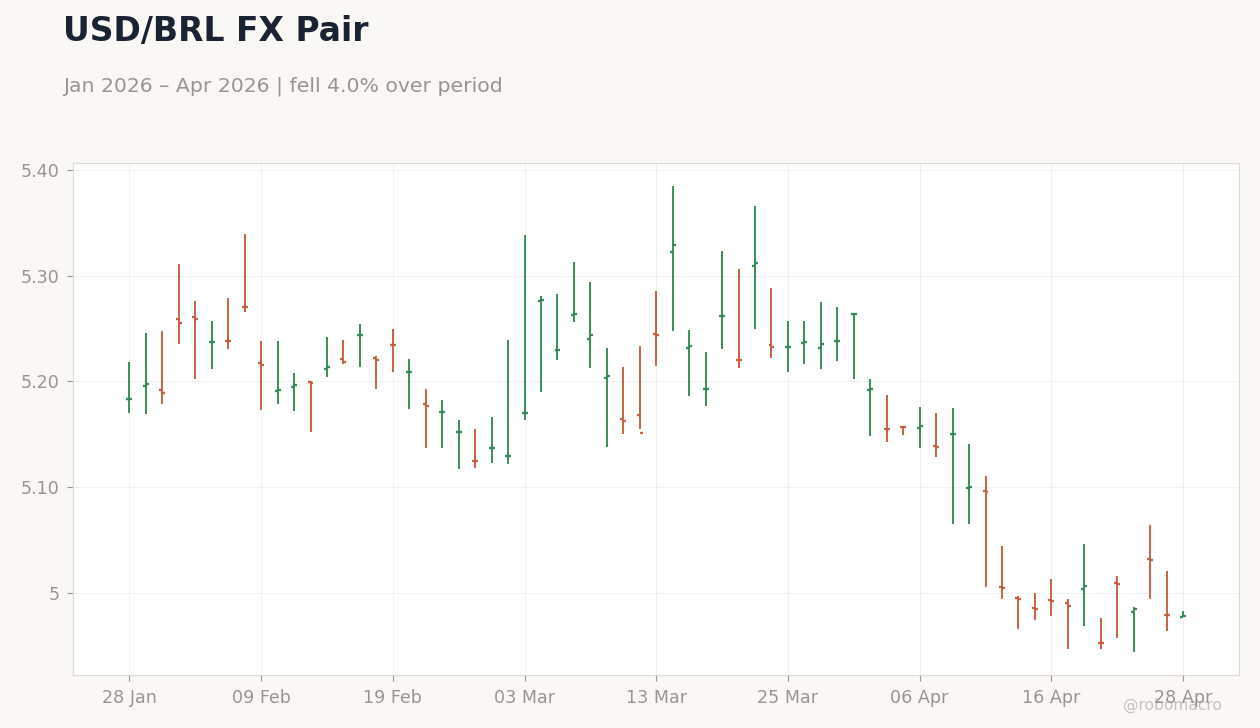
| USD/BRL | 4.98 | -0.03% |
| EUR/BRL | 5.83 | +0.04% |
| Vale | 17.07 | -0.58% |
| Petrobras | 20.96 | +0.43% |
| WTI Crude | 98.96 | +2.69% |
| Gold | 4,640.90 | -0.74% |
| Bitcoin | 76,843.69 | -0.68% |
| Brazil Short-term Rate | 14.90% | -0.67% |
| Brazil Long-term Rate | - | - |
Prior Economic Events
| Data | Prior | Cons | Actual |
|---|---|---|---|
| No events available | |||
 Brazil Short-term Rate | Type: macro_line | Short-term Rate (%): 14.9 (2026-03-01) | Range: 3.38–15 | Trend(6pt): 3.38,13.25,13.08,11.15,15,14.9
Today's Economic Events
| Data | Prior | Cons | Time |
|---|---|---|---|
| Wednesday (2026-04-29) | |||
| Central Bank Interest Rate Decision | 14.75 | - | 13:30 |
| Thursday (2026-04-30) | |||
| Headline Unemployment Rate | 5.80 | - | 04:00 |
- Bovespa dipped 0.61% amid mixed commodity moves, with WTI crude rising 2.69%.
- USD/BRL edged lower by 0.03% to 4.98, reflecting slight real strength.
- News highlights China's tripled car exports to Brazil, boosting trade ties.
Yesterday's Recap
Brazilian markets closed mixed on April 27 with no major data releases, as global risk sentiment weighed on equities. The Bovespa index fell 0.61% to 189,579.00, driven by declines in mining stocks like Vale, which dropped 0.58% to 17.07 amid softer iron ore demand signals. Petrobras bucked the trend, gaining 0.43% to 20.96 on rising oil prices, with WTI crude surging 2.69% to 98.96.
Currency markets saw USD/BRL slip 0.03% to 4.98, while EUR/BRL rose marginally by 0.04% to 5.83, supported by commodity export resilience. Brazil's short-term rate eased 0.67% to 14.90%, reflecting bets on steady Selic policy. Gold prices declined 0.74% to 4,640.90, and Bitcoin fell 0.68% to 76,843.69, aligning with broader EM asset weakness.
Overall, the session highlighted Brazil's exposure to global commodity fluctuations without domestic catalysts.
The Day Ahead
No major economic releases are scheduled for April 28, leaving markets to digest global news and anticipate upcoming events. Attention turns to the Central Bank Interest Rate Decision on April 29 at 13:30 ET, with the previous Selic rate at 14.75% and no consensus forecast available. This decision could influence short-term rates and BRL volatility, especially if forward guidance addresses inflation pressures.
On April 30, the Headline Unemployment Rate releases at 04:00 ET, with prior at 5.8%, offering insights into labor market strength amid fiscal concerns. Traders should monitor any unscheduled BCB communications that might preview the rate path. Broader events include potential commodity price shifts impacting export sectors like soybeans and iron ore.
Other Economic Notes
China's tripling of car exports to Brazil underscores deepening trade ties, potentially pressuring local manufacturers but boosting import-driven growth. The 'lithium valley' initiative has underdelivered on poverty reduction, highlighting challenges in resource-led development and fiscal sustainability. Petrobras' strategy to consolidate Jubarte pre-salt assets for nearly US$1 billion aims to streamline operations and enhance oil export revenues amid global energy demands.