Brazil Macro Daily(Beta Mode)
Inflation Eases, Bovespa Dips
Market Snapshot
| Asset | Level | Change |
|---|---|---|
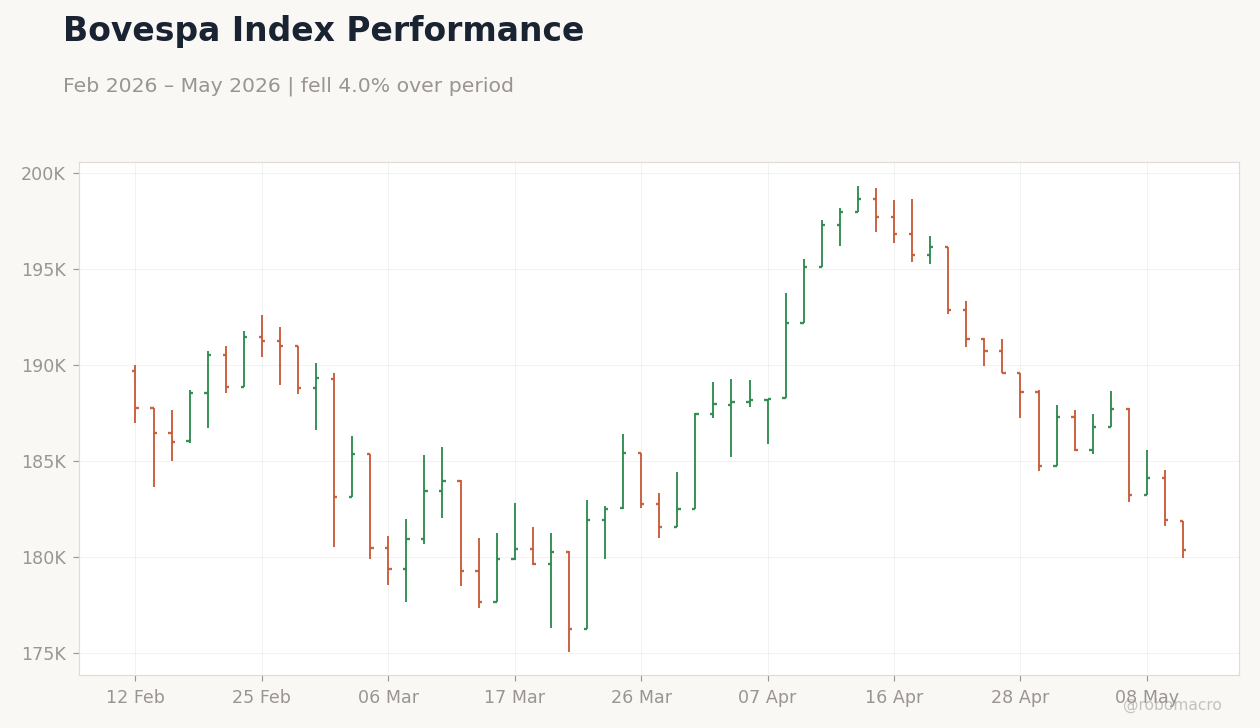
| Bovespa | 180,342.33 | -0.86% |
| USD/BRL | 4.91 | -0.14% |
| EUR/BRL | 5.77 | -0.06% |
| Vale | 17.07 | +2.65% |
| Petrobras | 20.75 | +2.07% |
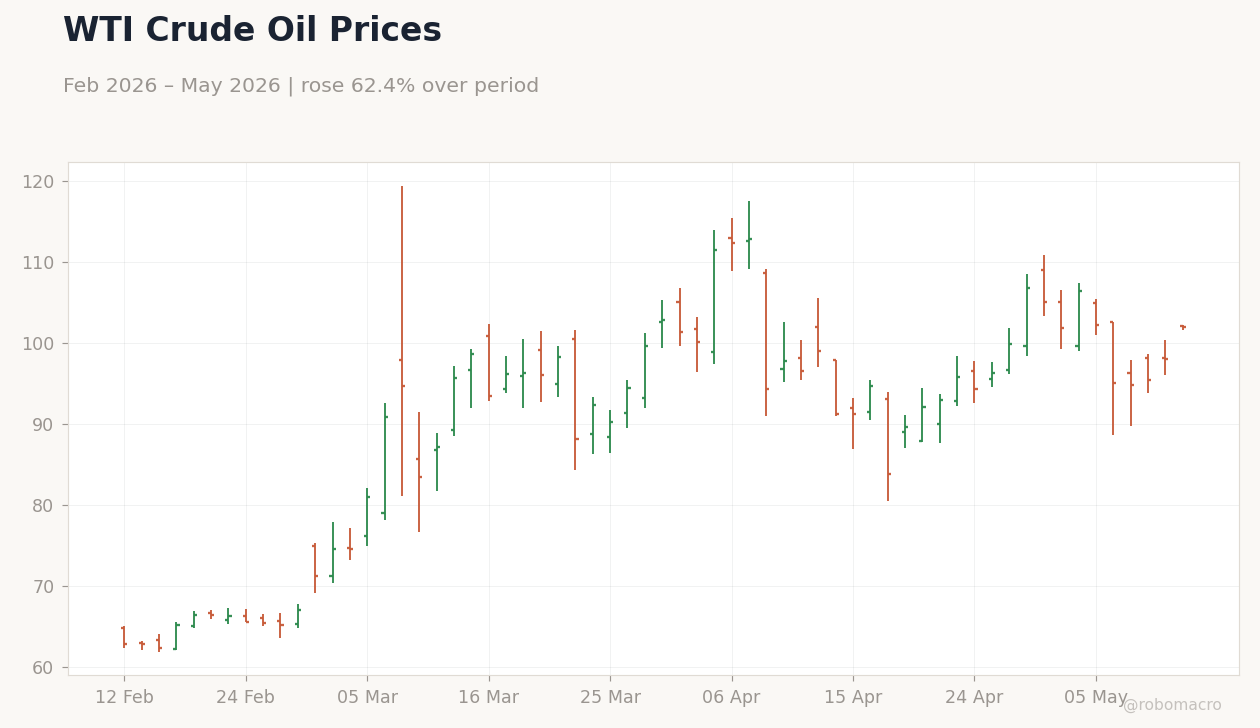
| WTI Crude | 102.03 | +4.04% |
| Gold | 4,725.80 | +0.15% |
| Bitcoin | 80,623.38 | -1.35% |
| Brazil Short-term Rate | 14.90% | -0.67% |
| Brazil Long-term Rate | - | - |
Prior Economic Events
| Data | Prior | Cons | Actual |
|---|---|---|---|
| Inflation Rate Month-over-Month | 0.88 | 0.70 | 0.67 |
| Inflation Rate Year-over-Year | 4.14 | 4.41 | 4.39 |
 Brazil Short-Term Rates | Type: macro_line | Short-Term Rate %: 14.9 (2026-03-01) | Range: 3.85–15 | Trend(6pt): 3.85,13.7,12.75,11.9,15,14.9
Today's Economic Events
| Data | Prior | Cons | Time |
|---|---|---|---|
| Wednesday (2026-05-13) | |||
| Retail Sales Month-over-Month | 0.60 | 0 | 08:00 |
| Friday (2026-05-15) | |||
| Business Confidence Index | 45.20 | - | 10:00 |
- April inflation softened to 0.67% MoM and 4.39% YoY, below consensus, easing pressure on rates.
- Bovespa declined 0.86% amid risk-off sentiment, offset by gains in Vale and Petrobras on commodities.
- USD/BRL fell 0.14% to 4.91, supported by benign inflation data and real strength.
Yesterday's Recap
Brazil's April inflation data came in softer than expected, with the month-over-month rate at 0.67% versus consensus of 0.7% and previous 0.88%, while the year-over-year rate hit 4.39% against expectations of 4.41% and prior 4.14%. This undershoot reinforced bets for potential monetary easing by the BCB, though ongoing fiscal worries tempered optimism. The Bovespa index dropped 0.86% to 180,342.33, weighed down by global emerging market weakness, despite positive moves in resource stocks.
Vale climbed 2.65% to 17.07, buoyed by robust iron ore demand, and Petrobras rose 2.07% to 20.75 as WTI crude surged. The USD/BRL pair slipped 0.14% to 4.91, and EUR/BRL eased 0.06% to 5.77, reflecting mild appreciation in the real amid the favorable inflation print. Brazil's short-term rate declined 0.67% to 14.90%, consistent with growing easing expectations.
The Day Ahead
Wednesday features April retail sales at 08:00 ET, with consensus anticipating 0% month-over-month versus the prior 0.6%, which could shape views on consumer spending and economic resilience. A softer reading might strengthen dovish signals for the Selic trajectory. No key releases are due today, directing attention to international factors.
Friday includes the May Business Confidence Index at 10:00 ET, following the previous 45.2, providing a gauge of business outlook amid fiscal adjustments. Markets could remain range-bound pending these data points, with commodity trends serving as an important external influence.
Other Economic Notes
Brazil's economy grapples with fiscal consolidation efforts, aiming to curb deficits and stabilize debt levels for sustained growth. Commodity sectors, such as iron ore and oil, underpin export revenues, benefiting from international demand but exposed to fluctuations in major markets like China. Elevated interest rates have constrained investment, yet the recent inflation slowdown may alleviate burdens on consumers and boost activity in areas like retail and services.
Trade balances remain supported by agricultural exports, though weather and global prices pose risks.