Brazil Macro Daily(Beta Mode)
Inflation Undershoots, Bovespa Dips
Market Snapshot
| Asset | Level | Change |
|---|---|---|
| Bovespa | 180,342.00 | -0.86% |
| USD/BRL | 4.89 | -0.24% |
| EUR/BRL | 5.73 | -0.80% |
| Vale | 17.03 | -0.23% |
| Petrobras | 20.50 | -1.20% |
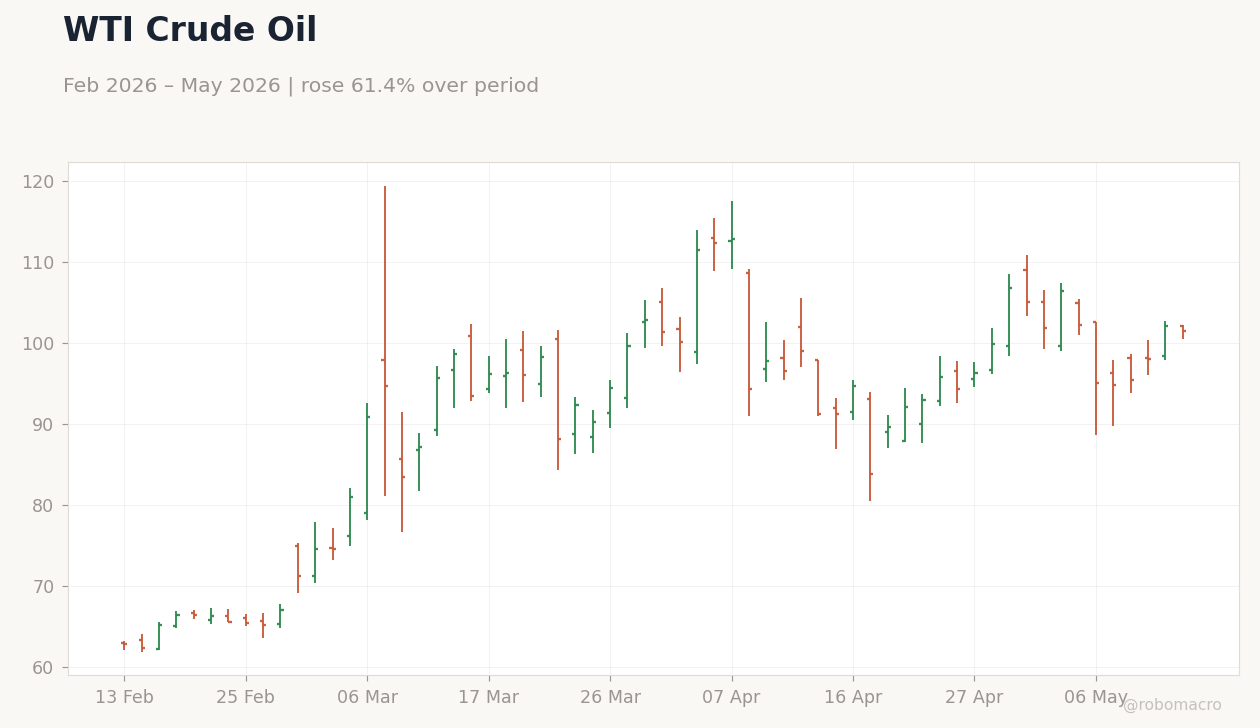
| WTI Crude | 101.58 | -0.59% |
| Gold | 4,709.10 | +0.67% |
| Bitcoin | 81,267.56 | +0.98% |
| Brazil Short-term Rate | 14.90% | -0.67% |
| Brazil Long-term Rate | - | - |
Prior Economic Events
| Data | Prior | Cons | Actual |
|---|---|---|---|
| Inflation Rate Month-over-Month | 0.88 | 0.70 | 0.67 |
| Inflation Rate Year-over-Year | 4.14 | 4.41 | 4.39 |
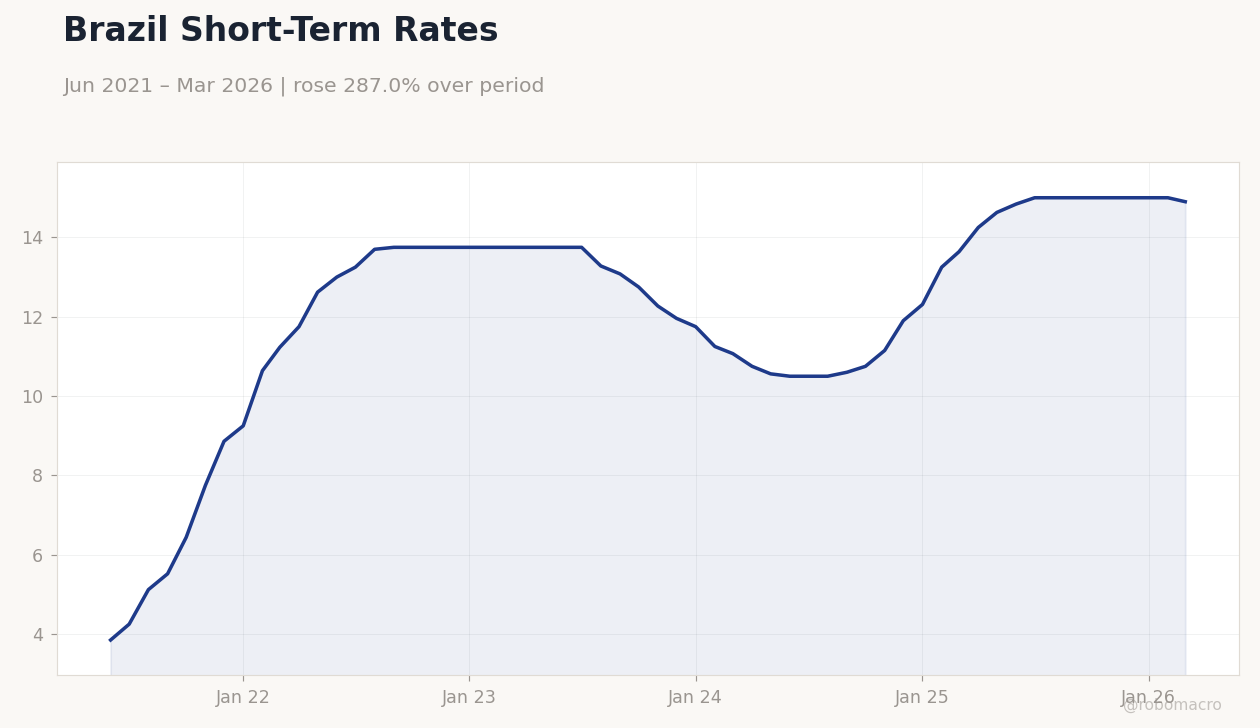 Brazil Short-Term Rates | Type: macro_line | Selic Rate %: 14.9 (2026-03-01) | Range: 3.85–15 | Trend(6pt): 3.85,13.7,12.75,11.9,15,14.9
Today's Economic Events
| Data | Prior | Cons | Time |
|---|---|---|---|
| Retail Sales Month-over-Month | 0.60 | 0 | 08:00 |
| Friday (2026-05-15) | |||
| Business Confidence Index | 45.20 | - | 10:00 |
- April inflation eased to 0.67% MoM and 4.39% YoY, below consensus, signaling moderating price pressures amid fiscal restraint.
- Bovespa fell 0.86% to 180,342, dragged by Petrobras (-1.20%) on lower Q1 profits, while USD/BRL dipped 0.24% to 4.89.
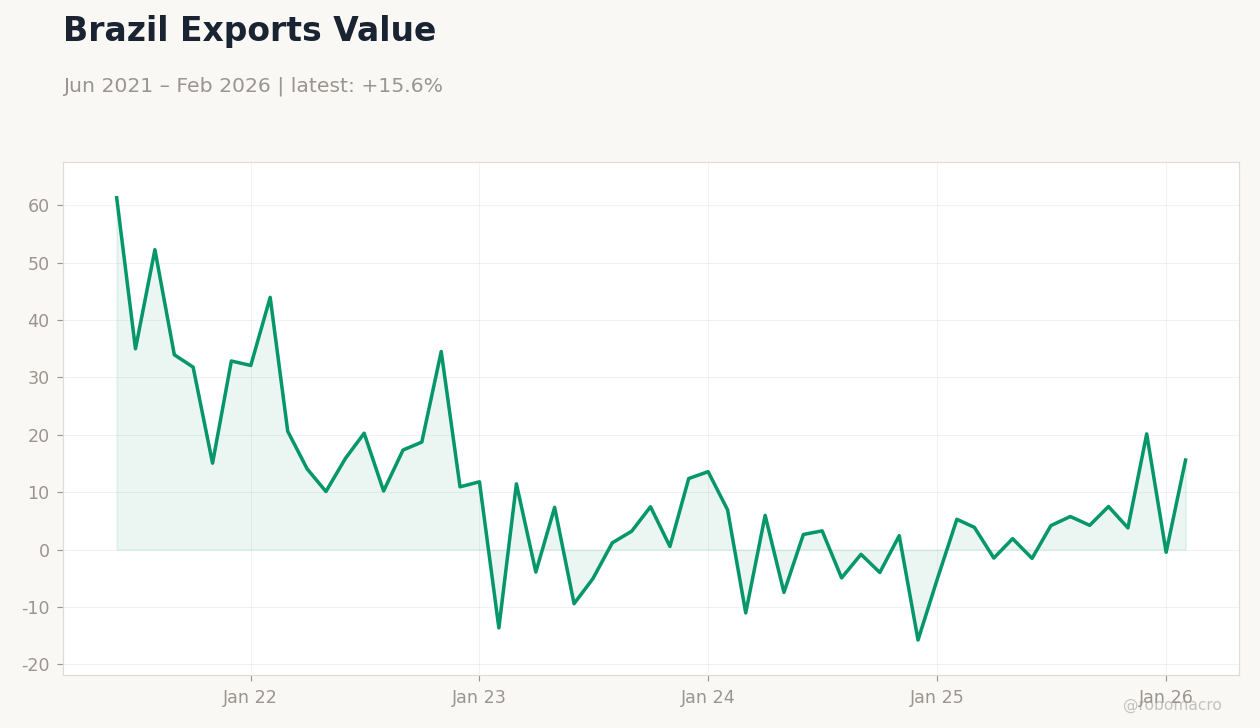
- Commodity prices mixed: WTI crude down 0.59% to 101.58, gold up 0.67% to 4,709.10, supporting Brazil's export outlook.
Yesterday's Recap
Brazil's April inflation data released on May 12 showed month-over-month growth of 0.67%, below the consensus of 0.7% and previous 0.88%, indicating easing pressures from food and energy costs. Year-over-year inflation came in at 4.39%, slightly under the expected 4.41% from a prior 4.14%, boosting market bets on potential monetary easing. The Bovespa index declined 0.86% to close at 180,342, pressured by weakness in key stocks like Petrobras, which dropped 1.20% to 20.50 following a 7.2% Q1 profit fall to $6.2 billion despite 11.7% revenue growth to $23.5 billion.
Vale shares edged down 0.23% to 17.03, tracking softer iron ore sentiment amid global supply concerns. Currency markets saw USD/BRL weaken 0.24% to 4.89 and EUR/BRL fall 0.80% to 5.73, reflecting the benign inflation print and reduced fiscal risk premia. Brazil's short-term rate eased 0.67% to 14.90%, aligning with inflation trends, while Bitcoin rose 0.98% to 81,267.56, providing a minor tailwind to risk assets.
The Day Ahead
Today's key release is April retail sales at 08:00 ET, with consensus expecting 0% month-over-month growth from a previous 0.6%, potentially influencing views on consumer demand and Selic path. A stronger-than-expected print could reinforce economic resilience, supporting Bovespa and pressuring USD/BRL lower. No major events tomorrow, but Friday brings the May Business Confidence Index at 10:00 ET, with prior at 45.2 and no consensus, offering insights into industrial sentiment amid commodity volatility.
Markets will watch for any unscheduled BCB commentary on inflation dynamics. Overall, focus remains on retail data as a gauge of domestic recovery.
Other Economic Notes
Petrobras' Q1 results highlight challenges in oil production efficiency, with profits down despite revenue gains, underscoring Brazil's reliance on commodity exports like oil and iron ore for fiscal stability. Broader themes include fiscal sustainability, as moderating inflation supports debt dynamics, though high Selic at 14.90% constrains growth. Indigenous and environmental concerns, amplified by news of a new dinosaur discovery in Brazil, tie into ongoing debates over rainforest preservation and its impact on global commodity supply chains.