Brazil Macro Daily(Beta Mode)
Retail Sales Beat Lifts Bovespa
Market Snapshot
| Asset | Level | Change |
|---|---|---|
| Bovespa | 178,375.80 | +0.72% |
| USD/BRL | 4.99 | +1.70% |
| EUR/BRL | 5.84 | +1.33% |
| Vale | 16.84 | -1.12% |
| Petrobras | 19.59 | -4.44% |
| WTI Crude | 100.25 | -0.76% |
| Gold | 4,702.30 | +0.10% |
| Bitcoin | 79,791.07 | +0.65% |
| Brazil Short-term Rate | 14.90% | -0.67% |
| Brazil Long-term Rate | - | - |
Prior Economic Events
| Data | Prior | Cons | Actual |
|---|---|---|---|
| Retail Sales Month-over-Month | 0.70 | 0 | 0.50 |
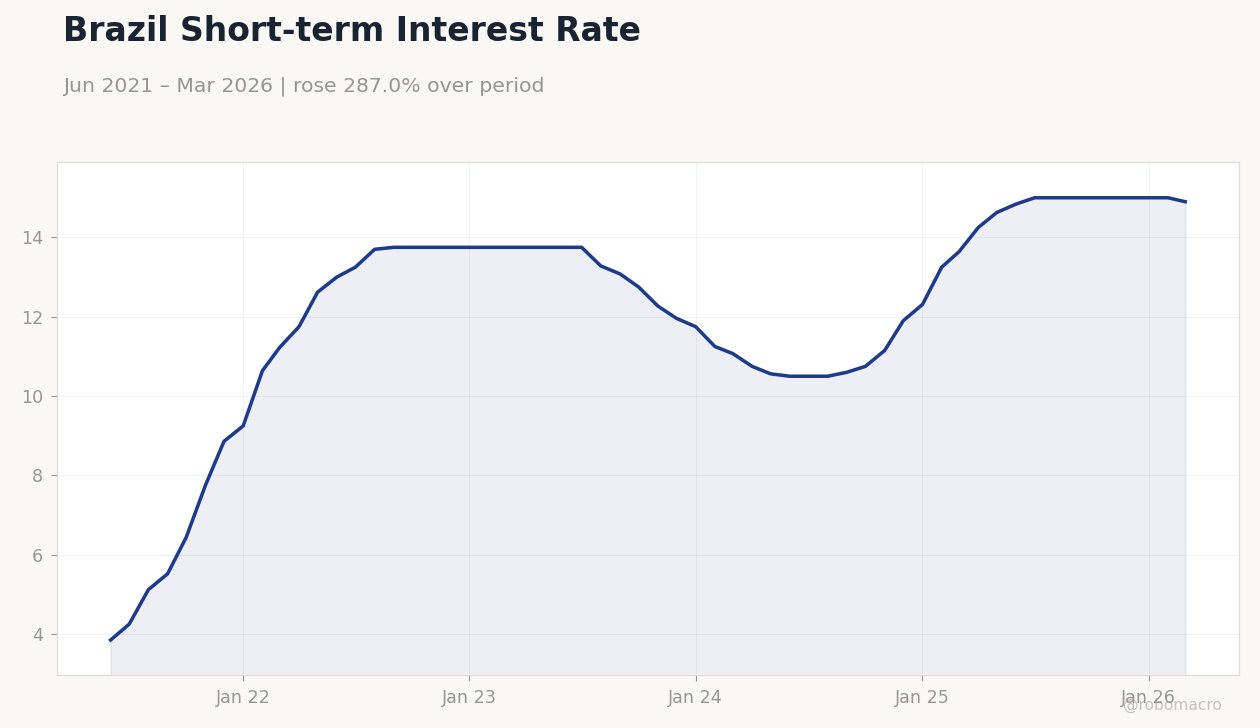 Brazil Short-term Interest Rate | Type: macro_line | Short-term Rate %: 14.9 (2026-03-01) | Range: 3.85–15 | Trend(6pt): 3.85,13.7,12.75,11.9,15,14.9
Today's Economic Events
| Data | Prior | Cons | Time |
|---|---|---|---|
| Friday (2026-05-15) | |||
| Business Confidence Index | 45.20 | - | 10:00 |
- Retail sales rose 0.5% MoM, surpassing consensus of 0.0% and prior 0.7%, underscoring resilient consumer spending despite high rates.
- Bovespa gained 0.72% to 178,375.80, while USD/BRL rose 1.70% to 4.99, signaling a weaker real amid external factors.
- Petrobras fell 4.44% to 19.59 on softer WTI crude at 100.25 (-0.76%), with Vale down 1.12% to 16.84.
Yesterday's Recap
Brazil's retail sales for the latest month increased 0.5% month-over-month on May 13, 2026, beating the consensus forecast of 0.0% and building on the previous 0.7% gain. This outcome points to strong domestic demand resilience amid elevated interest rates, potentially influencing monetary policy outlooks. The Bovespa index rose 0.72% to 178,375.80, supported by mixed performances in commodity sectors despite global volatility.
USD/BRL climbed 1.70% to 4.99, reflecting a depreciating real due to broader currency pressures, while EUR/BRL advanced 1.33% to 5.84. Petrobras shares declined 4.44% to 19.59, weighed down by WTI crude's 0.76% drop to 100.25. Vale fell 1.12% to 16.84, amid softer commodity sentiment.
Gold edged up 0.10% to 4,702.30, and Bitcoin rose 0.65% to 79,791.07. Brazil's short-term rate decreased 0.67% to 14.90%, indicating stable market expectations. No additional major releases were reported, maintaining focus on these metrics for trade and fiscal implications.
The Day Ahead
No economic indicators are set for release on May 14, 2026, allowing markets to absorb the recent retail sales surprise. Eyes turn to May 15, with the Business Confidence Index due at 10:00 ET, following a previous reading of 45.2 and lacking a current consensus. This gauge could reveal business sentiment trends amid commodity export hurdles and sustained high rates.
Unscheduled updates from the BCB are unlikely, but any fiscal developments, like tax policy shifts, might sway trading. Global news flows could also impact sentiment indirectly.
Other Economic Notes
Brazil's Atlantic forest saw its lowest deforestation in 40 years, aiding environmental efforts that support sustainable agriculture and exports such as soybeans. The official demarcation of 410,000 hectares for the uncontacted Kawahiva people seeks to protect against illegal mining and logging, which may help secure commodity supply stability. PagBank posted Q1 recurring net income of R$575 million, fueled by revenue increases and efficiency, with deposits exceeding R$42 billion and loans at R$5 billion, enhancing digital banking reach and economic inclusion.


