Brazil Macro Daily(Beta Mode)
Bovespa Gains, Real Strengthens
Market Snapshot
| Asset | Level | Change |
|---|---|---|
| Bovespa | 178,366.00 | +0.72% |
| USD/BRL | 4.99 | -0.69% |
| EUR/BRL | 5.80 | -1.44% |
| Vale | 16.58 | -1.54% |
| Petrobras | 19.78 | +0.97% |
| WTI Crude | 100.52 | -0.64% |
| Gold | 4,565.10 | -2.42% |
| Bitcoin | 80,619.48 | -0.53% |
| Brazil Short-term Rate | 14.90% | -0.67% |
| Brazil Long-term Rate | - | - |
Prior Economic Events
| Data | Prior | Cons | Actual |
|---|---|---|---|
| No events available | |||
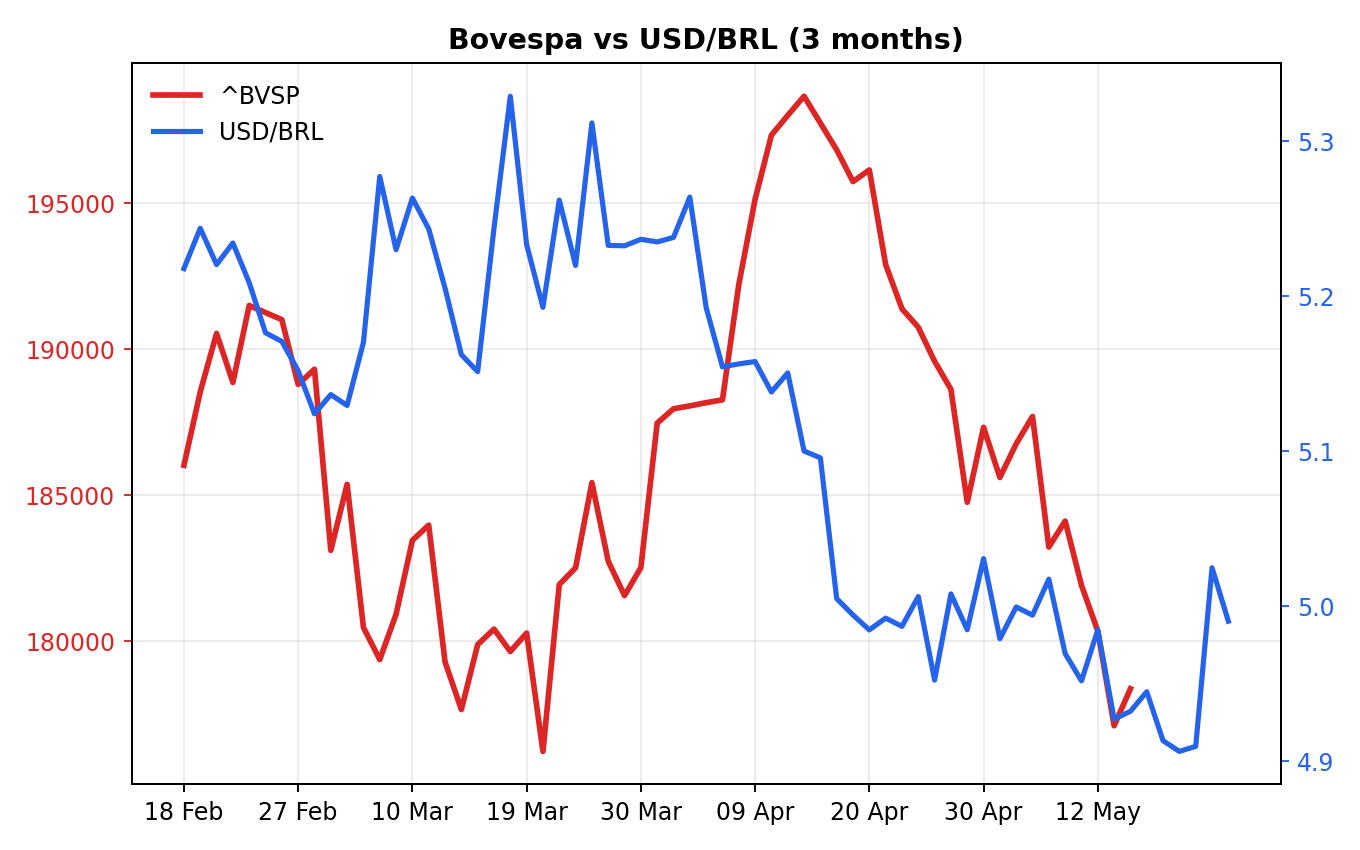
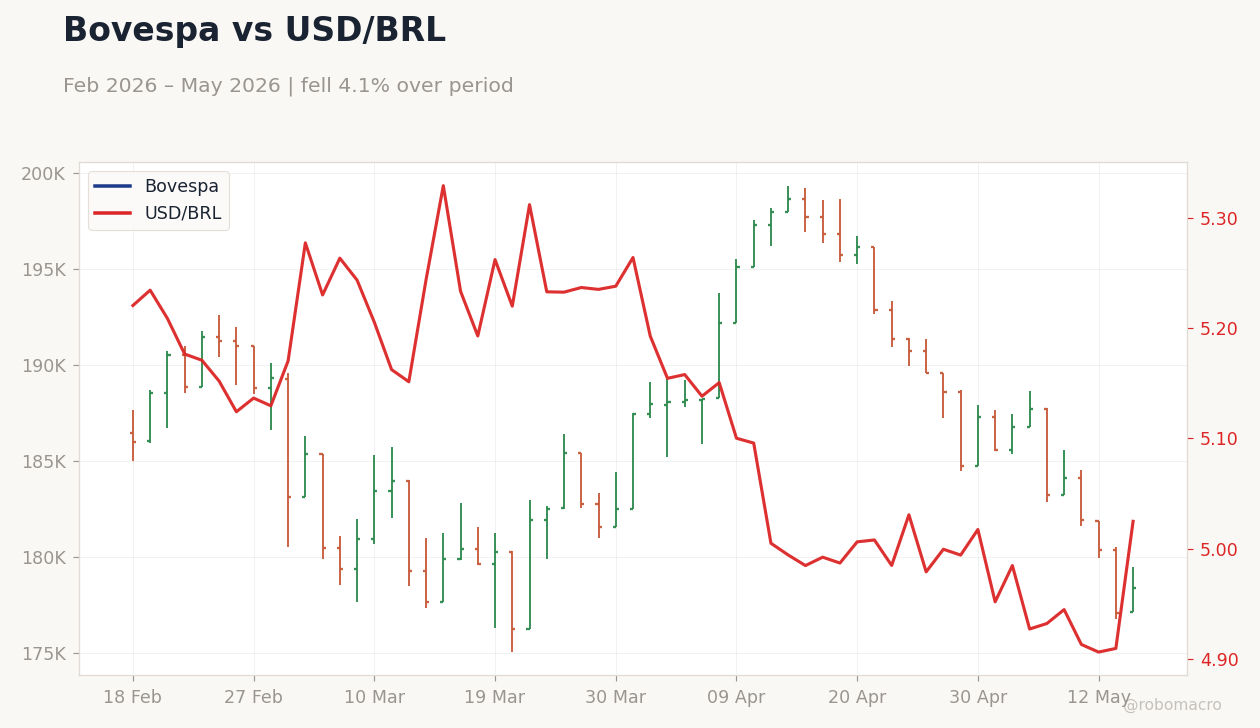 Bovespa vs USD/BRL | Type: market_hloc | Bovespa: 1.784e+05 (2026-05-14) | Range: 1.762e+05–1.987e+05 | Trend(6pt): 1.86e+05,1.834e+05,1.825e+05,1.961e+05,1.803e+05,1.784e+05 | USD/BRL: 4.99 (2026-05-15) | Range: 4.906–5.329 | Trend(5pt): 5.218,5.205,5.193,4.985,4.99
Today's Economic Events
| Data | Prior | Cons | Time |
|---|---|---|---|
| No events available | |||
- Bovespa rose 0.72% to 178,366.00, led by Petrobras up 0.97% amid stable oil prices.
- USD/BRL dropped 0.69% to 4.99, with EUR/BRL down 1.44% to 5.80 on positive export sentiment.
- Short-term rate fell 0.67 percentage points to 14.90%, reflecting steady monetary policy.
Yesterday's Recap
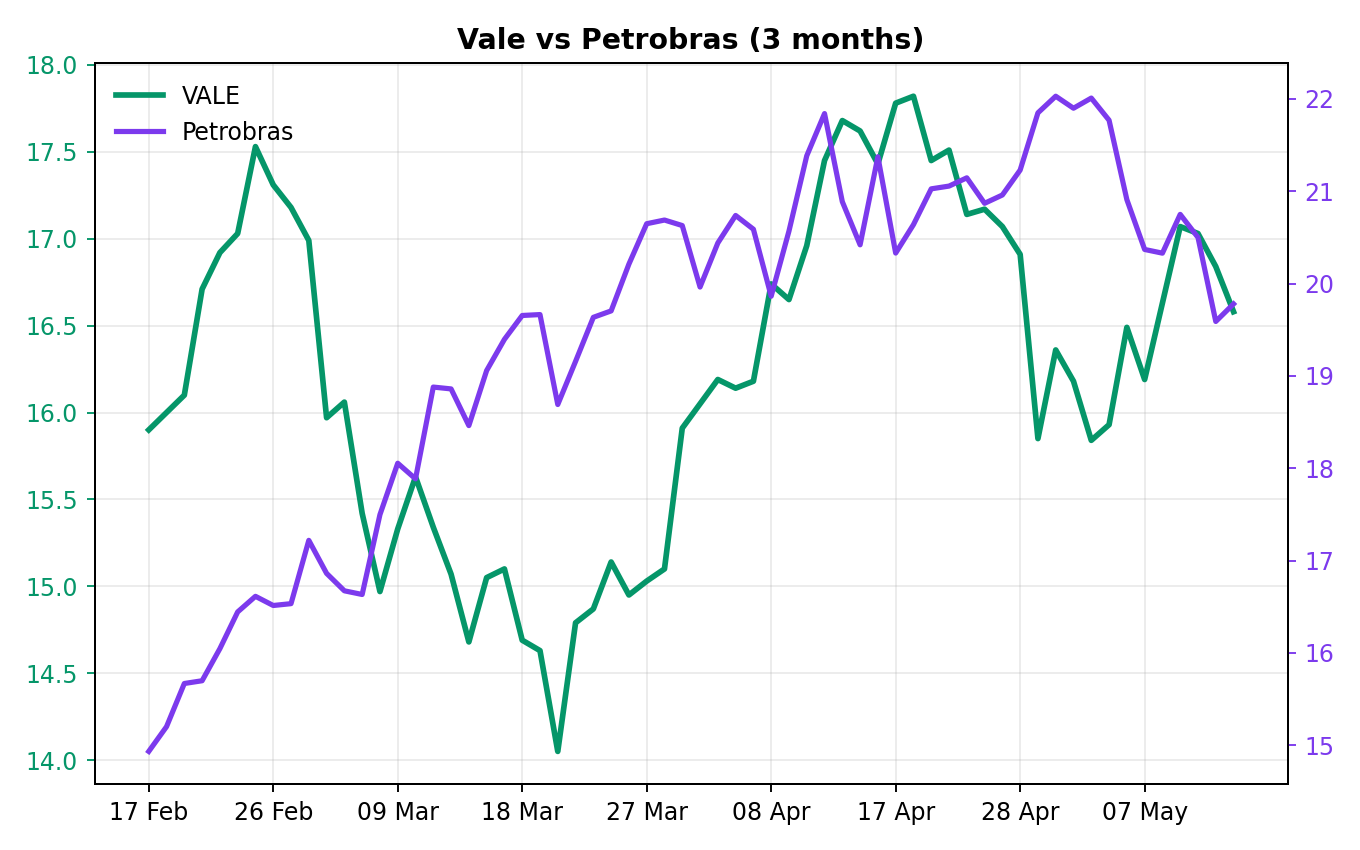
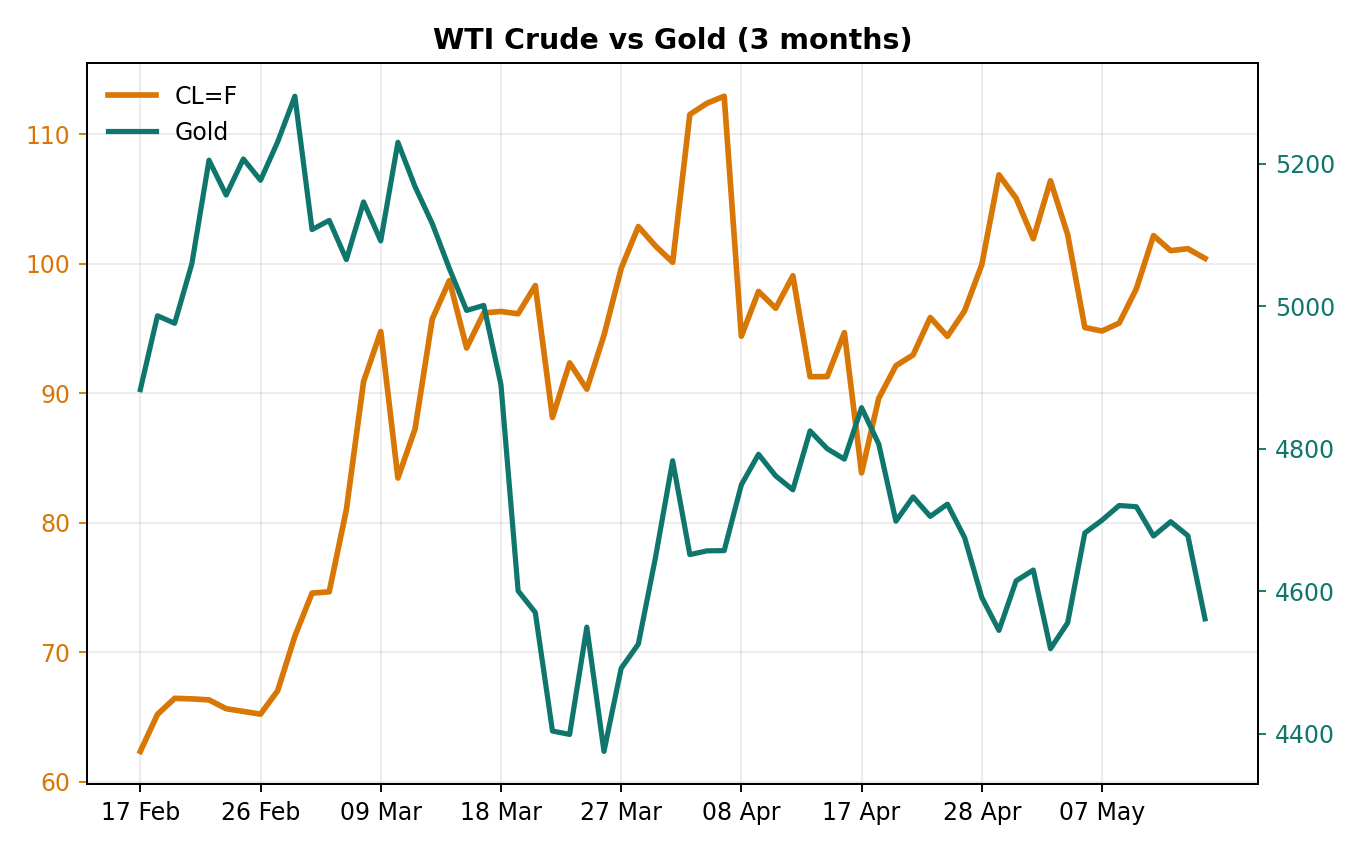
Brazilian markets displayed strength, with the Bovespa index climbing 0.72% to 178,366.00, supported by energy sector gains including Petrobras, which increased 0.97% to 19.78 as WTI crude settled at 100.52 despite a 0.64% decline. Vale fell 1.54% to 16.58, influenced by gold's 2.42% drop to 4,565.10. The real appreciated, with USD/BRL decreasing 0.69% to 4.99 and EUR/BRL declining 1.44% to 5.80, bolstered by commodity export optimism.
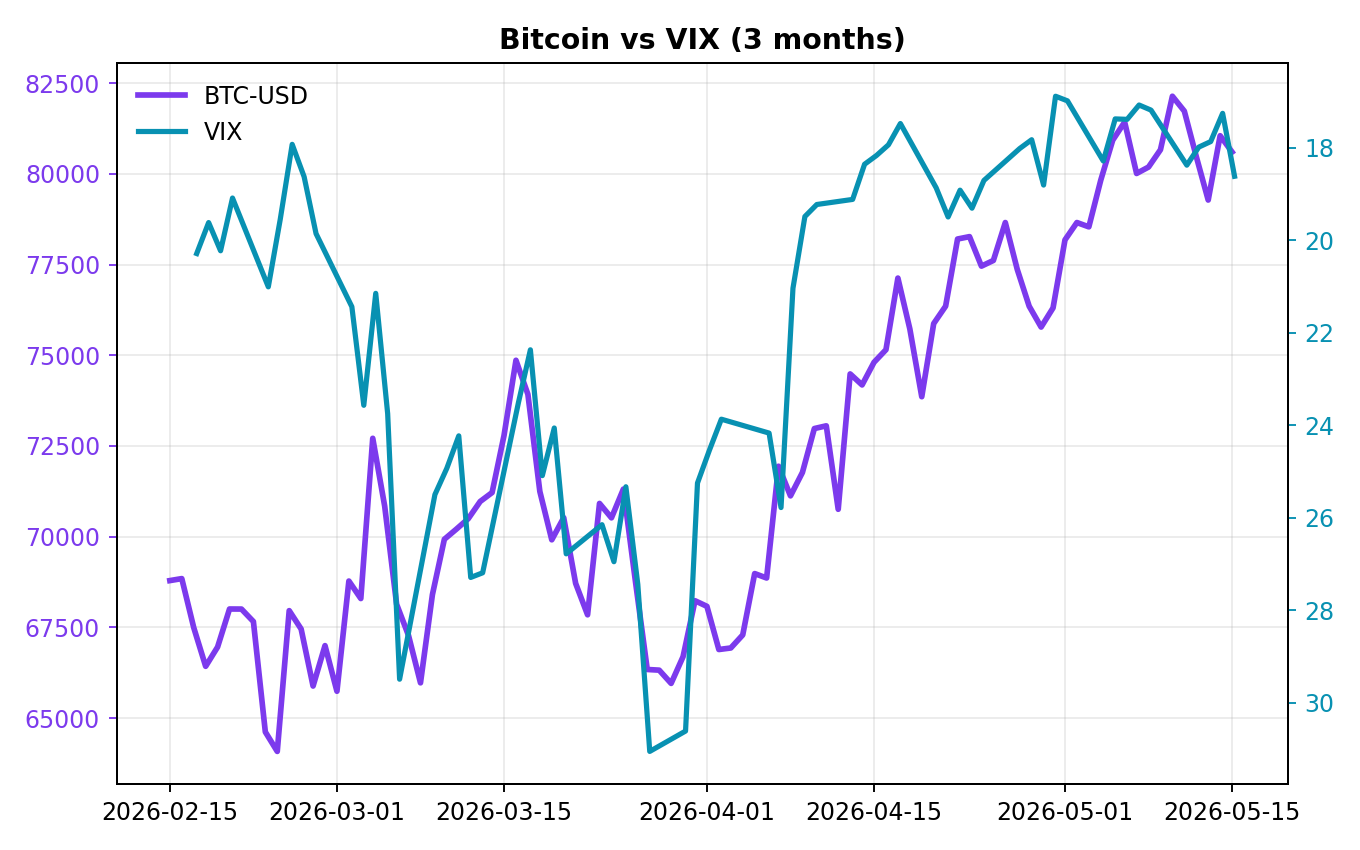
No economic data was released, but positive environmental developments emerged, including record-low deforestation in the Atlantic forest over the past 40 years and the start of land demarcation for the uncontacted Kawahiva people in the Amazon, spanning 410,000 hectares to protect against illegal activities. Bitcoin decreased 0.53% to 80,619.48, aligning with global caution. The short-term rate adjusted to 14.90% after a 0.67 percentage point drop, indicating stable conditions amid fiscal cues.
The Day Ahead
No scheduled economic releases or central bank events are on the calendar for today. Markets may focus on any unscheduled updates related to commodity trends, such as iron ore or oil, given recent global demand signals. Attention could also turn to international developments, including BRICS discussions on coordinated responses to global instability, potentially affecting Brazilian asset sentiment.
Traders expect subdued activity unless volatility arises from currency or commodity shifts. The Selic rate remains at 14.90%, with no speeches planned from Banco Central do Brasil officials.
Other Economic Notes
Environmental advancements bolster Brazil's long-term economic outlook, with the Atlantic forest recording its lowest deforestation in 40 years, aiding sustainable commodity exports like iron ore and soybeans. The demarcation of 410,000 hectares for the Kawahiva people aims to curb illegal mining and logging, enhancing Brazil's appeal for green investments. Resilient market performance, seen in Bovespa's rise, highlights ongoing domestic demand strength, which complicates inflation management under the current high Selic rate.
These factors support fiscal stability and could attract foreign capital inflows focused on sustainability.