Brazil Macro Daily(Beta Mode)
Selic Holds at 14.75% as Growth Slows
Market Snapshot
| Asset | Level | Change |
|---|---|---|
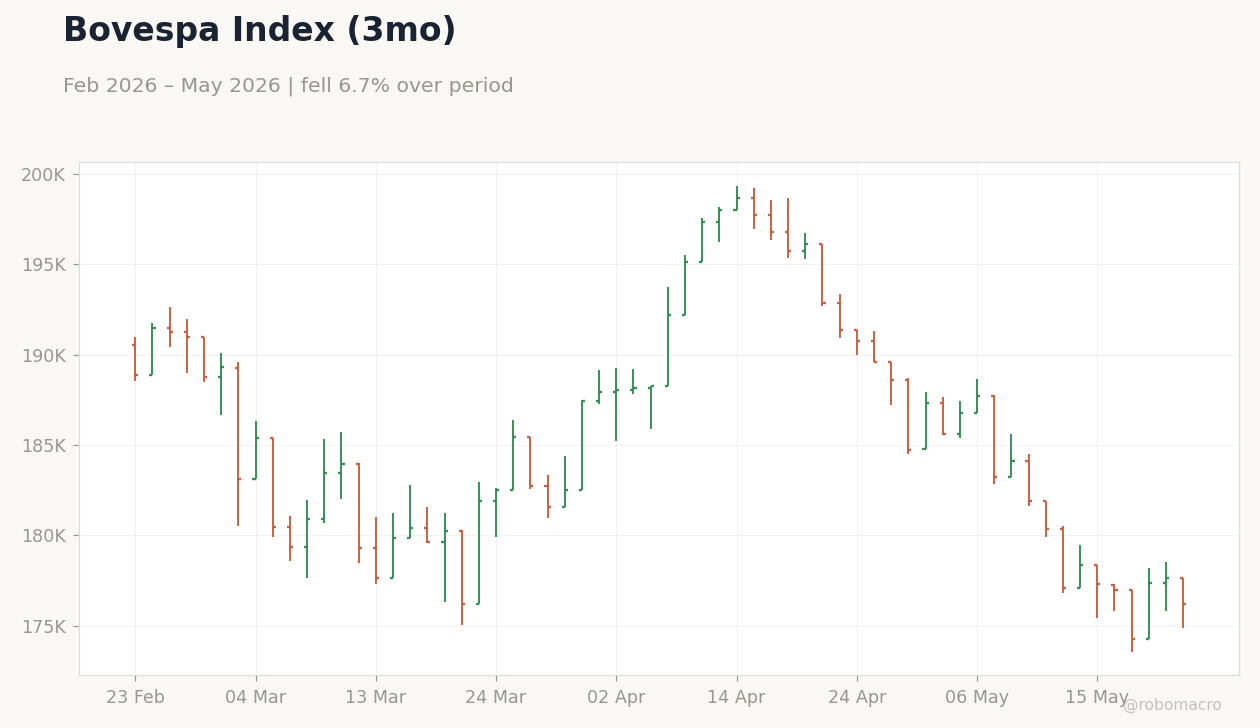
| Bovespa | 176,210.00 | -0.81% |
| USD/BRL | 5.02 | +0.05% |
| EUR/BRL | 5.84 | +0.31% |
| Vale | 16.48 | +0.06% |
| Petrobras | 19.90 | -0.65% |
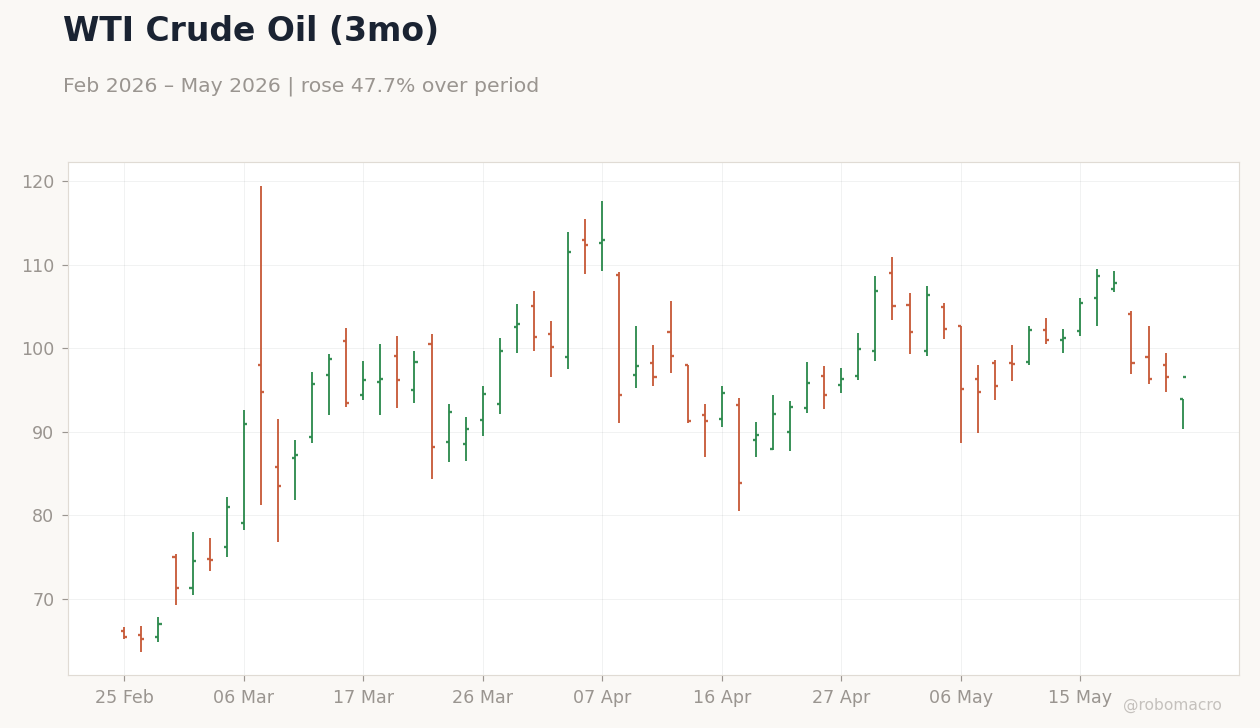
| WTI Crude | 96.60 | +0.00% |
| Gold | 4,523.20 | +0.05% |
| Bitcoin | 77,532.07 | +0.72% |
| Brazil Short-term Rate | 14.75% | -1.01% |
| Brazil Long-term Rate | - | - |
Prior Economic Events
| Data | Prior | Cons | Actual |
|---|---|---|---|
| No events available | |||
 Brazil Selic Policy Rate | Type: macro_line | Percent: 14.75 (2026-04-01) | Range: 3.85–15 | Trend(6pt): 3.85,13.7,12.75,11.9,15,14.75
Today's Economic Events
| Data | Prior | Cons | Time |
|---|---|---|---|
| Thursday (2026-05-28) | |||
| Headline Unemployment Rate | 6.10 | - | 04:00 |
| Friday (2026-05-29) | |||
| GDP Growth Quarter-over-Quarter | 0.10 | - | 04:00 |
| GDP Growth Year-over-Year | 1.80 | - | 04:00 |
- Brazil's Selic rate remains at 14.75%, with high borrowing costs continuing to restrain domestic demand and investment.
- Moody’s signals increased caution on Brazil’s fiscal and growth outlook amid persistent inflation pressures.
- BCB explicitly rules out forward guidance, citing Middle East risks and uncertainty over the inflation path.
Yesterday's Recap
Markets closed mixed on 24 May with Bovespa falling 0.81% to 176,210 amid thin volumes and limited corporate news. USD/BRL edged 0.05% higher to 5.02 while EUR/BRL rose 0.31% to 5.84, reflecting modest real softening. The short-term rate held steady at 14.75%, down 1.01% on the day in futures pricing.
Vale gained 0.06% on stable iron-ore prices while Petrobras declined 0.65%. No major data releases occurred, leaving attention on the ongoing impact of elevated policy rates. Traders focused on the absence of fresh BCB signals and the Treasury’s R$42 bn primary deficit target for 2026.
The Day Ahead
Attention turns to the 28 May release of the headline unemployment rate, expected to show limited improvement given tight financial conditions. On 29 May, first-quarter GDP figures will arrive, with quarter-over-quarter growth likely near the prior 0.1% print and year-over-year expansion around 1.8%. Markets will parse the data for evidence that high rates are further damping activity.
No Copom speakers are scheduled, keeping the focus squarely on incoming hard data. Any downside surprise in GDP could reinforce expectations for a prolonged hold at 14.75%.
Other Economic Notes
Sustained Selic levels at 14.75% continue to weigh on credit-sensitive sectors and household spending, producing a visible slowdown in domestic demand. Fiscal concerns have intensified after the Treasury widened its 2027 deficit projection, lifting long-term yields and prompting Moody’s to adopt a more cautious stance. Commodity exporters such as Vale and Petrobras remain key buffers, yet softer Chinese demand threatens iron-ore and oil revenues.
Inflation expectations have edged higher, complicating the BCB’s return to the target range.
Global Macro News
Global risk sentiment stayed subdued as Middle East tensions kept oil prices elevated near $96.60 per barrel. China’s latest PMI readings disappointed, adding pressure on Brazilian commodity exports and the real. Gold held near $4,523 per ounce, offering limited safe-haven support for emerging-market currencies.
<i>↓ p.2</i>