Brazil Macro Daily(Beta Mode)
Brazil Labor Data, Fuel Caps Draw Focus
Market Snapshot
| Asset | Level | Change |
|---|---|---|
| Bovespa | 176,589.00 | -0.43% |
| USD/BRL | 5.03 | +0.43% |
| EUR/BRL | 5.86 | +0.60% |
| Vale | 16.50 | +0.12% |
| Petrobras | 19.40 | -2.51% |
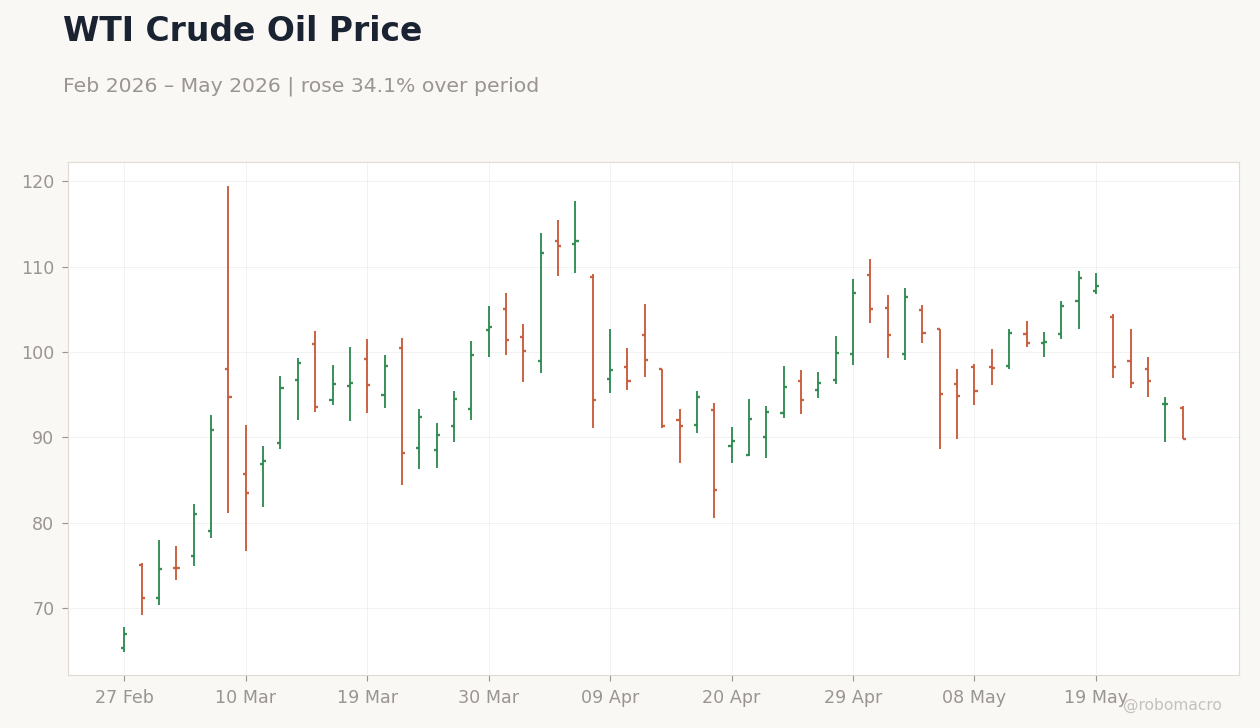
| WTI Crude | 89.97 | -4.18% |
| Gold | 4,528.80 | +0.63% |
| Bitcoin | 75,739.79 | -0.11% |
| Brazil Short-term Rate | 14.75% | -1.01% |
| Brazil Long-term Rate | - | - |
Prior Economic Events
| Data | Prior | Cons | Actual |
|---|---|---|---|
| No events available | |||
 Brazil Short-term Policy Rate | Type: macro_line | Short-term Rate (%): 14.75 (2026-04-01) | Range: 3.85–15 | Trend(6pt): 3.85,13.7,12.75,11.9,15,14.75
Today's Economic Events
| Data | Prior | Cons | Time |
|---|---|---|---|
| Thursday (2026-05-28) | |||
| Headline Unemployment Rate | 6.10 | 5.90 | 04:00 |
| Friday (2026-05-29) | |||
| GDP Growth Quarter-over-Quarter | 0.10 | 1 | 04:00 |
| GDP Growth Year-over-Year | 1.80 | 1.80 | 04:00 |
- Markets closed mixed as Bovespa fell 0.43% while USD/BRL rose 0.43% to 5.03 amid oil volatility.
- Unemployment rate expected at 5.9% tomorrow, with GDP prints due Friday showing 1.0% QoQ growth.
- Selic stands at 14.75% as BCB maintains tight stance against persistent inflation pressures.
Yesterday's Recap
Equity and currency markets reacted to global oil shocks and domestic policy signals. Bovespa declined 0.43% to 176,589 while Petrobras shares dropped 2.51% on weaker crude prices. USD/BRL climbed 0.43% to 5.03 and EUR/BRL gained 0.60% to 5.86.
Short-term Brazilian rates eased 1.01% to 14.75%. No major data releases occurred, leaving price action driven by external commodity moves and news of government efforts to cap fuel prices after Middle East supply disruptions. Foreign investor interest showed modest signs of returning beyond equities into macro funds and startups.
The Day Ahead
The Headline Unemployment Rate is scheduled for release at 04:00 ET on May 28 with consensus at 5.9%, down from 6.1%. GDP Growth QoQ is expected at 1.0% versus 0.1% prior, while YoY growth is seen unchanged at 1.8%. Markets will parse the labor print for signs of cooling that could influence BCB timing.
Fuel price containment measures will remain in focus following recent oil shocks. Traders will also monitor any updates on beef export quota renegotiations with China ahead of potential tariff exposure.
Other Economic Notes
Brazil’s public debt overhang continues to weigh on sentiment, with over 82 million individuals behind on payments. Government moves to shield consumers from fuel price spikes reflect fiscal trade-offs between inflation control and subsidy costs. Commodity export dynamics remain mixed, with iron ore and soybean shipments steady but beef facing quota constraints that could trigger 55% tariffs on surplus volumes.
Foreign capital inflows are broadening into venture and insurance channels, supporting longer-term real stability despite short-term volatility.
Global Macro News
Middle East oil shocks prompted Brazilian authorities to intervene in domestic fuel pricing to limit pass-through. President Trump’s meeting with Flávio Bolsonaro at the White House highlighted external political interest in Brazil’s October election cycle. Chile’s plans to expand exports to Brazil could intensify regional competition in agriculture and mining goods.
<i>↓ p.2</i>