Brazil Macro Daily(Beta Mode)
Brazil Rate Forecasts Raised as Economy Stays Hot
Market Snapshot
| Asset | Level | Change |
|---|---|---|
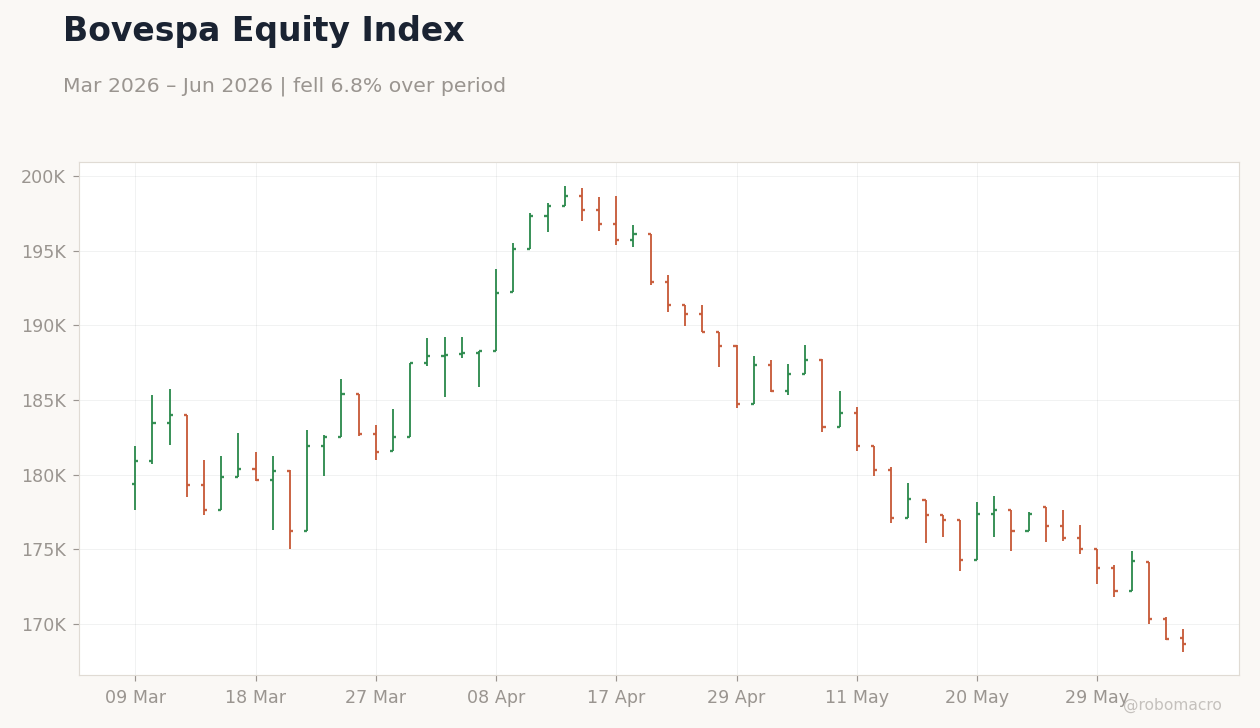
| Bovespa | 168,669.00 | -0.21% |
| USD/BRL | 5.16 | -0.41% |
| EUR/BRL | 5.96 | +0.02% |
| Vale | 14.99 | -1.58% |
| Petrobras | 17.75 | +0.00% |
| WTI Crude | 89.41 | -2.07% |
| Gold | 4,362.80 | +0.62% |
| Bitcoin | 62,519.48 | -0.91% |
| Brazil Short-term Rate | 14.75% | -1.01% |
| Brazil Long-term Rate | - | - |
Prior Economic Events
| Data | Prior | Cons | Actual |
|---|---|---|---|
| No events available | |||
 Brazil Short-term Policy Rate | Type: macro_line | Policy Rate %: 14.75 (2026-04-01) | Range: 4.25–15 | Trend(6pt): 4.25,13.75,12.27,12.31,14.9,14.75
Today's Economic Events
| Data | Prior | Cons | Time |
|---|---|---|---|
| Friday (2026-06-12) | |||
| Inflation Rate Month-over-Month | 0.67 | 0.51 | 04:00 |
| Inflation Rate Year-over-Year | 4.39 | 4.65 | 04:00 |
| Business Confidence Index | 47.20 | - | 05:40 |
- Brazil economists raised Selic forecasts after resilient activity data kept inflation risks elevated.
- Bovespa fell 0.21% while USD/BRL dropped to 5.16 as the 14.75% Selic anchored carry trades.
- June 12 inflation prints will test whether the BCB can hold rates through year-end.
Yesterday's Recap
Bovespa closed at 168,669, down 0.21%, with Vale falling 1.58% on softer iron-ore futures. USD/BRL declined 0.41% to 5.16 while the short-term rate held at 14.75%. No data releases occurred on June 8, leaving markets focused on the prior retail-sales beat.
Petrobras shares were unchanged at 17.75 amid stable WTI crude at 89.41. The DI curve priced the Selic unchanged through August, reflecting the BCB’s firm stance. Gold rose 0.62% to 4,362.80, offering limited support to Brazilian assets.
Capital-flow commentary highlighted ongoing pressure from higher US yields.
The Day Ahead
Markets will focus on the June 12 IPCA release at 04:00 ET. Month-over-month inflation is expected at 0.51% versus 0.67% prior, while the year-over-year rate is seen rising to 4.65% from 4.39%. Business confidence at 05:40 ET will provide a read on corporate sentiment.
A hotter print would reinforce expectations that the BCB keeps the Selic at 14.75% into late 2026. No central-bank speakers are scheduled before the release. Traders will watch for any revisions to the 2026 fiscal target that could affect the real.
Other Economic Notes
Strong soybean exports to China continued to support the trade balance and limit BRL downside. Iron-ore shipments also rose, yet foreign investors rotated away from Vale toward other LatAm commodity plays. Fiscal comments from the Lula administration stressed compliance with spending caps ahead of the 2026 budget.
Domestic demand remains firm, with retail sales and industrial production both beating expectations in April. These trends keep the inflation-targeting framework under scrutiny as the BCB balances growth and price stability.
Global Macro News
Higher US rates are accelerating foreign-capital outflows from Brazilian equities and supporting USD/BRL strength. China’s May soybean imports exceeded forecasts on robust Brazilian supply and faster port clearance. Oil prices stayed below 90 amid reduced Chinese purchases linked to the Iran conflict.
<i>↓ p.2</i>