Brazil Macro Daily(Beta Mode)
Fiscal Worries Anchor Selic at 14.75%
Market Snapshot
| Asset | Level | Change |
|---|---|---|
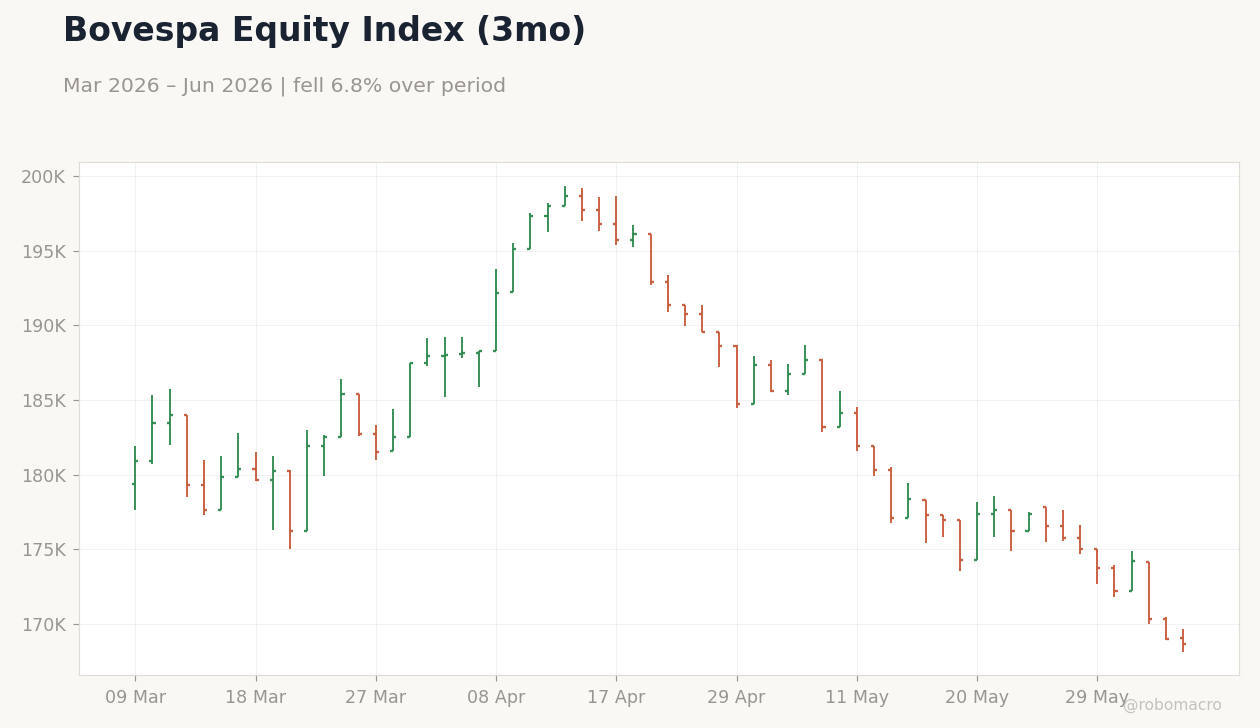
| Bovespa | 168,669.00 | -0.21% |
| USD/BRL | 5.17 | -0.61% |
| EUR/BRL | 5.97 | -0.31% |
| Vale | 15.12 | +0.83% |
| Petrobras | 17.86 | +0.62% |
| WTI Crude | 87.58 | -0.70% |
| Gold | 4,198.10 | -1.45% |
| Bitcoin | 61,252.78 | -0.63% |
| Brazil Short-term Rate | 14.75% | -1.01% |
| Brazil Long-term Rate | - | - |
Prior Economic Events
| Data | Prior | Cons | Actual |
|---|---|---|---|
| No events available | |||
 Brazil Short-term Policy Rate | Type: macro_line | Policy Rate %: 14.75 (2026-04-01) | Range: 4.25–15 | Trend(6pt): 4.25,13.75,12.27,12.31,14.9,14.75
Today's Economic Events
| Data | Prior | Cons | Time |
|---|---|---|---|
| Friday (2026-06-12) | |||
| Inflation Rate Month-over-Month | 0.67 | 0.51 | 04:00 |
| Inflation Rate Year-over-Year | 4.39 | 4.65 | 04:00 |
| Business Confidence Index | 47.20 | - | 05:40 |
- Short-term rates close at 14.75% with markets pricing potential Selic hikes on fiscal slippage
- Bovespa falls 0.21% to 168,669 while USD/BRL drops 0.61% to 5.17 on commodity moves
- June 12 IPCA release eyed after Durigan flags congressional spending agendas
Yesterday's Recap
Markets digested Durigan’s warning that high-cost fiscal proposals in Congress could render Brazil ungovernable and strengthen arguments for tighter monetary policy. Bovespa declined 0.21% to 168,669 with Vale rising 0.83% and Petrobras adding 0.62% while broader commodity prices weighed. USD/BRL fell 0.61% to 5.17 and EUR/BRL eased 0.31% to 5.97.
The Brazil short-term rate finished at 14.75%, down 1.01% on the day. Fixed-rate bonds approached 15% as the interest-rate market began pricing a higher Selic path. Brazilians withdrew R$482.8 million in forgotten bank balances during April, per central-bank data.
Extreme-poverty rates declined nationally yet regional disparities persisted according to Valor International.
The Day Ahead
Markets await the June 12 release of May inflation data at 04:00 ET, with IPCA month-over-month expected at 0.51% versus 0.67% prior and year-over-year at 4.65% versus 4.39%. Business Confidence Index for May prints at 05:40 ET. No BCB speeches or COPOM minutes are scheduled before the print.
Traders will monitor whether the data alters expectations for the Selic trajectory priced in the swap curve. Fiscal headlines from Congress remain the dominant domestic risk factor.
Other Economic Notes
Durigan’s remarks underscore how fiscal “bomb agendas” continue to pressure the inflation-targeting framework and support higher term premiums. Poverty reduction has advanced but uneven regional outcomes limit the breadth of consumption recovery. Iron-ore and oil export flows to China remain supportive for Vale and Petrobras earnings despite softer WTI.
Steady foreign demand appeared in the latest Treasury auction of LTNs and NTN-Bs.
Global Macro News
Sugar futures swung on ample Brazilian output offset by El Niño supply risks. China’s beef import quotas are prompting Australia and Brazil to diversify export destinations. A Thai business delegation visited Rio to expand trade, investment and tourism links.
<i>↓ p.2</i>