Brazil Macro Daily(Beta Mode)
Bovespa Rises as Real Strengthens on Commodity Gains
Market Snapshot
| Asset | Level | Change |
|---|---|---|
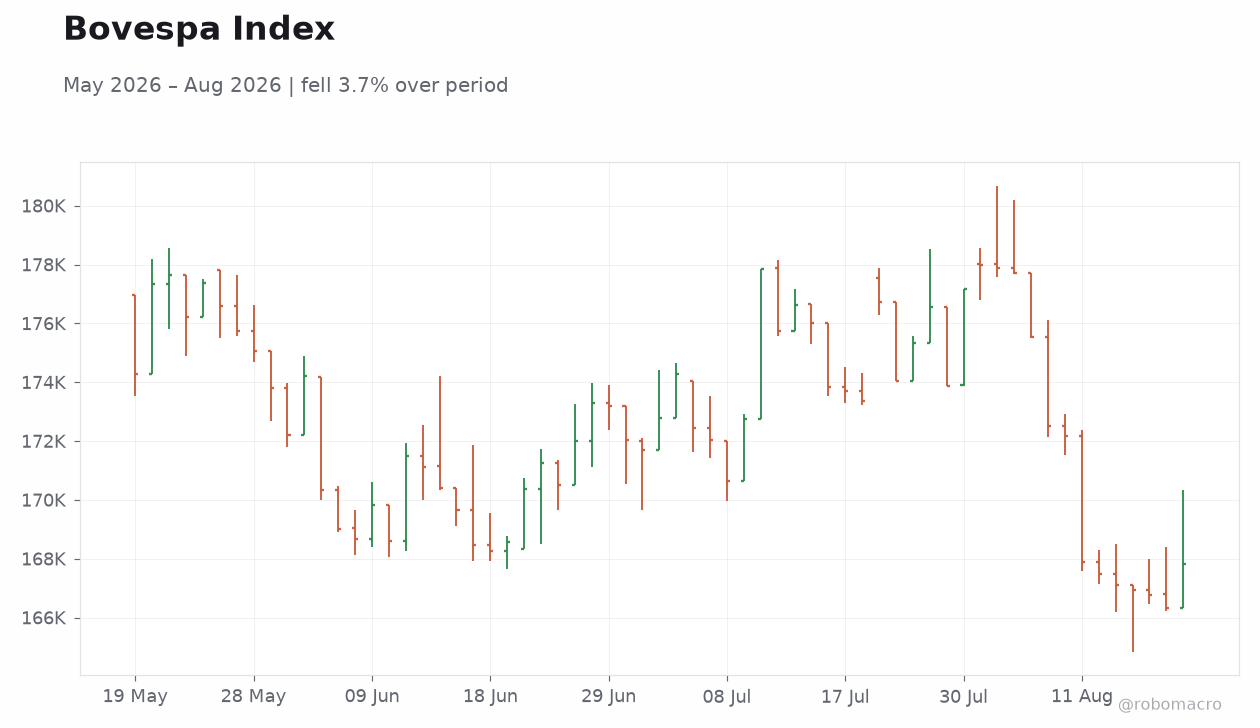
| Bovespa | 167,830.00 | +0.90% |
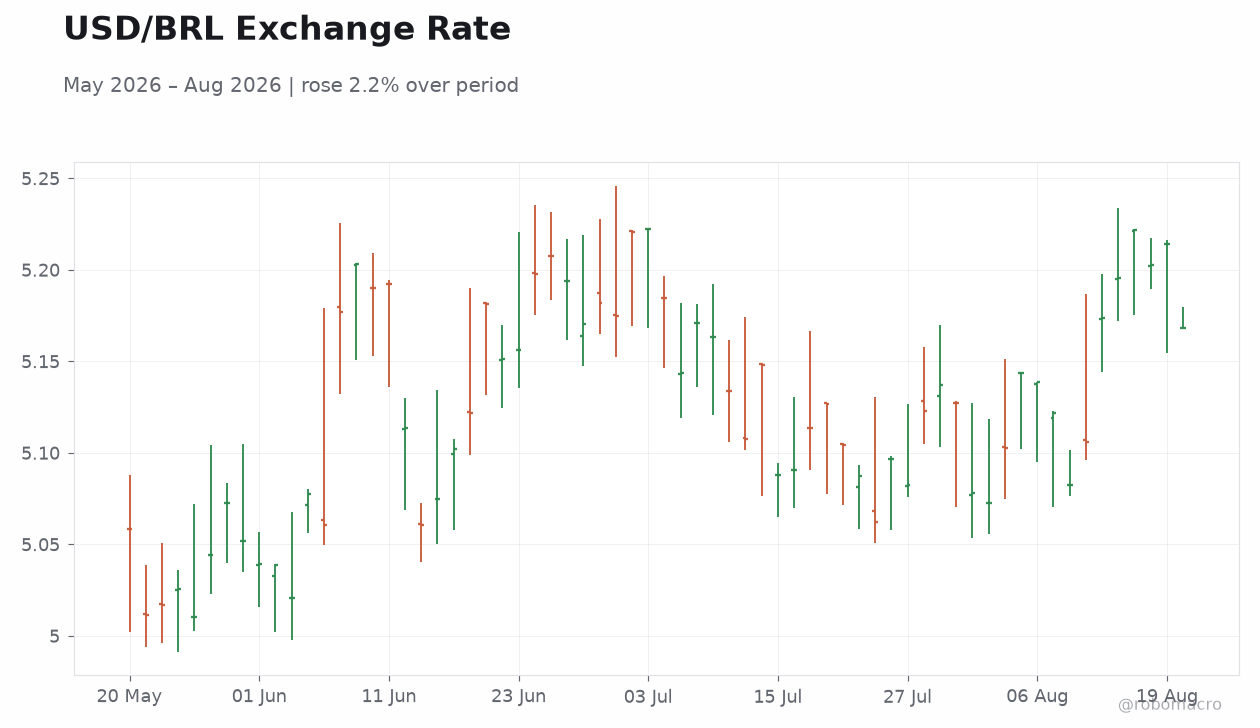
| USD/BRL | 5.17 | -0.89% |
| EUR/BRL | 6.05 | +0.34% |
| Vale | 13.90 | +1.61% |
| Petrobras | 18.54 | +1.98% |
| WTI Crude | 86.37 | +0.63% |
| Gold | 4,546.90 | +1.28% |
| Bitcoin | 71,578.74 | +3.34% |
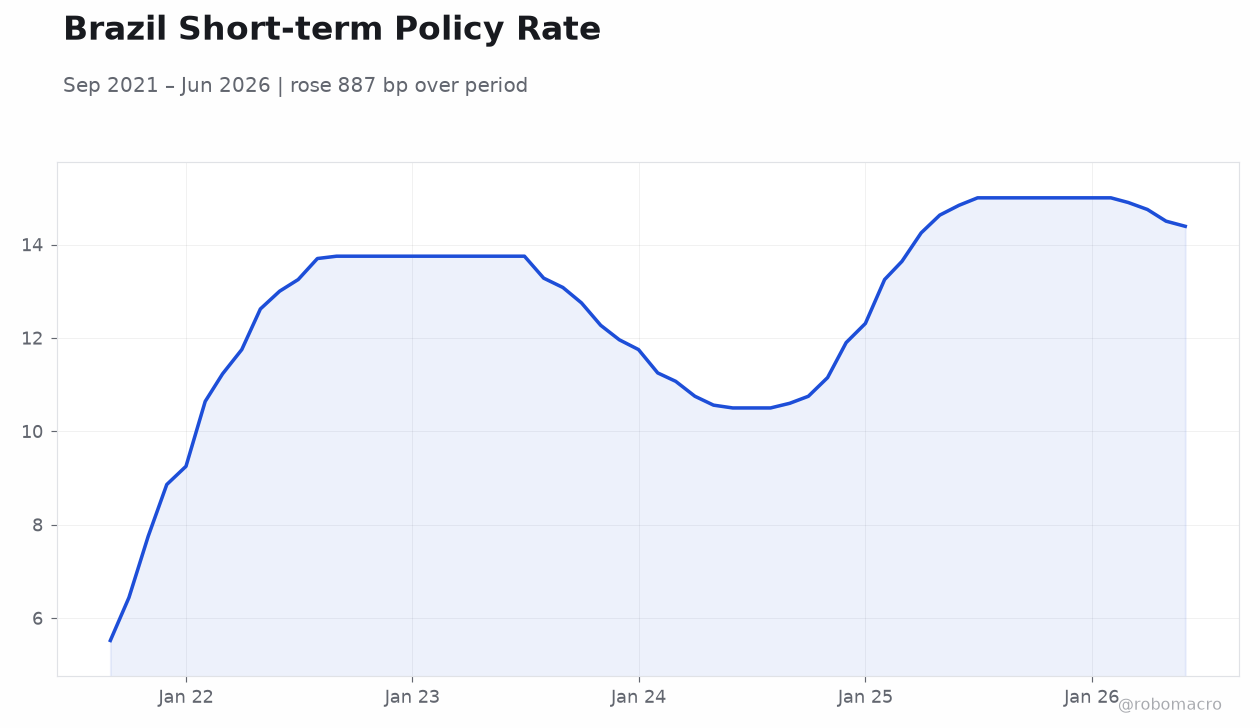
| Brazil Short-term Rate | 14.39% | -0.76% |
| Brazil Long-term Rate | - | - |
Prior Economic Events
| Data | Prior | Cons | Actual |
|---|---|---|---|
| No events available | |||
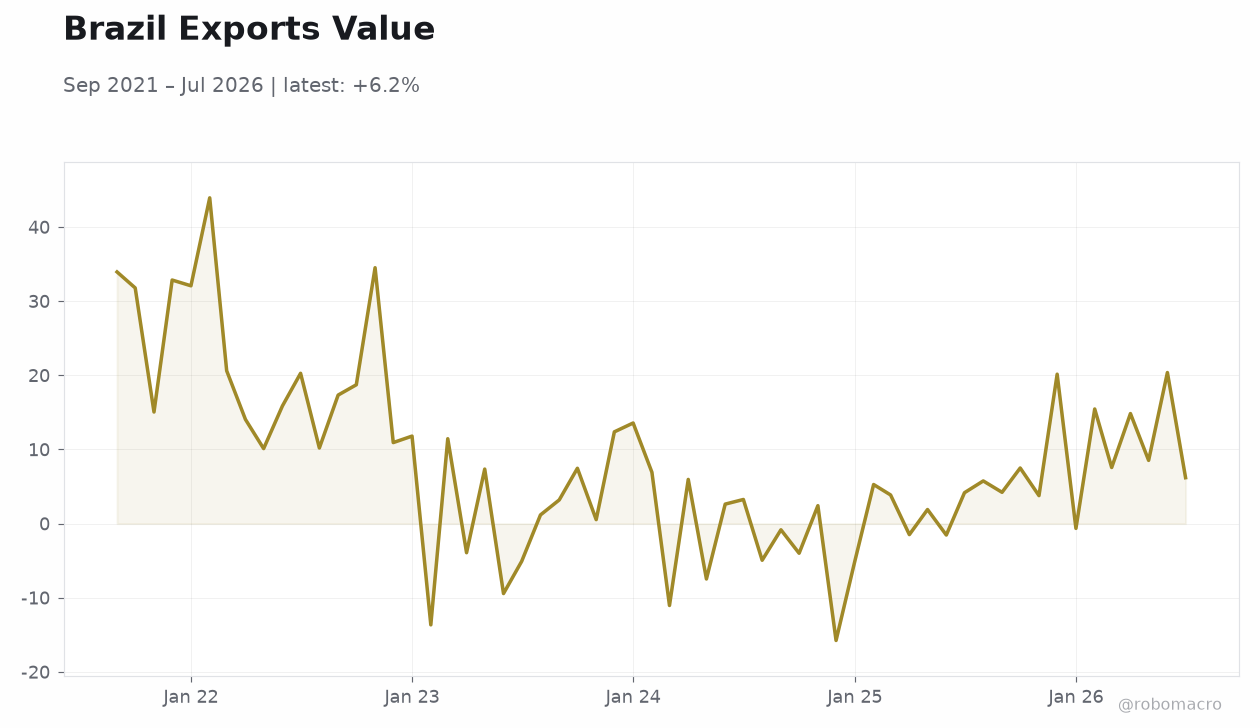 Brazil Exports Value | Type: macro_line | Exports YoY %: 6.195 (2026-07-01) | Range: -15.76–43.94 | Trend(6pt): 33.95,34.52,13.57,3.87,8.532,6.195
Today's Economic Events
| Data | Prior | Cons | Time |
|---|---|---|---|
| No events available | |||
- Bovespa climbs 0.9% to 167,830 while USD/BRL drops 0.89% to 5.17.
- Vale and Petrobras advance over 1.6% on higher WTI and iron ore prices.
- Fiscal pressures intensify for Brazil’s incoming administration amid stagnant data flow.
Yesterday's Recap
Equity markets advanced as commodity-linked stocks lifted the Bovespa to 167,830, a 0.90% gain. The real appreciated against the dollar, pushing USD/BRL to 5.17 after a 0.89% decline, while EUR/BRL edged 0.34% higher to 6.05. Petrobras rose 1.98% to 18.54 and Vale gained 1.61% to 13.90, supported by WTI crude at 86.37 and gold at 4,546.90.
Short-term rates eased 0.76% to 14.39%, reflecting limited immediate policy pressure. No major economic releases occurred, leaving investor focus on external commodity trends and domestic fiscal signals. Bitcoin’s 3.34% jump to 71,578.74 provided additional risk-on sentiment without altering local fixed-income dynamics.
Overall, the session showed steady foreign-exchange compression and equity outperformance tied to export sectors.
The Day Ahead
Markets enter a data-light session with no scheduled releases through tomorrow. Attention will stay on fiscal headlines and any follow-up comments from incoming policymakers regarding spending restraint. Commodity price movements, particularly iron ore and oil, will continue to drive Vale and Petrobras performance.
Currency traders will monitor USD/BRL around 5.17 for signs of further real appreciation or reversal. Long-term rates remain unquoted, keeping duration positioning cautious ahead of any fiscal clarification. External flows into equities may persist if global risk appetite holds, though domestic credit conditions stay constrained by structural factors beyond the Selic level.
Other Economic Notes
Brazil’s next government confronts mounting pressure to address fiscal imbalances that threaten debt sustainability. Bank executives note that high Selic alone does not explain tight credit; structural barriers in housing finance and collateral rules also limit lending expansion. Export revenues from iron ore and soybeans remain vital buffers, yet any sustained fiscal slippage risks crowding out private investment.
Inflation at 4.44% year-over-year leaves limited room for complacency even with stable policy rates. Policymakers must balance social spending demands against market signals that already price elevated long-term borrowing costs.