Canada Macro Daily(Beta Mode)
PMI Rises, TSX Dips on Geopolitical Tensions
Market Snapshot
| Asset | Level | Change |
|---|---|---|
| S&P/TSX | 33,784.90 | -2.19% |
| USD/CAD | 1.36 | -0.18% |
| EUR/CAD | 1.60 | -0.52% |
| WTI Crude | 75.19 | +0.84% |
| Natural Gas | 3.01 | -1.44% |
| Gold | 5,211.20 | +2.03% |
| Brent Crude | 82.67 | +1.56% |
| Bitcoin | 70,944.80 | +3.88% |
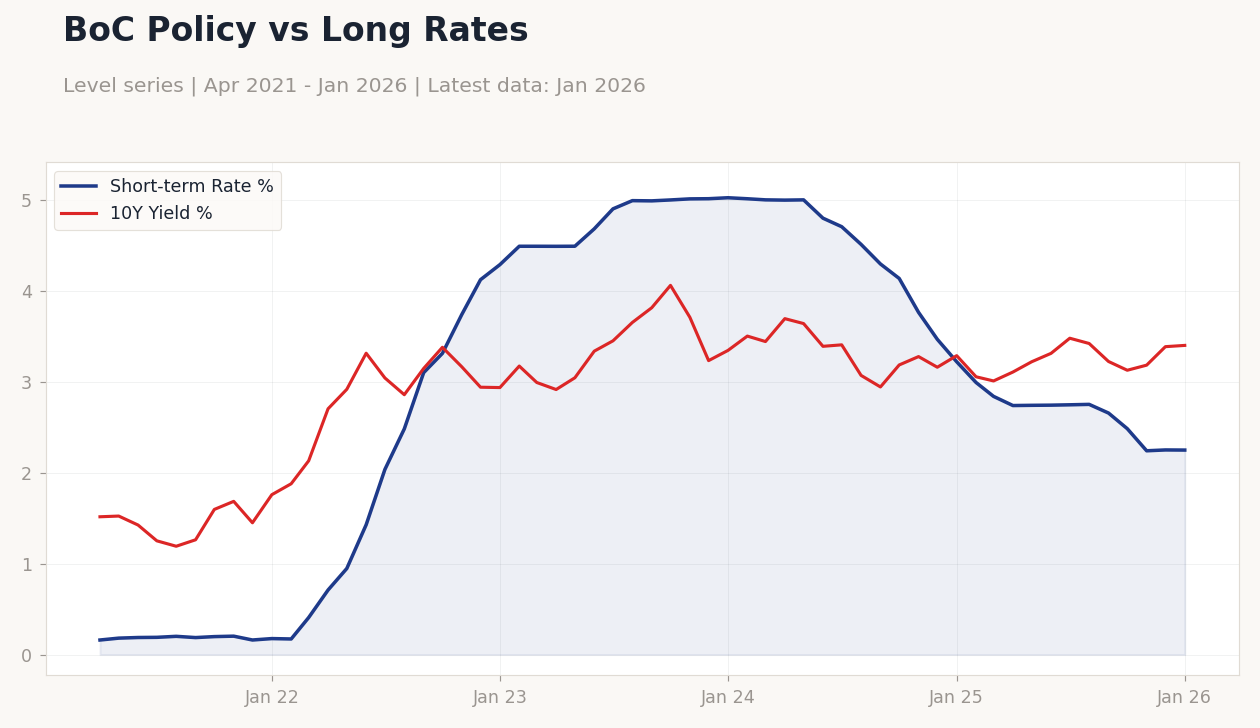
| Canada 2Y Govt Yield | 2.25% | -0.06% |
| Canada 10Y Govt Yield | 3.40% | +0.41% |
Prior Economic Events
| Data | Prior | Cons | Actual |
|---|---|---|---|
| S&P Global Manufacturing PMI Index | 50.40 | - | 51 |
Today's Economic Events
| Data | Prior | Cons | Time |
|---|---|---|---|
| Friday (2026-03-06) | |||
| Ivey PMI Seasonally Adjusted | 50.90 | 51.10 | 05:00 |
- Canadian Manufacturing PMI increased to 51.0 in February, indicating modest sector expansion.
- S&P/TSX Composite fell 2.19% to 33,784.90 amid Middle East conflict fears.
- USD/CAD declined 0.18% to 1.36, supported by higher oil prices boosting the loonie.
Yesterday's Recap
Canada's S&P Global Manufacturing PMI rose to 51.0 in February from 50.4 prior, reflecting slight growth in the sector due to stronger orders despite ongoing supply chain issues. The S&P/TSX Composite dropped 2.19% to 33,784.90, pressured by concerns over Middle East tensions potentially disrupting global energy supplies, leading to losses in energy and materials stocks. USD/CAD fell 0.18% to 1.36, as climbing oil prices strengthened the Canadian dollar, with WTI Crude up 0.84% to 75.19 and Brent Crude rising 1.56% to 82.67.
EUR/CAD decreased 0.52% to 1.60, amid broader euro weakness against the loonie. Canada 10Y government yield increased 0.41% to 3.40%, following global bond trends, while the 2Y yield dipped 0.06% to 2.25%. Natural Gas declined 1.44% to 3.01, partially offsetting energy sector gains, and Gold advanced 2.03% to 5,211.20 driven by safe-haven demand.
Bitcoin climbed 3.88% to 70,944.80 amid market volatility. These movements occurred against a backdrop of softer inflation, with verified CPI YoY at 2.32%, helping alleviate some concerns about rate hikes.
The Day Ahead
No significant Canadian economic data releases are planned for today, providing space for markets to process recent developments and geopolitical risks. Focus shifts to Friday's Ivey PMI seasonally adjusted, forecasted at 51.1 from 50.9 prior, which may offer insights into business conditions amid fluctuating oil prices. Traders should watch for any impromptu Bank of Canada statements or international events affecting CAD pairs.
Energy prices, including WTI Crude and Natural Gas, will likely influence TSX performance. USD/CAD and other forex pairs could react to U.S. economic spillover.
Trading may remain subdued unless Middle East conflicts intensify.
Other Economic Notes
Canadian small businesses experienced notable sales growth slowdowns in late 2025, linked to global economic fragmentation and supply disruptions. Bank of Canada research highlights the potential need to accept higher inflation levels during the economy's adaptation to artificial intelligence. (cont...)


