Canada Macro Daily(Beta Mode)
TSX Slides on Iran War Jitters
Market Snapshot
| Asset | Level | Change |
|---|---|---|
| S&P/TSX | 31,317.41 | -1.69% |
| USD/CAD | 1.37 | +0.05% |
| EUR/CAD | 1.59 | -0.17% |
| WTI Crude | 98.71 | +0.40% |
| Natural Gas | 3.07 | -0.71% |
| Gold | 4,283.60 | -6.28% |
| Brent Crude | 108.30 | -3.47% |
| Bitcoin | 70,869.65 | +4.46% |
| Canada 2Y Govt Yield | 2.25% | +0.00% |
| Canada 10Y Govt Yield | 3.29% | -3.35% |
Prior Economic Events
| Data | Prior | Cons | Actual |
|---|---|---|---|
| No events available | |||
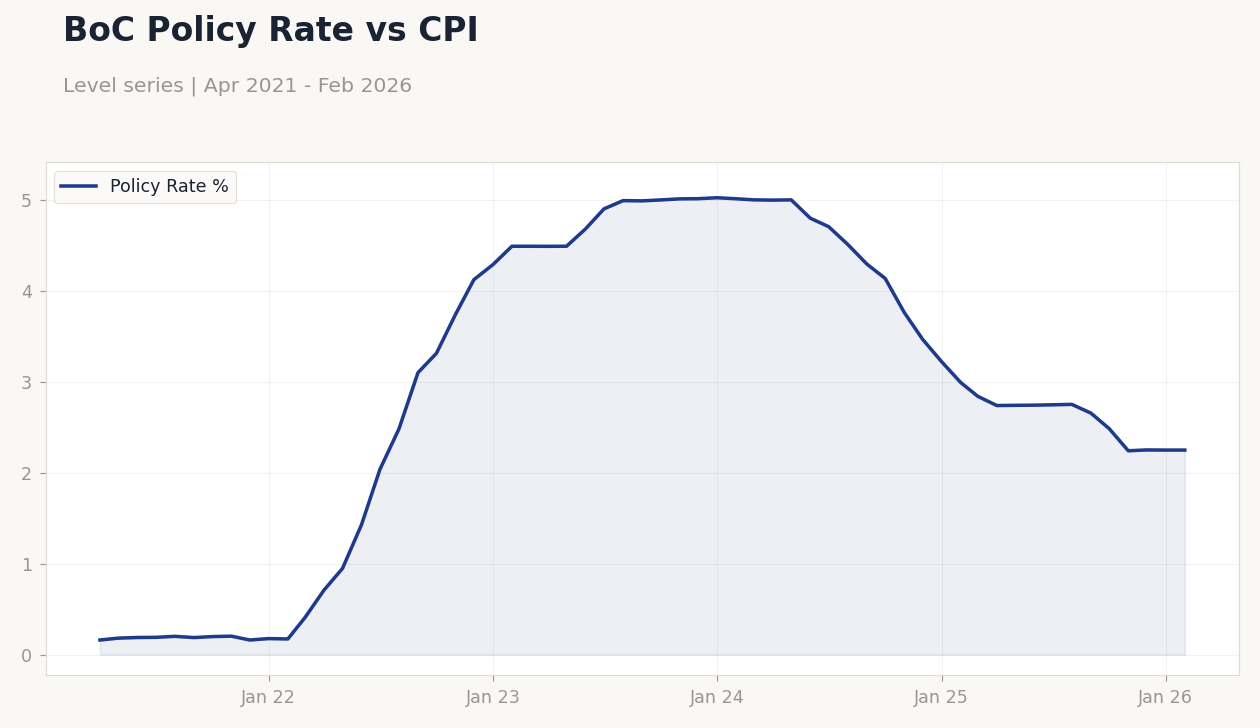 BoC Policy Rate vs CPI | Type: macro_line | Policy Rate %: 2.25 (2026-02-01) | Range: 0.1603–5.026 | Trend(6pt): 0.1603,1.429,4.994,4.138,2.251,2.25
Today's Economic Events
| Data | Prior | Cons | Time |
|---|---|---|---|
| No events available | |||
- TSX dropped 1.69% to 31,317.41 amid Iran conflict and energy volatility, with CAD holding steady on oil resilience.
- Money markets lifted 2026 BoC rate hike bets by 75bps, signaling inflation worries from energy shocks.
- Goods-trade deficit expanded to $2.68B, weighing on CAD, as BoC maintained policy rate at 2.25%.
Yesterday's Recap
Canadian markets ended lower, with the S&P/TSX index falling 1.69% to 31,317.41, pressured by energy sector declines as Brent crude dropped 3.47% to $108.30, while WTI rose modestly 0.40% to $98.71. USD/CAD inched up 0.05% to 1.37, and EUR/CAD dipped 0.17% to 1.59, bolstered by Canadian Dollar strength from oil prices despite commodity headwinds. Gold tumbled 6.28% to $4,283.60 amid reduced safe-haven demand, and natural gas fell 0.71% to $3.07 on soft demand expectations.
The Canada 10Y government yield declined 3.35% to 3.29%, indicating market bets on easing, while the 2Y yield remained unchanged at 2.25%. No significant data releases took place, but reports of a widening goods-trade deficit to $2.68B underscored export strains from global tensions. Bitcoin climbed 4.46% to $70,869.65, bucking the equity downturn.
Markets overall responded to Iran war developments, with resource-heavy TSX particularly affected.
The Day Ahead
No economic releases or events are scheduled today, directing attention to market responses to Middle East tensions and energy price movements. Traders will watch CAD pairs for shifts, especially USD/CAD near 1.37, as oil influences the currency. Bond yields could vary with global risk appetite, potentially pushing the Canada 10Y lower if safe-haven buying intensifies.
Look for any impromptu BoC statements or government updates on trade, given US-Canada dynamics. Equity sentiment may draw from US data influences, though Canadian trading stays tied to energy. Trading is likely subdued absent new geopolitical updates.
Other Economic Notes
Key themes encompass ongoing inflation challenges, with Canada CPI YoY at 2.32% as of March 2025, challenging BoC's efforts amid energy cost pressures. Housing and consumer activity encounter obstacles from elevated rates, yet recent indicators point to some durability prior to oil disruptions. Trade patterns, highlighted by the $2.68B deficit, reveal exposure to international commodity fluctuations and bilateral ties with the US.