Canada Macro Daily(Beta Mode)
TSX Drops on Geopolitical Tensions
Market Snapshot
| Asset | Level | Change |
|---|---|---|
| S&P/TSX | 31,887.50 | -1.53% |
| USD/CAD | 1.39 | +0.30% |
| EUR/CAD | 1.59 | -0.12% |
| WTI Crude | 96.72 | +2.37% |
| Natural Gas | 3.05 | +1.53% |
| Gold | 4,443.60 | +1.56% |
| Brent Crude | 104.02 | -3.69% |
| Bitcoin | 66,654.69 | -3.11% |
| Canada 2Y Govt Yield | 2.25% | +0.00% |
| Canada 10Y Govt Yield | 3.29% | -3.35% |
Prior Economic Events
| Data | Prior | Cons | Actual |
|---|---|---|---|
| No events available | |||
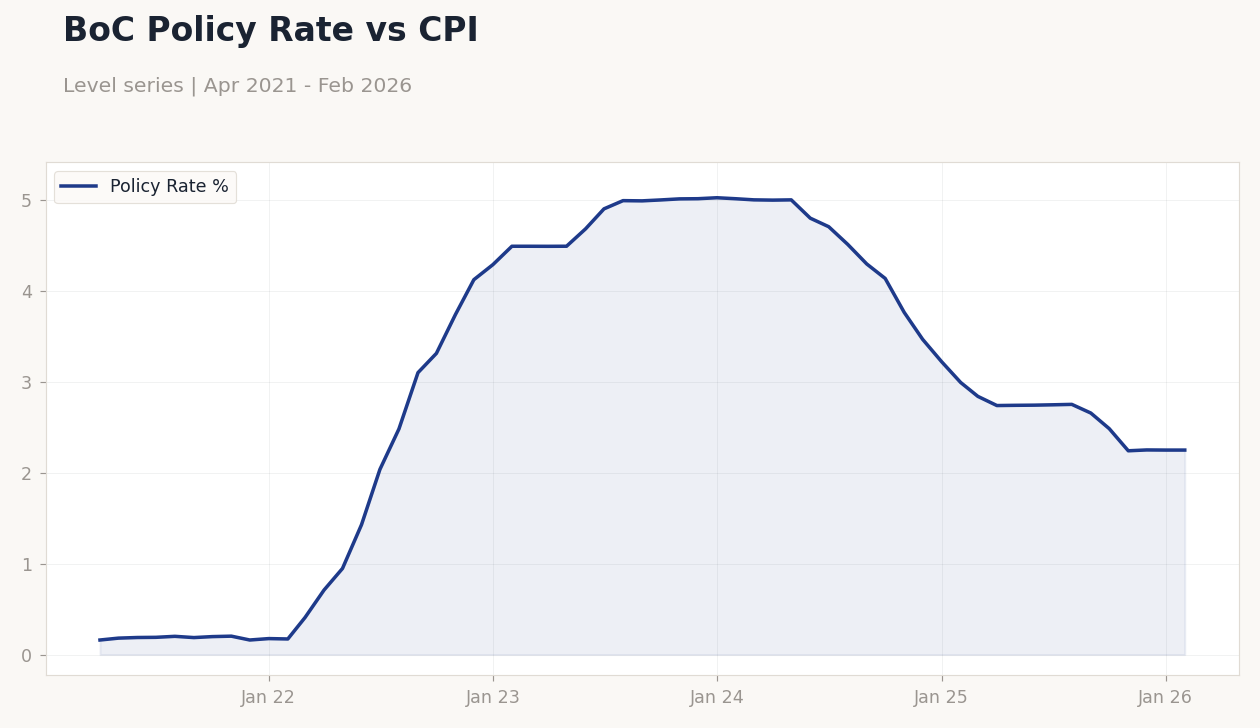 BoC Policy Rate vs CPI | Type: macro_line | Policy Rate %: 2.25 (2026-02-01) | Range: 0.1603–5.026 | Trend(6pt): 0.1603,1.429,4.994,4.138,2.251,2.25
Today's Economic Events
| Data | Prior | Cons | Time |
|---|---|---|---|
| No events available | |||
- S&P/TSX fell 1.53% amid Middle East war risks and commodity volatility.
- USD/CAD rose 0.30% to 1.39, pressuring the loonie; bond yields declined.
- Energy mixed: WTI up 2.37%, Brent down 3.69%; gold gained 1.56%.
Yesterday's Recap
Canadian markets ended lower on March 26, with the S&P/TSX Composite declining 1.53% to 31,887.50, driven by risk aversion from escalating Middle East conflicts and Ukraine's attacks on Russian refineries. USD/CAD increased 0.30% to 1.39, reflecting U.S. dollar strength and commodity fluctuations.
Government bond yields fell, with the 10Y yield dropping 3.35% to 3.29% and the 2Y unchanged at 2.25%, as markets anticipated potential Bank of Canada easing. Energy prices diverged: WTI Crude rose 2.37% to 96.72 on supply fears, while Brent Crude decreased 3.69% to 104.02. Natural Gas advanced 1.53% to 3.05, gold climbed 1.56% to 4,443.60 as a safe haven, and Bitcoin fell 3.11% to 66,654.69.
EUR/CAD slipped 0.12% to 1.59. No Canadian economic data was released, shifting focus to global risks.
The Day Ahead
March 27 has no scheduled Canadian economic data or Bank of Canada events, directing attention to global news. Markets may react to updates on Middle East tensions, influencing CAD, energy, and equities. U.S.
developments could spill over to Canadian bonds and stocks. Without domestic drivers, TSX and CAD will likely follow commodity trends and sentiment. Watch for any trade or policy announcements amid quiet conditions.
Other Economic Notes
Canadian recreational property prices are projected to rise 4% this year due to limited supply, per Royal LePage. Quebec's pension fund condemned Air Canada's English-only video on a collision, echoing governance concerns and potentially pressuring airline shares. Debates on prediction-market gambling highlight regulatory risks for fintech and betting industries in Canada.
Global Macro News
Middle East conflicts heightened global pressures on Canada, with central banks responding cautiously. The Philippine central bank warned of inflation from the war but held rates. Bank of England's Breeden downplayed second-round inflation risks despite the Iran conflict.
(cont...)


