Canada Macro Daily(Beta Mode)
Trade Gap Widens, Oil Spikes
Market Snapshot
| Asset | Level | Change |
|---|---|---|
| S&P/TSX | 33,108.20 | +0.46% |
| USD/CAD | 1.39 | +0.36% |
| EUR/CAD | 1.61 | -0.06% |
| WTI Crude | 111.54 | +11.41% |
| Natural Gas | 2.80 | -0.67% |
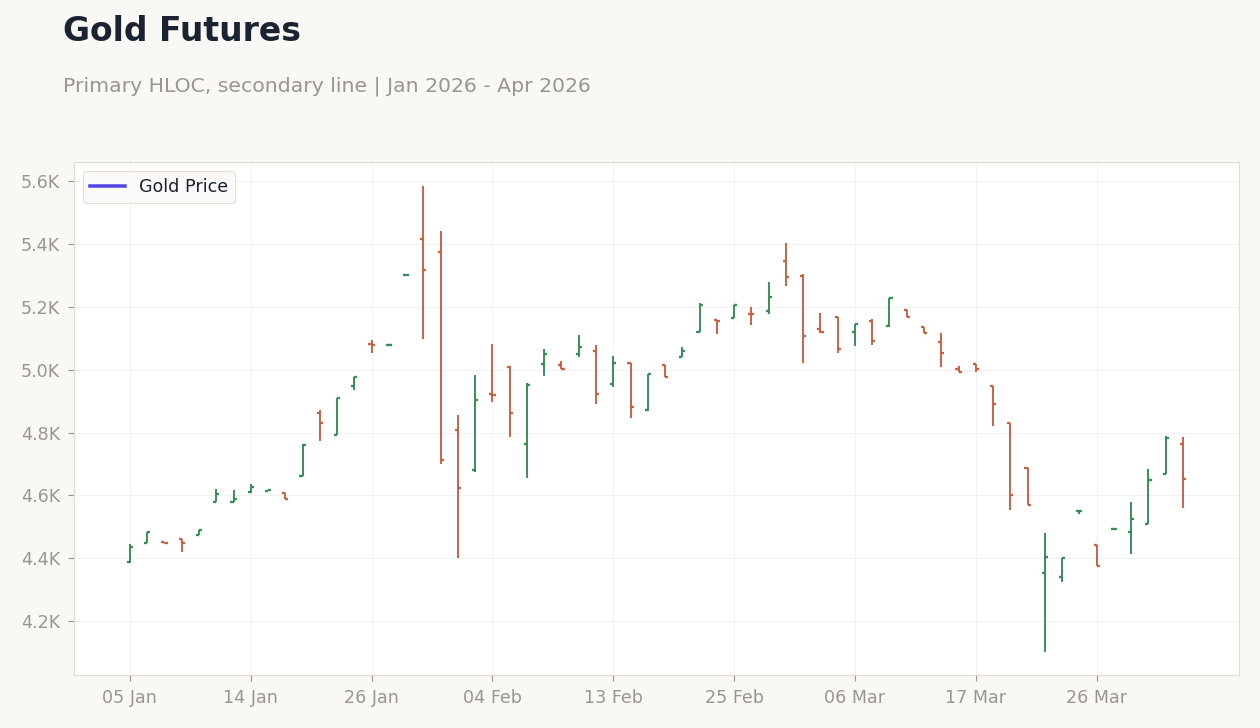
| Gold | 4,651.50 | -2.75% |
| Brent Crude | 109.03 | +7.78% |
| Bitcoin | 66,975.96 | +0.13% |
| Canada 2Y Govt Yield | 2.25% | +0.00% |
| Canada 10Y Govt Yield | 3.29% | -3.35% |
Prior Economic Events
| Data | Prior | Cons | Actual |
|---|---|---|---|
| GDP Month-over-Month | 0.20 | 0 | 0.10 |
| GDP Month-over-Month Prel | 0 | - | 0.20 |
| S&P Global Manufacturing PMI Index | 51 | - | 50 |
| BoC Summary of Deliberations | - | - | "" |
| Trade Balance | -3,650m | -2,300m | -5,740m |
 Canada 10Y Govt Yield | Type: macro_line | 10Y Yield %: 3.288 (2026-02-01) | Range: 1.192–4.062 | Trend(6pt): 1.524,3.043,3.816,3.279,3.402,3.288
Today's Economic Events
| Data | Prior | Cons | Time |
|---|---|---|---|
| No events available | |||
- Canada's trade deficit unexpectedly ballooned to C$5.74 billion in February, driven by surging gold imports amid global uncertainty.
- GDP growth edged up slightly to 0.1% MoM, with preliminary figures at 0.2%, signaling modest economic resilience despite forecasts.
- Manufacturing PMI dipped to 50.0, indicating stagnation, while oil prices surged on geopolitical tensions, boosting energy-linked assets.
Yesterday's Recap
Canada's February trade balance posted a wider-than-expected deficit of C$5.74 billion, missing consensus of C$2.3 billion and worsening from January's C$3.65 billion, primarily due to record gold imports amid safe-haven demand. GDP month-over-month rose 0.1%, beating expectations of flat growth but down from the prior 0.2%, with preliminary data showing a 0.2% uptick. The S&P Global Manufacturing PMI fell to 50.0 from 51.0, reflecting a slowdown in factory activity amid weak external demand.
The Bank of Canada released its Summary of Deliberations, underscoring dovish patience amid geopolitical risks and a weak outlook. Markets reacted with the S&P/TSX climbing 0.46% to 33,108.20, supported by energy stocks as WTI crude jumped 11.41% to $111.54 and Brent rose 7.78% to $109.03. USD/CAD strengthened 0.36% to 1.39 on loonie weakness, while the 10-year government yield dropped 3.35% to 3.29%, signaling dovish bets.
Gold prices fell 2.75% to 4,651.50, bucking broader commodity gains.
The Day Ahead
Thursday brings a quiet calendar for Canadian data, with no major releases scheduled, allowing markets to digest recent trade and GDP figures. Investors will monitor any follow-up commentary from the Bank of Canada's deliberations summary, potentially influencing rate expectations. Attention may shift to global cues, such as U.S.
employment indicators, which could indirectly pressure CAD crosses through trade linkages. Without domestic events, energy prices and geopolitical developments will likely drive TSX and commodity moves. Expect volatility in oil and natural gas if Middle East tensions escalate further.
Overall, the lack of data points to a consolidation day for Canadian assets.
Other Economic Notes
Deloitte Canada slashed its GDP forecast by 20%, citing a 'wobbly' economy amid energy price spikes and persistent headwinds. Inflation eased to 2.32% YoY as of March 2025, driven by falling gasoline prices, providing some relief but not altering the weak growth outlook. (cont...)