Canada Macro Daily(Beta Mode)
Jobs Hold Steady, Oil Surges
Market Snapshot
| Asset | Level | Change |
|---|---|---|
| S&P/TSX | 33,841.09 | +0.43% |
| USD/CAD | 1.38 | -0.20% |
| EUR/CAD | 1.62 | +0.08% |
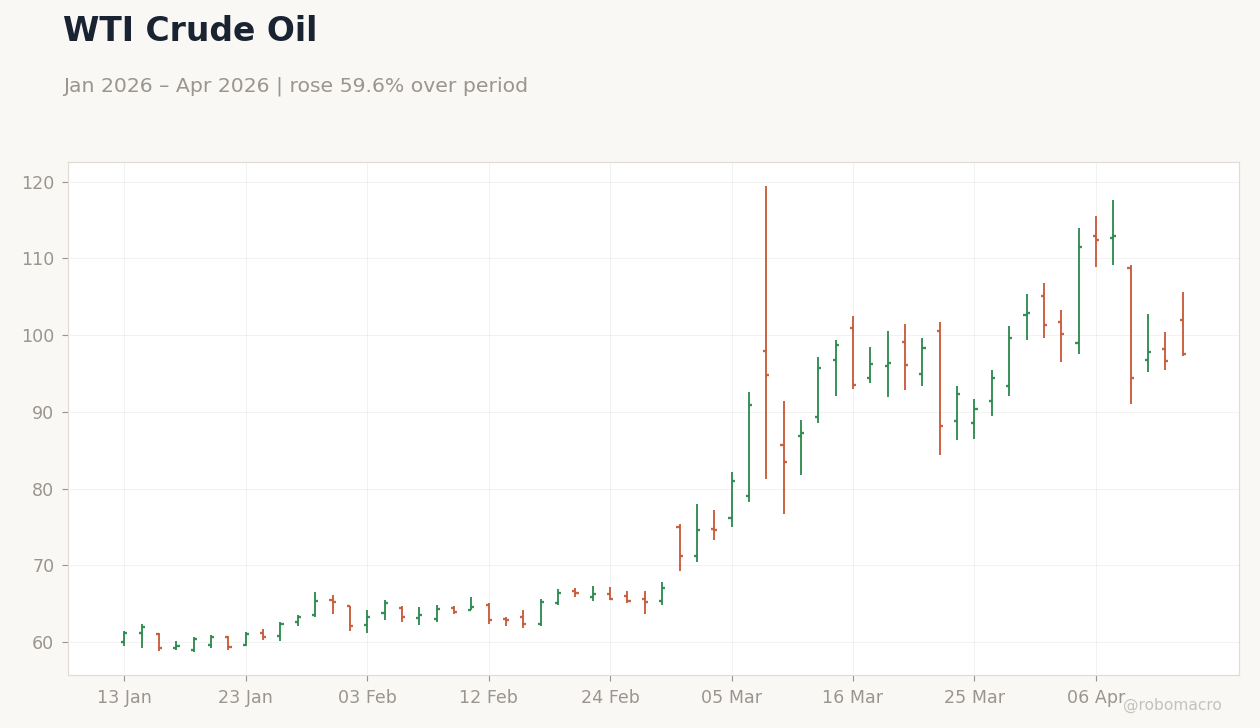
| WTI Crude | 98.34 | +1.83% |
| Natural Gas | 2.63 | -0.68% |
| Gold | 4,758.60 | -0.07% |
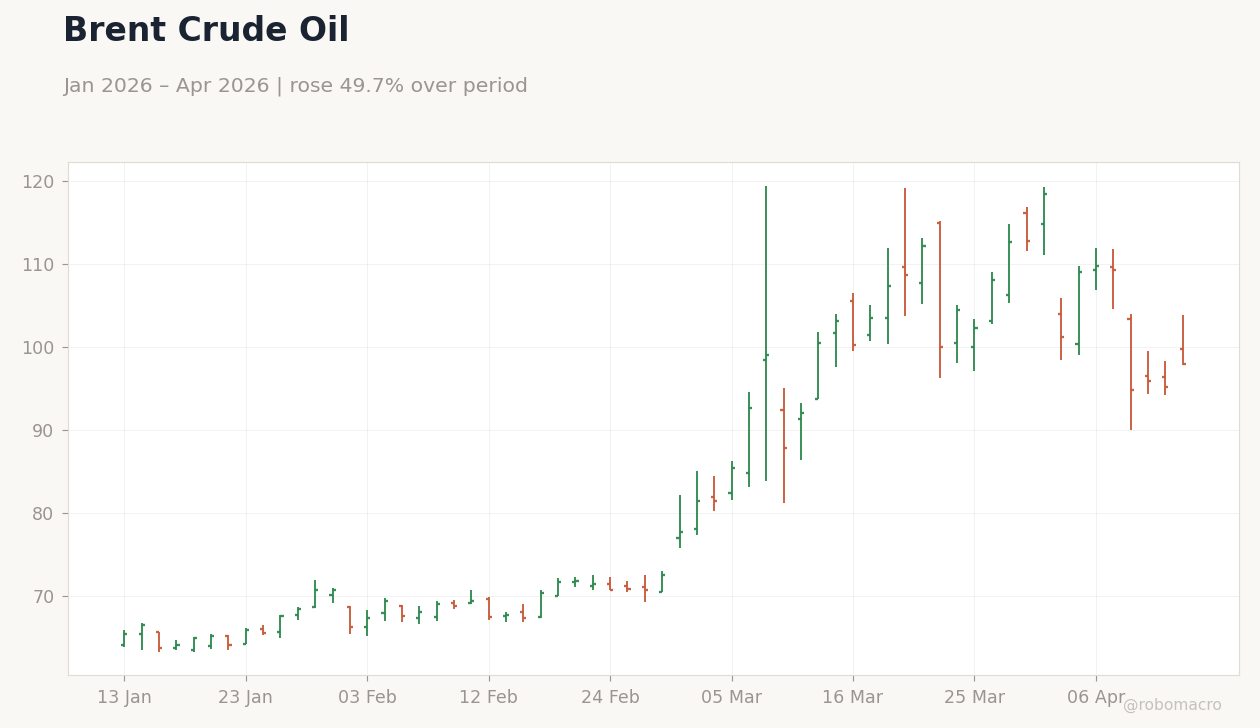
| Brent Crude | 98.83 | +3.81% |
| Bitcoin | 72,453.80 | +2.40% |
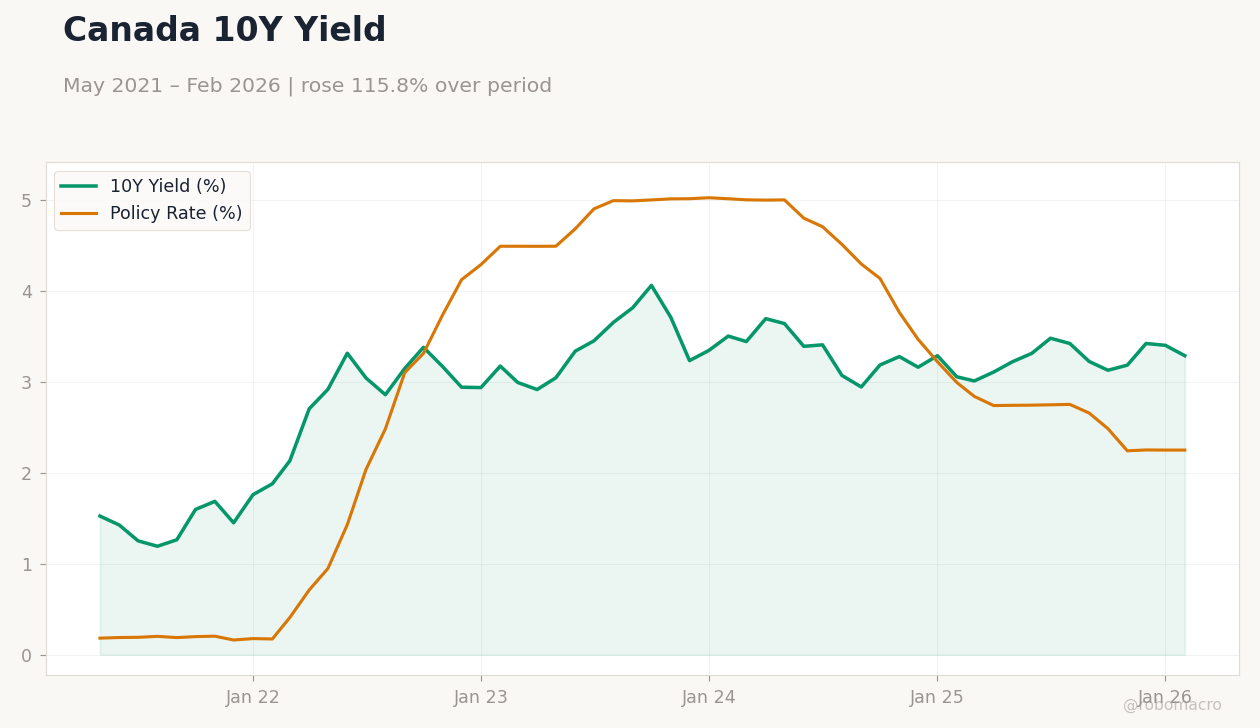
| Canada 2Y Govt Yield | 2.25% | +0.00% |
| Canada 10Y Govt Yield | 3.29% | -3.35% |
Prior Economic Events
| Data | Prior | Cons | Actual |
|---|---|---|---|
| No events available | |||
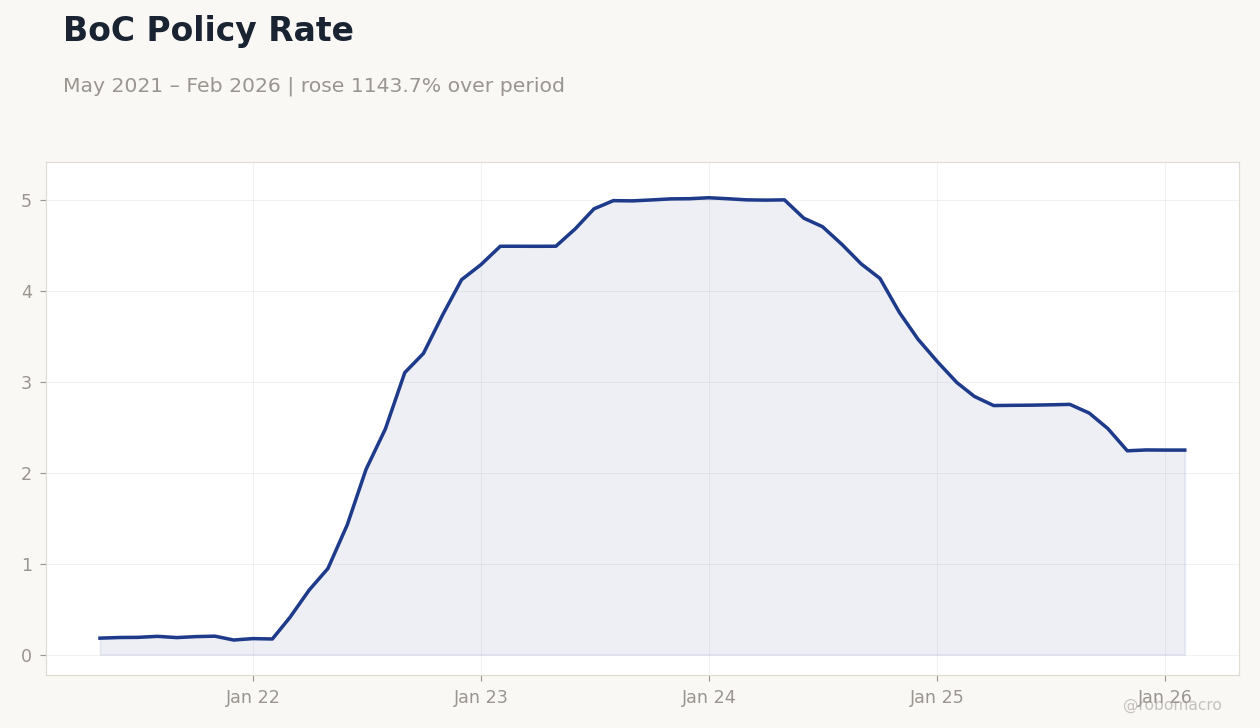 BoC Policy Rate | Type: macro_line | Short-term Rate (%): 2.25 (2026-02-01) | Range: 0.1604–5.026 | Trend(5pt): 0.1809,2.037,4.992,3.765,2.25
Today's Economic Events
| Data | Prior | Cons | Time |
|---|---|---|---|
| No events available | |||
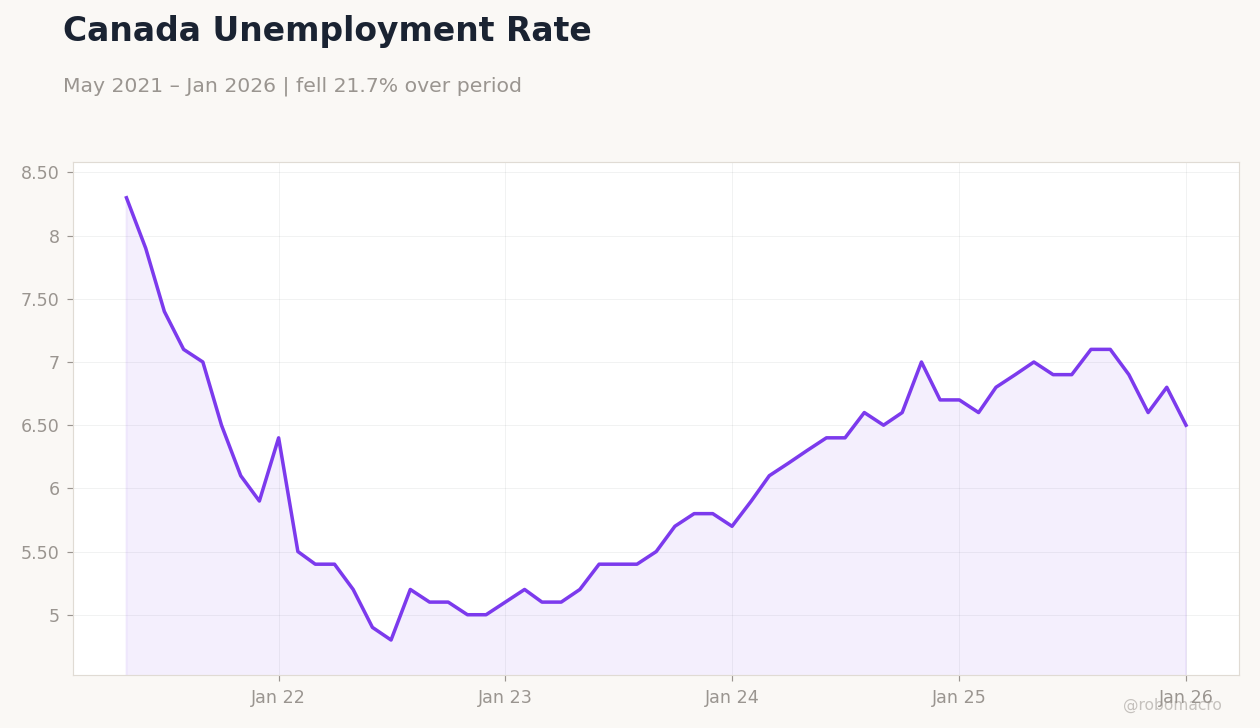
- Canada added 14,000 jobs in March 2026, maintaining unemployment at 6.7% despite softening growth signals.
- Oil prices rallied sharply, with WTI up 1.83% to 98.34 and Brent up 3.81% to 98.83, supporting energy sector sentiment.
- BoC data flags steeper 2026 mortgage renewal risks for retirees, alongside warnings on global debt threats to growth.
Yesterday's Recap
Canadian markets displayed strength, with the S&P/TSX advancing 0.43% to 33,841.09, led by financials amid positive equity momentum. USD/CAD fell 0.20% to 1.38, indicating CAD gains bolstered by rising oil prices, while EUR/CAD rose 0.08% to 1.62. WTI crude increased 1.83% to 98.34 and Brent climbed 3.81% to 98.83, driven by supply concerns, contrasting with natural gas declining 0.68% to 2.63.
Gold slipped 0.07% to 4,758.60, and Bitcoin gained 2.40% to 72,453.80. The Canada 10Y government yield decreased 3.35% to 3.29%, suggesting softer rate outlooks, while the 2Y yield stayed unchanged at 2.25%. Royal Bank of Canada stock rose, outperforming the market despite Canerector Inc.
selling 13,267,800 shares. No key data releases happened, but March 2026 jobs data of 14,000 additions and 6.7% unemployment reinforced labor market resilience.
The Day Ahead
No major Canadian economic events are slated for today, giving markets time to process recent jobs numbers and oil price movements. Focus may shift to any BoC insights on its policy framework review, which could indicate significant adjustments amid global debt issues. Energy commodity trends, including WTI and Brent fluctuations, are expected to impact CAD pairs.
Updates on BoC data regarding 2026 retiree mortgage risks could influence housing market views. Global factors, such as U.S. inflation developments, might indirectly affect Canadian yields and stocks.
Other Economic Notes
Key concerns include escalating global debt as a major risk to Canadian expansion, according to BoC assessments, which could strain fiscal strategies amid GDP slowdowns. BoC data points to heightened 2026 renewal challenges for retirees, calling for adapted approaches to ease financial pressures. Sectors like housing and consumer spending contend with high rates, though stable employment offers some protection against recessionary pressures.
Global Macro News
Oil prices strengthened, with WTI at 98.34 and Brent at 98.83, enhancing Canada's export position but stoking inflation worries worldwide. (cont...)