Emerging Europe Macro Daily(Beta Mode)
NBP Cuts Rates, Turkish GDP Misses
Market Snapshot
| Asset | Level | Change |
|---|---|---|
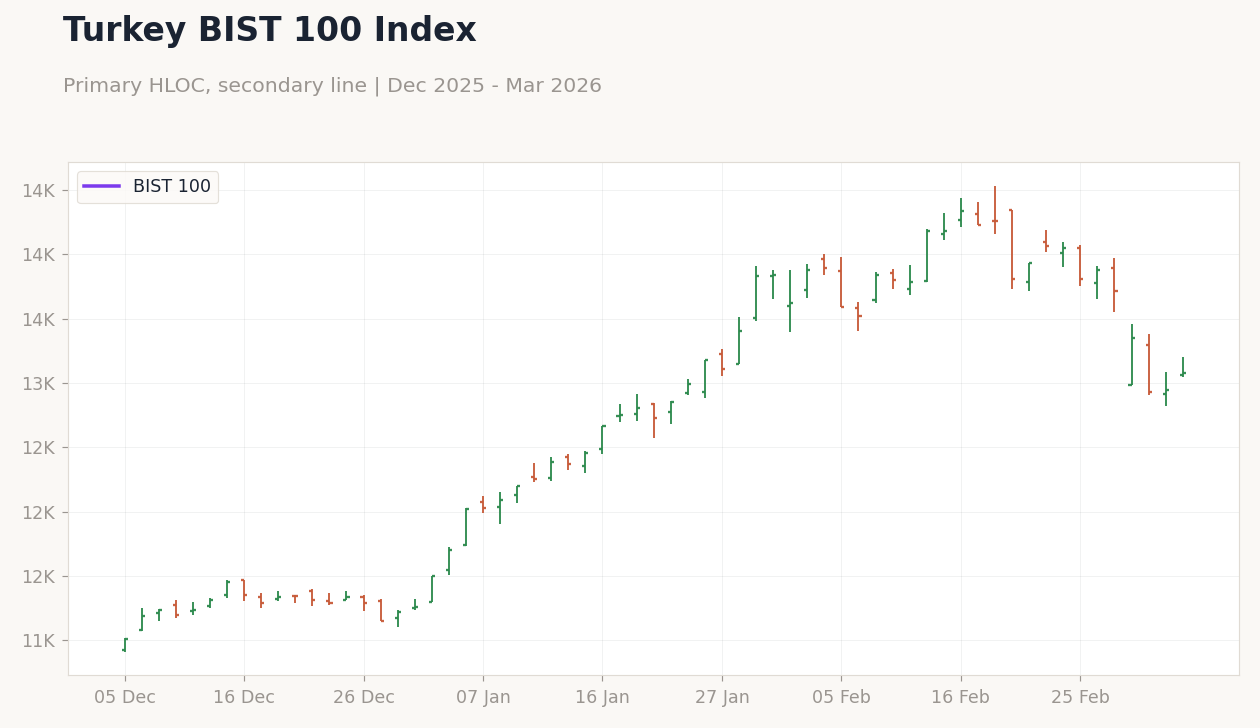
| BIST 100 | 13,078.93 | +1.05% |
| iShares Poland | 36.21 | +1.91% |
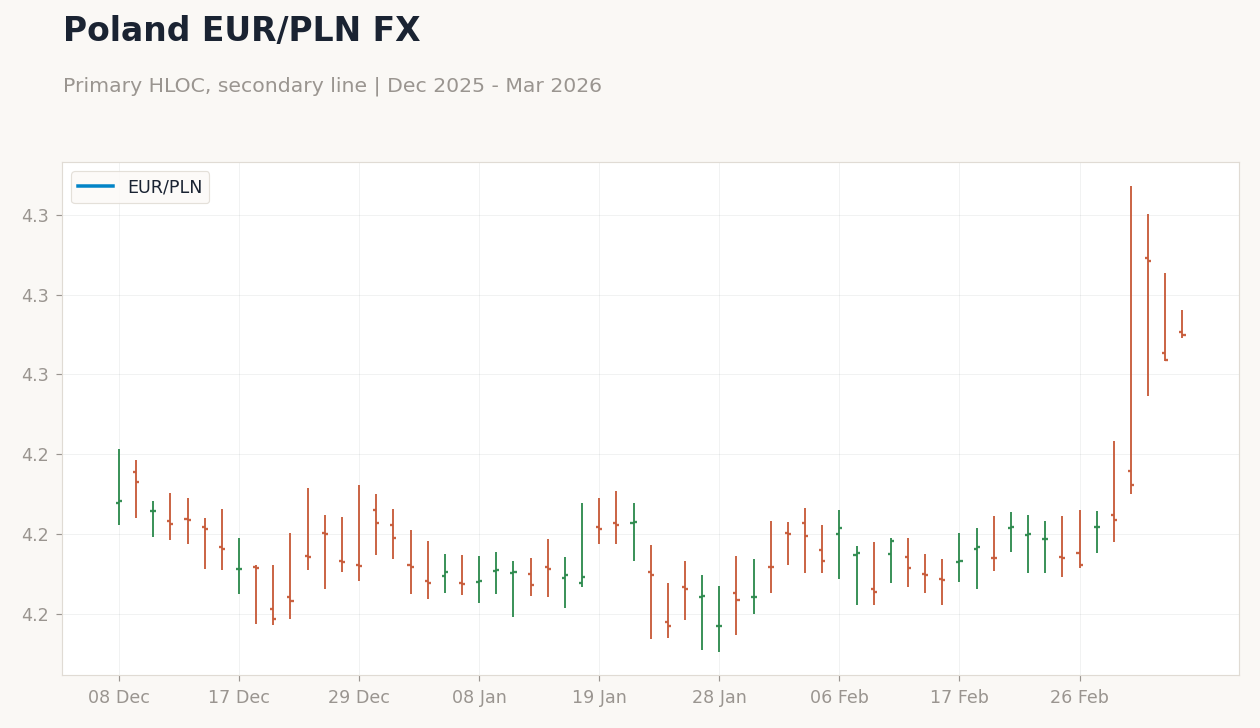
| EUR/PLN | 4.27 | +0.15% |
| EUR/HUF | 386.86 | +0.79% |
| EUR/CZK | 24.37 | +0.17% |
| USD/TRY | 44.06 | +0.28% |
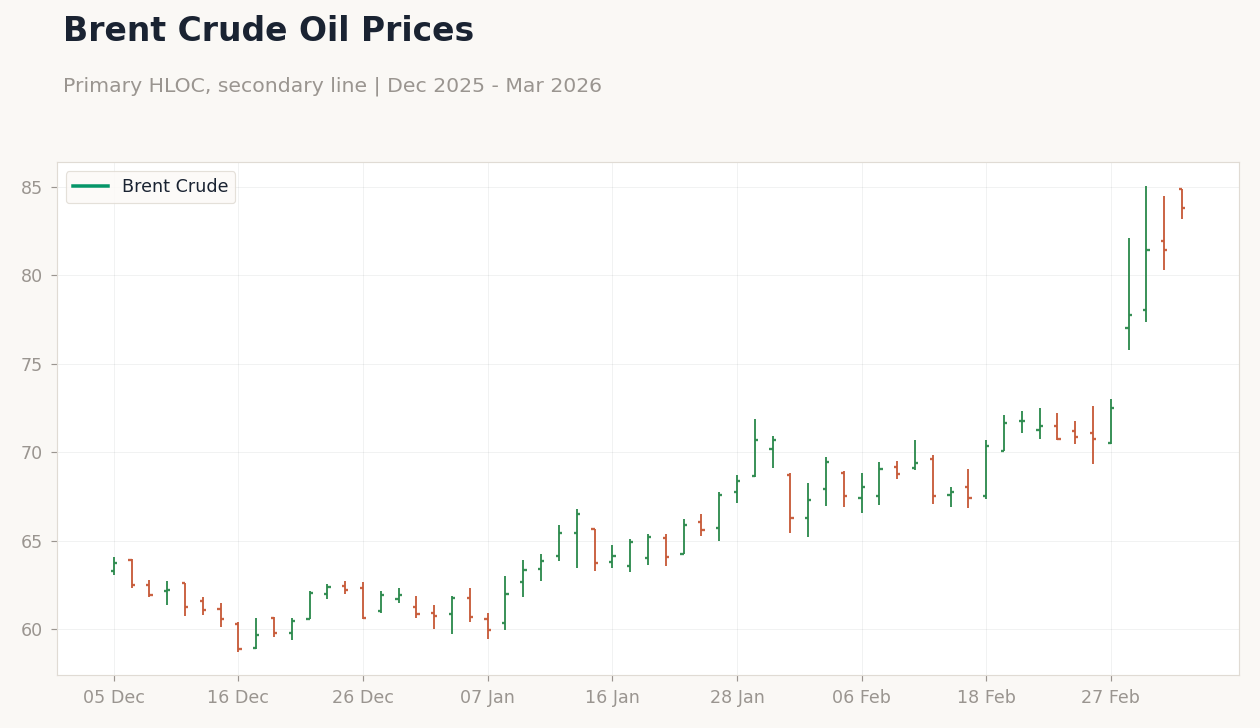
| Brent Crude | 83.33 | +2.37% |
| Gold | 5,082.80 | -0.73% |
| Bitcoin | 70,895.43 | -2.50% |
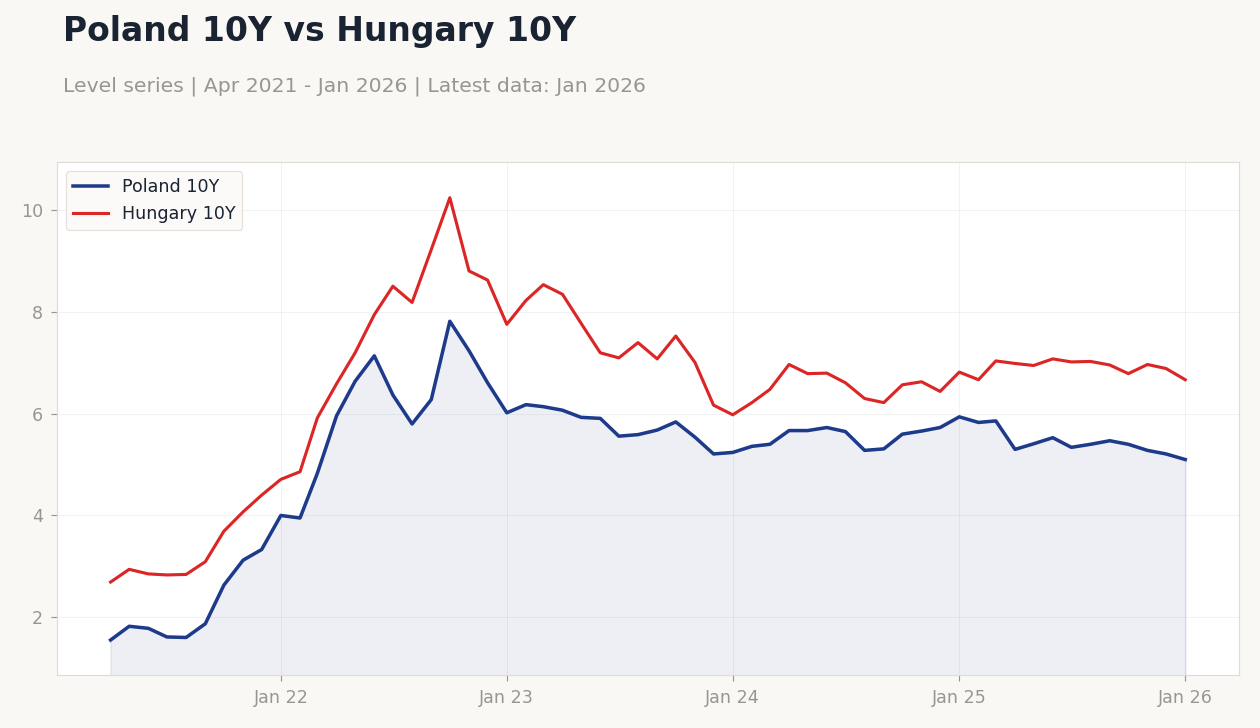
| Poland 10Y Govt Yield | 5.10% | -2.11% |
| Hungary 10Y Govt Yield | 6.67% | -3.19% |
Prior Economic Events
| Data | Prior | Cons | Actual |
|---|---|---|---|
| GDP Growth Quarter-over-Quarter | 1 | - | 0.40 |
| GDP Growth Year-over-Year | 3.80 | 3.50 | 3.40 |
| Inflation Rate Month-over-Month | 4.84 | 3 | 2.96 |
| Inflation Rate Year-over-Year | 30.65 | 31.55 | 31.53 |
| Balance of Trade Prel | -8,400m | - | -9,200m |
| Central Bank Interest Rate Decision | 4 | 3.75 | 3.75 |
Today's Economic Events
| Data | Prior | Cons | Time |
|---|---|---|---|
| No events available | |||
- Poland's NBP cut rates to 3.75% as expected, amid zloty resilience despite dovish concerns.
- Turkey's Q4 GDP softened to 0.4% QoQ and 3.4% YoY, missing estimates, with inflation at 2.96% MoM.
- Markets mixed: BIST 100 up 1.05%, Polish assets gain, forint weakens on regional risks.
Yesterday's Recap
Turkey's economic data drew focus with Q4 GDP missing estimates at 0.4% QoQ versus previous 1.0% and 3.4% YoY against consensus 3.5%, indicating slowing growth amid high inflation and tight monetary policy. February inflation eased to 2.96% MoM, slightly below the 3.0% forecast, with YoY at 31.53% near the 31.55% expectation, showing ongoing price pressures. The preliminary trade balance widened to -9.2 billion USD from -8.4 billion, highlighting export strains.
Poland's NBP cut its interest rate to 3.75% from 4.00% as consensus anticipated, supporting market sentiment. The BIST 100 rose 1.05% to 13,078.93, buoyed by energy gains despite GDP weakness. iShares Poland ETF advanced 1.91% to 36.21 on rate cut optimism.
EUR/PLN rose 0.15% to 4.27, indicating slight zloty weakening, while EUR/HUF increased 0.79% to 386.86, pressuring the forint amid Middle East tensions. EUR/CZK edged up 0.17% to 24.37. USD/TRY climbed 0.28% to 44.06.
Bond yields declined, with Poland's 10Y down 2.11% to 5.10% and Hungary's down 3.19% to 6.67%, reflecting easing expectations.
The Day Ahead
No major economic releases are scheduled today in Emerging Europe, shifting attention to global factors like oil price swings from Iran tensions. Markets may monitor ECB signals for spillover to CNB and MNB policies. Turkey's CBRT could face pressure on lira stability.
EU fund flows might impact Polish and Hungarian assets amid convergence discussions. Romania's fiscal updates remain possible, though no events are set. A light calendar could favor carry trades in Czech and Hungarian currencies.
Other Economic Notes
Emerging Europe's reliance on energy imports heightens vulnerability, as Brent crude rose 2.37% to 83.33, increasing costs for net importers like Poland and Hungary. EU cohesion funds aid economic alignment, but Hungary's disputes hinder access, straining budgets. Turkey's high inflation and geopolitical exposure contrast with CEE peers pursuing euro adoption.
Global Macro News
Escalating US-Israel-Iran tensions pressured risk assets, lifting Brent crude 2.37% to 83.33 and raising energy costs for import-dependent Emerging Europe. (cont...)