Emerging Europe Macro Daily(Beta Mode)
Polish Data Boosts Zloty, Stocks Rally
Market Snapshot
| Asset | Level | Change |
|---|---|---|
| BIST 100 | 13,217.60 | +2.01% |
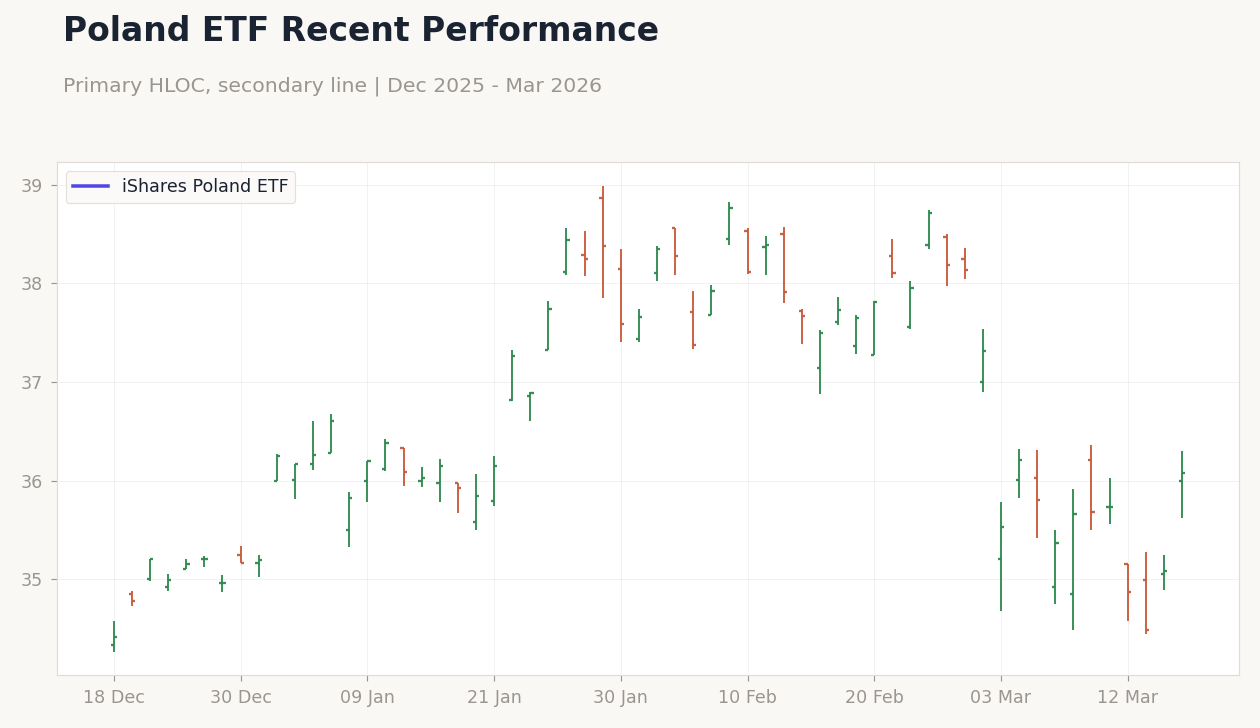
| iShares Poland | 36.08 | +2.85% |
| EUR/PLN | 4.26 | -0.01% |
| EUR/HUF | 388.13 | -0.55% |
| EUR/CZK | 24.43 | -0.00% |
| USD/TRY | 44.21 | +0.06% |
| Brent Crude | 100.92 | -2.42% |
| Gold | 4,989.20 | -0.24% |
| Bitcoin | 74,284.07 | -0.77% |
| Poland 10Y Govt Yield | 4.99% | -2.16% |
| Hungary 10Y Govt Yield | 6.48% | -2.85% |
Prior Economic Events
| Data | Prior | Cons | Actual |
|---|---|---|---|
| No events available | |||
 Poland 10Y Yield vs Policy Rate | Type: macro_line | Poland 10Y Yield (%): 4.99 (2026-02-01) | Range: 1.55–7.82 | Trend(6pt): 1.55,7.14,5.59,5.6,5.21,4.99
Today's Economic Events
| Data | Prior | Cons | Time |
|---|---|---|---|
| Consumer Confidence Index | 85.70 | - | 03:00 |
| Business Confidence Index | 104.10 | - | 03:00 |
| Headline Unemployment Rate | 6 | - | 05:00 |
- Polish core inflation below expectations and a positive current account balance strengthened the zloty, lifting local equities amid broader regional gains.
- Turkish stocks advanced strongly, while Hungarian bond yields fell, highlighting varied risk sentiments in Emerging Europe.
- Ongoing global inflation and geopolitical risks pressured commodities, affecting energy-reliant regional economies.
Yesterday's Recap
Emerging Europe markets delivered strong performances on March 17, bolstered by Poland's lower-than-expected core inflation and a surprisingly positive current account balance, which supported the zloty as EUR/PLN eased -0.01% to 4.26. The iShares Poland ETF advanced +2.85% to 36.08, reflecting investor confidence in the region's key economy, now ranked among the world's top 20 following its post-communist transformation. Turkey's BIST 100 rose +2.01% to 13,217.60, driven by export sectors despite lira strains, with USD/TRY ticking up +0.06% to 44.21.
Hungary's EUR/HUF declined -0.55% to 388.13, contributing to a -2.85% drop in 10Y government yields to 6.48%, though tensions with Poland over the Friendship pipeline introduced forint volatility. The Czech koruna remained stable with EUR/CZK flat at -0.00% to 24.43. Romania experienced subdued activity without major data, supported by ongoing EU fund inflows for convergence.
Bond markets in Poland and Hungary rallied, with 10Y yields decreasing -2.16% to 4.99% and -2.85% to 6.48% respectively, indicating reduced monetary pressures despite a quiet regional calendar.
The Day Ahead
Focus shifts to Turkey's Consumer Confidence Index at 03:00 ET, gauging sentiment amid elevated inflation after a previous 85.7 reading. Turkey's Business Confidence Index is next at 03:00 ET, with the prior 104.1 suggesting manufacturing resilience despite lira issues. Poland's Headline Unemployment Rate releases at 05:00 ET, assessing labor market strength following the previous 6% figure, key for NBP decisions on euro convergence.
No significant events are scheduled for the Czech Republic, Hungary, or Romania, directing attention to these indicators. Markets may react to global developments, including Fed updates, with potential FX fluctuations after the data.
Other Economic Notes
Poland's emergence as a top-20 global economy, evolving from rationing basics like sugar to wages nearing Western levels, demonstrates effective EU integration and trade growth, though domestic conflicts between pro-EU Prime Minister Tusk and pro-MAGA President Nawrocki could strain EU ties. (cont...)