Emerging Europe Macro Daily(Beta Mode)
Turkish Trade Improves, Polish CPI Rises
Market Snapshot
| Asset | Level | Change |
|---|---|---|
| BIST 100 | 12,791.00 | +1.30% |
| iShares Poland | 36.41 | +5.11% |
| EUR/PLN | 4.29 | +0.00% |
| EUR/HUF | 383.71 | -1.07% |
| EUR/CZK | 24.53 | -0.01% |
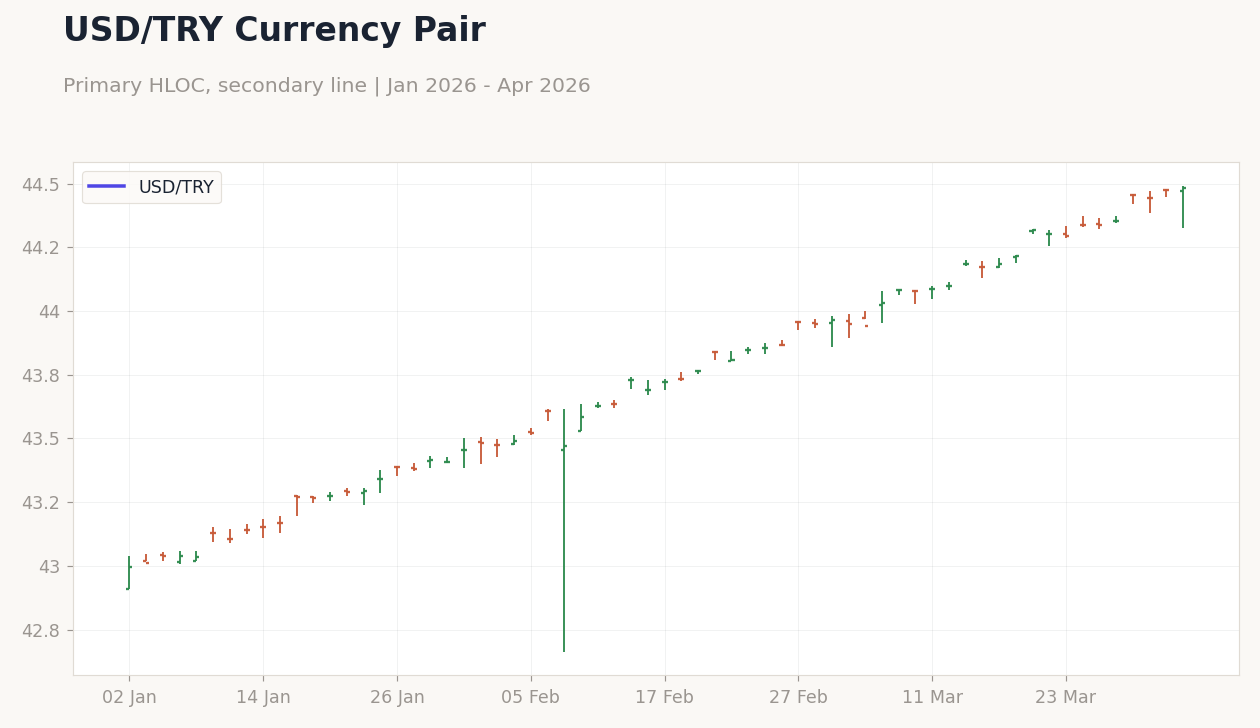
| USD/TRY | 44.48 | +0.02% |
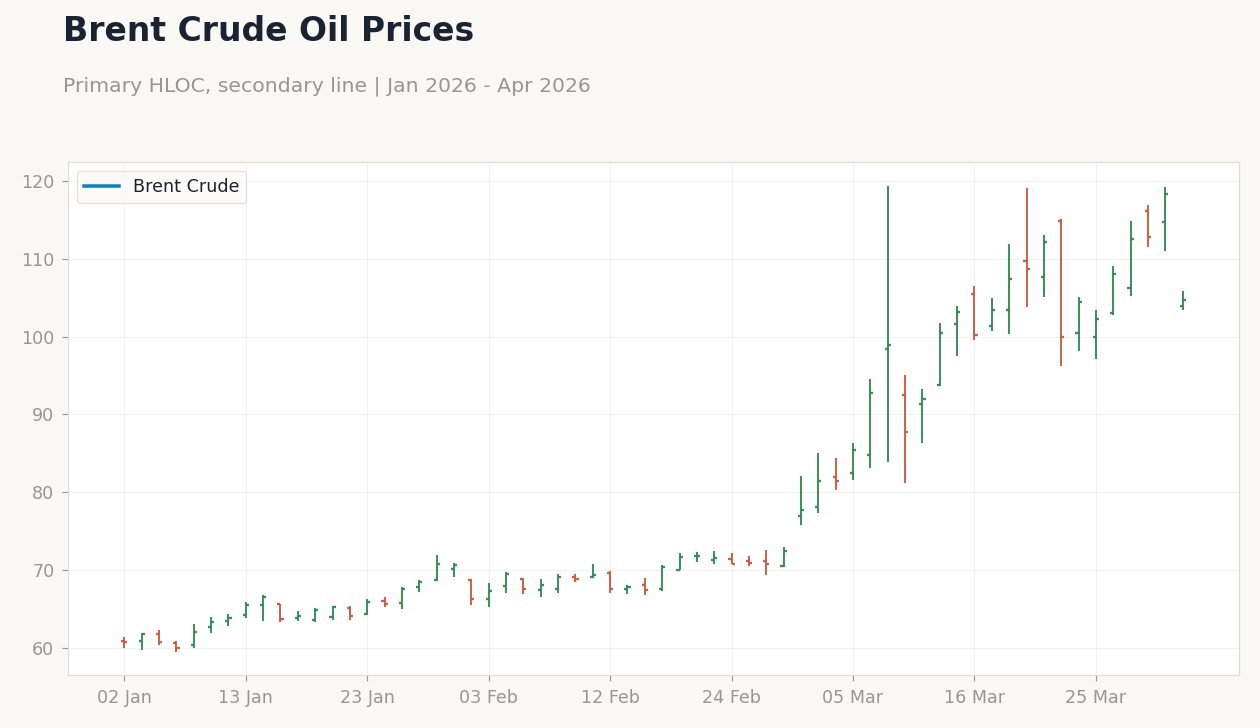
| Brent Crude | 104.69 | -11.54% |
| Gold | 4,703.50 | +1.20% |
| Bitcoin | 68,180.29 | +2.23% |
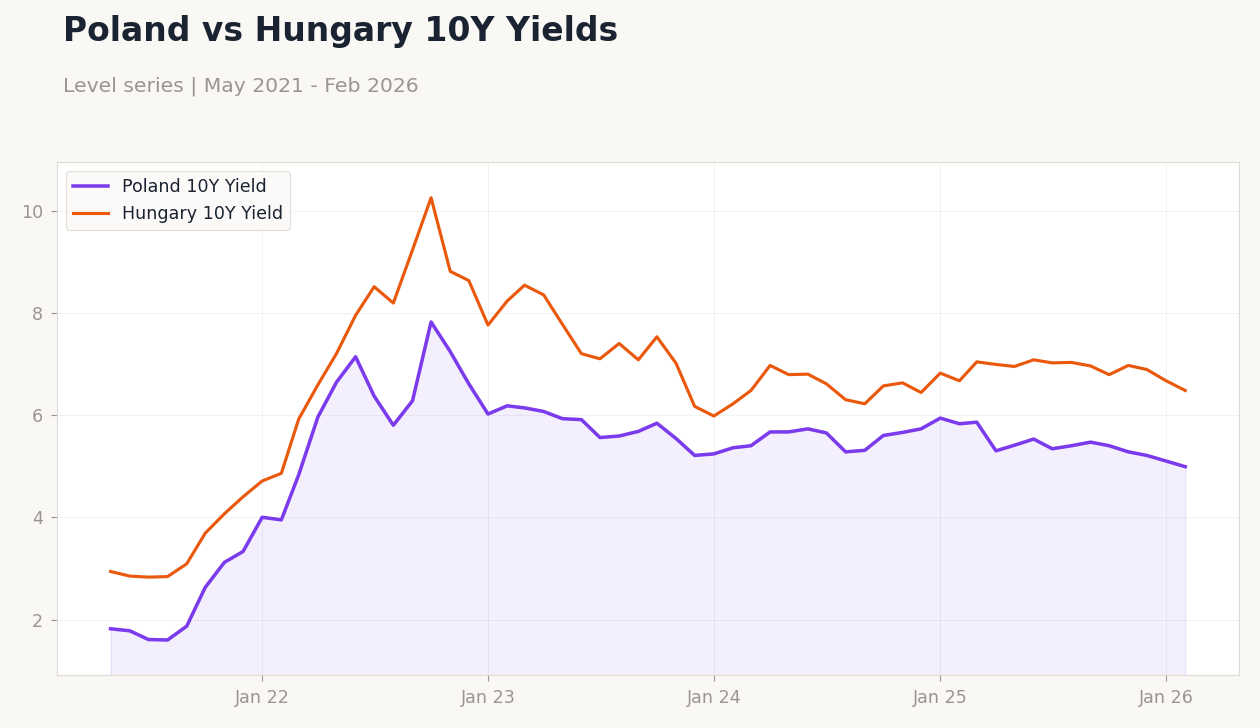
| Poland 10Y Govt Yield | 4.99% | -2.16% |
| Hungary 10Y Govt Yield | 6.48% | -2.85% |
Prior Economic Events
| Data | Prior | Cons | Actual |
|---|---|---|---|
| Balance of Trade Final | -8,400m | -9,200m | -9,000m |
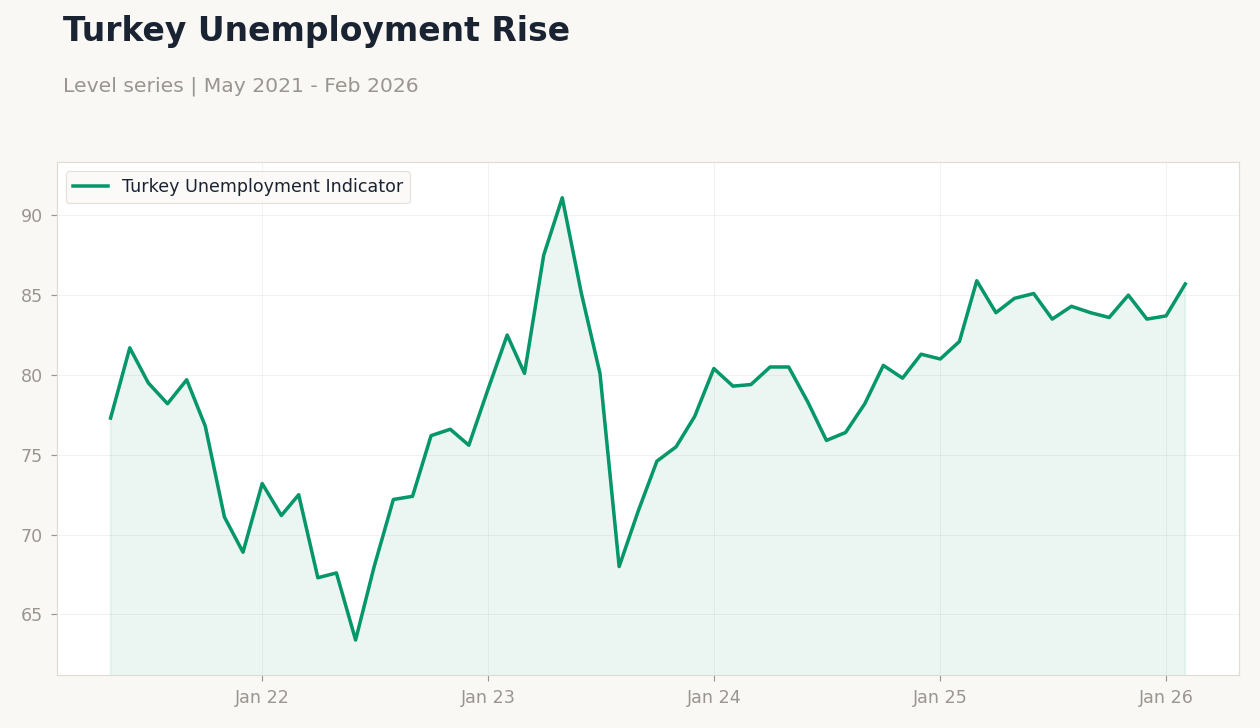
| Headline Unemployment Rate | 8.10 | - | 8.50 |
| Inflation Rate Year-over-Year Preliminary | 2.40 | - | 3 |
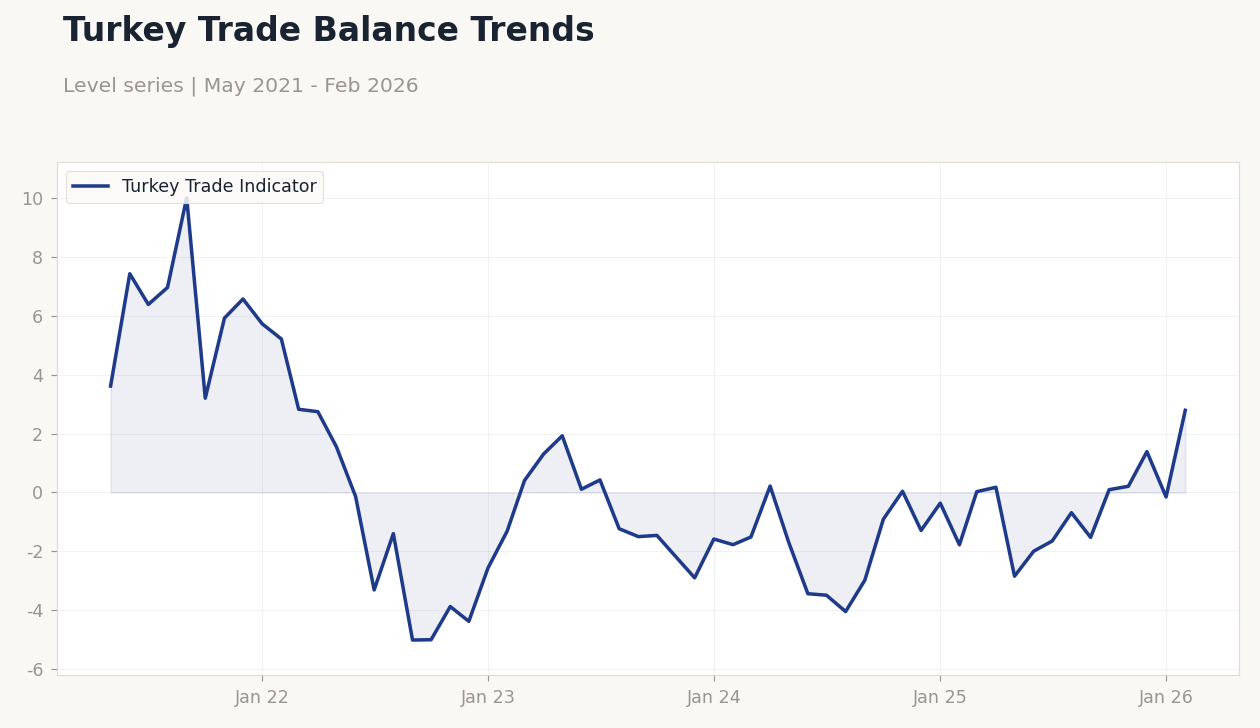 Turkey Trade Balance Trends | Type: macro_line | Turkey Trade Indicator: 2.796 (2026-02-01) | Range: -5.017–10.03 | Trend(6pt): 3.62,-3.314,-1.501,0.04282,-0.1515,2.796
Today's Economic Events
| Data | Prior | Cons | Time |
|---|---|---|---|
| Inflation Rate Month-over-Month | 2.96 | - | 23:00 |
| Inflation Rate Year-over-Year | 31.53 | - | 23:00 |
- Turkey's February trade deficit narrowed to -$9B, beating expectations, with unemployment up to 8.5%; Poland's preliminary March inflation climbed to 3% YoY.
- Regional markets advanced, led by BIST 100 +1.3% and iShares Poland +5.11%, supported by declining bond yields in Poland and Hungary.
- Geopolitical tensions from Iran conflict pressured sentiment, with Brent crude falling 11.54% amid oversupply concerns.
Yesterday's Recap
Turkey's final February balance of trade showed a deficit of -$9 billion, better than the consensus -$9.2 billion and previous -$8.4 billion, indicating some export strength despite lira challenges. The headline unemployment rate increased to 8.5% from 8.1%, pointing to labor market strains amid persistent inflation. Poland's preliminary March inflation accelerated to 3% year-over-year from 2.4%, influenced by rising energy and food prices, which may postpone rate cuts by the National Bank of Poland (NBP).
Regional equities performed well, with Turkey's BIST 100 rising 1.3% to 12,791 on positive trade news, and iShares Poland ETF advancing 5.11% to 36.41, as inflation data did not disrupt growth outlooks. Currencies showed limited movement: EUR/PLN unchanged at 4.29, USD/TRY up 0.02% to 44.48, and EUR/HUF down 1.07% to 383.71 with forint gains tied to lower yields. Bond markets eased, with Poland's 10-year yield dropping 2.16% to 4.99% and Hungary's falling 2.85% to 6.48%, reflecting regional resilience despite global caution.
No significant releases from Czech Republic, Hungary, or Romania shifted attention to Turkey and Poland as primary influences.
The Day Ahead
Turkey's March inflation figures are slated for release tomorrow, with month-over-month data following the prior 2.96% and year-over-year potentially topping the previous 31.53%, challenging the central bank's tight policy. Consensus estimates are unavailable, but pressures from wages and currency weakness remain key. No other Emerging Europe data is on the calendar, shifting focus to geopolitical developments in the Iran conflict.
Markets may monitor ECB-related signals for implications on Czech National Bank (CNB) and Hungarian National Bank (MNB) strategies. EU discussions, including Hungary's reported Russia connections, could introduce volatility to forint and zloty. A relatively light schedule emphasizes global oil trends affecting energy-reliant economies like Poland and Czech Republic.
Other Economic Notes
Emerging Europe displays varied trends, with Poland's inflation rise contrasting Turkey's elevated levels, highlighting advantages for EU members in policy alignment. Energy reliance poses risks for importers such as Hungary and Romania, particularly with volatile Brent prices. Recent progress on EU funds for Poland may enhance fiscal health and progress toward euro criteria, aiding regional stability.