Emerging Europe Macro Daily(Beta Mode)
Turkey Deficit Narrows, Poland CPI Rises
Market Snapshot
| Asset | Level | Change |
|---|---|---|
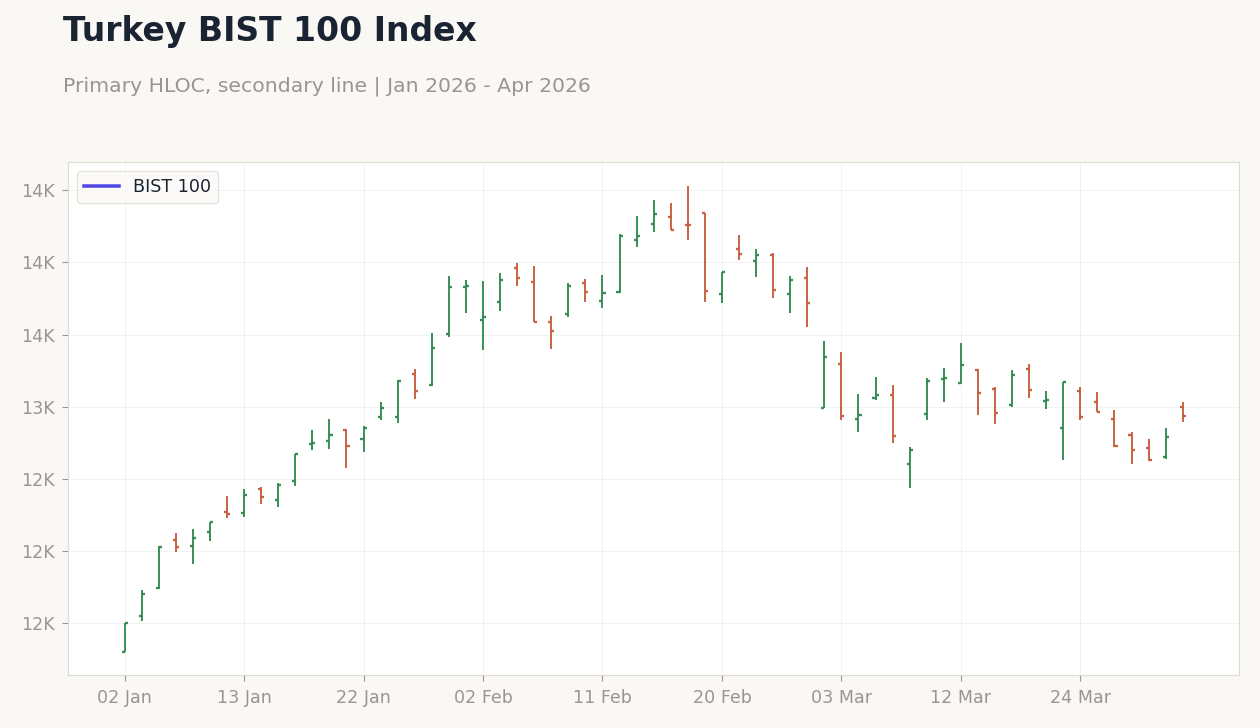
| BIST 100 | 12,937.90 | +1.15% |
| iShares Poland | 36.41 | +5.11% |
| EUR/PLN | 4.29 | +0.15% |
| EUR/HUF | 385.06 | +0.60% |
| EUR/CZK | 24.52 | -0.04% |
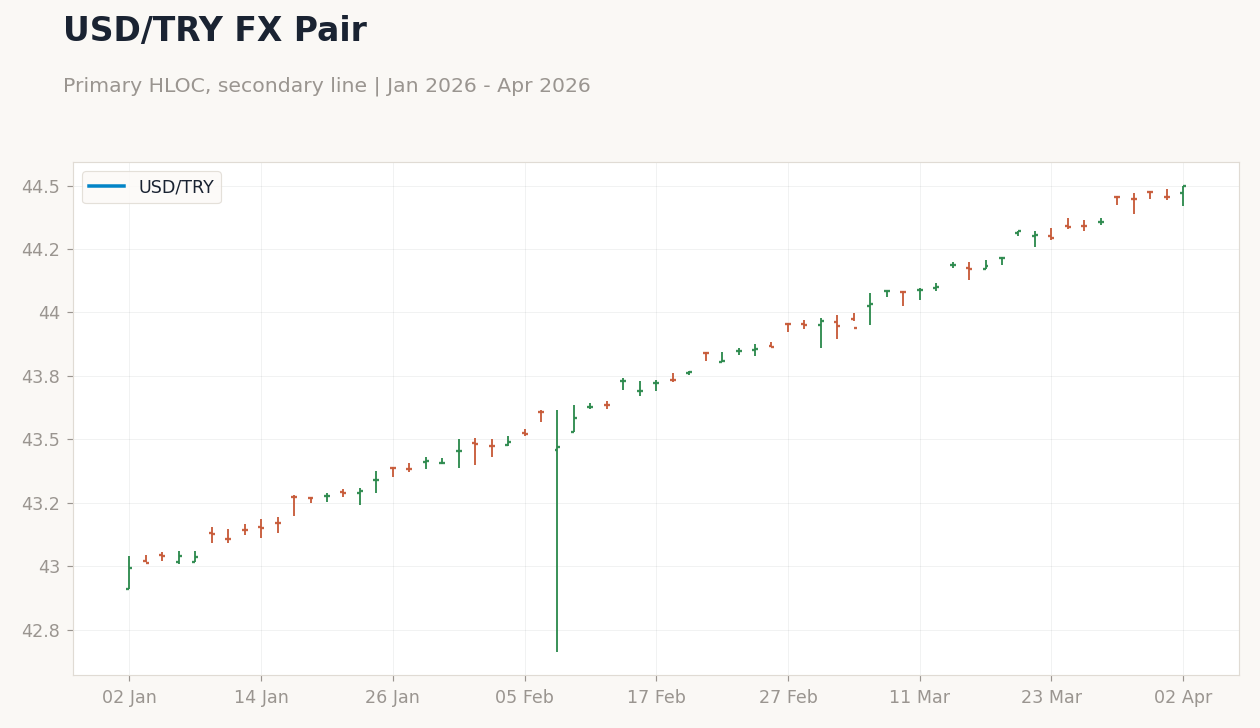
| USD/TRY | 44.48 | +0.06% |
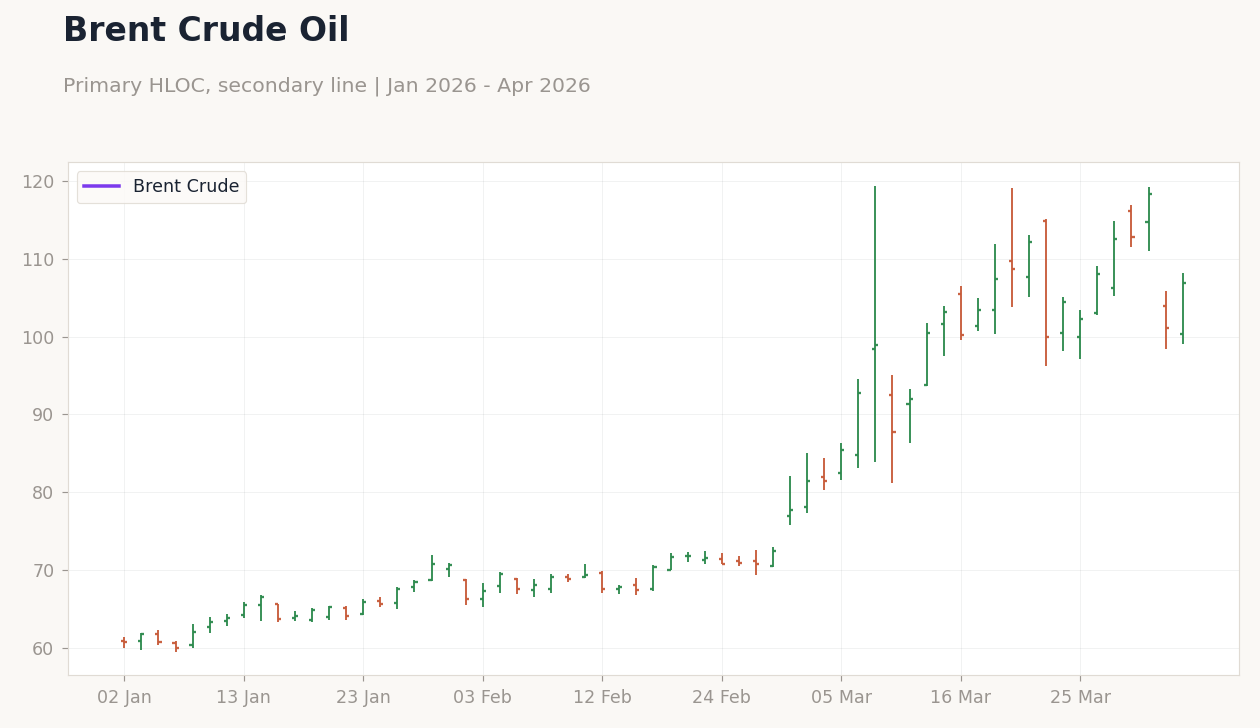
| Brent Crude | 107.02 | +5.79% |
| Gold | 4,697.20 | -1.80% |
| Bitcoin | 66,368.56 | -2.73% |
| Poland 10Y Govt Yield | 4.99% | -2.16% |
| Hungary 10Y Govt Yield | 6.48% | -2.85% |
Prior Economic Events
| Data | Prior | Cons | Actual |
|---|---|---|---|
| Balance of Trade Final | -8,400m | -9,200m | -9,000m |
| Headline Unemployment Rate | 8.10 | - | 8.50 |
| Inflation Rate Year-over-Year Preliminary | 2.40 | - | 3 |
 Turkey Core Inflation | Type: macro_line | Turkey Core CPI % MoM: 2.796 (2026-02-01) | Range: -5.017–10.03 | Trend(6pt): 3.62,-3.314,-1.501,0.04282,-0.1515,2.796
Today's Economic Events
| Data | Prior | Cons | Time |
|---|---|---|---|
| Inflation Rate Month-over-Month | 2.96 | - | 23:00 |
| Inflation Rate Year-over-Year | 31.53 | - | 23:00 |
| Friday (2026-04-03) | |||
| Inflation Rate Month-over-Month | 2.96 | - | 23:00 |
| Inflation Rate Year-over-Year | 31.53 | - | 23:00 |
- Turkey's February trade deficit narrowed to -$9bn, beating consensus but widening from prior, with unemployment rising to 8.5%, underscoring labor strains amid inflation.
- Poland's preliminary March inflation climbed to 3% YoY, up from 2.4%, likely prompting NBP caution on policy easing.
- Regional markets advanced, led by iShares MSCI Poland ETF up 5.11% and Turkey's BIST 100 gaining 1.15%, amid easing yields and global optimism.
Yesterday's Recap
Turkey's February trade balance final reading showed a deficit of -$9bn, narrower than the consensus -$9.2bn but wider than the previous -$8.4bn, indicating some export strength despite elevated imports from energy prices. In Turkey, headline unemployment rose to 8.5% from 8.1%, reflecting weaker job growth in a persistent high-inflation setting that tests CBRT effectiveness. Poland's preliminary March inflation hit 3% YoY, accelerating from February's 2.4%, fueled by food and energy costs, which may postpone NBP rate cuts in Central Europe's biggest economy.
Regional stocks rose, with Turkey's BIST 100 up 1.15% to 12,937.90 and iShares MSCI Poland ETF surging 5.11% to 36.41, aided by declining bond yields. Currency shifts were limited: EUR/PLN rose 0.15% to 4.29, EUR/HUF increased 0.60% to 385.06, EUR/CZK fell 0.04% to 24.52, and USD/TRY edged up 0.06% to 44.48. Hungary's 10Y yield dropped 2.85% to 6.48%, and Poland's fell 2.16% to 4.99%, suggesting bets on policy alignment with ECB.
Hungary and Czech Republic had no key data, but Hungary's opposition rise with Peter Magyar adds political nuance. Romania saw no major releases, yet EU funds support its growth amid regional energy risks.
The Day Ahead
Turkey releases March inflation data today, with prior MoM at 2.96% and YoY at 31.53%; no consensus available, but elevated figures could heighten lira pressures and push back CBRT easing. Tomorrow features similar Turkish inflation metrics, offering consecutive views on price trends. The calendar is otherwise light for Emerging Europe, directing attention to global factors like US economic indicators.
Geopolitical tensions in the Middle East may influence energy prices, affecting import-heavy nations such as Poland and Hungary. ECB signals could resonate, given CNB and MNB's policy ties.
Other Economic Notes
Emerging Europe grapples with energy vulnerabilities from Middle East strife, raising costs for net importers like Poland and Czech Republic, while Turkey's transit role provides partial offsets. EU funds are vital for Romania and Poland's infrastructure and sustainability goals, though administrative hurdles could limit uptake. Hungary pursues fiscal discipline toward euro criteria, contrasting Turkey's challenges with deficits and non-EU geopolitics.
(cont...)