Emerging Europe Macro Daily(Beta Mode)
Turkish Trade Improves, Polish CPI Rises
Market Snapshot
| Asset | Level | Change |
|---|---|---|
| BIST 100 | 13,051.70 | +0.88% |
| iShares Poland | 36.41 | +5.11% |
| EUR/PLN | 4.28 | -0.09% |
| EUR/HUF | 384.01 | +0.30% |
| EUR/CZK | 24.49 | -0.05% |
| USD/TRY | 44.55 | +0.14% |
| Brent Crude | 109.03 | +7.78% |
| Gold | 4,651.50 | -2.75% |
| Bitcoin | 66,629.90 | -2.13% |
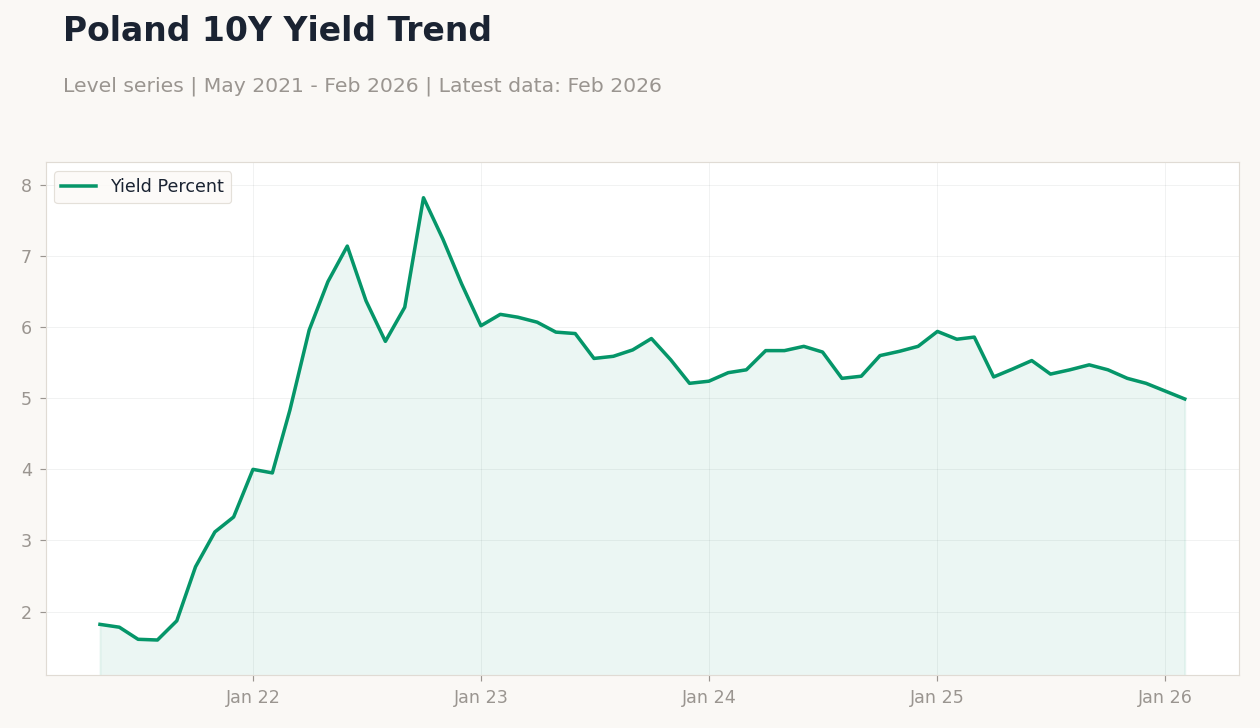
| Poland 10Y Govt Yield | 4.99% | -2.16% |
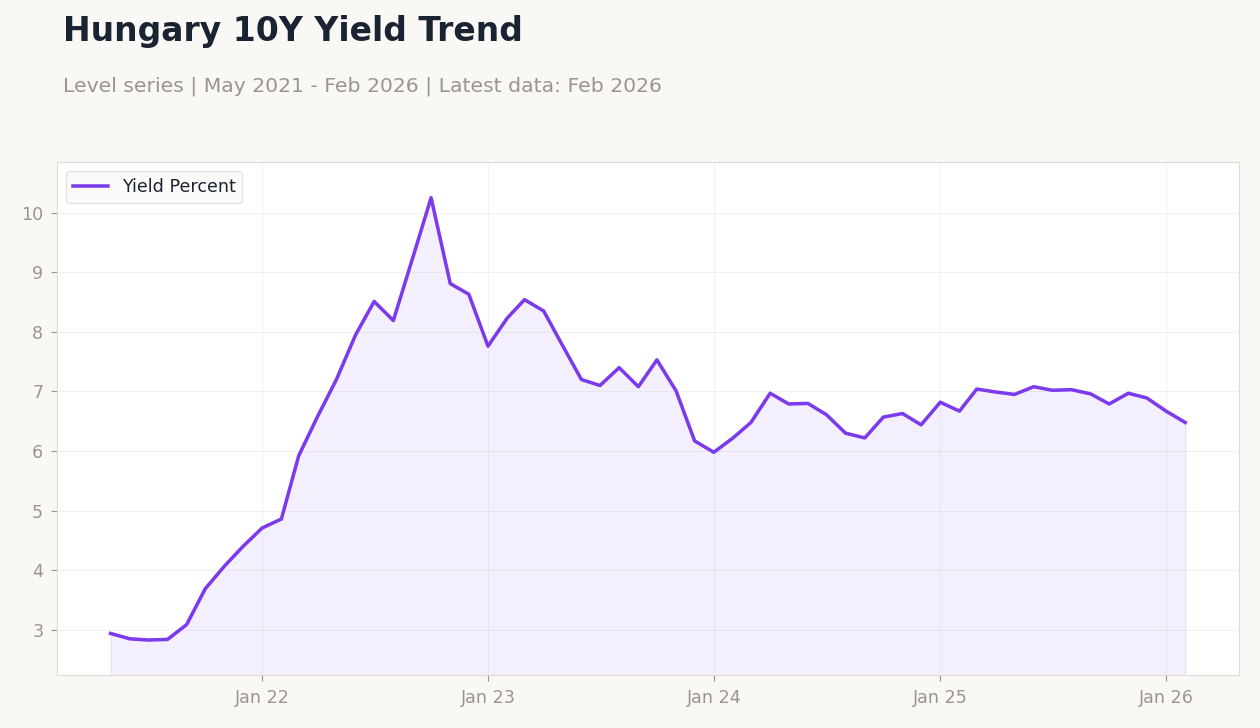
| Hungary 10Y Govt Yield | 6.48% | -2.85% |
Prior Economic Events
| Data | Prior | Cons | Actual |
|---|---|---|---|
| Balance of Trade Final | -8,400m | -9,200m | -9,000m |
| Headline Unemployment Rate | 8.10 | - | 8.50 |
| Inflation Rate Year-over-Year Preliminary | 2.40 | - | 3 |
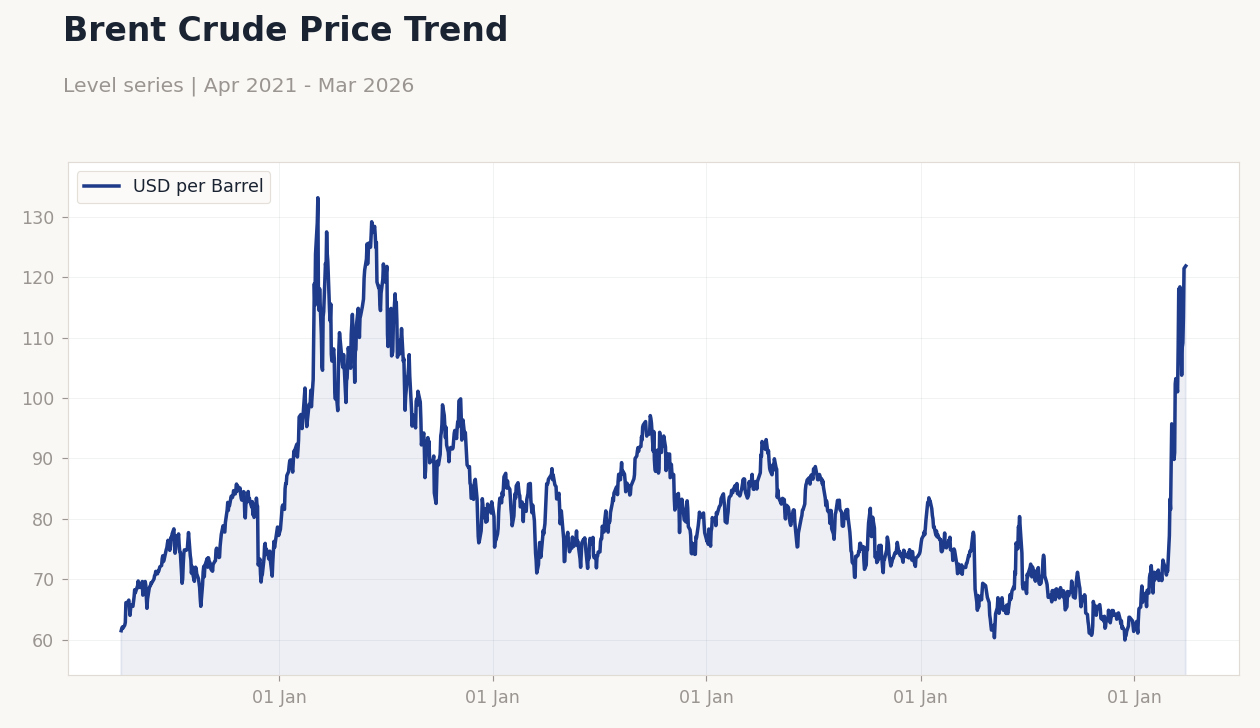 Brent Crude Price Trend | Type: macro_line | USD per Barrel: 121.9 (2026-03-30) | Range: 59.93–133.2 | Trend(5pt): 61.47,121.8,94.46,74.58,121.9
Today's Economic Events
| Data | Prior | Cons | Time |
|---|---|---|---|
| Inflation Rate Month-over-Month | 2.96 | 2.32 | 23:00 |
| Inflation Rate Year-over-Year | 31.53 | 31.40 | 23:00 |
- Turkey's Feb trade deficit narrowed to -$9bn vs -$9.2bn consensus, unemployment up to 8.5%; Poland's prelim Mar CPI hit 3% YoY from 2.4%.
- Markets mixed: BIST 100 +0.88%, iShares Poland +5.11%; CEE FX stable, EUR/PLN -0.09%.
- Global pressures: Brent +7.78% on tensions, weighing on energy importers in Emerging Europe.
Yesterday's Recap
Turkey's February trade balance finalized at -$9bn, better than the -$9.2bn consensus and improving from January's -$8.4bn, supported by export strength despite lira fluctuations, though unemployment rose to 8.5% from 8.1%, indicating labor market weakness amid elevated inflation. In Poland, preliminary March inflation increased to 3% YoY from 2.4%, reflecting ongoing services costs, which contributed to a 5.11% gain in iShares Poland ETF amid expectations of NBP policy continuity. Hungarian assets posted modest advances with EUR/HUF up 0.3% to 384.01 and 10Y yields down 2.85% to 6.48%, supported by discussions on economic revival potentially linked to government changes.
Czech markets remained stable, with EUR/CZK down 0.05% to 24.49. Overall, Turkey's BIST 100 rose 0.88% to 13,051.70, bucking broader EM caution, as Poland's equity exposure outperformed on local data. Turkey's USD/TRY increased 0.14% to 44.55, highlighting CBRT's ongoing currency stabilization challenges.
The Day Ahead
Turkey's March inflation data leads today's agenda, with consensus for 2.32% MoM and 31.4% YoY, possibly moderating from February's 31.53% if energy costs ease, though sticky services inflation may heighten CBRT alertness. No significant releases from Poland, Czech Republic, Hungary, or Romania, directing attention to Turkish numbers amid commodity swings. Markets will monitor CBRT hints on FX support if TRY softens after the data.
Emerging Europe mood could track ECB remarks, considering CNB and MNB's policy ties. Tomorrow has no major events, turning focus to next week's PMI and wage figures in the region.
Other Economic Notes
Poland's copper and silver resources position it as a vital EU provider of "metals of the future," enhancing growth prospects in the energy transition, though PM Tusk warned that global events may align with Putin's strategies, risking supply disruptions. Hungary's growth framework seems fatigued, with revival possibly requiring political shifts, as EU funds stay blocked over rule-of-law issues, limiting fiscal options. Turkey contends with Middle East conflicts escalating energy import expenses and inflation transmission, while Romania's expanding fiscal gap tests BNR's stability goals.