Emerging Europe Macro Daily(Beta Mode)
CEE Yields Fall, Polish Stocks Rally
Market Snapshot
| Asset | Level | Change |
|---|---|---|
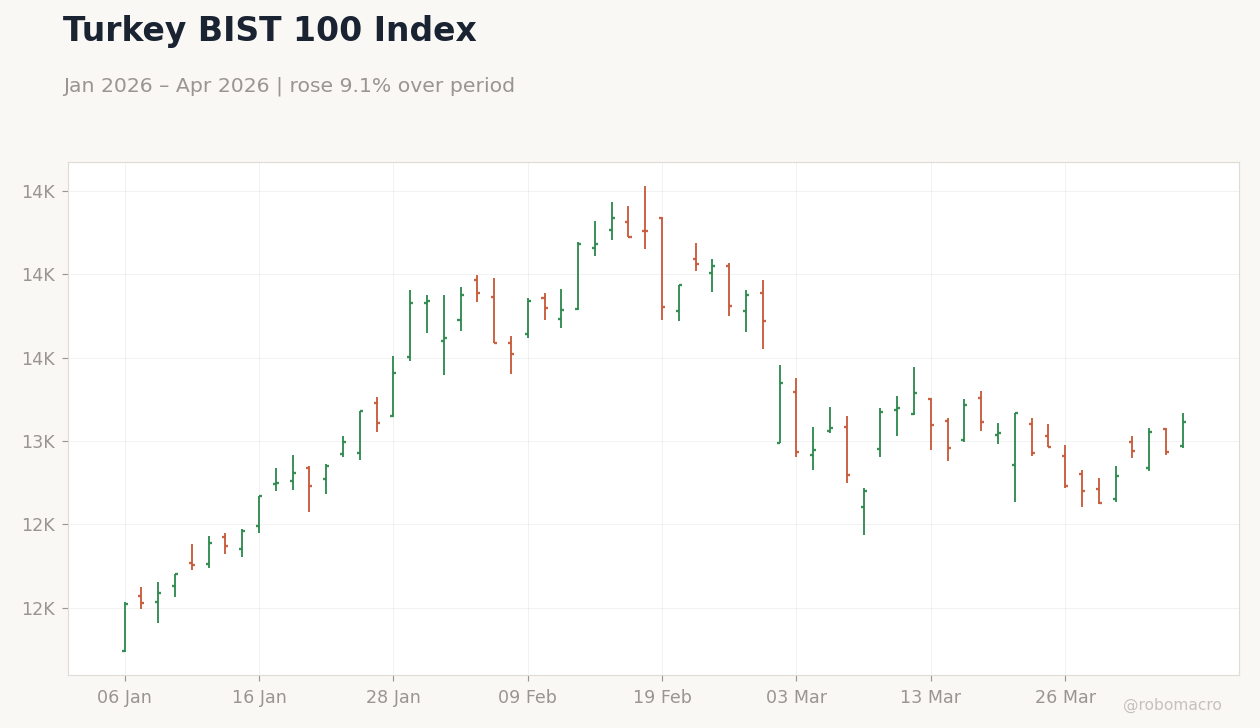
| BIST 100 | 13,112.30 | +1.36% |
| iShares Poland | 36.41 | +5.11% |
| EUR/PLN | 4.27 | -0.16% |
| EUR/HUF | 381.76 | -0.49% |
| EUR/CZK | 24.52 | +0.07% |
| USD/TRY | 44.61 | +0.05% |
| Brent Crude | 111.02 | +1.14% |
| Gold | 4,686.20 | +0.63% |
| Bitcoin | 68,811.20 | -0.25% |
| Poland 10Y Govt Yield | 4.99% | -2.16% |
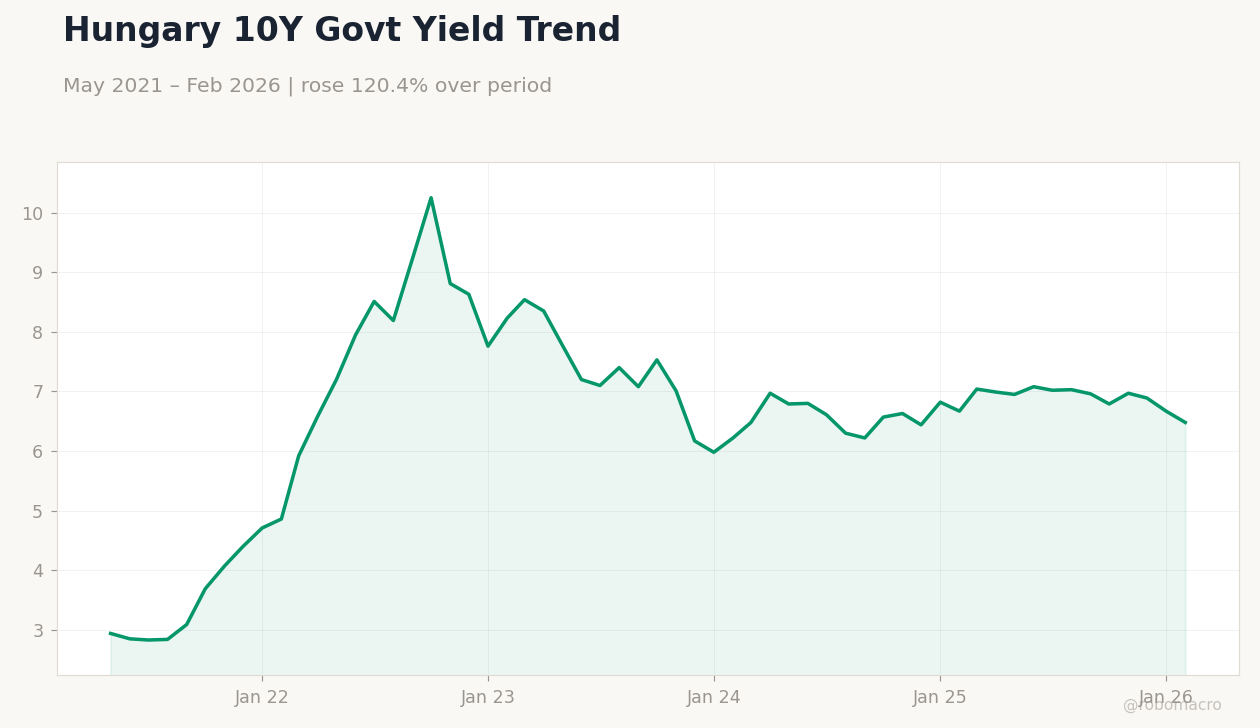
| Hungary 10Y Govt Yield | 6.48% | -2.85% |
Prior Economic Events
| Data | Prior | Cons | Actual |
|---|---|---|---|
| No events available | |||
 Poland 10Y Govt Yield Trend | Type: macro_line | Poland 10Y Yield (%): 4.99 (2026-02-01) | Range: 1.6–7.82 | Trend(6pt): 1.82,6.37,5.68,5.66,5.1,4.99
Today's Economic Events
| Data | Prior | Cons | Time |
|---|---|---|---|
| Industrial Production Year-over-Year | -1.80 | - | 23:00 |
- Polish hourly labor costs rose to 19.1 euros in 2025 from 17.3 euros in 2024, per Eurostat, highlighting wage pressures in EU convergence.
- Emerging Europe bond yields declined, with Poland's 10Y at 4.99% (down 2.16%) and Hungary's at 6.48% (down 2.85%).
- Turkey's BIST 100 advanced 1.36%, while PLN and HUF appreciated against EUR amid regional resilience.
Yesterday's Recap
Emerging European markets displayed strength with varied equity results, as Poland's iShares ETF jumped 5.11% to 36.41 driven by upbeat wage growth figures. Turkey's BIST 100 index rose 1.36% to 13,112.30, supported by rising commodity prices despite persistent inflation worries. Bond markets strengthened, with Poland's 10Y government yield decreasing 2.16% to 4.99% and Hungary's dropping 2.85% to 6.48%, indicating investor confidence in steady central bank approaches.
Currency fluctuations were limited, with EUR/PLN falling 0.16% to 4.27 due to zloty firmness linked to NBP reserve discussions, while EUR/HUF decreased 0.49% to 381.76 reflecting forint appreciation. EUR/CZK increased slightly by 0.07% to 24.52, indicating koruna steadiness, and USD/TRY edged up 0.05% to 44.61. No significant data releases happened, but headlines featured Poland's labor costs climbing to 19.1 euros/hour from 17.3 in 2024, according to Eurostat, emphasizing competitive dynamics compared to Europe.
Additional notes included Hungary's political developments involving Orbán, which could affect EU funding inflows.
The Day Ahead
Focus shifts to Turkey's industrial production year-over-year figures, set for release at 23:00 ET on April 9, carrying medium impact with a previous reading of -1.8%. No consensus is available, but an improvement might indicate manufacturing revival despite elevated inflation. No further Emerging Europe events are planned for today or tomorrow, directing attention to global influences like oil movements.
Traders will watch FX fluctuations, especially in TRY, considering CBRT's operational limits. Wider market mood could depend on ECB-linked statements influencing CNB and MNB strategies. In summary, a light schedule emphasizes real-time market responses.
Other Economic Notes
Poland's wage trends underscore EU integration hurdles, where increasing labor costs may fuel inflation yet boost spending in CEE's biggest economy. Energy exposures persist as a risk, with Brent crude increasing 1.14% to 111.02, aiding Turkey's import costs but threatening inflation spillover in the region. Political uncertainties, like critiques of Hungary's Orbán, could postpone EU funds vital for fiscal health in Romania and Poland.