Emerging Europe Macro Daily(Beta Mode)
Polish Growth Outlook Lifts Sentiment
Market Snapshot
| Asset | Level | Change |
|---|---|---|
| BIST 100 | 14,252.40 | +0.35% |
| iShares Poland | 40.48 | +0.60% |
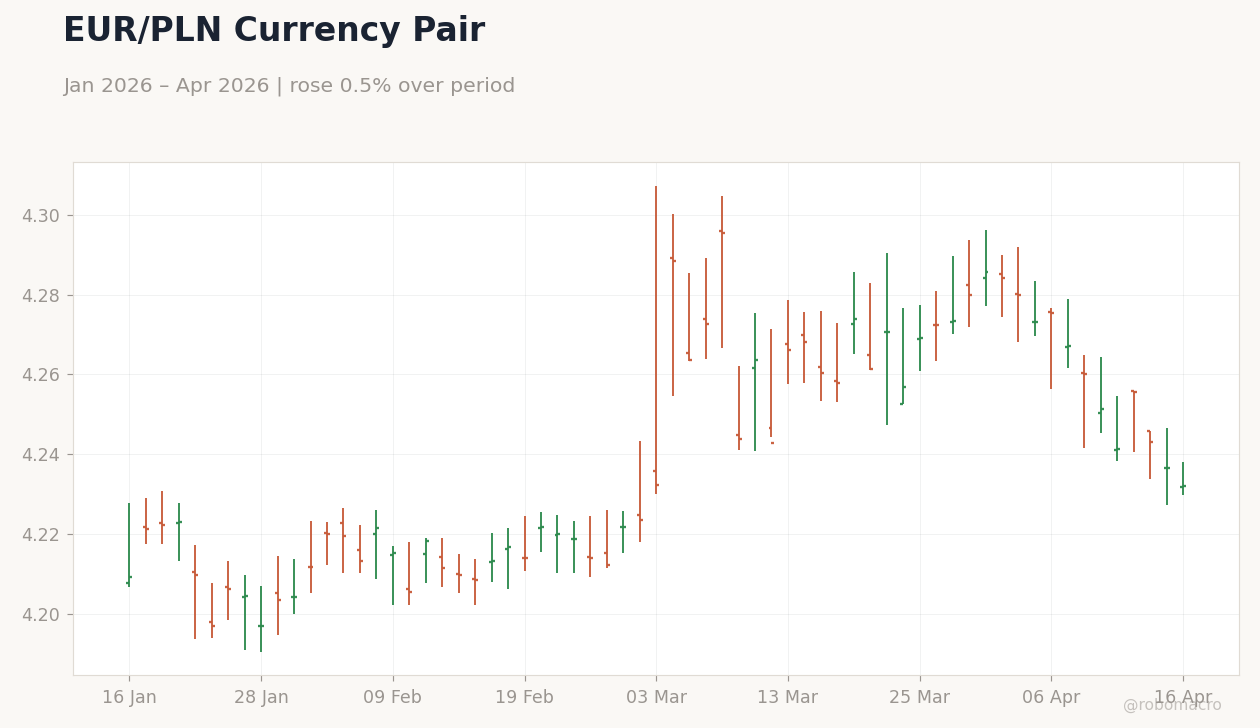
| EUR/PLN | 4.23 | -0.12% |
| EUR/HUF | 363.37 | +0.42% |
| EUR/CZK | 24.33 | +0.04% |
| USD/TRY | 44.76 | +0.07% |
| Brent Crude | 94.99 | +0.06% |
| Gold | 4,847.60 | +0.99% |
| Bitcoin | 74,995.09 | +0.25% |
| Poland 10Y Govt Yield | 5.58% | +11.82% |
| Hungary 10Y Govt Yield | 7.13% | +10.03% |
Prior Economic Events
| Data | Prior | Cons | Actual |
|---|---|---|---|
| No events available | |||
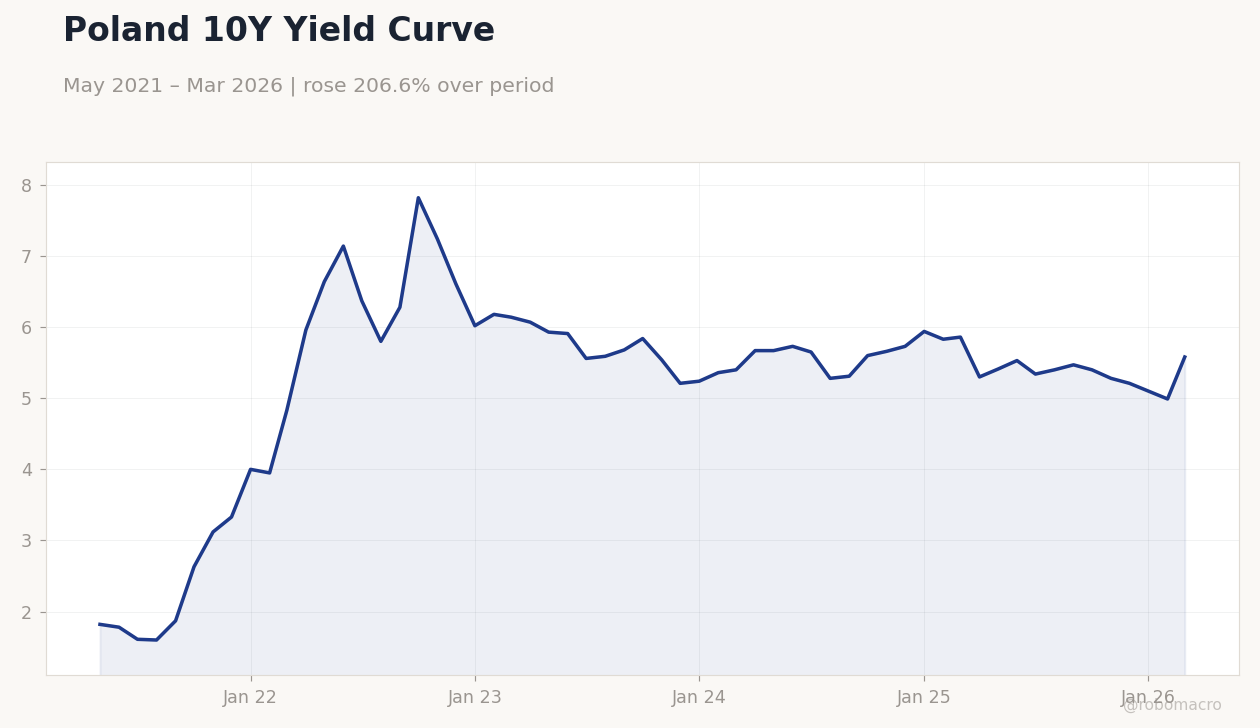 Poland 10Y Yield Curve | Type: macro_line | Poland 10Y Yield %: 5.58 (2026-03-01) | Range: 1.6–7.82 | Trend(6pt): 1.82,6.37,5.68,5.66,5.1,5.58
Today's Economic Events
| Data | Prior | Cons | Time |
|---|---|---|---|
| No events available | |||
- Poland forecast as Europe's fastest-growing major economy in 2026, poised to overtake Switzerland as world's 20th-largest by 2028 per IMF.
- Hungary's yields rise amid fiscal pressures for new Tisza government following Orbán's defeat and media reform pledges.
- Turkish stocks inch higher with stable commodities, while CEE currencies mixed amid inflation and political shifts.
Yesterday's Recap
Emerging European markets showed varied moves with limited data flow, as Polish assets gained from upbeat growth projections. The iShares Poland ETF climbed 0.60% to 40.48, fueled by IMF outlooks naming Poland Europe's fastest-growing major economy in 2026 and set to rank as the world's 20th-largest by 2028, surpassing Switzerland. Poland's 10-year government yield rose sharply by 11.82 basis points to 5.58%, reflecting inflation worries tied to Middle East tensions and higher fuel costs, as noted by Finance Minister Domański.
Hungary's 10-year yield increased 10.03 basis points to 7.13%, weighed by fiscal challenges for the incoming Tisza government under Péter Magyar, who ousted Viktor Orbán after 16 years, signaling media overhauls and budget strains from weak growth. Turkey's BIST 100 advanced 0.35% to 14,252.40, aided by steady oil, with Brent crude up 0.06% to 94.99. The USD/TRY rose 0.07% to 44.76 amid central bank policy focus.
CEE currencies diverged: EUR/PLN fell 0.12% to 4.23, EUR/HUF gained 0.42% to 363.37, and EUR/CZK added 0.04% to 24.33, with no key releases from Czechia or Romania. Gold rose 0.99% to 4,847.60 and Bitcoin edged up 0.25% to 74,995.09, offering some haven appeal amid regional energy sensitivities.
The Day Ahead
No economic data releases are scheduled across Emerging Europe, shifting focus to Hungary's political transition under Péter Magyar, who demands quick power transfer and vows to reform state media for impartiality. Markets may watch for updates on costly infrastructure like the Mohács Danube bridge project, funded at 76 billion forints by the outgoing government. In Turkey, inflation trends could draw informal CBRT remarks, given persistent pressures from geopolitics.
Romania's euro adoption goal for 2029 remains in view amid deficit concerns, potentially influenced by EU fund discussions. Broader CEE attention includes Poland's strengthening convergence, with investors eyeing currency swings if global sentiment sours, especially for the forint during Hungary's shift. Without events, trading may center on digesting yield increases and positive Polish forecasts.
Other Economic Notes
Poland's strong growth path highlights its CEE leadership, supported by EU ties and fiscal prudence, with debt near 49% of GDP aiding eurozone criteria. (cont...)