Emerging Europe Macro Daily(Beta Mode)
Polish Zloty Strengthens, Yields Rise
Market Snapshot
| Asset | Level | Change |
|---|---|---|
| BIST 100 | 14,201.10 | -0.36% |
| iShares Poland | 39.93 | -1.36% |
| EUR/PLN | 4.24 | +0.20% |
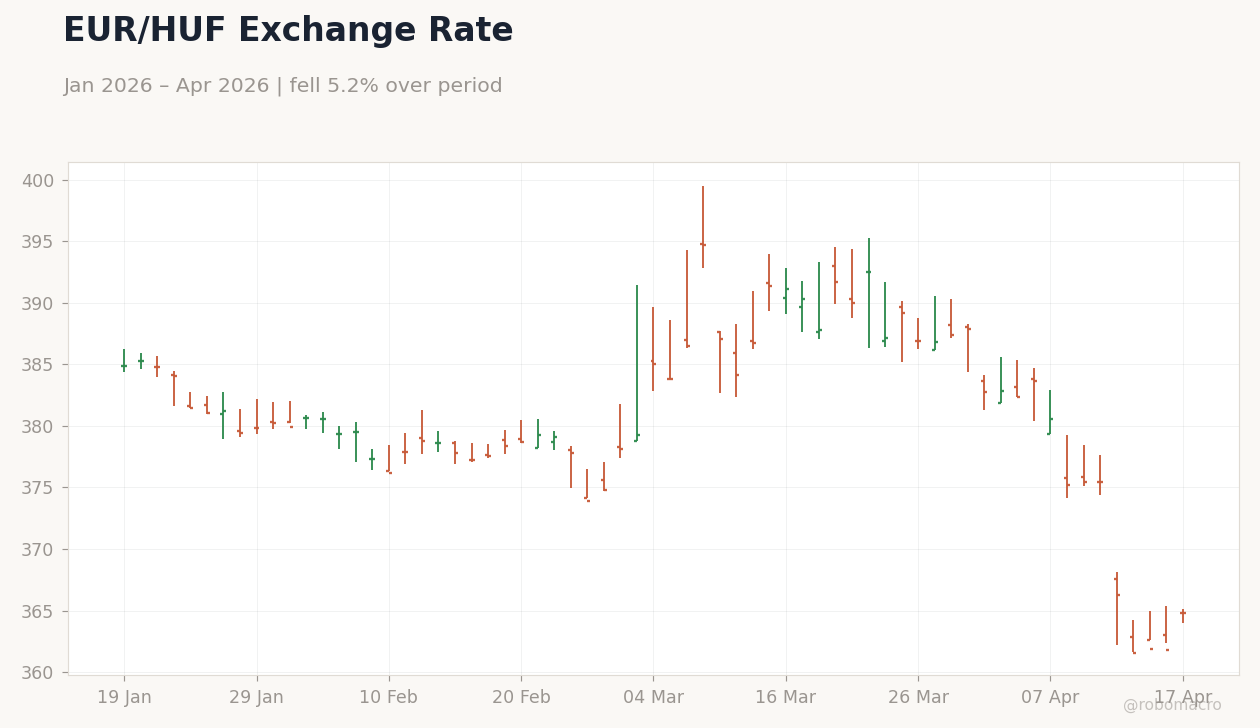
| EUR/HUF | 364.67 | +0.80% |
| EUR/CZK | 24.28 | -0.16% |
| USD/TRY | 44.86 | +0.30% |
| Brent Crude | 98.50 | -0.90% |
| Gold | 4,811.90 | +0.55% |
| Bitcoin | 74,804.76 | -0.00% |
| Poland 10Y Govt Yield | 5.58% | +11.82% |
| Hungary 10Y Govt Yield | 7.13% | +10.03% |
Prior Economic Events
| Data | Prior | Cons | Actual |
|---|---|---|---|
| No events available | |||
 Poland 10Y vs Equity ETF | Type: macro_line | 10Y Yield %: 5.58 (2026-03-01) | Range: 1.6–7.82 | Trend(6pt): 1.82,6.37,5.68,5.66,5.1,5.58
Today's Economic Events
| Data | Prior | Cons | Time |
|---|---|---|---|
| No events available | |||
- Polish zloty firms against euro, with EUR/PLN falling to 4.24 amid G20 recognition and economic strength.
- Bond yields surge in Poland and Hungary, signaling inflation worries and global risk aversion.
- Turkish lira and stocks weaken slightly, while Czech koruna edges stronger against euro.
Yesterday's Recap
Emerging Europe markets showed mixed performance on April 16, with Poland's iShares ETF dropping 1.36% to 39.93 due to broader risk-off mood, but the zloty strengthened as EUR/PLN fell to 4.24 from higher war-related levels, as per local reports noting a rebound to lows since Middle East conflict. Hungary's forint weakened, with EUR/HUF up 0.80% to 364.67, alongside a 10.03% rise in 10-year government yields to 7.13%, fueled by fiscal concerns. Turkey's BIST 100 index declined 0.36% to 14,201.10, while USD/TRY increased 0.30% to 44.86, highlighting persistent lira pressures.
Czech assets held firm, with EUR/CZK down 0.16% to 24.28, aided by regional stability. No significant macro data emerged in the region, shifting attention to news such as Poland's G20 invitation underscoring economic resilience, deeper ties with Saudi Arabia in energy and infrastructure, and worker concerns over economy, AI, and restructuring. Other highlights included Poland's absence from IMF top 20 economies and the stock exchange's role in transformation, while Czech media overhaul plans drew criticism for potential independence risks.
The Day Ahead
No economic releases are scheduled for April 17 in Emerging Europe, so markets will track global developments, including UK GDP outperformance and Iran peace talks. Polish and Hungarian investors may eye yield trends after recent increases, influencing FX like EUR/PLN and EUR/HUF. Turkey's CBRT might attract focus on lira management during the data lull, with any inflation comments potentially shifting USD/TRY.
Czech and other regional assets could stay stable without fresh drivers, though EU news on media or policy might surface. A quiet calendar emphasizes geopolitical risks and commodities, such as Brent crude's 0.90% drop to 98.50, impacting energy-reliant nations like Hungary.
Other Economic Notes
Key themes in Emerging Europe include Poland's energy shift, aiming to end coal reliance by 2050 via nuclear and renewables to cut import vulnerabilities. Polish workers express high concerns about economic conditions, AI impacts, and restructuring, reflecting labor challenges amid EU ties. Hungary and Czechia exhibit policy differences, with Czech media reform proposals sparking fears of reduced independence that may erode investor trust in EU funding.
(cont...)