Emerging Europe Macro Daily(Beta Mode)
Turkish Sentiment Dips, Yields Surge
Market Snapshot
| Asset | Level | Change |
|---|---|---|
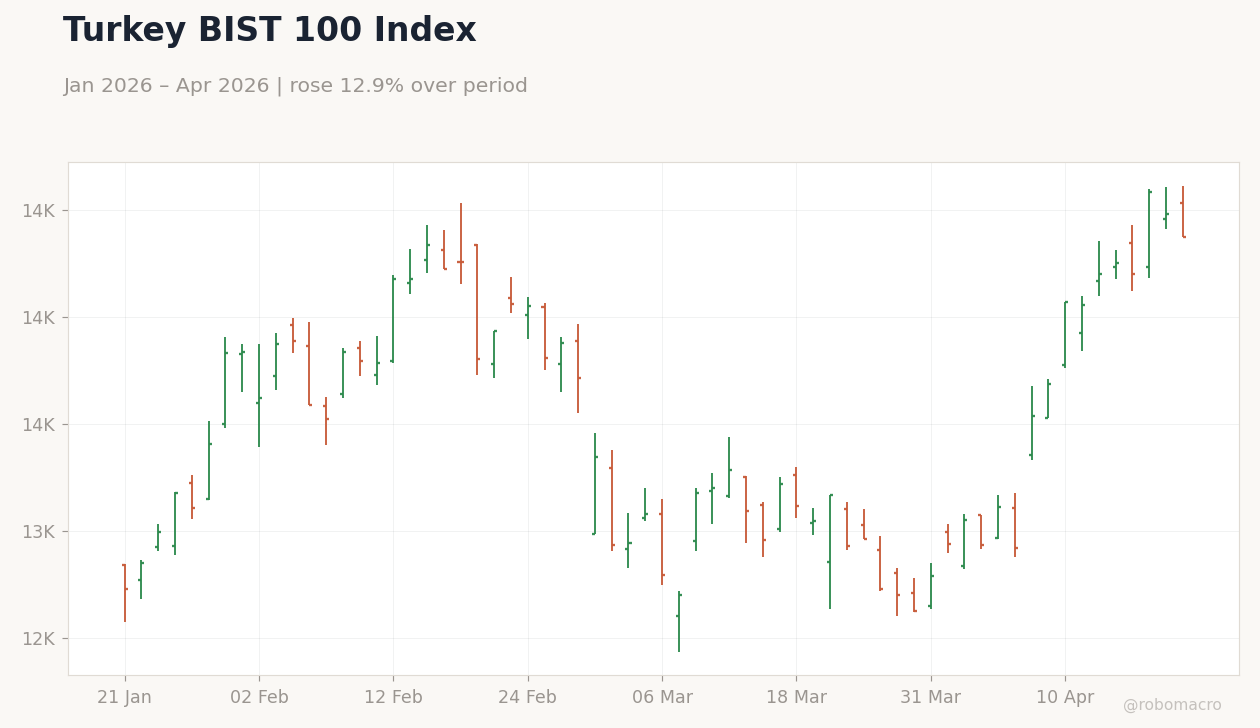
| BIST 100 | 14,375.40 | -0.76% |
| iShares Poland | 39.37 | -2.43% |
| EUR/PLN | 4.23 | +0.13% |
| EUR/HUF | 363.88 | +1.02% |
| EUR/CZK | 24.33 | +0.24% |
| USD/TRY | 44.90 | +0.04% |
| Brent Crude | 92.95 | -5.62% |
| Gold | 4,771.30 | +1.55% |
| Bitcoin | 77,556.80 | +2.22% |
| Poland 10Y Govt Yield | 5.58% | +11.82% |
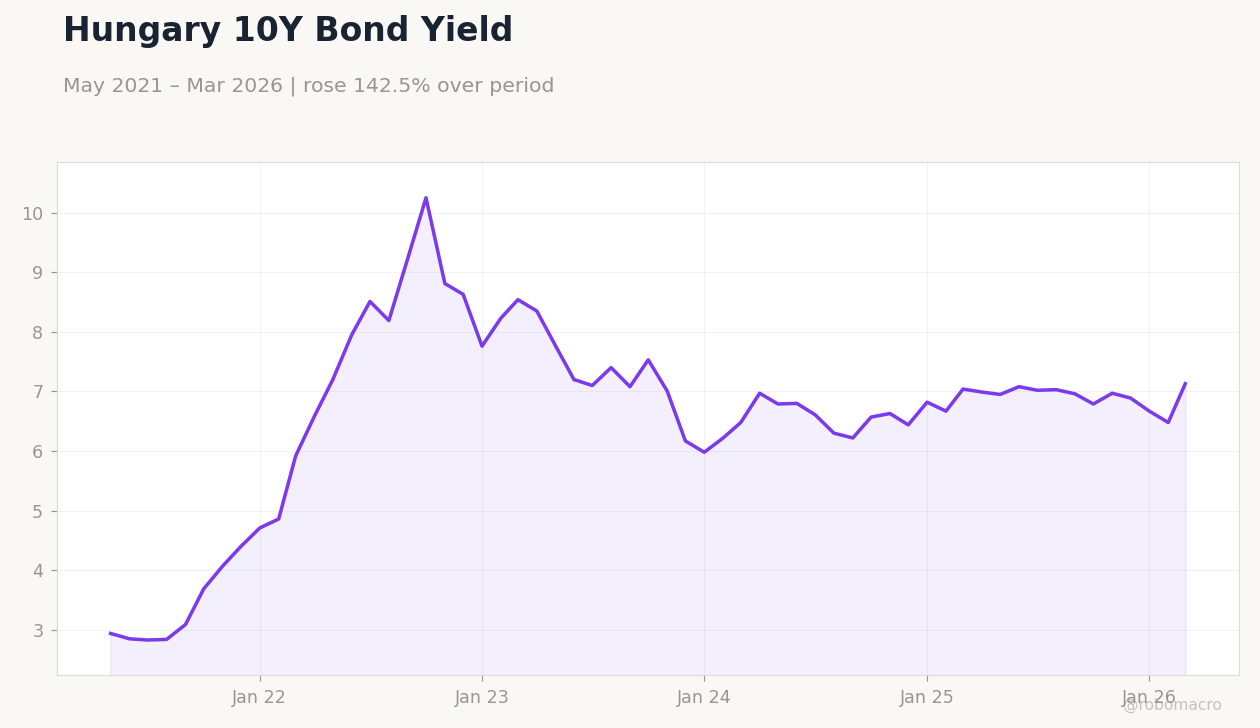
| Hungary 10Y Govt Yield | 7.13% | +10.03% |
Prior Economic Events
| Data | Prior | Cons | Actual |
|---|---|---|---|
| Business Confidence Index | 101 | - | 100.60 |
 Turkey Consumer Confidence | Type: macro_line | Index: 85 (2026-03-01) | Range: 63.4–91.1 | Trend(6pt): 77.3,68,71.5,79.8,83.7,85
Today's Economic Events
| Data | Prior | Cons | Time |
|---|---|---|---|
| Consumer Confidence Index | 85 | - | 23:00 |
| TCMB Interest Rate Decision | 37 | - | 03:00 |
| Headline Unemployment Rate | 6.10 | 6.10 | 23:30 |
- Turkey's business confidence eased to 100.6 in April, reflecting caution ahead of TCMB rate decision amid high inflation.
- CEE yields surged, with Poland's 10Y up 11.82% to 5.58% and Hungary's rising 10.03% to 7.13%, amid global risk-off.
- Markets mixed: BIST 100 down 0.76%, iShares Poland fell 2.43%; EUR/HUF climbed 1.02%, EUR/PLN up 0.13%.
Yesterday's Recap
Turkey's business confidence index slipped to 100.6 in April from 101 previously, highlighting tempered optimism among firms due to ongoing inflation and geopolitical risks. In Poland, the key CEE market, equities softened with iShares Poland ETF down 2.43% to 39.37, influenced by a sharp 11.82% rise in 10Y government yields to 5.58%, likely linked to broader bond market pressures. Hungary experienced a 10.03% increase in its 10Y yield to 7.13%, while EUR/HUF rose 1.02% to 363.88, indicating forint softening from carry trade adjustments.
The Czech koruna saw modest weakening with EUR/CZK up 0.24% to 24.33. No significant data emerged from Romania or Czech Republic. Turkey's BIST 100 declined 0.76% to 14,375.40, with USD/TRY edging 0.04% higher to 44.90, emphasizing the lira's vulnerability in a high-inflation environment.
Regionally, markets followed global trends, including a 5.62% drop in Brent crude to 92.95 and a 1.55% gain in gold to 4,771.30 as a safe haven.
The Day Ahead
Focus shifts to Turkey's consumer confidence index at 23:00 ET, offering views on household mood after the business index dip, with prior reading at 85. The TCMB interest rate decision at 03:00 ET is critical, previous repo rate at 37%; expectations lean toward a hold given sticky inflation, though political factors could play a role. Poland's headline unemployment rate is due at 23:30 ET, consensus at 6.1% matching previous, potentially confirming labor market steadiness in the region's largest economy.
Czech Republic, Hungary, and Romania have no major releases, directing attention to Turkish events. These could spur volatility in pairs like USD/TRY and EUR/PLN.
Other Economic Notes
Poland's National Bank persisted with gold buys in March, elevating reserves above 580 tons despite softer prices, strengthening euro convergence credentials amid EU fund access. The CEE IT sector analysis positions Poland ahead of Czech Republic, Hungary, and Romania, driven by digital spending and skilled workforce. ING's assessment of Poland's economy stays upbeat, noting solid growth from wage hikes and fiscal prudence, tempered by energy exposure risks.