Emerging Europe Macro Daily(Beta Mode)
CBRT Holds Amid Mixed Confidence
Market Snapshot
| Asset | Level | Change |
|---|---|---|
| BIST 100 | 14,335.50 | -0.28% |
| iShares Poland | 39.58 | +0.53% |
| EUR/PLN | 4.24 | +0.17% |
| EUR/HUF | 365.45 | +0.54% |
| EUR/CZK | 24.36 | +0.29% |
| USD/TRY | 44.91 | -0.02% |
| Brent Crude | 103.03 | +1.10% |
| Gold | 4,724.30 | -0.17% |
| Bitcoin | 78,019.51 | +2.18% |
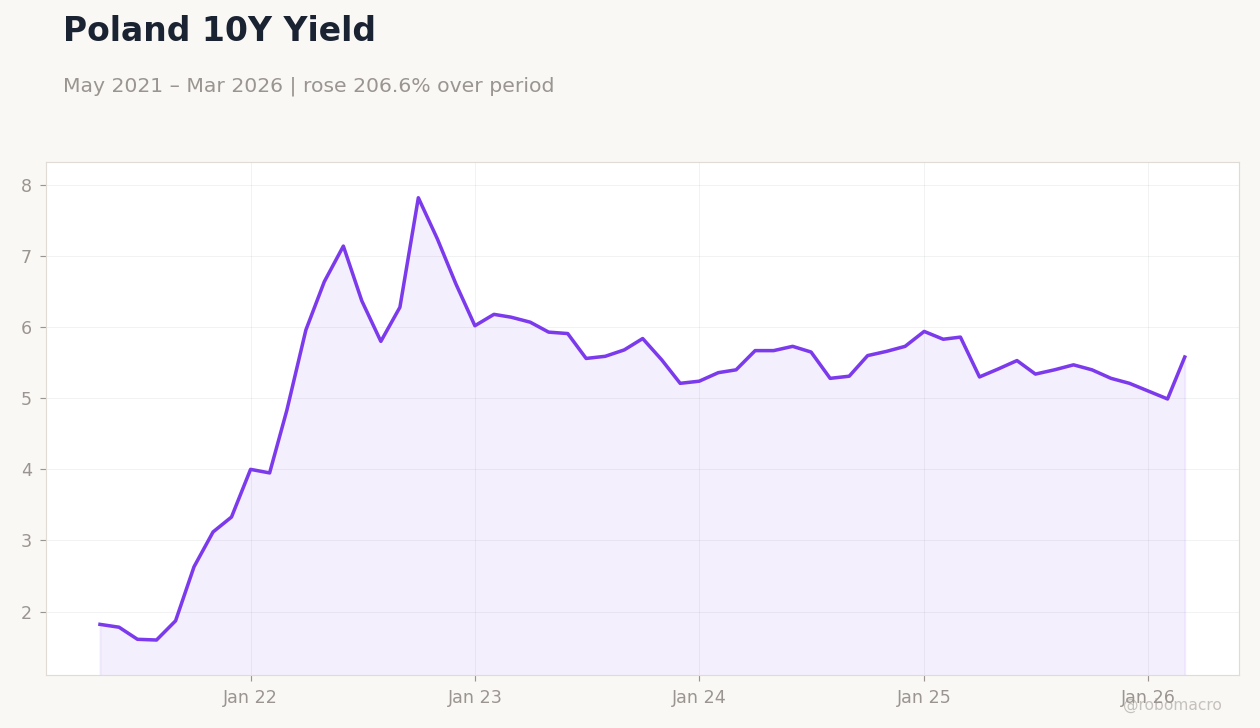
| Poland 10Y Govt Yield | 5.58% | +11.82% |
| Hungary 10Y Govt Yield | 7.13% | +10.03% |
Prior Economic Events
| Data | Prior | Cons | Actual |
|---|---|---|---|
| Business Confidence Index | 101 | - | 100.60 |
| Consumer Confidence Index | 85 | - | 85.50 |
| TCMB Interest Rate Decision | 37 | - | 37 |
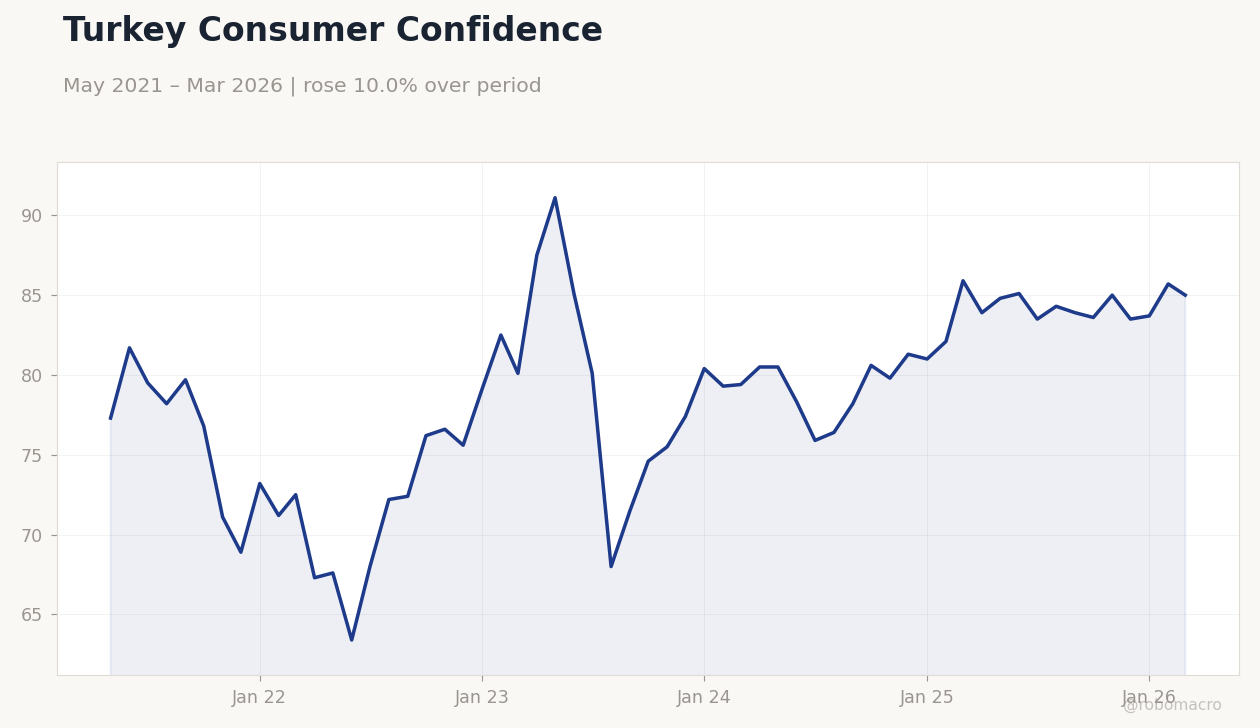 Turkey Consumer Confidence | Type: macro_line | Confidence Index: 85 (2026-03-01) | Range: 63.4–91.1 | Trend(6pt): 77.3,68,71.5,79.8,83.7,85
Today's Economic Events
| Data | Prior | Cons | Time |
|---|---|---|---|
| Headline Unemployment Rate | 6.10 | 6.10 | 23:30 |
| Friday (2026-04-24) | |||
| Headline Unemployment Rate | 6.10 | 6.10 | 23:30 |
- Turkey's CBRT kept rates at 37%, with business confidence dipping to 100.6 from 101, while consumer confidence edged up to 85.5 from 85.
- Polish zloty stable below 4.24 per euro; Hungarian forint and Czech koruna weakened modestly.
- Regional bond yields rose, with Poland's 10Y at 5.58% and Hungary's at 7.13%, amid global risk aversion.
Yesterday's Recap
Turkey led regional developments as the CBRT held its key rate at 37%, matching expectations amid lingering inflation. Business confidence fell slightly to 100.6 from 101, signaling caution among firms, while consumer confidence improved marginally to 85.5 from 85, hinting at resilient sentiment. The Turkish lira held steady, with USD/TRY down 0.02% to 44.91, though the BIST 100 index slipped 0.28% to 14,335.50, weighed by global energy price gains.
In Poland, the iShares Poland ETF rose 0.53% to 39.58, bolstered by steady macro indicators, but EUR/PLN increased 0.17% to 4.24. Hungarian markets lagged, with EUR/HUF up 0.54% to 365.45 and the 10Y yield climbing to 7.13%, reflecting forecasts of fragile 1.5% GDP growth in 2026 per the Egyensúly Intézet. The Czech koruna softened, with EUR/CZK rising 0.29% to 24.36.
No key data emerged from Romania, but EU subsidy approvals, like for Czech firm Agrofert, supported sentiment. Regional equities showed mixed performance, amplified by energy dependencies as Brent crude advanced 1.10% to 103.03. Gold dipped 0.17% to 4,724.30, while Bitcoin gained 2.18% to 78,019.51.
The Day Ahead
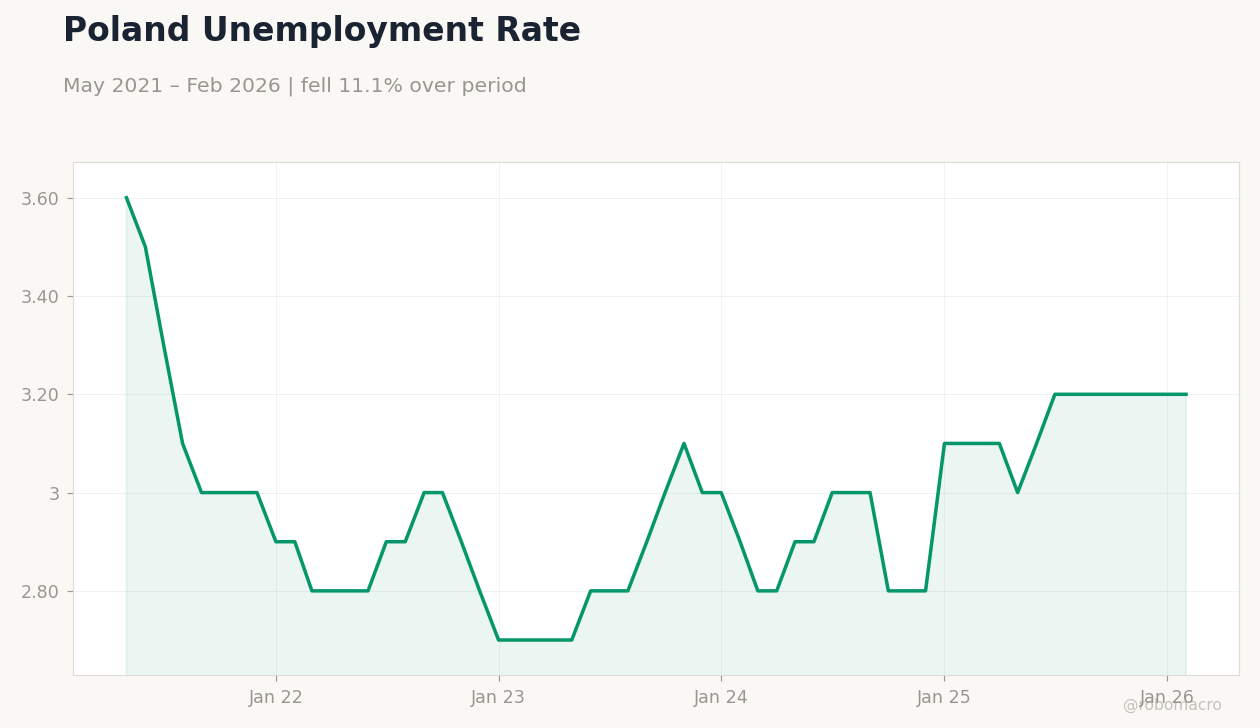
Poland's March headline unemployment rate releases at 23:30 ET, with consensus at 6.1%, unchanged from prior, potentially affirming labor market strength and backing the NBP's current stance. The Czech Republic, Hungary, and Romania have no major data slated, shifting attention to global drivers. Turkey's calendar is light, but investors may eye any CBRT follow-up remarks post-decision.
Broader focus includes ECB influences on CEE currencies via trade links.
Other Economic Notes
Energy vulnerabilities in Emerging Europe continue, with Middle East tensions driving Brent higher and risking inflation in import-reliant nations like Turkey and Poland. Hungary's economy faces fragile growth, projected at 1.5% for 2026 by the Egyensúly Intézet, driven by consumption but hampered by fiscal deficits. EU subsidies, including eligibility for Czech Agrofert despite political ties, aid convergence, though they underscore governance risks.
Czech banks are exploring bitcoin sales, signaling diversification amid stable koruna trends. Regional recoveries remain tied to global commodity stability and euro-area demand.