Emerging Europe Macro Daily(Beta Mode)
CBRT Holds Amid Mixed Sentiment
Market Snapshot
| Asset | Level | Change |
|---|---|---|
| BIST 100 | 14,335.50 | -0.28% |
| iShares Poland | 38.76 | -2.07% |
| EUR/PLN | 4.24 | -0.04% |
| EUR/HUF | 366.24 | +0.92% |
| EUR/CZK | 24.36 | +0.12% |
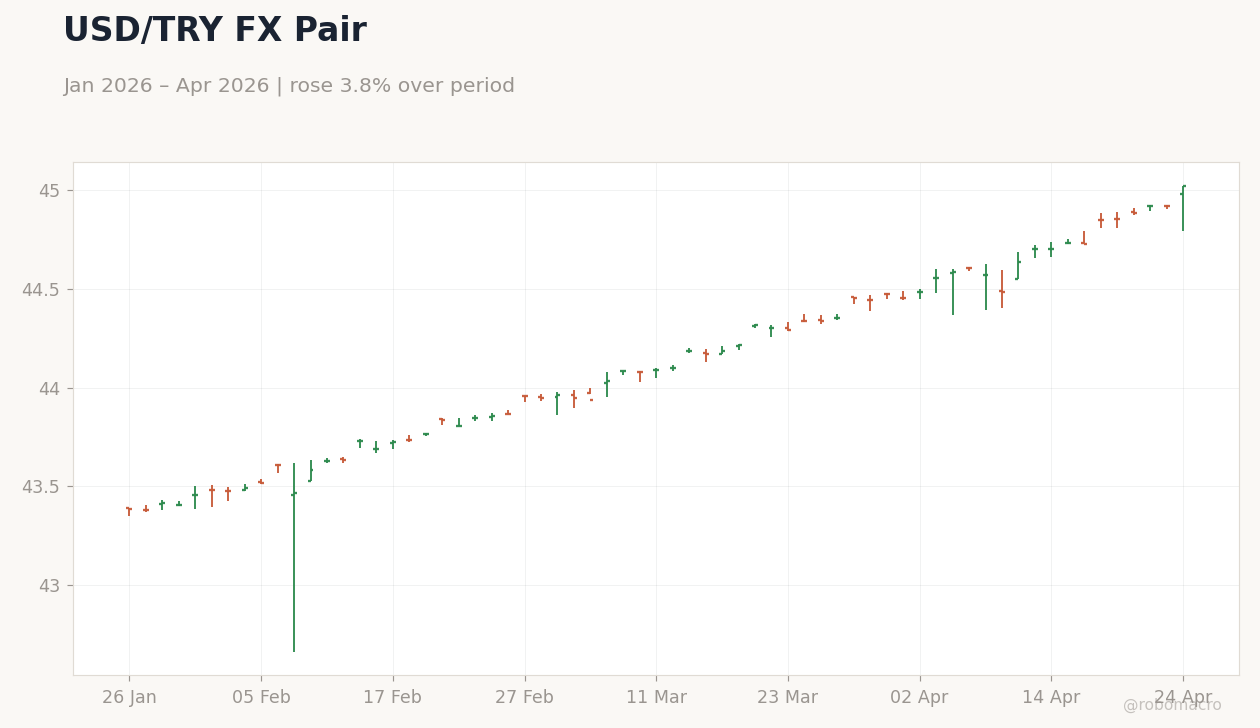
| USD/TRY | 45.02 | +0.22% |
| Brent Crude | 105.51 | +0.42% |
| Gold | 4,689.20 | -0.34% |
| Bitcoin | 77,732.53 | -0.60% |
| Poland 10Y Govt Yield | 5.58% | +11.82% |
| Hungary 10Y Govt Yield | 7.13% | +10.03% |
Prior Economic Events
| Data | Prior | Cons | Actual |
|---|---|---|---|
| Business Confidence Index | 101 | - | 100.60 |
| Consumer Confidence Index | 85 | - | 85.50 |
| TCMB Interest Rate Decision | 37 | - | 37 |
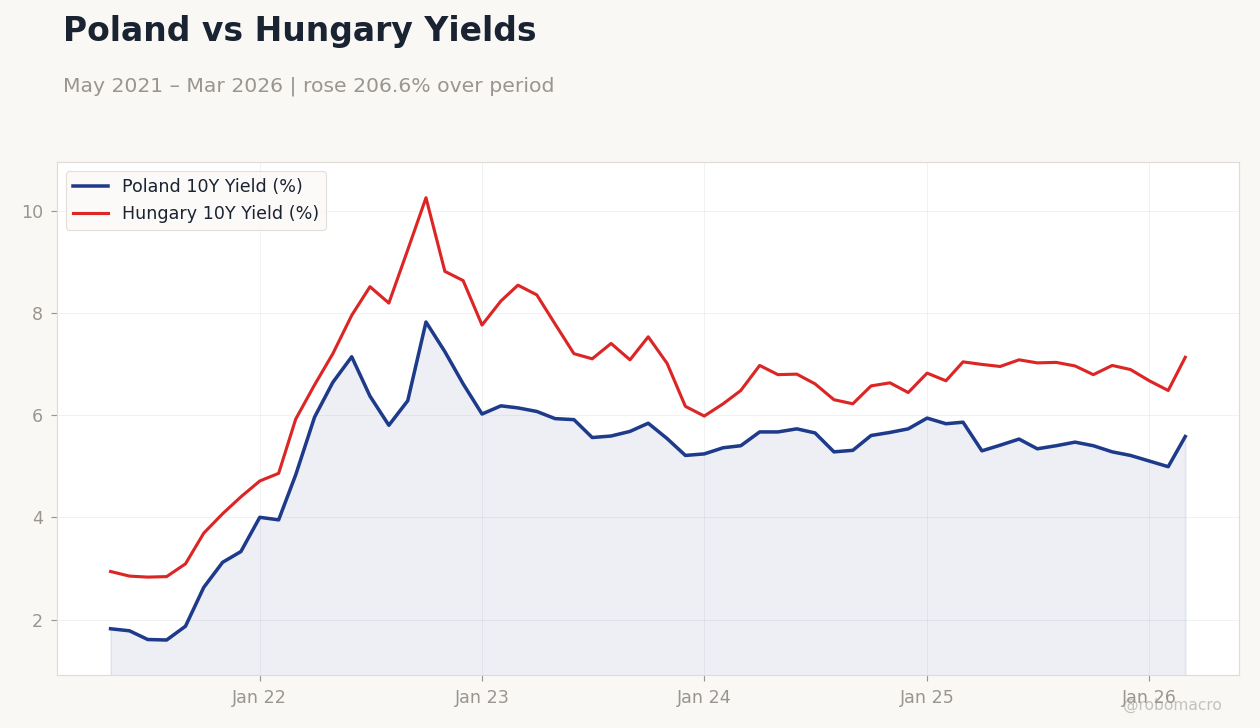 Poland vs Hungary Yields | Type: macro_line | Poland 10Y Yield (%): 5.58 (2026-03-01) | Range: 1.6–7.82 | Trend(6pt): 1.82,6.37,5.68,5.66,5.1,5.58 | Hungary 10Y Yield (%): 7.13 (2026-03-01) | Range: 2.83–10.25 | Trend(6pt): 2.94,8.51,7.08,6.63,6.67,7.13
Today's Economic Events
| Data | Prior | Cons | Time |
|---|---|---|---|
| Headline Unemployment Rate | 6.10 | 6.10 | 23:30 |
- Turkey's CBRT maintained rates at 37%, with business confidence easing to 100.6 and consumer sentiment rising slightly to 85.5 amid persistent inflation.
- Poland's M3 money supply grew to PLN 2.804 trillion, up PLN 42.7 billion month-on-month, underscoring liquidity in a robust economy.
- Regional yields rose sharply, with Poland's 10Y at 5.58% (+11.82%) and Hungary's at 7.13% (+10.03%), reflecting global risk aversion and Middle East tensions.
Yesterday's Recap
Turkey led yesterday's releases, as the CBRT kept its key rate at 37% as anticipated, highlighting ongoing inflation pressures without a consensus forecast. Business confidence dipped to 100.6 from 101, indicating caution among firms due to geopolitical risks, while consumer confidence improved modestly to 85.5 from 85, suggesting steady household resilience. In Poland, the NBP's latest report showed M3 money supply reaching PLN 2.804 trillion by end-March, a PLN 42.7 billion increase from February, supporting liquidity amid reports of a soaring economy.
Markets reacted variably: Turkey's BIST 100 declined 0.28% to 14,335.50 amid lira fluctuations, and iShares Poland dropped 2.07% to 38.76, while EUR/PLN edged down 0.04% to 4.24, signaling minor zloty strength. Hungary's EUR/HUF climbed 0.92% to 366.24, pressured by fiscal concerns and potential tax cuts. EUR/CZK rose 0.12% to 24.36, and USD/TRY increased 0.22% to 45.02.
Broader CEE bonds weakened, with yields jumping amid EU sanctions on Russia and Middle East uncertainty. Overall, Emerging Europe assets lagged global indices, influenced by commodity shifts like Brent crude up 0.42% to 105.51 and gold down 0.34% to 4,689.20.
The Day Ahead
Poland's March headline unemployment rate is set for release at 23:30 ET, with consensus holding at 6.1% from the previous reading, which could reinforce labor market stability in CEE's biggest economy. No significant data is slated for the Czech Republic, Hungary, Romania, or Turkey, directing attention to global factors such as Middle East tensions and ECB previews noting eurozone economic strains. News on Poland's presidential race, fueled by strong growth, may also draw focus, alongside potential impacts from energy price volatility.
With tomorrow's calendar empty, markets could look ahead to next week's indicators from Hungary or Romania if updates arise.
Other Economic Notes
Poland's economy is drawing international attention, with reports highlighting its expanding G20 role and the EC approving a €7.2 billion recovery plan disbursement to aid investments in hi-tech and defense. The zloty faces headwinds, as the euro exchange rate rose for the fourth straight day, impacted by a stronger dollar and Middle East uncertainty, per Bankier.pl. (cont...)