Emerging Europe Macro Daily(Beta Mode)
WIG20 Hits Record on Zabka Bid; Hungary Nuclear Risk
Market Snapshot
| Asset | Level | Change |
|---|---|---|
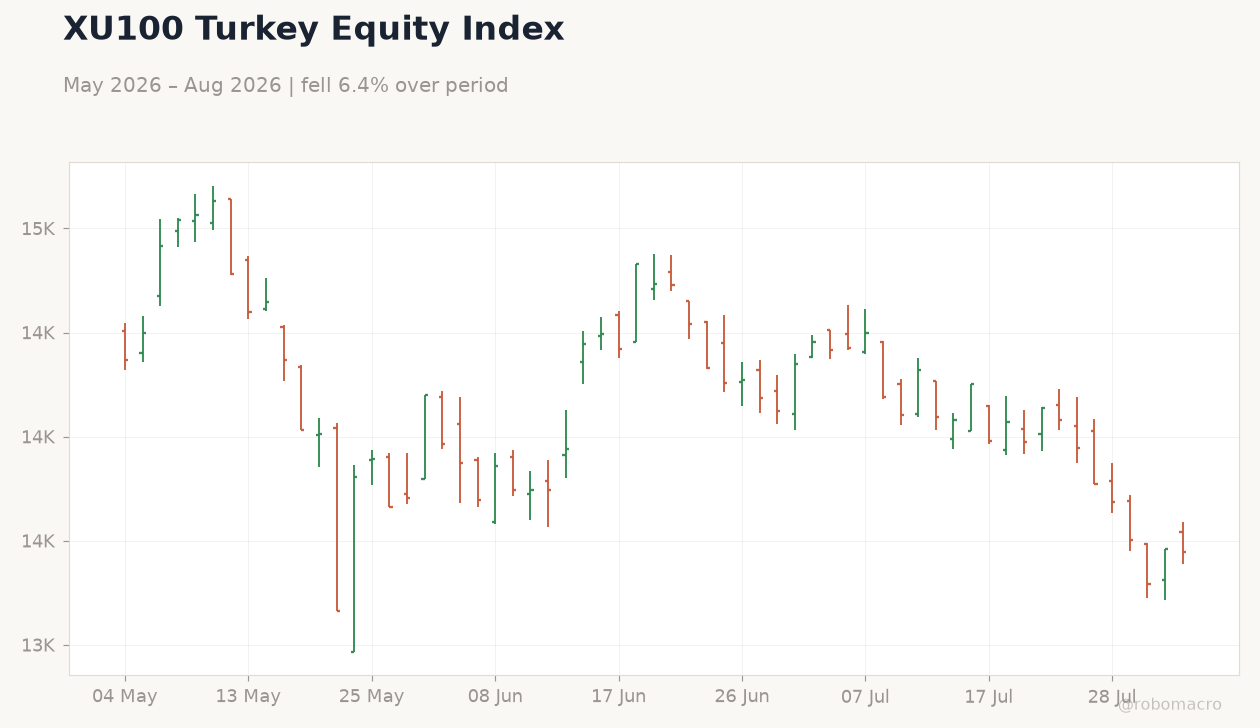
| BIST 100 | 13,433.33 | -0.18% |
| iShares Poland | 42.83 | +0.16% |
| EUR/PLN | 4.31 | -0.40% |
| EUR/HUF | 363.12 | +0.27% |
| EUR/CZK | 24.21 | +0.06% |
| USD/TRY | 47.53 | +0.06% |
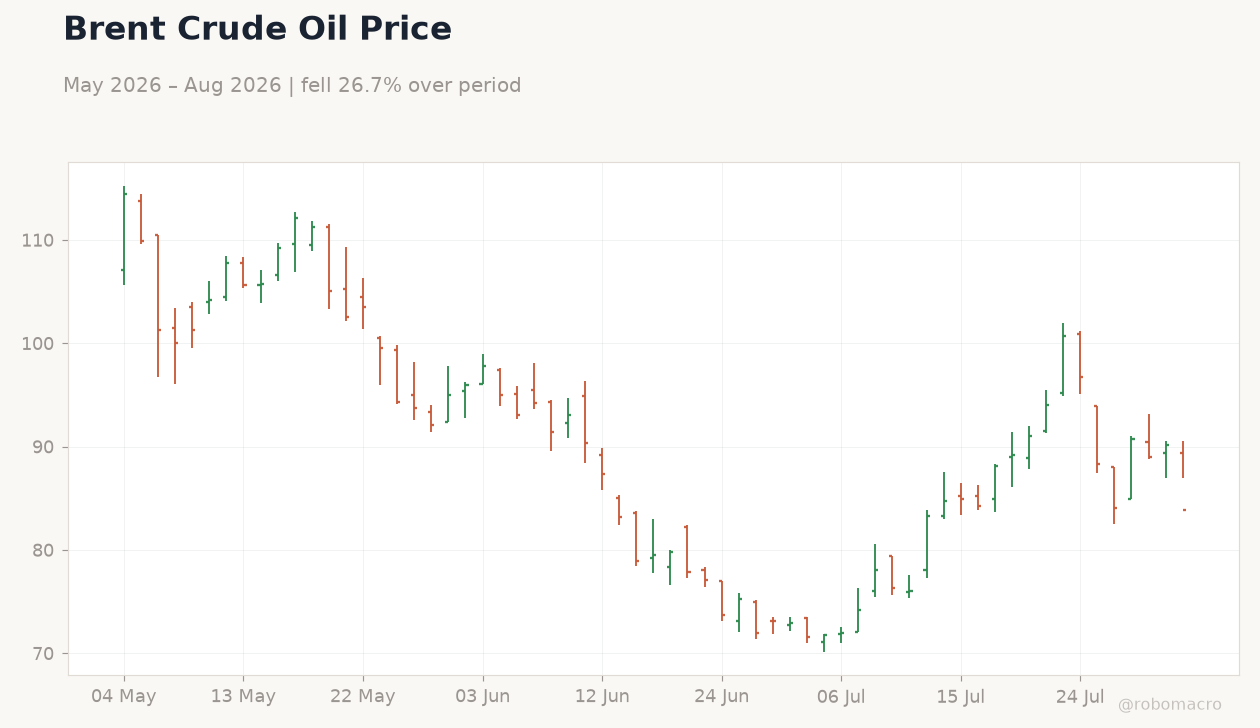
| Brent Crude | 83.83 | -6.98% |
| Gold | 4,114.50 | +1.62% |
| Bitcoin | 62,559.63 | -0.32% |
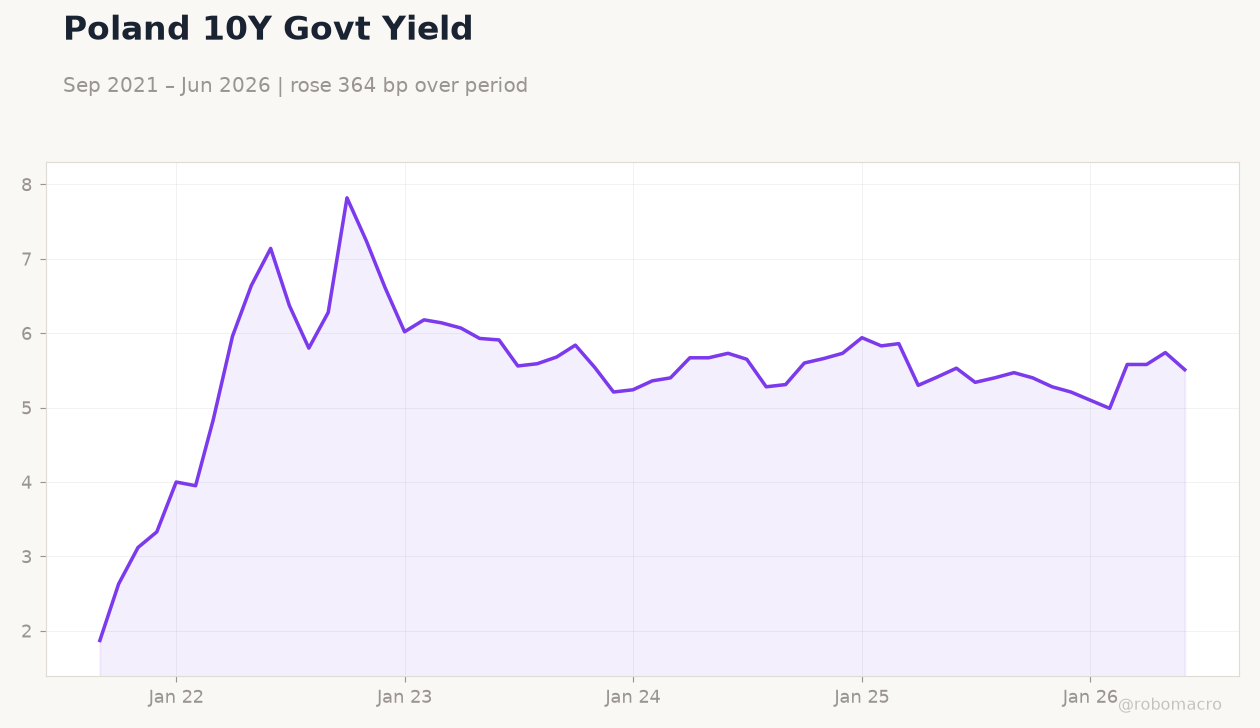
| Poland 10Y Govt Yield | 5.51% | -4.01% |
| Hungary 10Y Govt Yield | 5.26% | -6.90% |
Prior Economic Events
| Data | Prior | Cons | Actual |
|---|---|---|---|
| Inflation Rate Month-over-Month | 0.99 | 1.83 | 1.78 |
| Inflation Rate Year-over-Year | 32.11 | 31.80 | 31.75 |
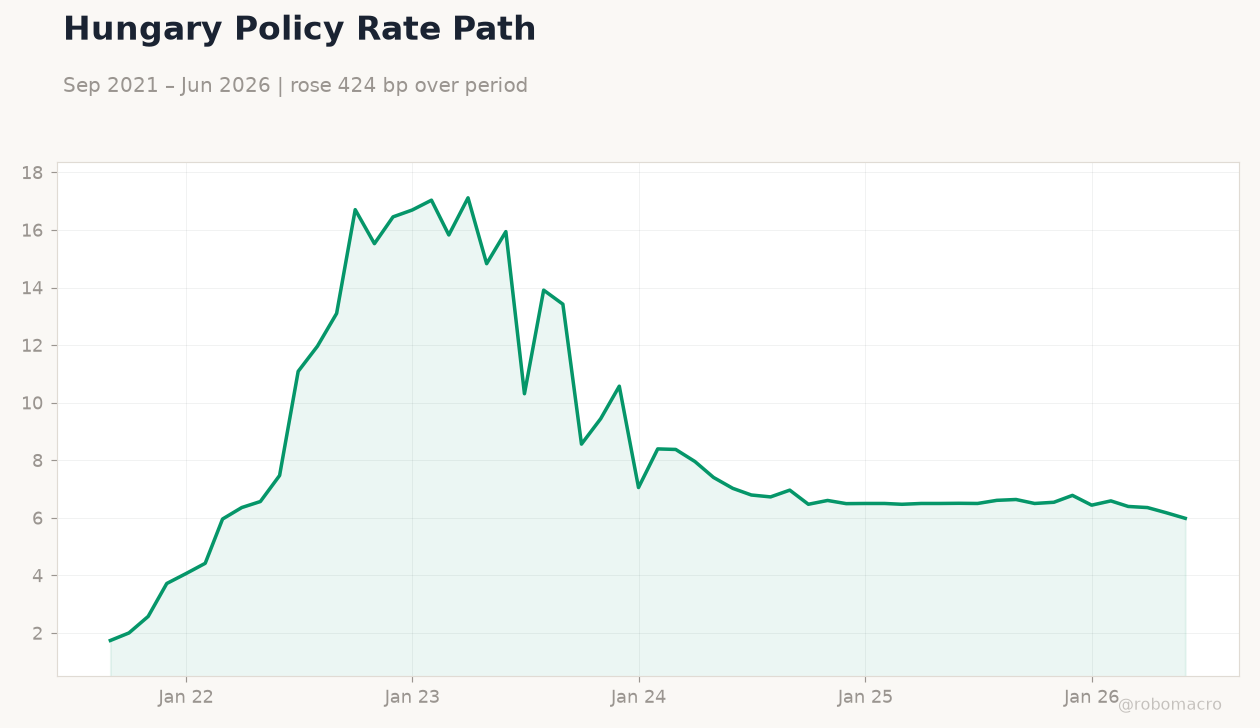
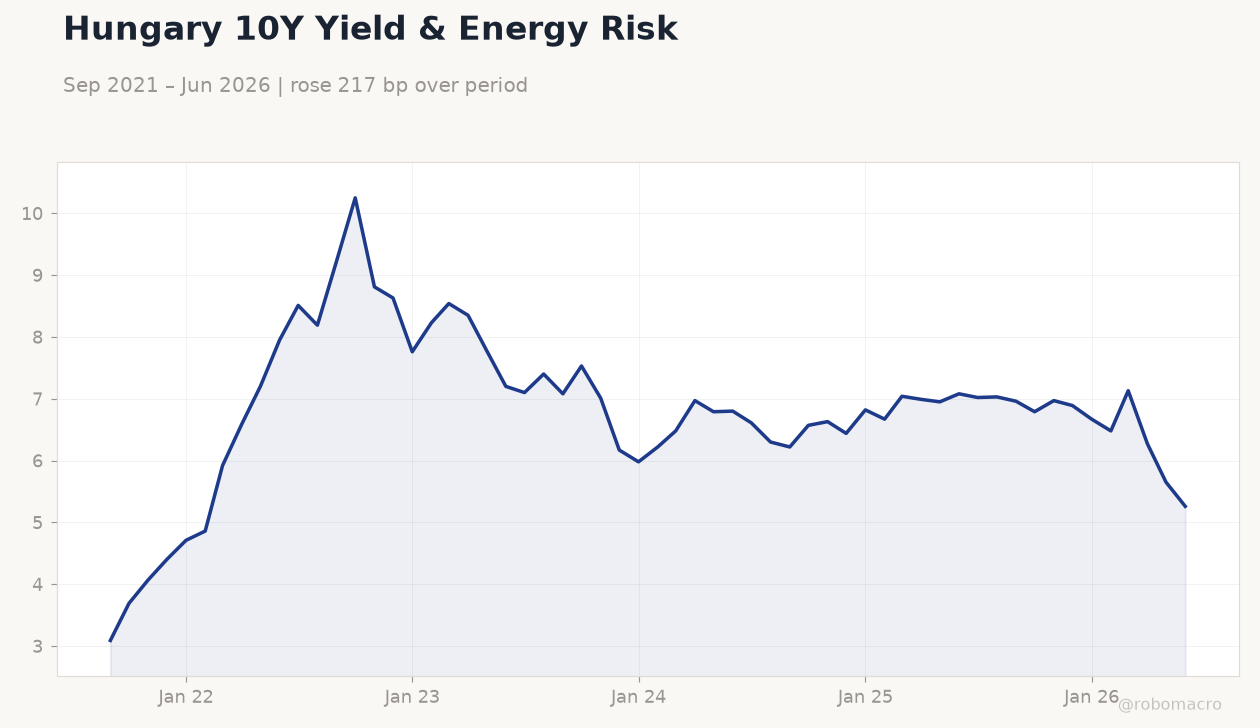 Hungary 10Y Yield & Energy Risk | Type: macro_line | 10Y Yield %: 5.26 (2026-06-01) | Range: 3.09–10.25 | Trend(6pt): 3.09,8.81,5.98,7.04,5.65,5.26
Today's Economic Events
| Data | Prior | Cons | Time |
|---|---|---|---|
| No events available | |||
- Poland’s WIG20 closed at a record 3,920 points as Couche-Tard’s $8.7 billion Żabka takeover drove record Warsaw volumes.
- Turkish inflation printed 1.78% MoM and 31.75% YoY, both below consensus, while BIST 100 slipped 0.18%.
- Hungary’s sole nuclear plant faces full shutdown from record-low Danube levels, removing a major share of national power supply.
Yesterday's Recap
Turkish CPI data released after market close showed month-over-month inflation at 1.78% against a 1.83% consensus and year-over-year at 31.75% versus 31.8% expected, confirming a modest cooling from July’s 32.11%. The Polish equity market surged on news that Alimentation Couche-Tard will acquire Żabka for roughly $8.7 billion, pushing the WIG20 to an all-time closing high of 3,920 with turnover far above average. Hungary’s energy outlook deteriorated sharply after Prime Minister Magyar confirmed the Paks nuclear plant will shut due to critically low Danube water levels caused by prolonged heat and drought.
Regional fixed-income markets rallied, with Hungary’s 10-year yield falling 6.90% to 5.26% and Poland’s 10-year yield declining 4.01% to 5.51%. The zloty strengthened 0.40% against the euro to 4.31 while the forint weakened 0.27% to 363.12. The BIST 100 closed 0.18% lower at 13,433.33 amid thin follow-through after the inflation print.
No data releases emerged from the Czech Republic or Romania.
The Day Ahead
Markets in Emerging Europe face a data-empty session with no scheduled releases across the five economies. Attention will remain on Hungary’s voluntary power-saving measures and any further updates on Paks output. Traders will monitor EUR/PLN and EUR/HUF flows for signs of positioning ahead of this week’s ECB speakers.
Regional equity desks will watch for follow-through buying in Warsaw after the record close and any profit-taking in Budapest energy names. Currency desks expect limited volatility absent fresh global risk signals or Turkish policy comments.
Other Economic Notes
Hungary’s sudden loss of baseload generation from its sole nuclear plant highlights the region’s shared vulnerability to climate-driven water shortages and Russian gas import dependence. Poland’s record equity volumes underscore the continued pull of EU single-market access and inbound M&A for CEE corporates. Turkish inflation remains structurally elevated relative to the other four economies, keeping real yields deeply negative and sustaining pressure on the lira.
Euro-area trade linkages continue to transmit any ECB policy shifts directly into Polish, Czech, Hungarian and Romanian funding costs and FX valuations.