Emerging Europe Macro Daily(Beta Mode)
Turkey CPI Softens, CEE Bonds Advance
Market Snapshot
| Asset | Level | Change |
|---|---|---|
| BIST 100 | 13,687.93 | +2.07% |
| iShares Poland | 42.83 | +0.16% |
| EUR/PLN | 4.30 | -0.20% |
| EUR/HUF | 361.01 | -0.70% |
| EUR/CZK | 24.17 | -0.14% |
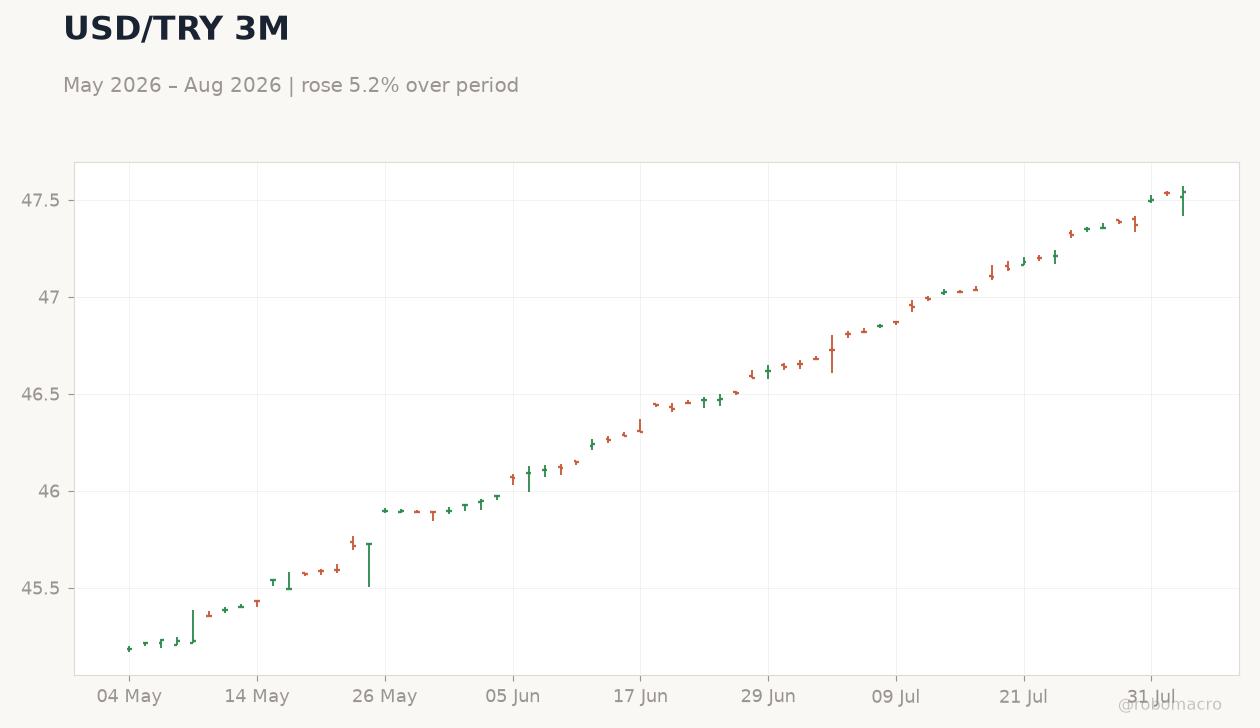
| USD/TRY | 47.54 | +0.01% |
| Brent Crude | 79.44 | -5.17% |
| Gold | 4,143.50 | +2.72% |
| Bitcoin | 63,968.31 | +0.80% |
| Poland 10Y Govt Yield | 5.51% | -4.01% |
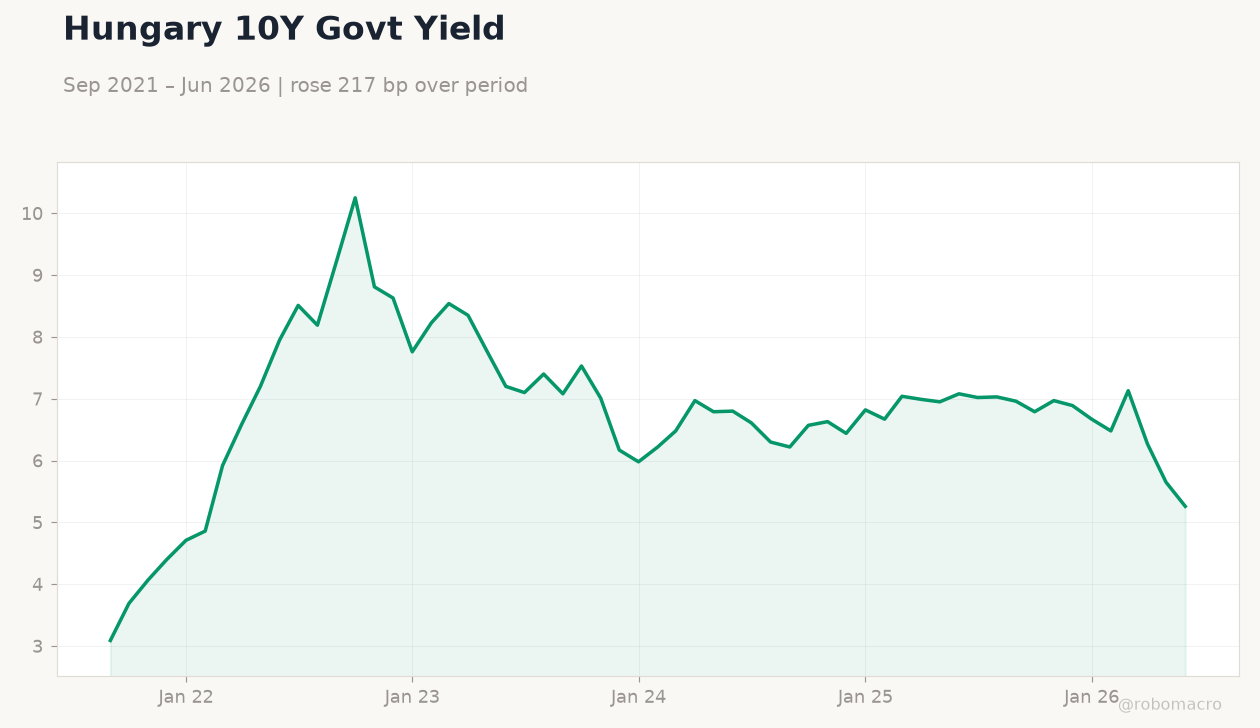
| Hungary 10Y Govt Yield | 5.26% | -6.90% |
Prior Economic Events
| Data | Prior | Cons | Actual |
|---|---|---|---|
| Inflation Rate Month-over-Month | 0.99 | 1.83 | 1.78 |
| Inflation Rate Year-over-Year | 32.11 | 31.80 | 31.75 |
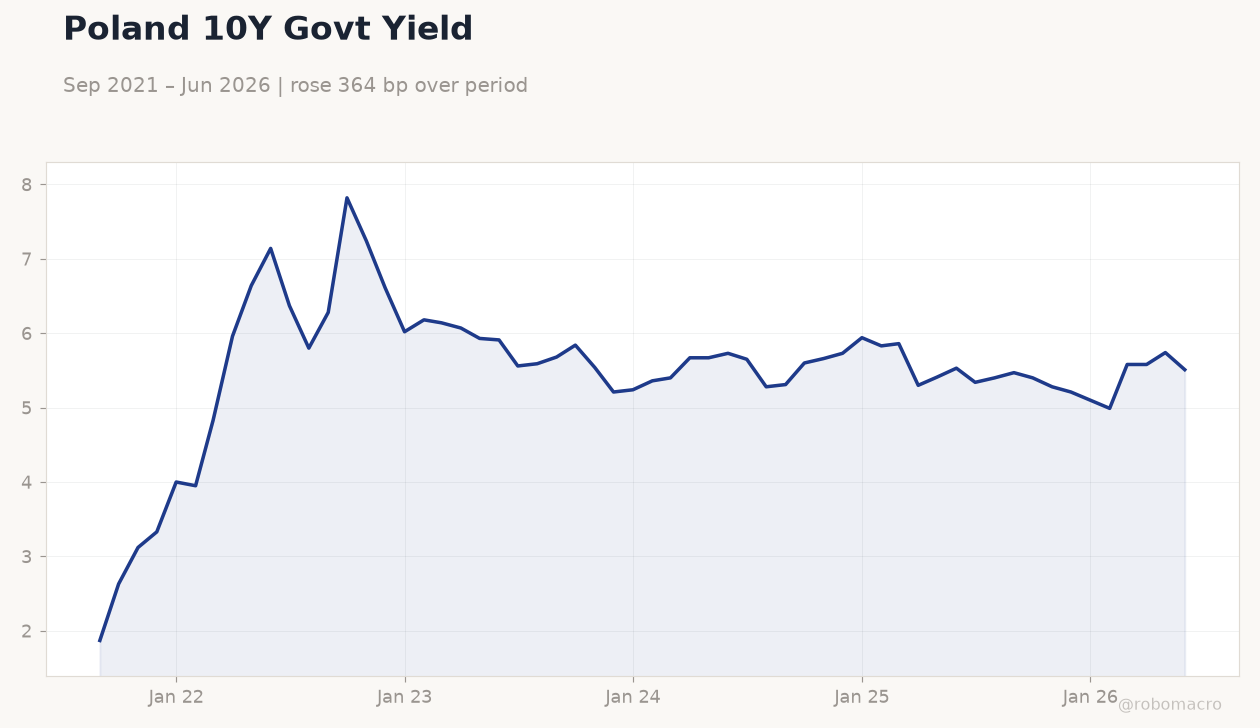 Poland 10Y Govt Yield | Type: macro_line | Yield %: 5.51 (2026-06-01) | Range: 1.87–7.82 | Trend(6pt): 1.87,7.24,5.24,5.86,5.74,5.51
Today's Economic Events
| Data | Prior | Cons | Time |
|---|---|---|---|
| No events available | |||
- Turkey July inflation missed consensus at 31.75% y/y and 1.78% m/m, easing sequential pressure
- Polish and Hungarian 10Y yields dropped 4-7% as regional bonds rallied on lower risk premia
- BIST 100 surged 2.07% while EUR/PLN and EUR/HUF eased modestly amid thin CEE data flow
Yesterday's Recap
Turkey's July inflation rate printed 31.75% y/y and 1.78% m/m, both slightly below consensus and marking the first sequential deceleration in several months. The outcome reinforced expectations that the CBRT may pause after its June adjustment, though real rates stay deeply negative. Poland's 10Y government yield fell 4.01% to 5.51% while Hungary's 10Y yield dropped 6.90% to 5.26%, reflecting improved sentiment toward CEE duration.
The BIST 100 index rose 2.07% to 13,687.93 as Turkish equities outperformed on the softer print. EUR/PLN eased 0.20% to 4.30 and EUR/HUF fell 0.70% to 361.01, while EUR/CZK slipped 0.14%. Brent crude declined 5.17% to $79.44, lowering imported energy costs for the region.
Poland, the largest CEE economy, saw limited domestic data but benefited from the broader fixed-income bid. iShares Poland rose 0.16% to 42.83 and gold advanced 2.72% to 4,143.50, underscoring hedging flows into the region.
The Day Ahead
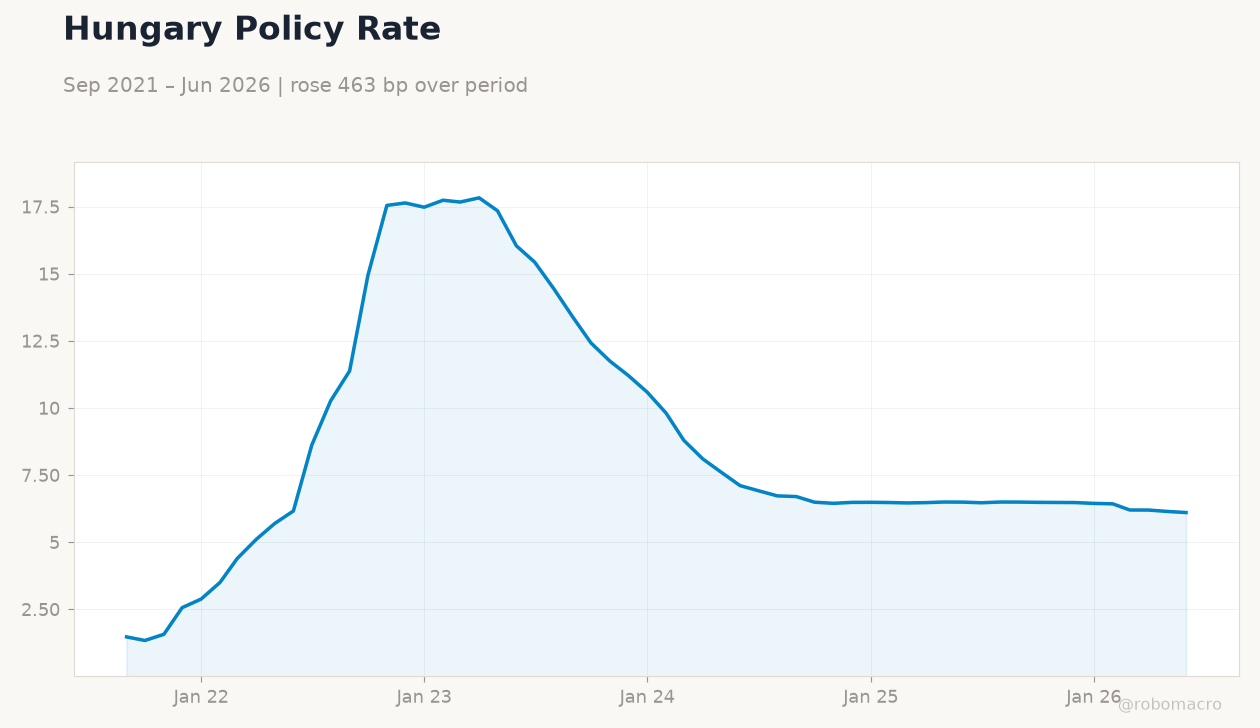
The calendar shows no major releases scheduled for Poland, Czech Republic, Hungary, Romania or Turkey today. Markets will monitor any follow-up comments from CBRT officials after yesterday's inflation figures. Attention may shift to ECB communications given the 2.25% deposit rate and its influence on CNB and MNB positioning.
Regional FX desks will track EUR crosses for signs of further compression in volatility. Energy prices remain a key variable for import-dependent economies across the five countries. With zero events listed for today or tomorrow, trading desks are expected to focus on external drivers including euro-area data prints and any updates on EU cohesion-fund flows.
Other Economic Notes
Persistent drought across the Rhine, Danube and Po basins continues to disrupt inland shipping and hydroelectric output, raising costs for Polish and Hungarian manufacturers. EU migration tensions following the Ceuta events have prompted fresh calls for stronger external borders, which could affect future cohesion-fund disbursements to Romania and Hungary. Gold's 2.72% advance to 4,143.50 highlights ongoing hedging demand that may support Turkish reserves amid elevated inflation.
<i>↓ p.2</i>