Emerging Europe Macro Daily(Beta Mode)
Turkey CPI Softens as Polish Equities Climb
Market Snapshot
| Asset | Level | Change |
|---|---|---|
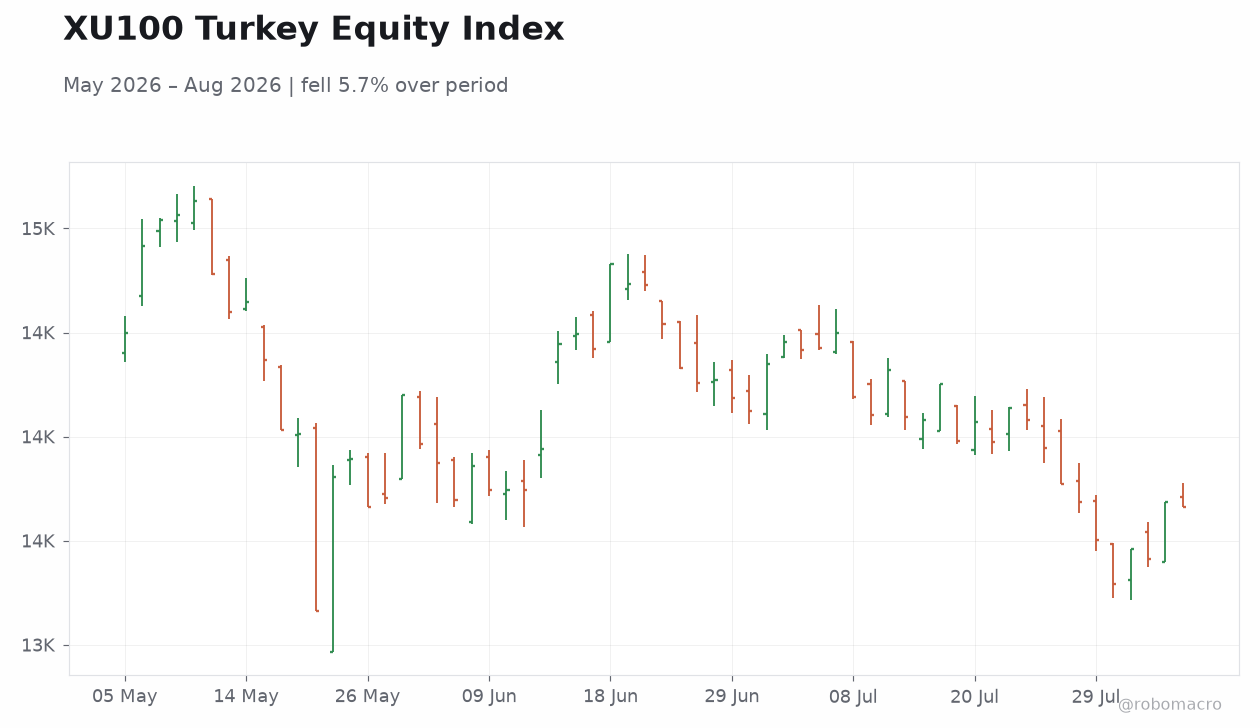
| BIST 100 | 13,686.57 | -0.01% |
| iShares Poland | 44.07 | +2.63% |
| EUR/PLN | 4.31 | +0.01% |
| EUR/HUF | 363.16 | -0.11% |
| EUR/CZK | 24.19 | +0.03% |
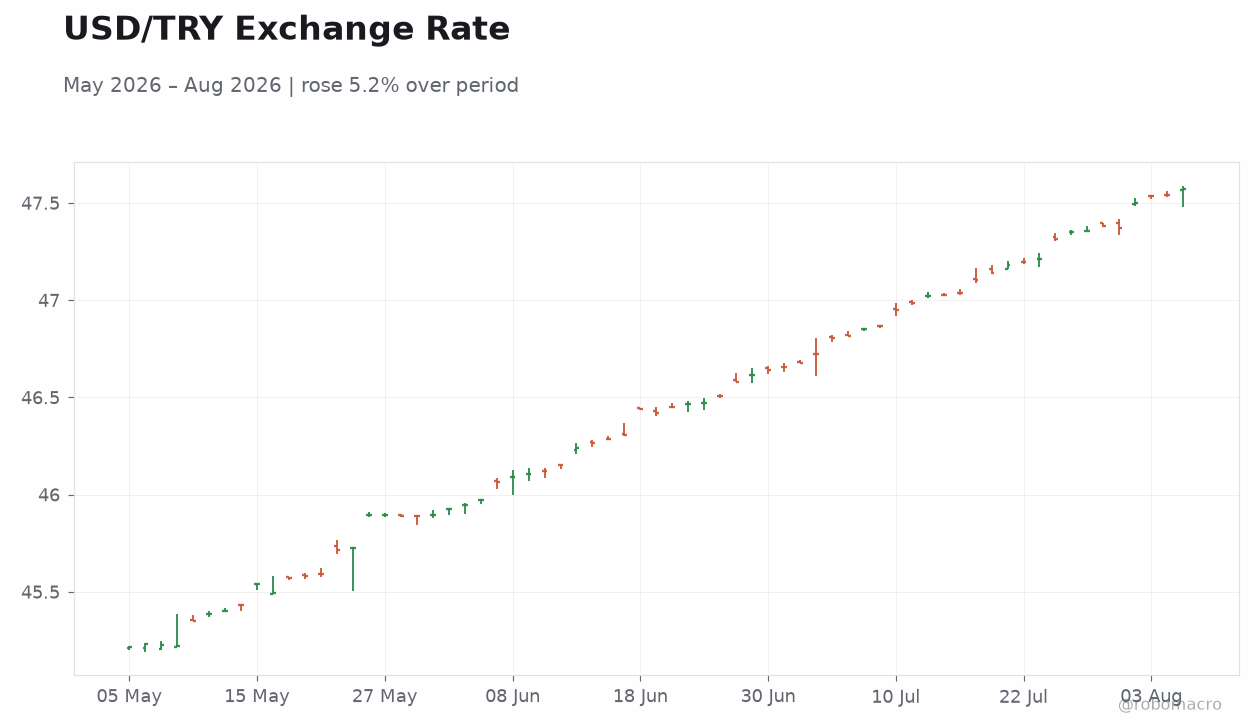
| USD/TRY | 47.58 | +0.08% |
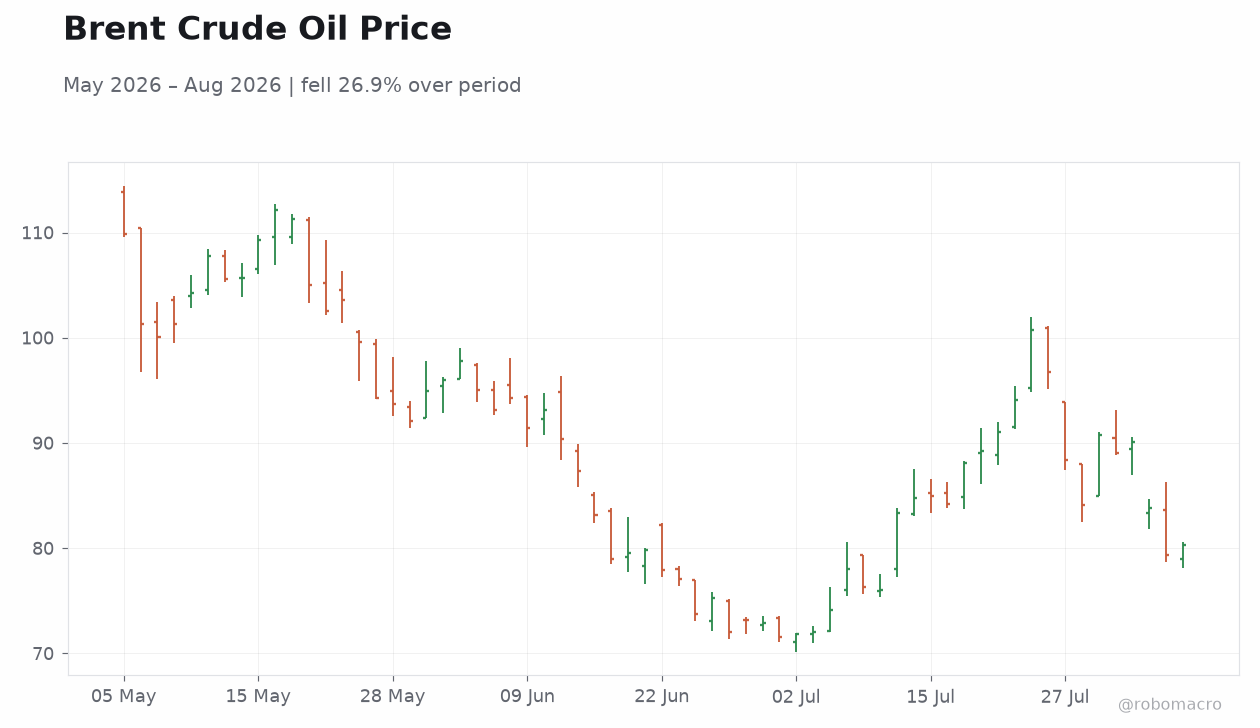
| Brent Crude | 80.28 | +1.16% |
| Gold | 4,216.20 | +2.95% |
| Bitcoin | 64,105.97 | +0.08% |
| Poland 10Y Govt Yield | 5.51% | -4.01% |
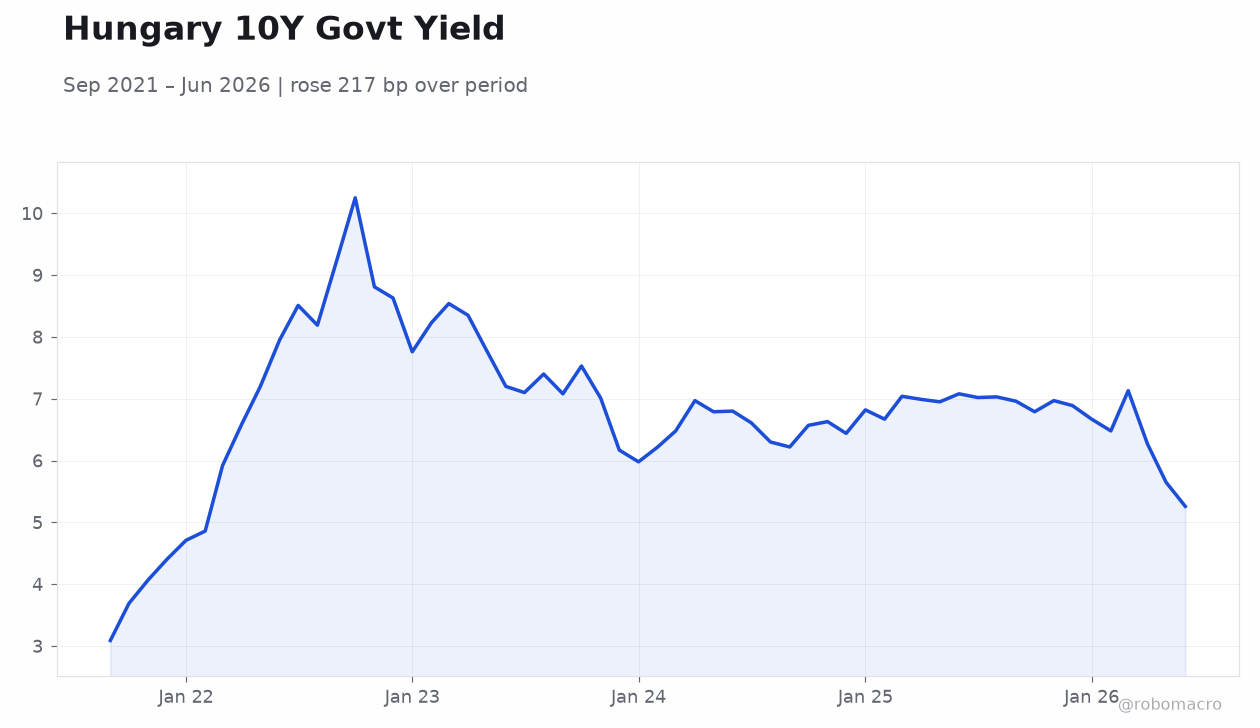
| Hungary 10Y Govt Yield | 5.26% | -6.90% |
Prior Economic Events
| Data | Prior | Cons | Actual |
|---|---|---|---|
| Inflation Rate Month-over-Month | 0.99 | 1.83 | 1.78 |
| Inflation Rate Year-over-Year | 32.11 | 31.80 | 31.75 |
| Balance of Trade Preliminary | -10,370m | - | -7,400m |
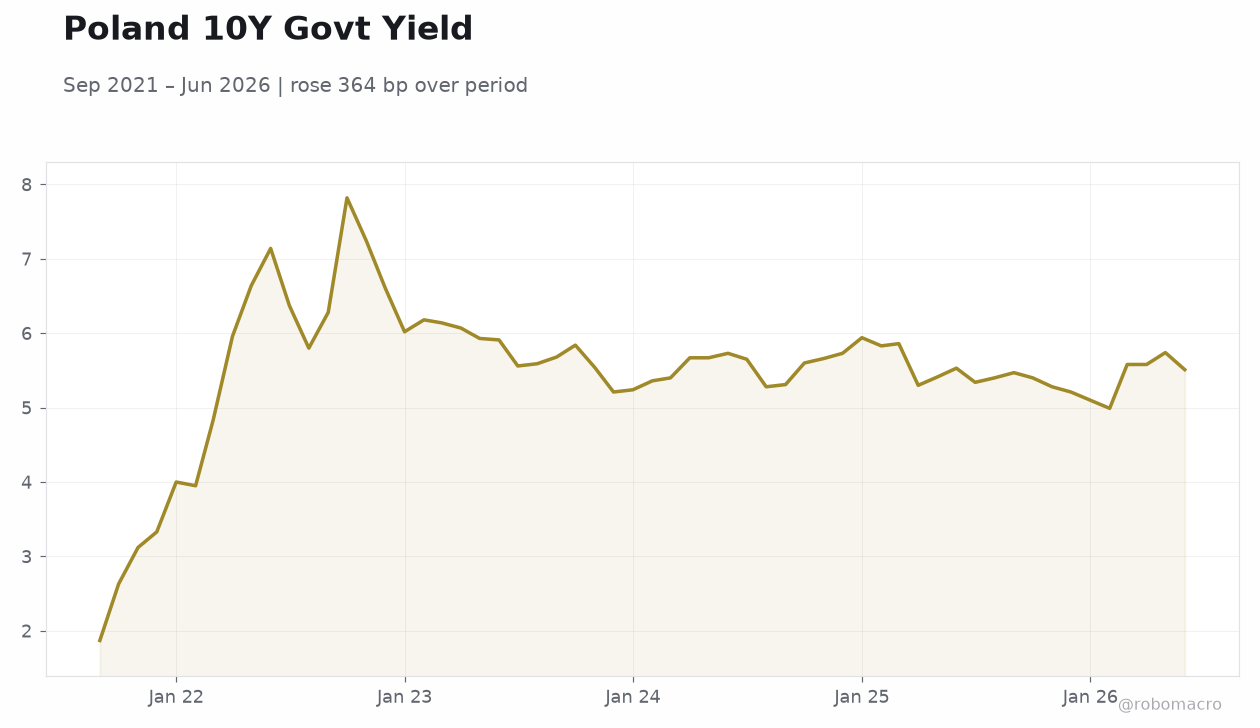 Poland 10Y Govt Yield | Type: macro_line | Yield %: 5.51 (2026-06-01) | Range: 1.87–7.82 | Trend(6pt): 1.87,7.24,5.24,5.86,5.74,5.51
Today's Economic Events
| Data | Prior | Cons | Time |
|---|---|---|---|
| No events available | |||
- Turkish July inflation printed 31.75% y/y, narrowly below consensus, while the trade deficit narrowed sharply to $7.4 bn.
- Polish equities rallied 2.63% and 10-year yields fell 4 bp as risk appetite improved across CEE.
- Regional FX remained stable against the euro, with EUR/PLN at 4.31 and EUR/HUF at 363.16.
Yesterday's Recap
Turkish July CPI rose 1.78% m/m and 31.75% y/y, both slightly softer than consensus forecasts of 1.83% and 31.8%. The preliminary trade balance improved to a $7.4 bn deficit from $10.37 bn previously. Polish markets led regional gains as the iShares Poland ETF climbed 2.63% while the 10-year government yield dropped 4 bp to 5.51%.
Hungarian 10-year yields fell 7 bp to 5.26%. The BIST 100 index closed essentially flat at 13,686.57 amid modest lira pressure, with USD/TRY rising 0.08% to 47.58. EUR/PLN edged 0.01% higher to 4.31 while EUR/HUF eased 0.11% to 363.16.
Brent crude advanced 1.16% to $80.28 and gold surged 2.95% to $4,216.20, supporting broader commodity-linked sentiment in the region. The moves occurred against a backdrop of stable regional FX crosses and selective fixed-income outperformance in Poland and Hungary, where lower yields reflected improved local demand and carry appeal versus euro-area peers.
The Day Ahead
No major data releases are scheduled for Poland, Czech Republic, Hungary, Romania or Turkey today. Markets will monitor any follow-up commentary from the CBRT after yesterday’s inflation print. Attention may turn to euro-area industrial production figures for indirect signals on Polish and Czech export demand.
Regional equity and fixed-income desks are likely to track global risk sentiment and any ECB speakers. Currency traders will watch USD/TRY for signs of renewed pressure following the narrower trade gap. Energy price gains in Brent and gold highlight continued vulnerability for net importers across the five economies, while EU fund flows remain a key support for Poland and Romania, with disbursement conditions tied to rule-of-law milestones.
Other Economic Notes
Sharply lower Polish and Hungarian yields reflect improved local demand and carry appeal versus euro-area peers. Turkey’s narrower trade deficit supports the CBRT’s narrative of gradual external adjustment despite still-elevated inflation. Energy price gains in Brent and gold highlight continued vulnerability for net importers across the five economies.
EU fund flows remain a key support for Poland and Romania, with disbursement conditions tied to rule-of-law milestones. <i>↓ p.2</i>