Eurozone Macro Daily(Beta Mode)
German Prices Surge, Stocks Mixed
Market Snapshot
| Asset | Level | Change |
|---|---|---|
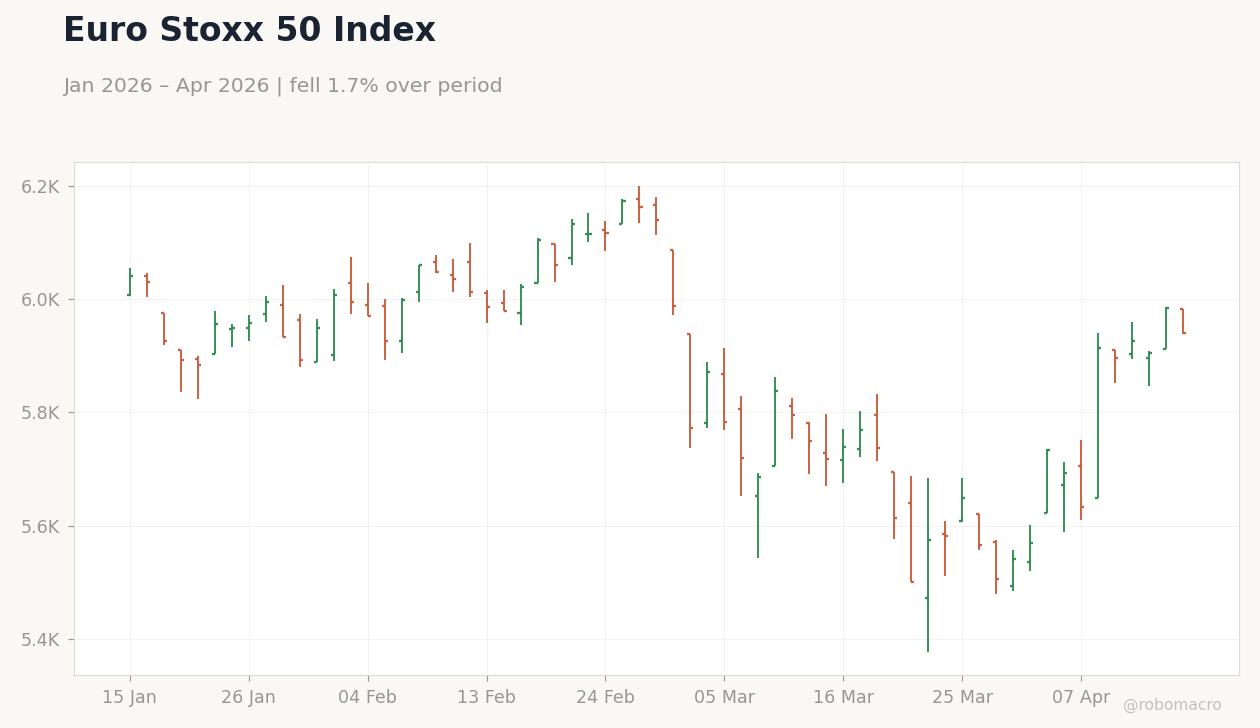
| Euro Stoxx 50 | 5,940.34 | -0.74% |
| DAX | 24,044.22 | +1.27% |
| CAC 40 | 8,274.57 | -0.64% |
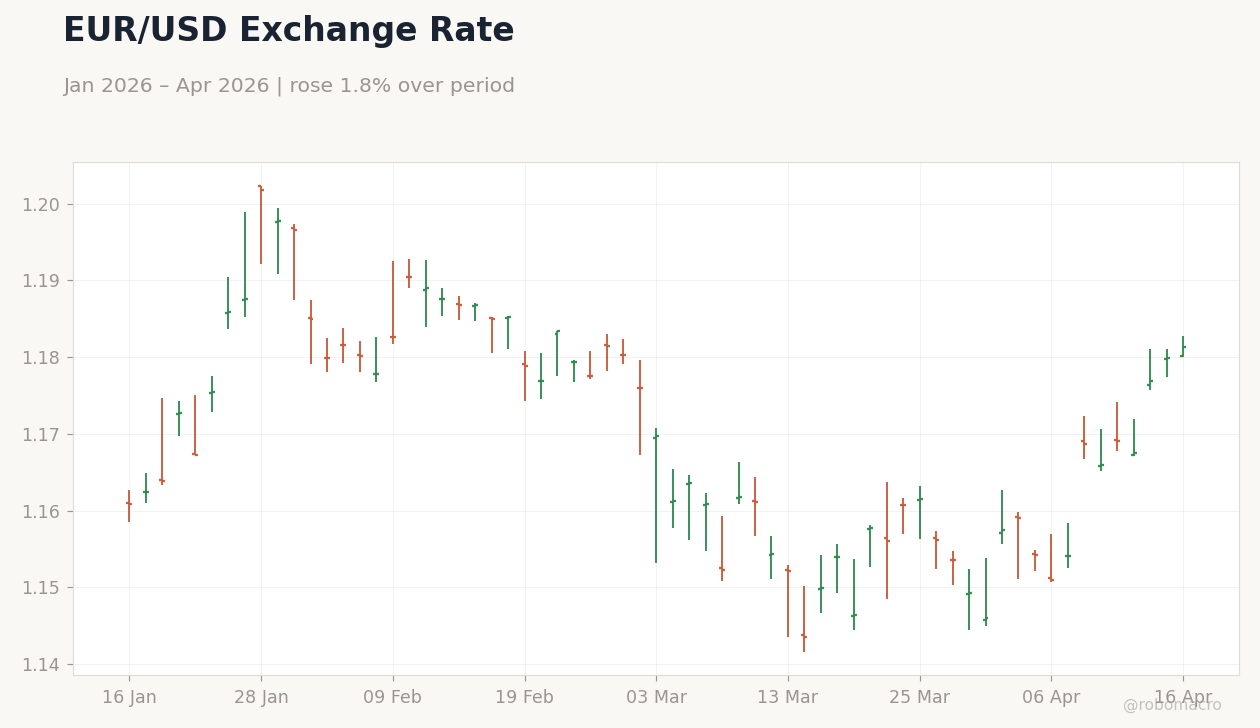
| EUR/USD | 1.18 | +0.12% |
| EUR/GBP | 0.87 | -0.15% |
| EUR/JPY | 187.41 | +0.03% |
| Gold | 4,853.20 | +1.11% |
| Brent Crude | 95.04 | +0.12% |
| Bitcoin | 75,012.45 | +1.12% |
| German 2Y Bund | - | - |
| German 10Y Bund | 2.91% | +5.84% |
Prior Economic Events
| Data | Prior | Cons | Actual |
|---|---|---|---|
| Wholesale Prices Month-over-Month | 0.60 | 0.40 | 2.70 |
| Wholesale Prices Year-over-Year | 1.20 | - | 4.10 |
| Headline Unemployment Rate | 4.10 | - | 4 |
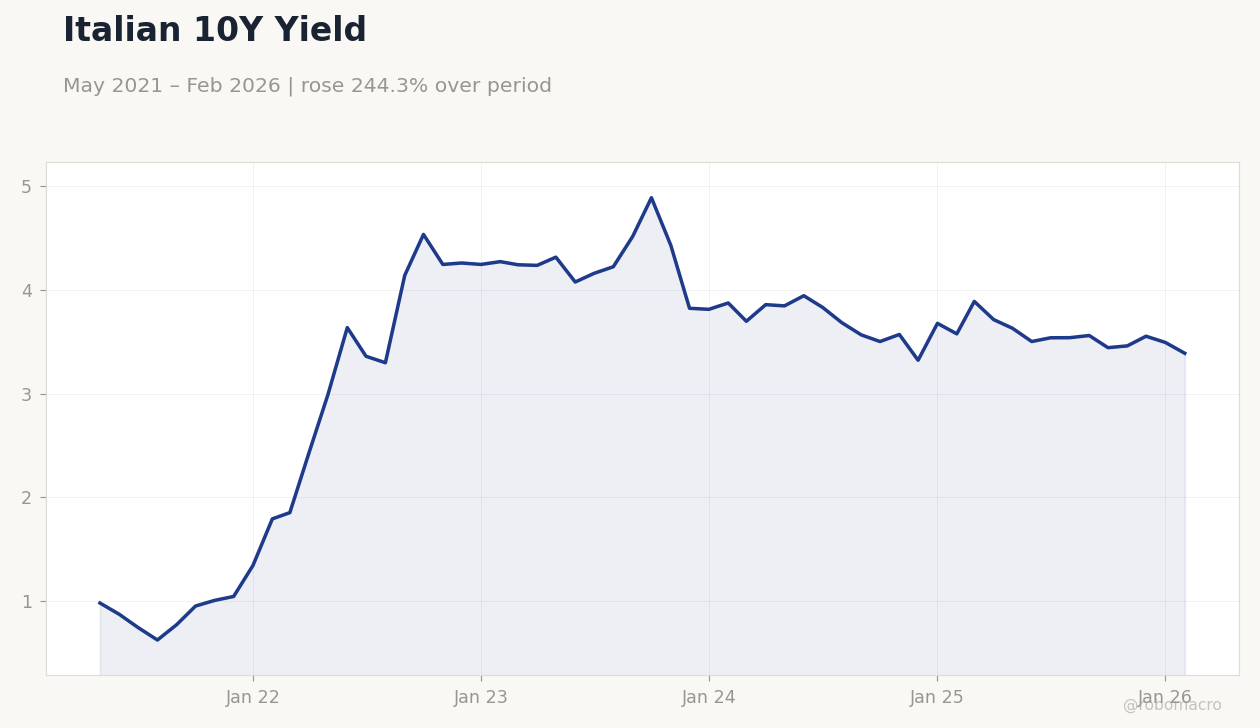 Italian 10Y Yield | Type: macro_line | Italian 10Y Yield %: 3.388 (2026-02-01) | Range: 0.628–4.885 | Trend(6pt): 0.984,3.359,4.513,3.569,3.492,3.388
Today's Economic Events
| Data | Prior | Cons | Time |
|---|---|---|---|
| Trade Balance | 1,089m | 3,830m | 00:00 |
| Friday (2026-04-17) | |||
| Trade Balance | 1,089m | 3,830m | 00:00 |
- German wholesale prices jumped unexpectedly, fueling inflation concerns amid mixed equity performance.
- Dutch unemployment dipped slightly, bolstering regional labor market resilience.
- Currency pairs showed modest shifts, with Bund yields climbing on repricing.
Yesterday's Recap
German wholesale prices surged month-over-month to 2.7% in March, far exceeding consensus of 0.4% and previous 0.6%, while year-over-year climbed to 4.1% from 1.2%, underscoring persistent input cost pressures in Europe's largest economy. Netherlands headline unemployment rate eased to 4% from 4.1%, reflecting labor market strength despite economic headwinds. Euro Stoxx 50 declined 0.74% to 5,940.34, pressured by regional uncertainties, while Germany's DAX rose 1.27% to 24,044.22 on industrial sector gains.
France's CAC 40 fell 0.64% to 8,274.57, weighed by luxury slowdowns. EUR/USD gained 0.12% to 1.18 amid mild dollar softening, but EUR/GBP slipped 0.15% to 0.87. EUR/JPY edged up 0.03% to 187.41.
Gold climbed 1.11% to 4,853.20 as safe-haven demand rose, Brent crude rose 0.12% to 95.04 on supply stability, and Bitcoin advanced 1.12% to 75,012.45. German 10-year Bund yield increased 5.84 basis points to 2.91%, driven by inflation data and global rate dynamics.
The Day Ahead
Italy's trade balance for February releases at 00:00 on April 17, with consensus forecasting a €3.83 billion surplus versus previous €1.089 billion, which could signal export improvements and influence Italian bonds and euro sentiment if it outperforms. No key ECB events are scheduled, allowing markets to absorb recent data. Attention persists on geopolitical developments, such as Ukraine aid, potentially impacting energy costs and Eurozone trade.
Other Economic Notes
Eurozone fiscal discussions escalate, with Germany pushing stricter debt rules against France's projected deficits and Italy's growth worries. Corporate updates include Airbus order successes and Volkswagen's lowered EV guidance, highlighting manufacturing disparities. Germany's €4 billion Ukraine aid package, including Patriot missiles, may strain budgets but enhances security.
IMF forecasts Nigeria's 4.3% growth by 2027 surpassing Germany and others, possibly shifting global investments. French inflation revised higher in March due to Iran war energy surges, adding ECB policy pressures. Sovereign debt sell-offs hit Britain, Italy, and France as 'Bifs' amid conflict, raising Eurozone contagion risks.