Eurozone Macro Daily(Beta Mode)
French Jobless Up, German Prices Surge
Market Snapshot
| Asset | Level | Change |
|---|---|---|
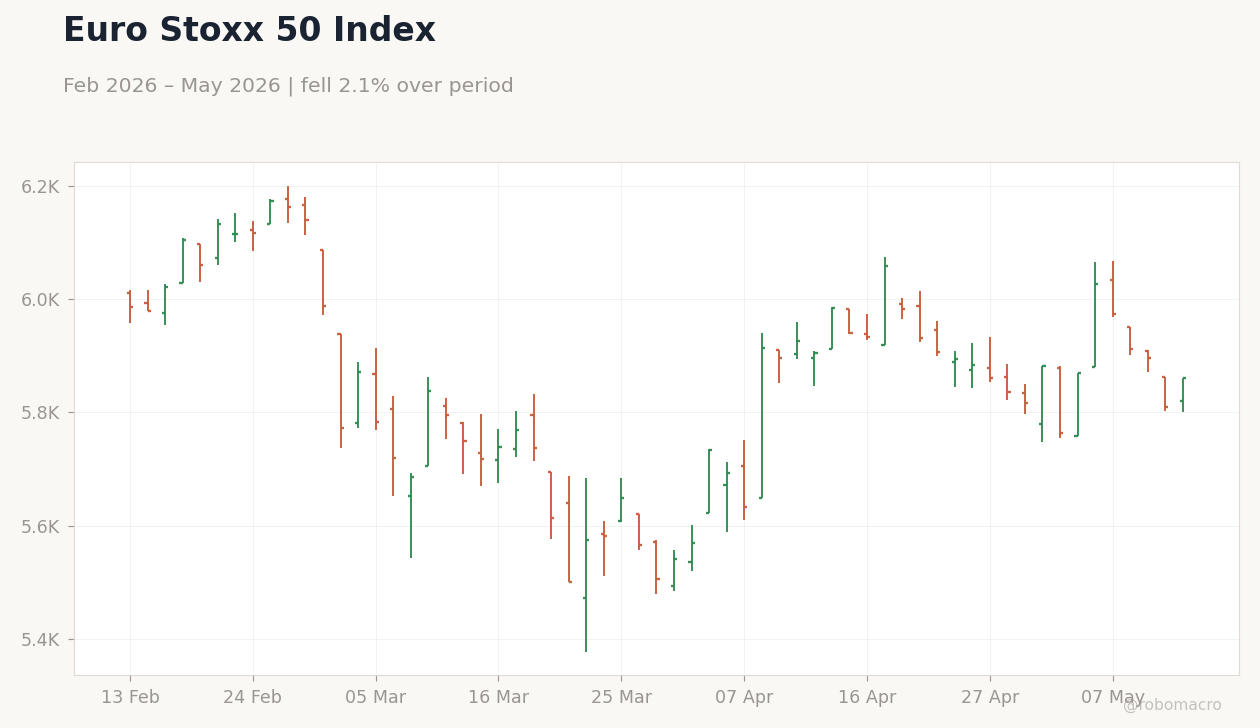
| Euro Stoxx 50 | 5,861.07 | +0.91% |
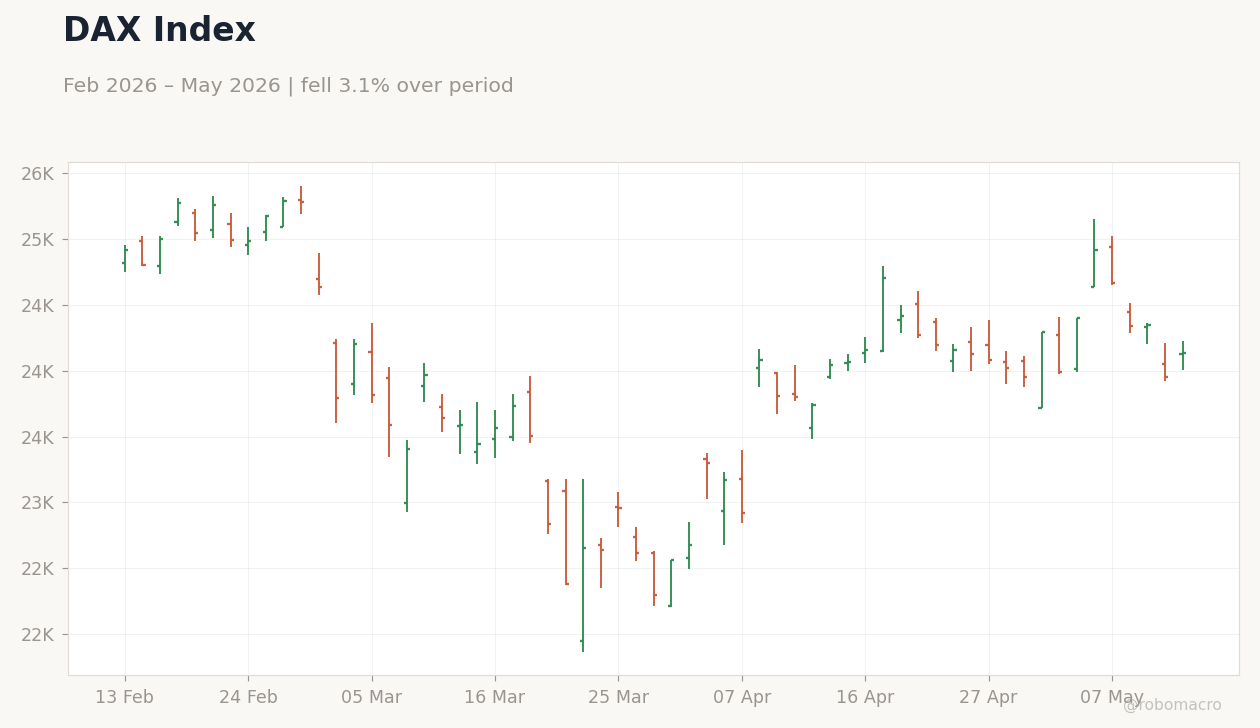
| DAX | 23,954.93 | -1.62% |
| CAC 40 | 8,007.97 | +0.35% |
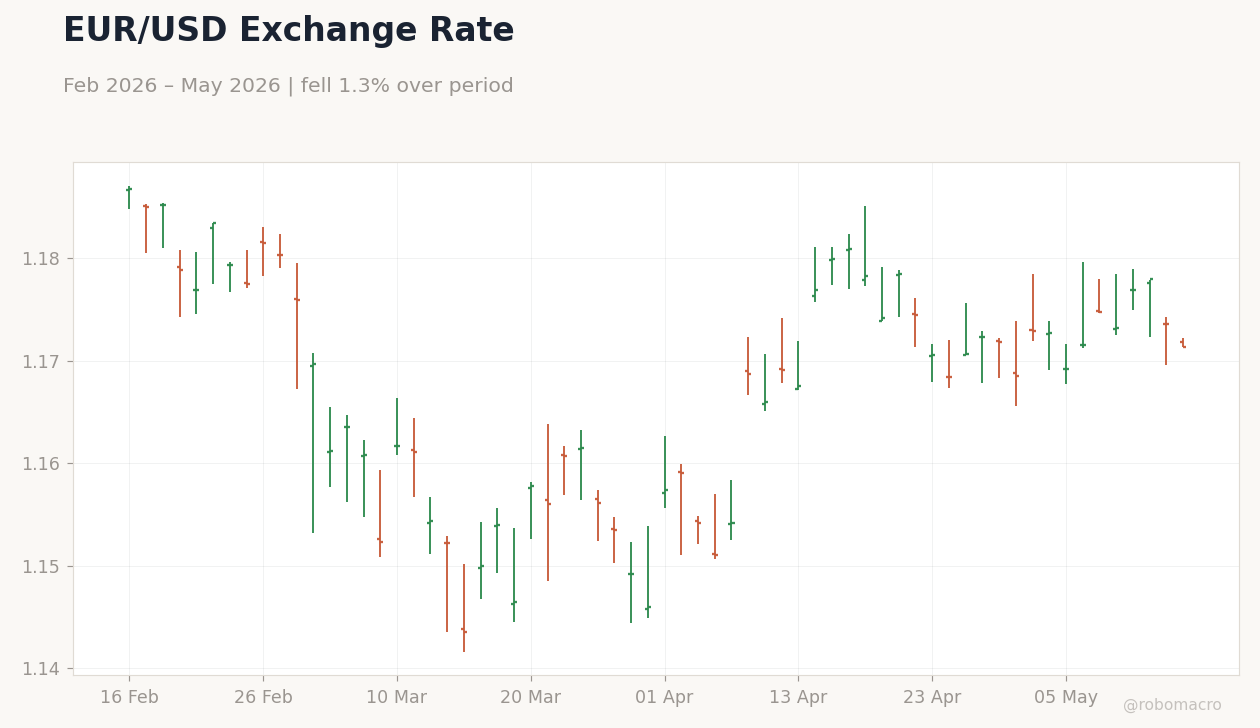
| EUR/USD | 1.17 | -0.19% |
| EUR/GBP | 0.87 | -0.08% |
| EUR/JPY | 184.90 | -0.07% |
| Gold | 4,708.20 | +0.22% |
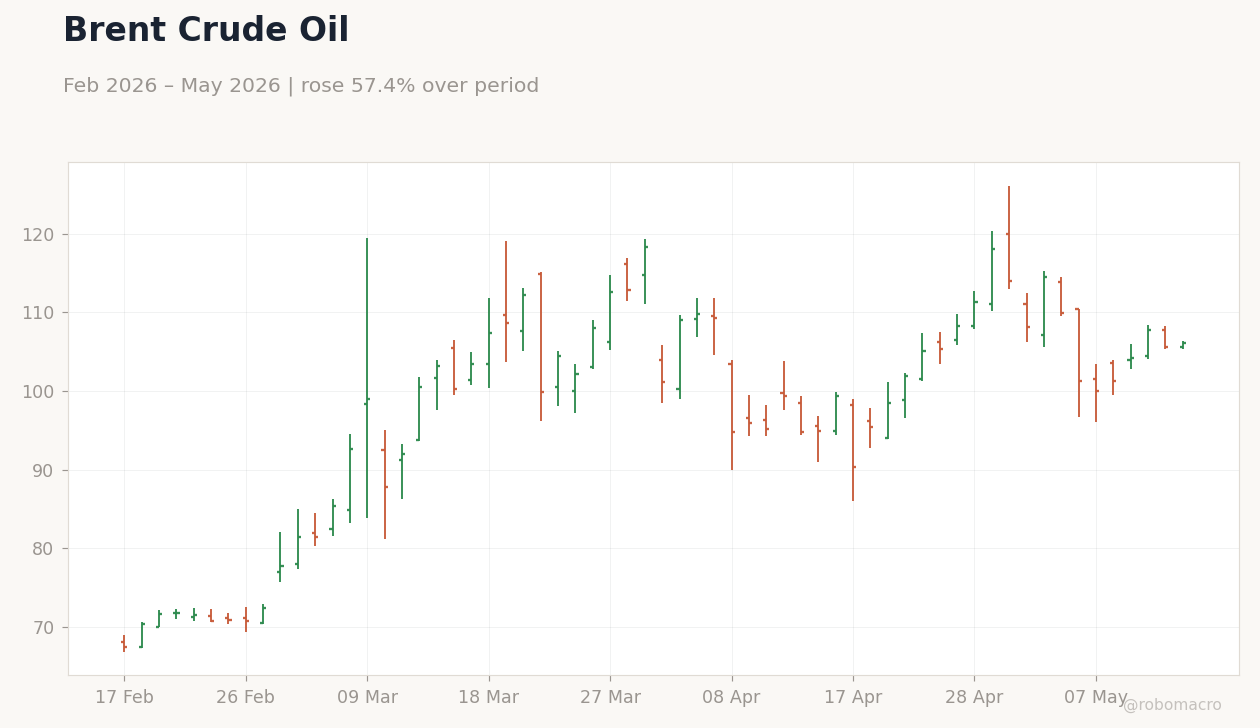
| Brent Crude | 106.11 | +0.45% |
| Bitcoin | 79,807.91 | -0.83% |
| German 2Y Bund | - | - |
| German 10Y Bund | 2.91% | +5.84% |
Prior Economic Events
| Data | Prior | Cons | Actual |
|---|---|---|---|
| Headline Unemployment Rate | 7.90 | 7.80 | 8.10 |
| Wholesale Prices Month-over-Month | 2.70 | 1 | 2 |
| Wholesale Prices Year-over-Year | 4.10 | - | 6.30 |
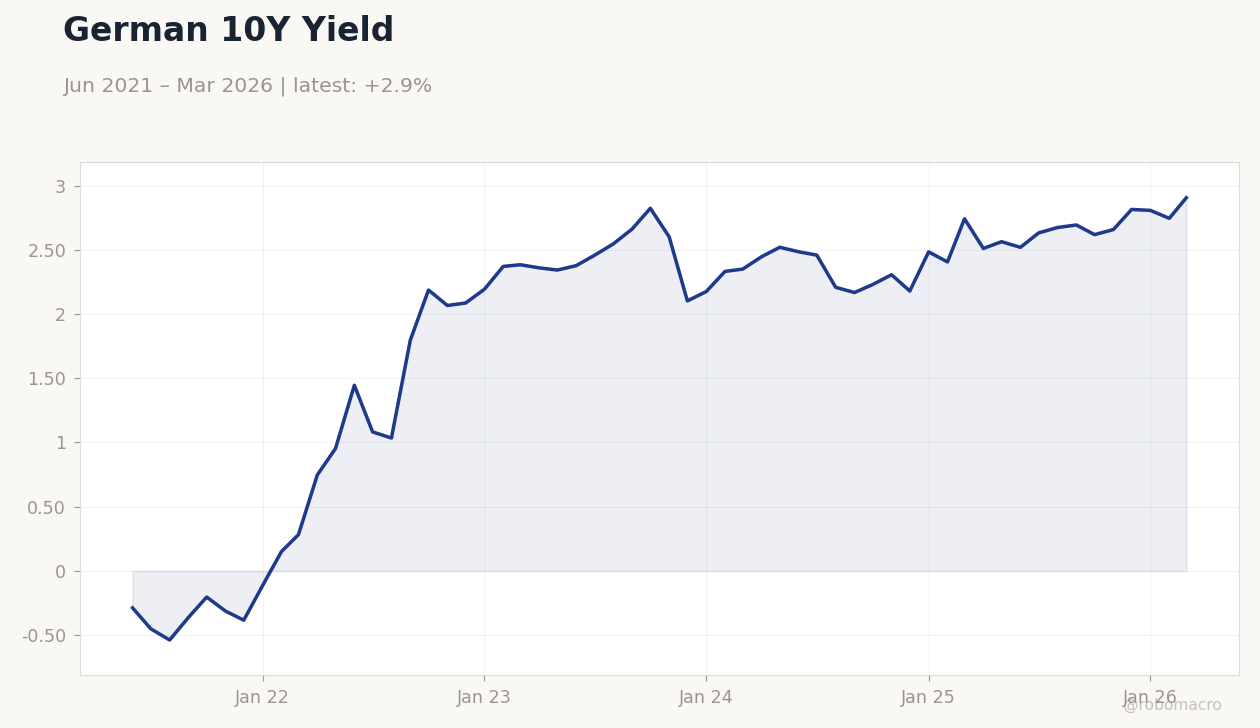 German 10Y Yield | Type: macro_line | 10Y Yield (%): 2.905 (2026-03-01) | Range: -0.5386–2.905 | Trend(6pt): -0.2886,1.034,2.823,2.179,2.745,2.905
Today's Economic Events
| Data | Prior | Cons | Time |
|---|---|---|---|
| Trade Balance | 4,944m | - | 04:00 |
| Trade Balance | -3,300m | - | 04:00 |
| Producer Price Index Year-over-Year | -0.20 | - | 02:00 |
| Consumer Confidence Index | -44 | - | 00:30 |
| Headline Unemployment Rate | 4 | - | 00:30 |
| S&P Global Composite PMI Flash | 47.60 | - | 03:15 |
| S&P Global Manufacturing PMI Flash | 52.80 | - | 03:15 |
| S&P Global Services PMI Flash | 46.50 | - | 03:15 |
| S&P Global Manufacturing PMI Flash | 51.40 | - | 03:30 |
| S&P Global Composite PMI Flash | 48.40 | - | 03:30 |
- French unemployment rose unexpectedly to 8.1%, signaling labor market weakness, while German wholesale prices beat forecasts with 2% MoM and 6.3% YoY gains.
- Equities mixed: Euro Stoxx 50 +0.91%, DAX -1.62%, CAC 40 +0.35%; EUR/USD dipped to 1.17 amid rising Bund yields.
- Global factors like oil spikes and geopolitical tensions influenced Eurozone sentiment, with Brent at $106.11 (+0.45%).
Yesterday's Recap
French headline unemployment rate climbed to 8.1% in April, exceeding consensus of 7.8% and prior 7.9%, highlighting persistent labor challenges amid slowing growth. German wholesale prices rose 2% month-over-month, surpassing expectations of 1% from previous 2.7%, while year-over-year figures jumped to 6.3% against prior 4.1%, stoking inflation concerns in the bloc's largest economy. No major Italian or Spanish data emerged, but broader Eurozone markets reacted with mixed equity performance.
Euro Stoxx 50 advanced 0.91% to 5,861.07, buoyed by gains in French stocks as CAC 40 rose 0.35% to 8,007.97, while Germany's DAX fell 1.62% to 23,954.93 on inflation jitters. EUR/USD weakened 0.19% to 1.17, with EUR/GBP down 0.08% to 0.87 and EUR/JPY slipping 0.07% to 184.90. German 10-year Bund yields rose to 2.91%, up 5.84%, reflecting bets on sustained ECB tightening.
Overall, these releases underscored uneven recovery across key member states, pressuring the euro lower.
The Day Ahead
Investors eye Italian trade balance data at 04:00 ET, with prior surplus of €4.944 billion, potentially signaling export resilience amid global demand shifts. Spanish trade balance follows at 04:00 ET, following previous deficit of -€3.3 billion, which could highlight import pressures from energy costs. German producer price index year-over-year is due at 02:00 ET, building on prior -0.2%, offering insights into upstream inflation trends.
Dutch consumer confidence index and headline unemployment rate arrive at 00:30 ET, with prior figures of -44.0 and 4%, respectively, gauging sentiment in the Netherlands. French S&P Global PMI flashes for composite, manufacturing, and services release at 03:15 ET, with priors of 47.6, 52.8, and 46.5, critical for assessing activity. German PMI flashes at 03:30 ET, including high-impact manufacturing at prior 51.4, could sway ECB cut expectations if below forecasts.
Other Economic Notes
Broader Eurozone themes include sticky inflation in core economies like Germany, where wholesale price surges suggest pass-through risks to consumers, complicating ECB's path to normalization. <i>↓ p.2</i>