GCC Macro Daily(Beta Mode)
Saudi Intercepts Drones as Oil Dips
Market Snapshot
| Asset | Level | Change |
|---|---|---|
| Saudi Aramco | 27.06 | -0.15% |
| MSCI Saudi | 36.78 | -2.18% |
| MSCI UAE | 17.45 | -2.62% |
| DFM General | 5,550.24 | +0.81% |
| MSCI Qatar | 18.29 | -0.22% |
| MSCI Kuwait | 35.96 | +0.43% |
| Brent Crude | 106.41 | -2.06% |
| WTI Crude | 98.23 | +2.17% |
| Gold | 4,574.90 | -0.56% |
| USD/SAR | 3.75 | +0.12% |
| USD/AED | 3.67 | +0.04% |
| USD/KWD | 0.31 | -0.07% |
| Bitcoin | 70,276.18 | -0.35% |
Prior Economic Events
| Data | Prior | Cons | Actual |
|---|---|---|---|
| No events available | |||
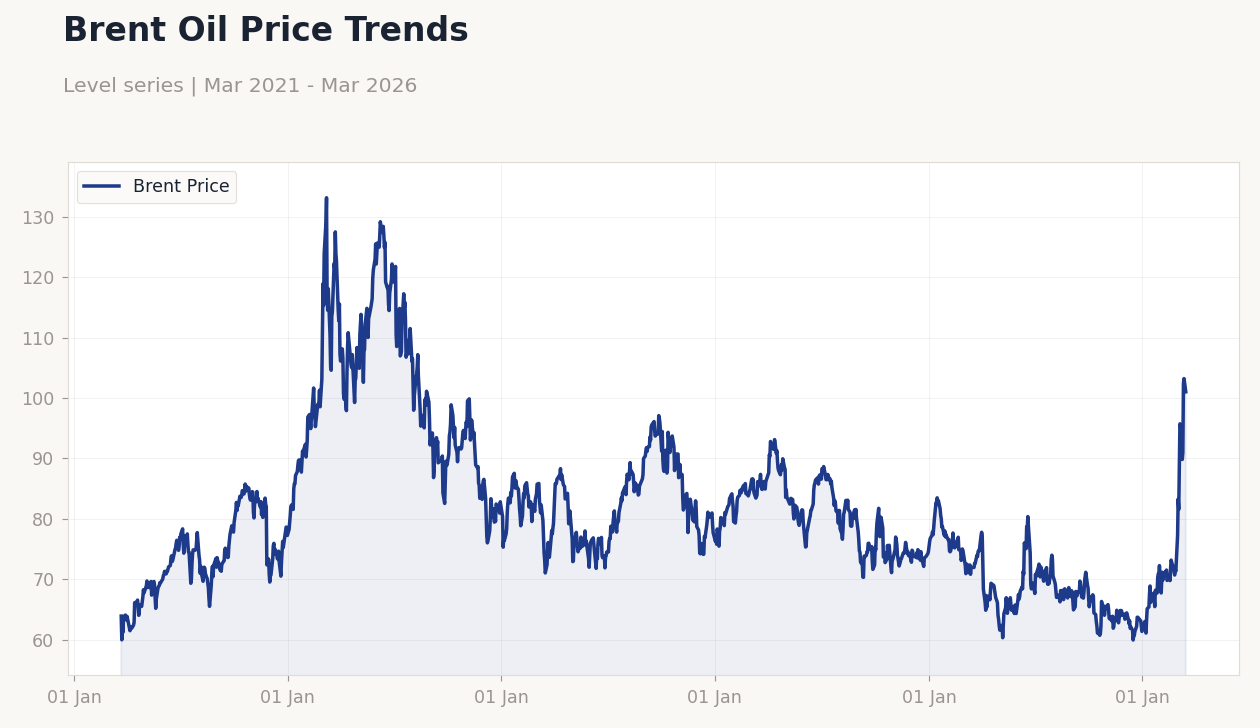 Brent Oil Price Trends | Type: macro_line | Brent Price: 101 (2026-03-16) | Range: 59.93–133.2 | Trend(5pt): 63.89,118.5,94.56,74.3,101
Today's Economic Events
| Data | Prior | Cons | Time |
|---|---|---|---|
| No events available | |||
- Saudi Arabia intercepts two drones in Eastern Province amid ongoing Iran tensions.
- GCC equities mixed; MSCI Saudi down 2.18%, DFM General up 0.81%.
- Brent crude falls 2.06% to $106.41, weighing on regional fiscal outlooks.
Yesterday's Recap
Saudi Arabia's Ministry of Defence reported intercepting two drones in the Eastern Province, underscoring persistent security threats linked to regional conflicts, including Iran's involvement, which could heighten oil supply risks through the Strait of Hormuz. Azerbaijan's investments in the Saudi economy grew nearly eightfold in 2025, highlighting diversification under Vision 2030, while reports of $2.5 trillion in mining resource potential added optimism for non-oil sectors. UAE markets showed strength with the DFM General Index rising 0.81% to 5,550.24, supported by real estate amid efforts to attract global talent through housing and schooling benefits, similar to Saudi initiatives.
Qatar's MSCI index slipped 0.22% to 18.29, reflecting slight pressure from LNG market concerns tied to outages, though energy stocks held steady. Kuwait's MSCI index gained 0.43% to 35.96, bolstered by banking on positive fiscal indicators, while Bahrain and Oman had quiet sessions with no significant changes. Brent crude's 2.06% drop to $106.41 pressured Saudi Aramco shares, down 0.15% to 27.06, and drove a 2.18% decline in MSCI Saudi to 36.78.
Saudi Arabia's alternative export routes for Hormuz disruptions are approaching 3 million barrels per day, easing some flow worries but remaining below pre-crisis volumes. UAE's MSCI fell 2.62% to 17.45 amid broader volatility.
The Day Ahead
No key economic data releases are scheduled today in the GCC, shifting focus to geopolitical developments, especially potential escalations in the Red Sea or Strait of Hormuz that might affect Saudi and Qatari oil shipments. Updates on Saudi mining sector progress, following the $2.5 trillion resource potential news, could influence non-oil growth forecasts. UAE officials may provide insights on talent attraction via housing benefits, affecting real estate markets.
Qatar's LNG dynamics stay in view amid global supply tightness, potentially impacting revenues. GCC equities are likely to follow Brent crude trends, with Kuwait's dinar basket peg offering some buffer against USD shifts. Minor fiscal notes from Oman and Bahrain could emerge, though nothing is formally planned.
Other Economic Notes
GCC economies continue emphasizing non-oil diversification, with Saudi Vision 2030 advancing through mining and housing incentives to draw global talent, supporting sustained GDP growth beyond oil dependency. (cont...)