GCC Macro Daily(Beta Mode)
Oil Plunges Amid Iran Tensions
Market Snapshot
| Asset | Level | Change |
|---|---|---|
| Saudi Aramco | 26.98 | +0.00% |
| MSCI Saudi | 38.79 | +2.32% |
| MSCI UAE | 17.84 | +0.22% |
| DFM General | 5,434.41 | -0.15% |
| MSCI Qatar | 18.20 | +0.19% |
| MSCI Kuwait | 35.58 | +0.00% |
| Brent Crude | 105.40 | -6.54% |
| WTI Crude | 102.80 | -0.08% |
| Gold | 4,707.20 | +4.00% |
| USD/SAR | 3.75 | +0.11% |
| USD/AED | 3.67 | +0.01% |
| USD/KWD | 0.31 | +0.40% |
| Bitcoin | 67,565.40 | +1.31% |
Prior Economic Events
| Data | Prior | Cons | Actual |
|---|---|---|---|
| No events available | |||
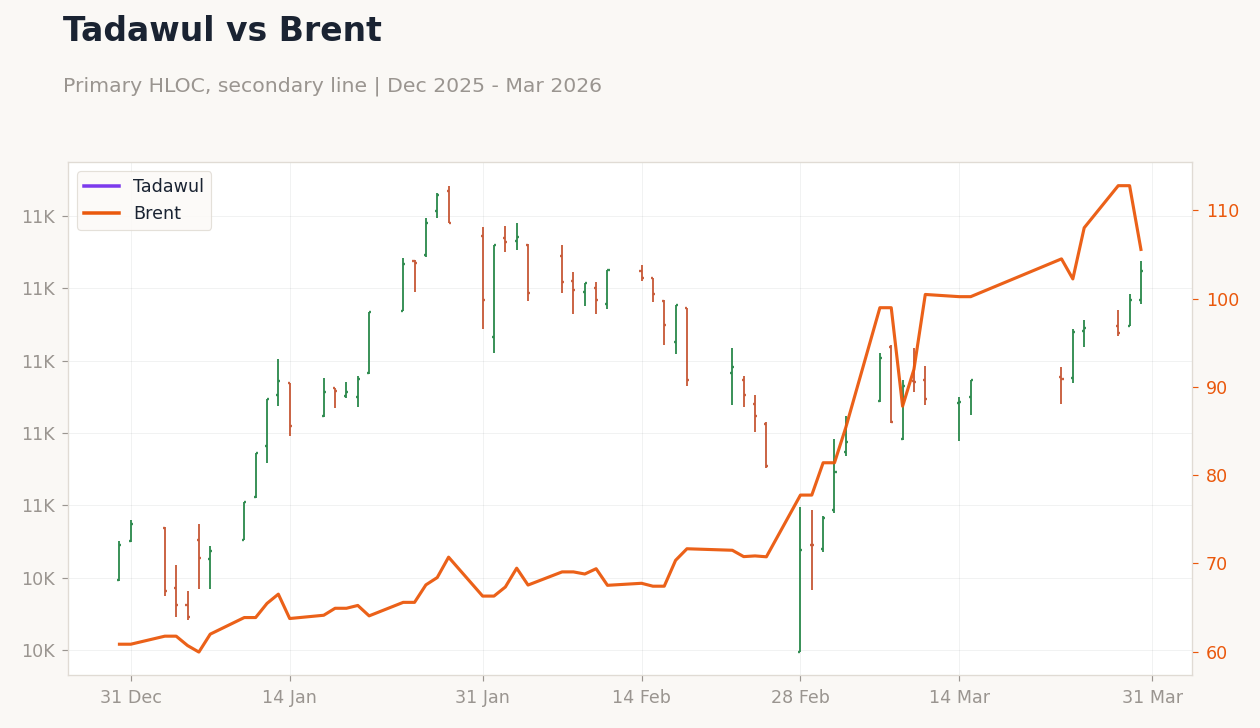
 Brent vs WTI Crude Prices | Type: macro_line | Brent ($/bbl): 103.8 (2026-03-23) | Range: 59.93–133.2 | Trend(5pt): 61.47,119.2,95.86,73.5,103.8 | WTI ($/bbl): 89.33 (2026-03-23) | Range: 55.44–123.6 | Trend(5pt): 58.73,113.7,89.56,70.1,89.33
Today's Economic Events
| Data | Prior | Cons | Time |
|---|---|---|---|
| No events available | |||
- Brent crude fell 6.54% to 105.40 amid Iran war escalation and Hormuz blockade risks, straining GCC budgets.
- GCC stocks mixed: MSCI Saudi rose 2.32% to 38.79, UAE and Qatar indices gained modestly despite oil drop.
- Geopolitical strains grew with Gulf condemnations of Iran, plus weather hits to UAE and Saudi infrastructure.
Yesterday's Recap
GCC markets displayed varied results yesterday amid steep oil price drops and persistent Middle East conflict updates, with no economic data releases. In Saudi Arabia, MSCI Saudi climbed 2.32% to 38.79, supported by steady Aramco shares at 26.98 despite Brent's 6.54% decline to 105.40, highlighting investor emphasis on diversification efforts. UAE markets were muted, with MSCI UAE up 0.22% to 17.84 and DFM General down 0.15% to 5,434.41, as thunderstorms caused disruptions and raised infrastructure worries.
Qatar's MSCI Qatar advanced 0.19% to 18.20, aided by resilient LNG flows despite Houthi support for Iran posing Red Sea threats. Kuwait's MSCI Kuwait held flat at 35.58, with officials highlighting dire economic risks from any Hormuz shutdown. GCC currency pegs stayed stable, with USD/SAR rising 0.11% to 3.75 and USD/AED up 0.01% to 3.67, demonstrating resilience in turbulent conditions.
Oman and Bahrain experienced minimal trading, with focus on possible labor impacts from the Iran war.
The Day Ahead
No economic indicators are slated for tomorrow, shifting focus to geopolitical shifts, including updates on the Iran war and Houthi moves in Yemen that might affect Red Sea transit. GCC officials could discuss oil market strategies informally to address Hormuz blockade threats and supply contingencies. Traders will watch Brent prices, as additional falls may challenge Saudi and UAE fiscal positions.
Qatar may progress LNG deals with Europe amid high energy costs. Kuwait might comment on dinar adjustments amid USD gains. Markets anticipate volatility from U.S.
statements on the conflict, with vigilance for unscheduled news.
Other Economic Notes
GCC economies prioritize non-oil growth acceleration against war-driven oil swings, with Saudi pushing Vision 2030 initiatives despite market unrest. UAE contends with storm-related setbacks and migrant exits, possibly delaying building and hospitality. Inflation pressures build from disrupted supplies, calling for careful budgeting region-wide.