| Asset | Level | Change |
|---|---|---|
| Saudi Aramco | 27.40 | +1.56% |
| MSCI Saudi | 39.75 | +2.47% |
| MSCI UAE | 18.65 | +4.54% |
| DFM General | 5,485.17 | -0.46% |
| MSCI Qatar | 18.60 | +2.22% |
| MSCI Kuwait | 36.14 | +1.57% |
| Brent Crude | 109.03 | +7.78% |
| WTI Crude | 111.54 | +11.41% |
| Gold | 4,651.50 | -2.75% |
| USD/SAR | 3.75 | +0.13% |
| USD/AED | 3.67 | +0.00% |
| USD/KWD | 0.31 | -0.66% |
| Bitcoin | 67,150.28 | +0.33% |
| Data | Prior | Cons | Actual |
|---|---|---|---|
| No events available | |||
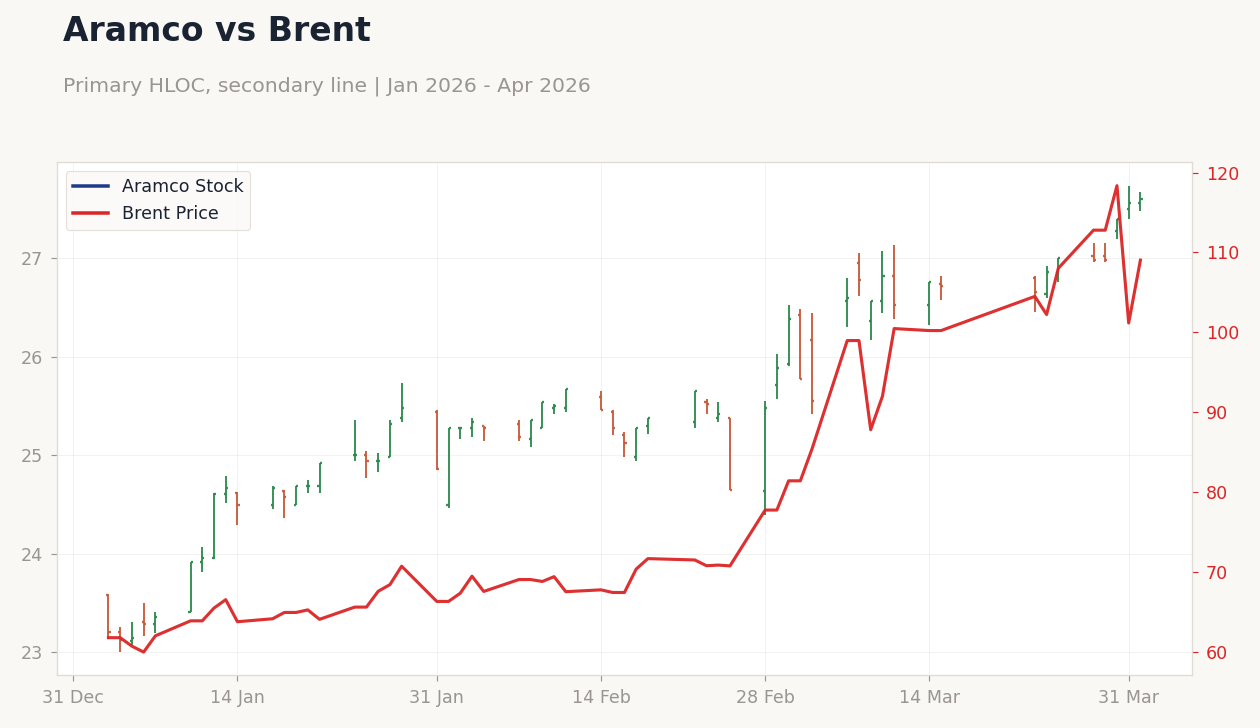
Aramco vs Brent | Type: market_hloc | Aramco Stock: 27.6 (2026-04-02) | Range: 23.12–27.6 | Trend(6pt): 23.21,24.92,25.5,25.77,27.4,27.6 | Brent Price: 109 (2026-04-02) | Range: 59.96–118.3 | Trend(6pt): 61.76,67.57,70.35,91.98,101.2,109
| Data | Prior | Cons | Time |
|---|---|---|---|
| No events available | |||
Geopolitical risks intensified as Saudi Arabia intercepted and destroyed seven drones and one additional drone over the past few hours, amid ongoing threats. Attacks targeted facilities across the region, including a UAE gas plant hit by debris, resulting in one Egyptian killed and four injured, and Emirates Global Aluminium warning of up to a year for full output restoration at a key Abu Dhabi facility. A Kuwait oil refinery was also hit in the latest Iran-linked incidents, with IRGC actions reportedly targeting iconic bridges in Bahrain, Kuwait, Saudi Arabia, UAE, Jordan, and Egypt to disrupt economy, tourism, and logistics.
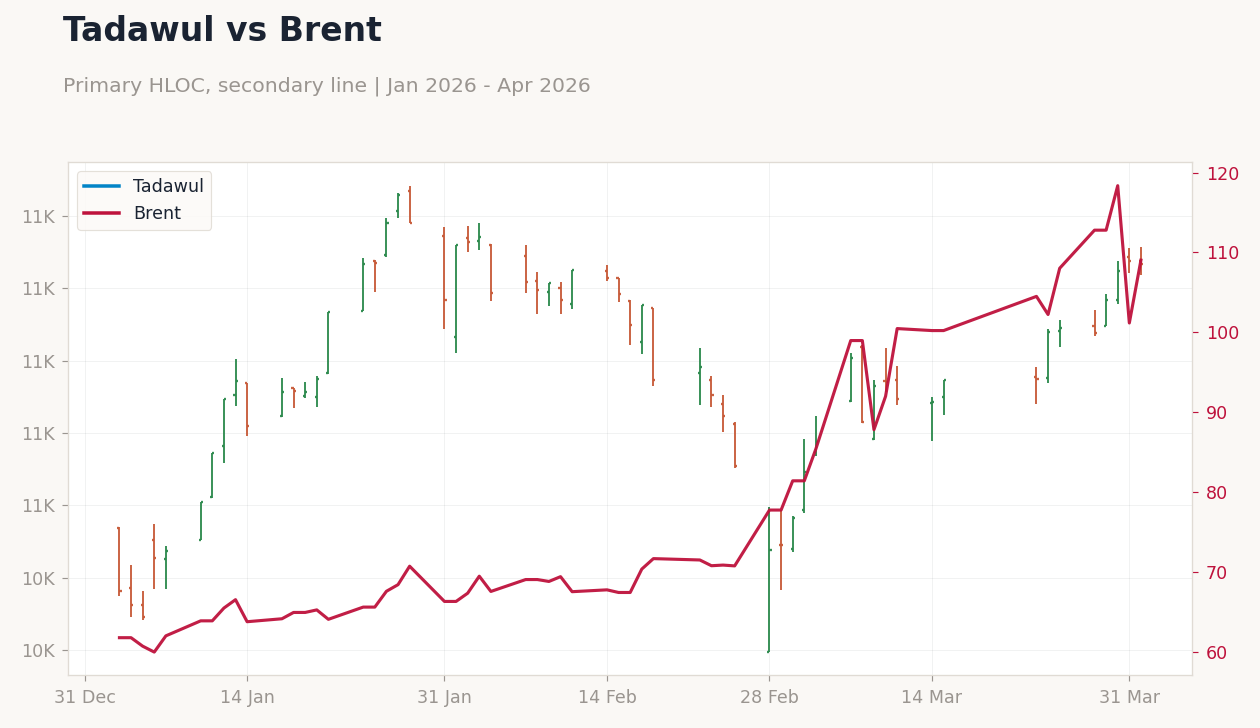
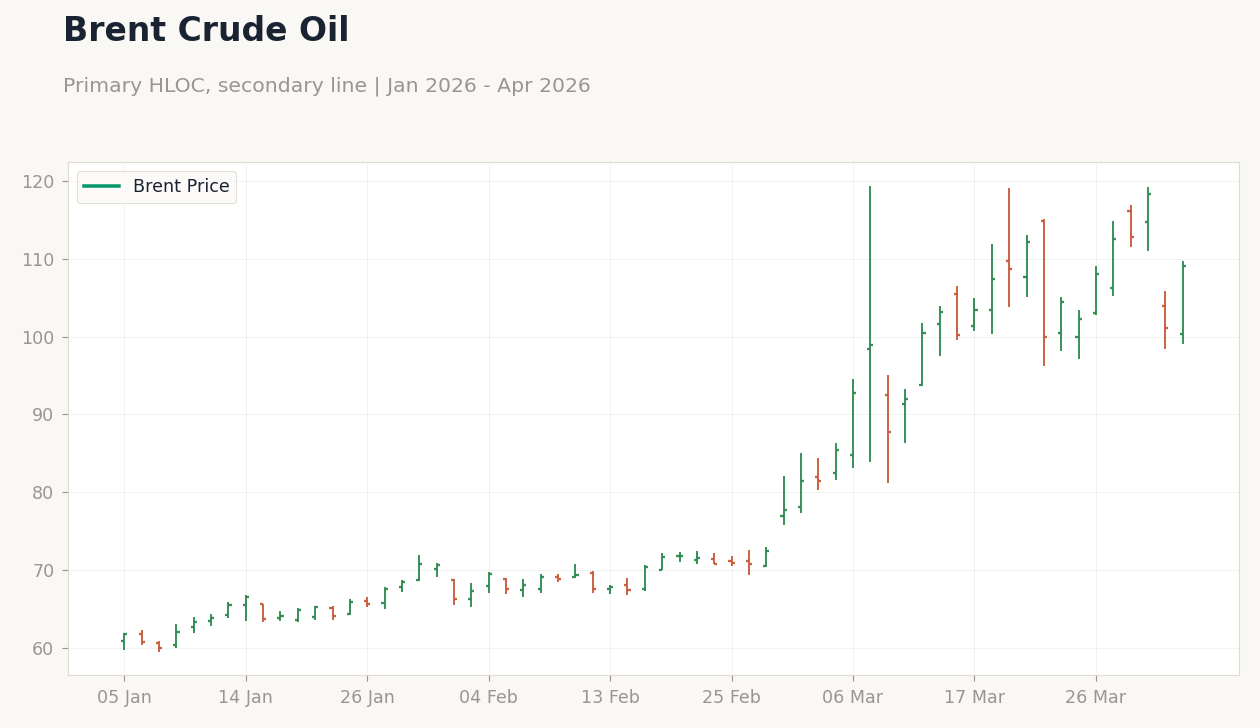
Saudi Sadara petrochemical giant halted all production, creating a plastics chokepoint. Saudi Aramco shares rose 1.56% to 27.40, driving the MSCI Saudi index up 2.47% to 39.75, reflecting oil market strength. Brent crude surged 7.78% to 109.03 and WTI climbed 11.41% to 111.54, bolstering fiscal positions across the GCC.
The UAE's DFM General index dipped 0.46% to 5,485.17, but MSCI UAE gained 4.54% to 18.65 amid energy optimism. Qatar's MSCI index advanced 2.22% to 18.60, and Kuwait's MSCI rose 1.57% to 36.14. Gold fell 2.75% to 4,651.50, while Bitcoin edged up 0.33% to 67,150.28.
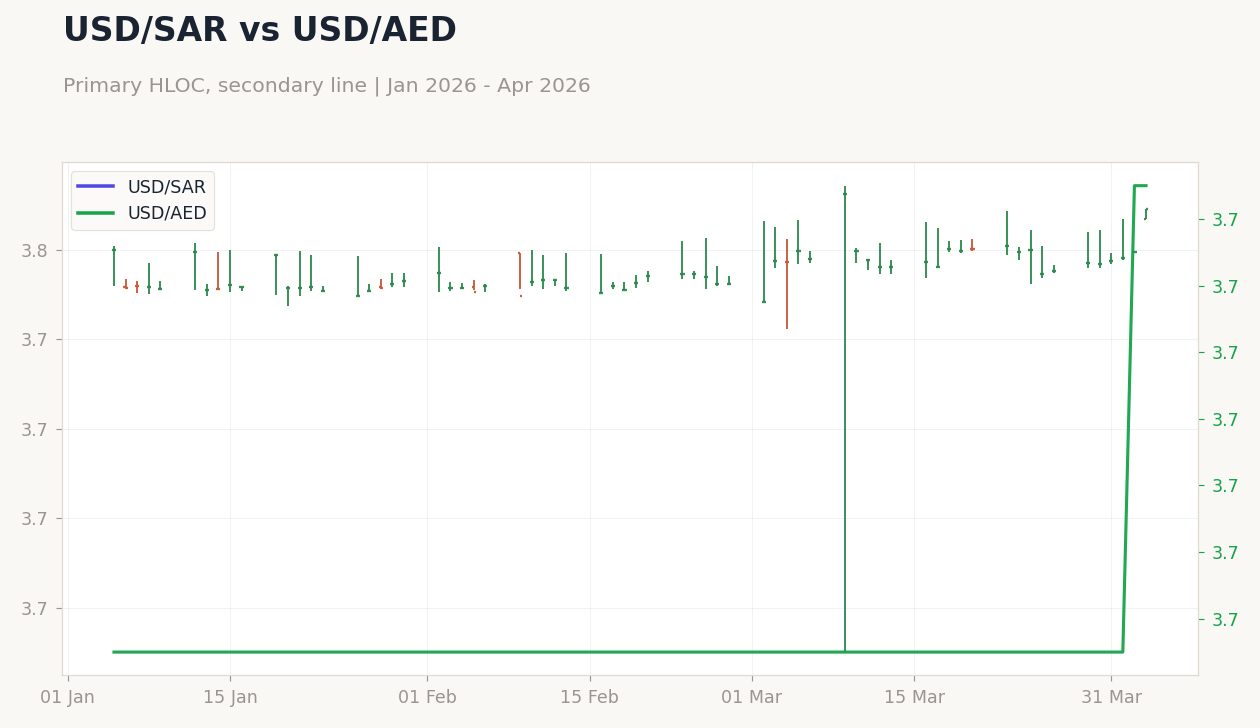
FX moves were mixed: USD/SAR +0.13% to 3.75, USD/AED flat at 3.67, USD/KWD -0.66% to 0.31.
With no major scheduled data releases, attention turns to potential updates on geopolitical developments, including follow-ups on Iranian IRGC actions targeting infrastructure in Bahrain, Kuwait, Saudi Arabia, and the UAE. Italian Prime Minister Giorgia Meloni's visit to Saudi Arabia during her Gulf tour could yield announcements on energy cooperation, potentially influencing bilateral ties. Markets will monitor oil price volatility amid disruptions, with Brent futures sensitive to escalations.
In Qatar, warnings against using emergency alert tones as mobile ringtones highlight minor regulatory notes, but focus remains on LNG stability. UAE schools and KHDA responses to IGCSE, A Level, and IB exam cancellations may affect education trends, as seen in Saudi POS data surges. Overall, a quiet calendar underscores reliance on news flow for directional cues in GCC equities and FX.
Subscribe to GCC Macro Daily and get each new issue delivered to your inbox.
Already a member? Visit robomacro.com to log in and manage subscriptions, or use Forgot Password to set a password.
Brent Crude Oil | Type: market_hloc | Brent Price: 109 (2026-04-02) | Range: 59.96–118.3 | Trend(6pt): 61.76,67.57,70.35,91.98,101.2,109
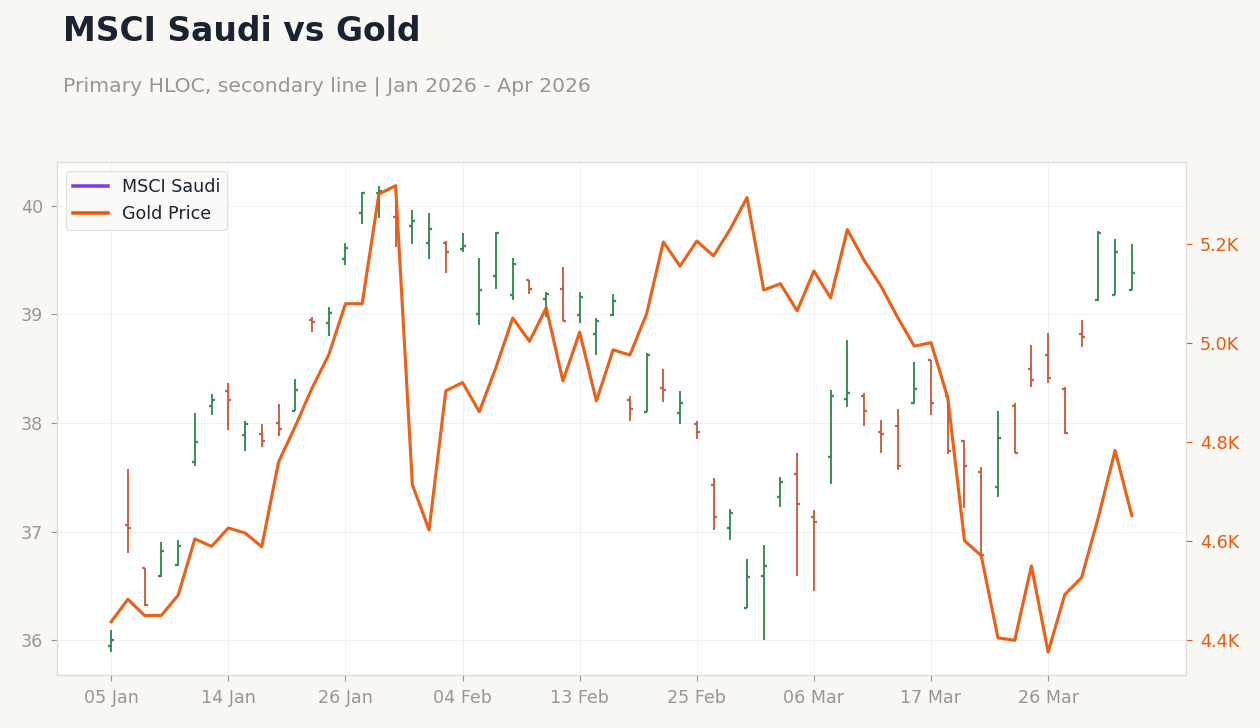
MSCI Saudi vs Gold | Type: market_hloc | MSCI Saudi: 39.38 (2026-04-02) | Range: 36–40.14 | Trend(6pt): 36,40.12,39.12,38.11,39.57,39.38 | Gold Price: 4652 (2026-04-02) | Range: 4376–5318 | Trend(6pt): 4437,5080,4986,5167,4783,4652
Tadawul vs Brent | Type: market_hloc | Tadawul: 1.127e+04 (2026-04-02) | Range: 1.029e+04–1.146e+04 | Trend(6pt): 1.036e+04,1.113e+04,1.117e+04,1.069e+04,1.125e+04,1.127e+04 | Brent: 109 (2026-04-02) | Range: 59.96–118.3 | Trend(6pt): 61.76,67.57,70.35,91.98,101.2,109
USD/SAR vs USD/AED | Type: market_hloc | USD/SAR: 3.755 (2026-04-04) | Range: 3.744–3.756 | Trend(6pt): 3.75,3.745,3.746,3.748,3.75,3.755 | USD/AED: 3.673 (2026-04-04) | Range: 3.671–3.673 | Trend(5pt): 3.671,3.671,3.671,3.671,3.673
Broader themes include non-oil diversification setbacks, with UAE PMI dropping to a near 4-year low in March, reflecting slowed private sector growth. Saudi POS spending held above $3.5 billion, driven by surging education outlays, indicating resilient consumer activity amid high oil revenues supporting fiscal balances in Saudi Arabia and Qatar. Environmental initiatives advance, as the Emirates Environmental Group honored 52 entities for net zero and circular economy drives.
Dubai's work-from-hotel trend gains traction among UAE residents, shifting from home offices and boosting related sectors. Bangladesh and Saudi Arabia discussed boosting manpower cooperation, potentially enhancing labor flows.
Global energy markets face pressures from Middle East tensions. Russian firms plan to scale up oil and LNG supplies to India, which could compete with Qatar and UAE shipments but benefit from Asian demand growth. In Nigeria, oil windfalls fail to lift the economy amid dropping reserves and naira slides, underscoring risks for oil-dependent nations like Bahrain and Oman.
US discussions on targeting Iran energy sites, as reported by WSJ, add to regional volatility, impacting Strait of Hormuz risks for GCC oil transit. Japan's JERA annulled a deal with Commonwealth LNG, shifting focus to alternative suppliers and possibly boosting opportunities for Qatar's LNG capacity. Saudi FM and Russian counterpart discussed regional developments, amid Italian PM's Gulf tour to bolster energy supplies hit by conflicts.
Banco de Portugal warned on bank account blocks in certain situations, highlighting global financial stability concerns.
GCC central banks maintain tight alignment with Fed policy due to USD pegs, with SAMA, CBUAE, QCB, CBO, and CBB holding rates steady amid stable interbank benchmarks like SAIBOR and EIBOR. Kuwait's CBK manages its basket-pegged dinar, which weakened 0.66% against USD to 0.31, reflecting minor volatility not seen in pure USD pegs like USD/SAR at 3.75 (+0.13%) or USD/AED at 3.67 (flat). FX reserve adequacy remains robust across members, supporting peg defenses, though Oman's CBO monitors oil-driven fiscal strains more closely.
Divergences are minimal, but Kuwait's basket introduces slight flexibility, potentially allowing nuanced responses to global shocks. No rate changes anticipated without Fed moves, as coordination minimizes capital flow disruptions. Bahrain's CBB focuses on reserve bolstering via oil revenues, while Qatar's QCB eyes LNG windfalls for liquidity.
Overall, peg dynamics ensure monetary stability, with attention on geopolitical risks to reserve inflows.