GCC Macro Daily(Beta Mode)
Saudi Pipeline Recovers, Oil Jumps
Market Snapshot
| Asset | Level | Change |
|---|---|---|
| Saudi Aramco | 27.20 | +0.82% |
| MSCI Saudi | 39.69 | +0.15% |
| MSCI UAE | 19.19 | -1.49% |
| DFM General | 5,668.26 | -0.45% |
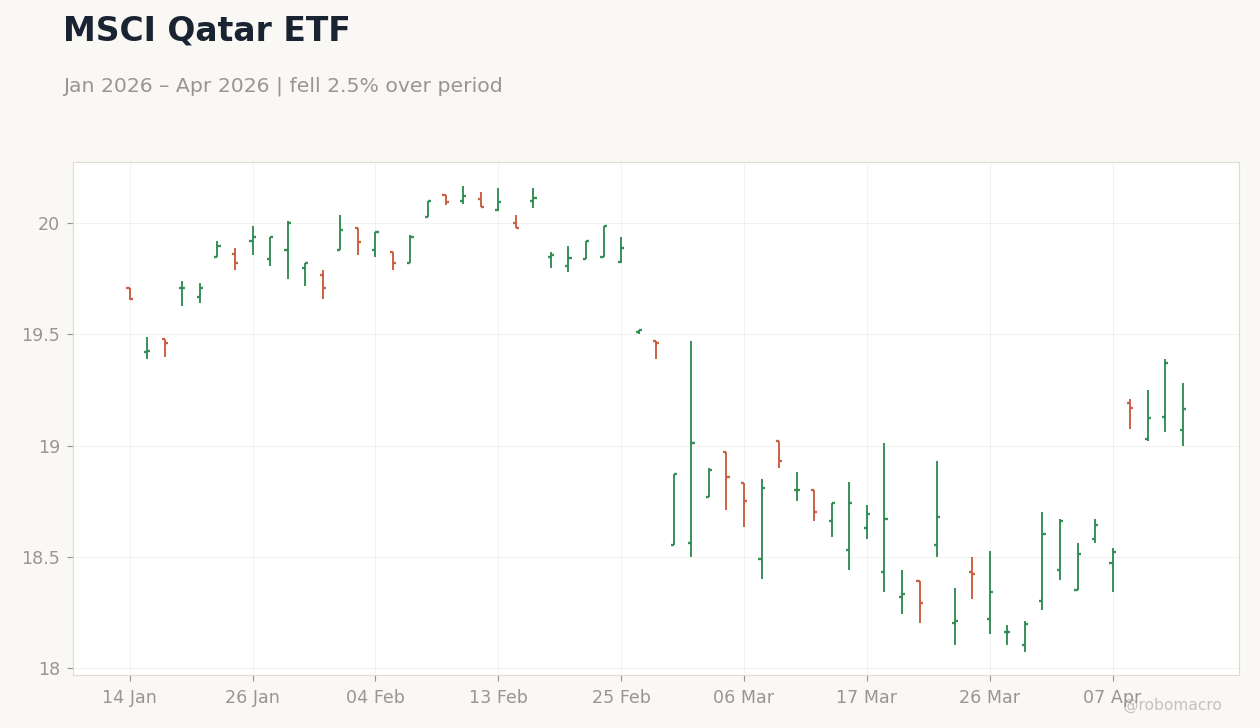
| MSCI Qatar | 19.37 | +1.28% |
| MSCI Kuwait | 37.31 | -0.13% |
| Brent Crude | 98.15 | +3.10% |
| WTI Crude | 97.18 | +0.63% |
| Gold | 4,798.30 | +0.76% |
| USD/SAR | 3.75 | +1.84% |
| USD/AED | 3.67 | +0.01% |
| USD/KWD | 0.31 | -0.55% |
| Bitcoin | 74,374.37 | +5.12% |
Prior Economic Events
| Data | Prior | Cons | Actual |
|---|---|---|---|
| No events available | |||
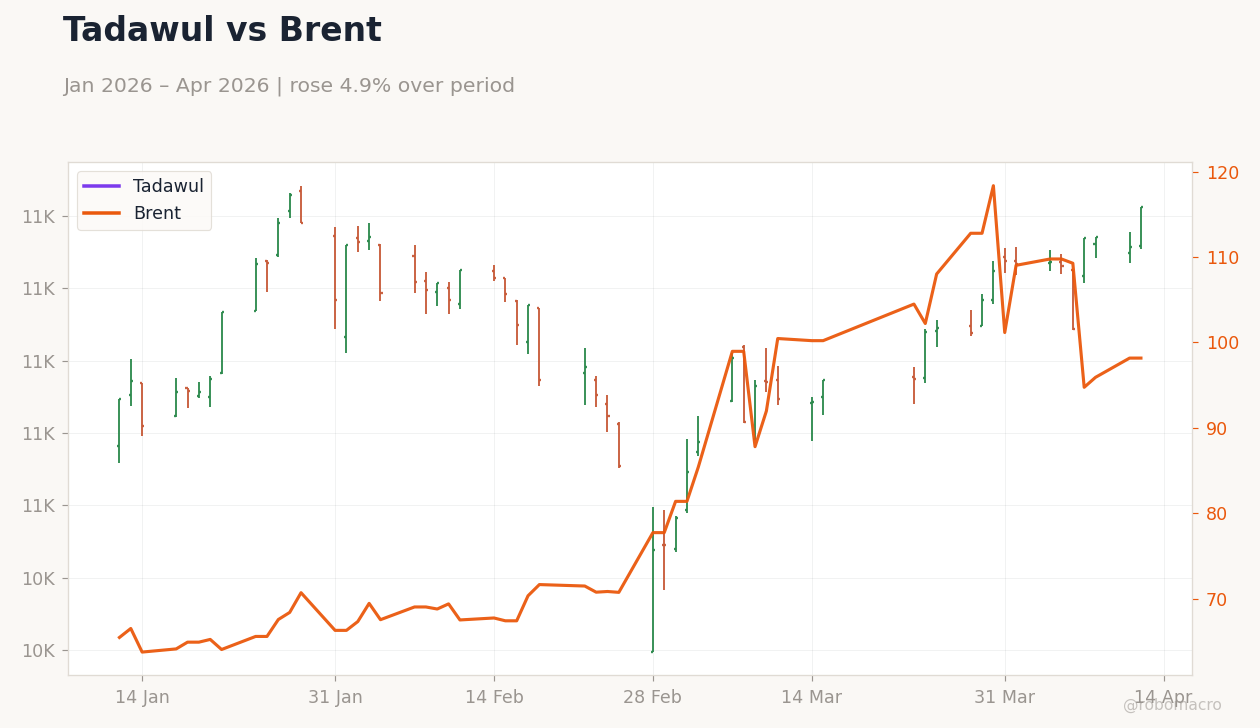
 Aramco vs Brent Crude | Type: market_hloc | Aramco Price: 27.6 (2026-04-13) | Range: 24.49–27.6 | Trend(6pt): 24.61,25.28,25.65,26.76,27.2,27.6 | Brent Price: 98.17 (2026-04-13) | Range: 63.76–118.3 | Trend(6pt): 65.47,69.46,70.75,108.7,95.2,98.17
Today's Economic Events
| Data | Prior | Cons | Time |
|---|---|---|---|
| No events available | |||
- Saudi Arabia restores key oil pipeline to full capacity after attacks, stabilizing exports and boosting Brent crude +3.1% to $98.15/bbl.
- UAE markets dip with MSCI UAE -1.49%, amid weather alerts and resumed flights; Qatar equities rise +1.28%.
- Broader GCC diversification advances with Saudi investments topping $400bn and Qatar LNG commitments.
Yesterday's Recap
Saudi Arabia dominated headlines as authorities announced the key oil pipeline returned to full capacity following attacks that wiped out 10% of the kingdom's export capabilities, reinforcing its reliability as a global energy supplier amid rapid recovery efforts. In market moves, Saudi Aramco shares climbed +0.82% to 27.20, while the MSCI Saudi index edged up +0.15%, supported by rising oil prices. UAE equities faced pressure with the MSCI UAE down -1.49% and DFM General slipping -0.45%, coinciding with unsettled weather alerts in Abu Dhabi urging caution for drivers and news of resumed flights to Dubai, Abu Dhabi, and Amman.
Qatar's MSCI index gained +1.28%, buoyed by resumed maritime traffic and commitments to reliable energy supplies to India. Kuwait's MSCI index dipped slightly -0.13%. Oman saw mentions in the deepening Strait of Hormuz crisis, joining regional efforts to address mine threats from Iran.
Broader GCC FX pegs held steady, with USD/SAR up +1.84% to 3.75 reflecting minor volatility, USD/AED +0.01% to 3.67, and USD/KWD -0.55% to 0.31.
The Day Ahead
With no major data releases scheduled, focus shifts to ongoing monitoring of oil supply stability in Saudi Arabia following the pipeline restoration, potentially influencing fiscal projections under Vision 2030. UAE authorities may provide updates on weather-related disruptions in Abu Dhabi, impacting local transport and economic activity. Qatar's tourism sector could see developments in response to competition from Saudi Arabia and the UAE, with emphasis on travel trends and energy security.
Oman continues coordination on Strait of Hormuz navigation amid Iran tensions. Overall, GCC markets will track global oil dynamics, with Brent's momentum possibly supporting equity sentiment.
Other Economic Notes
Saudi Arabia's push for non-oil diversification gained traction as industrial cities surpassed $400 billion in investments, aligning with efforts to build a scalable creator economy and e-commerce platforms like Kanaa. UAE and Qatar are turning to private markets for funding, with billions raised through bond sales amid volatility from the Iran conflict, bolstering fiscal resilience. (cont...)