| Asset | Level | Change |
|---|---|---|
| Saudi Aramco | 27.78 | +1.02% |
| MSCI Saudi | 38.46 | -0.70% |
| MSCI UAE | 19.16 | +0.95% |
| DFM General | 5,898.42 | +2.96% |
| MSCI Qatar | 18.86 | -0.16% |
| MSCI Kuwait | 38.54 | +0.44% |
| Brent Crude | 101.82 | -7.33% |
| WTI Crude | 95.67 | -6.45% |
| Gold | 4,714.60 | +3.49% |
| USD/SAR | 3.75 | +1.70% |
| USD/AED | 3.67 | +0.03% |
| USD/KWD | 0.31 | -0.02% |
| Bitcoin | 81,100.19 | +0.21% |
| Data | Prior | Cons | Actual |
|---|---|---|---|
| No events available | |||
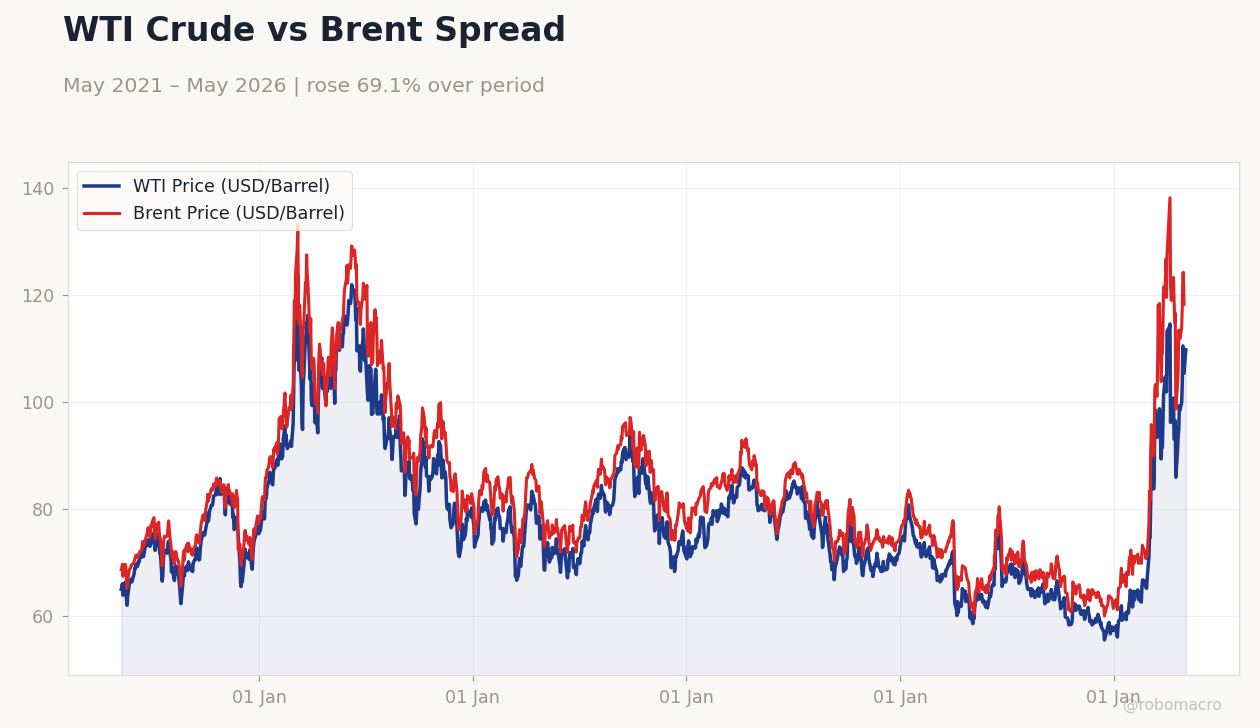
WTI Crude vs Brent Spread | Type: macro_line | WTI Price (USD/Barrel): 109.8 (2026-05-04) | Range: 55.44–123.6 | Trend(5pt): 64.92,91.29,81.64,73.52,109.8 | Brent Price (USD/Barrel): 118.3 (2026-05-01) | Range: 59.93–138.2 | Trend(5pt): 68.61,97.99,87.55,76.49,118.3
| Data | Prior | Cons | Time |
|---|---|---|---|
| No events available | |||
Saudi Arabia led regional news with its Q1 2026 budget revealing a SR125.7bn ($33.5bn) deficit, driven by reduced oil sales, spending increases, and war-related costs amid geopolitical tensions. The kingdom's non-oil private sector showed growth in April per PMI data, boosted by new orders though tempered by conflict-linked deferrals. Saudi Aramco shares rose 1.02% to 27.78 following reports of June oil price cuts from May highs, but the MSCI Saudi index fell 0.70% to 38.46.
UAE markets advanced, with the MSCI UAE up 0.95% to 19.16 and DFM General climbing 2.96% to 5,898.42, supported by defense manufacturing agreements and PMI easing while staying expansive. Qatar's MSCI index dipped 0.16% to 18.86, with non-energy PMI rising to 46.4, slowing the contraction rate. Kuwait's MSCI index gained 0.44% to 38.54.
Broader GCC sentiment was mixed amid Brent crude dropping 7.33% to 101.82 and WTI falling 6.45% to 95.67. Foreign flows into GCC rebounded, with Saudi attracting $953m, indicating early stabilization. Geopolitical updates included Saudi support for UAE after Iranian attacks, with condemnations from the Crown Prince and Arab League.
UAE signed deals for a global defense hub in Abu Dhabi and advanced stem cell therapies via partnerships. No major data emerged from Oman or Bahrain.
No key economic releases are slated for May 6, 2026, shifting focus to OPEC+ talks on extending voluntary production cuts, which could sway crude prices and GCC budgets. UAE highlights include the Make it in the Emirates forum's fifth edition, emphasizing industrial diversification, AI initiatives, and non-oil growth drivers. Saudi Arabia may build on reports of consolidating its top regional tourism position.
Qatar's LNG exports stay in view amid global energy pressures and potential US-Iran MOU talks involving GCC states to reduce tensions and enhance trade connectivity. Markets will watch Strait of Hormuz stability, as escalations could affect oil transit and sovereign CDS. Kuwait and Bahrain might update on interbank rates, tied to USD peg movements.
Subscribe to GCC Macro Daily and get each new issue delivered to your inbox.
Already a member? Visit robomacro.com to log in and manage subscriptions, or use Forgot Password to set a password.
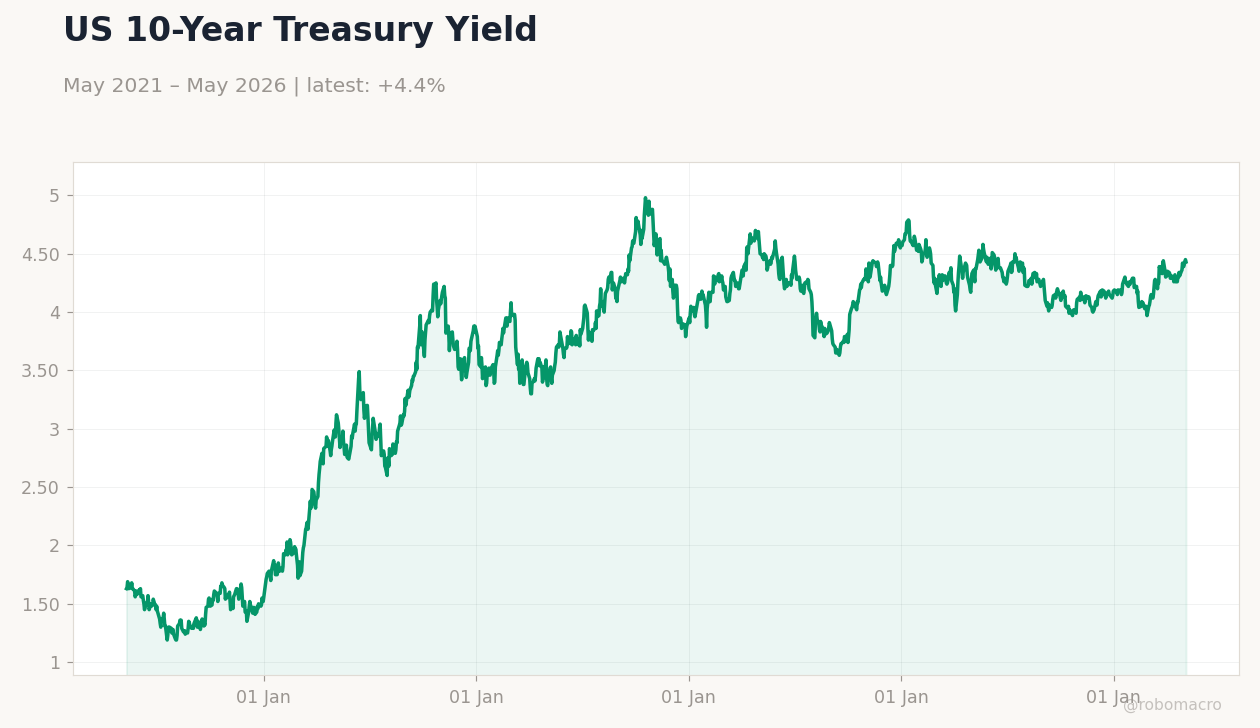
US 10-Year Treasury Yield | Type: macro_line | 10-Year Treasury Yield (%): 4.43 (2026-05-05) | Range: 1.19–4.98 | Trend(6pt): 1.63,2.83,4.67,4.54,4.39,4.43
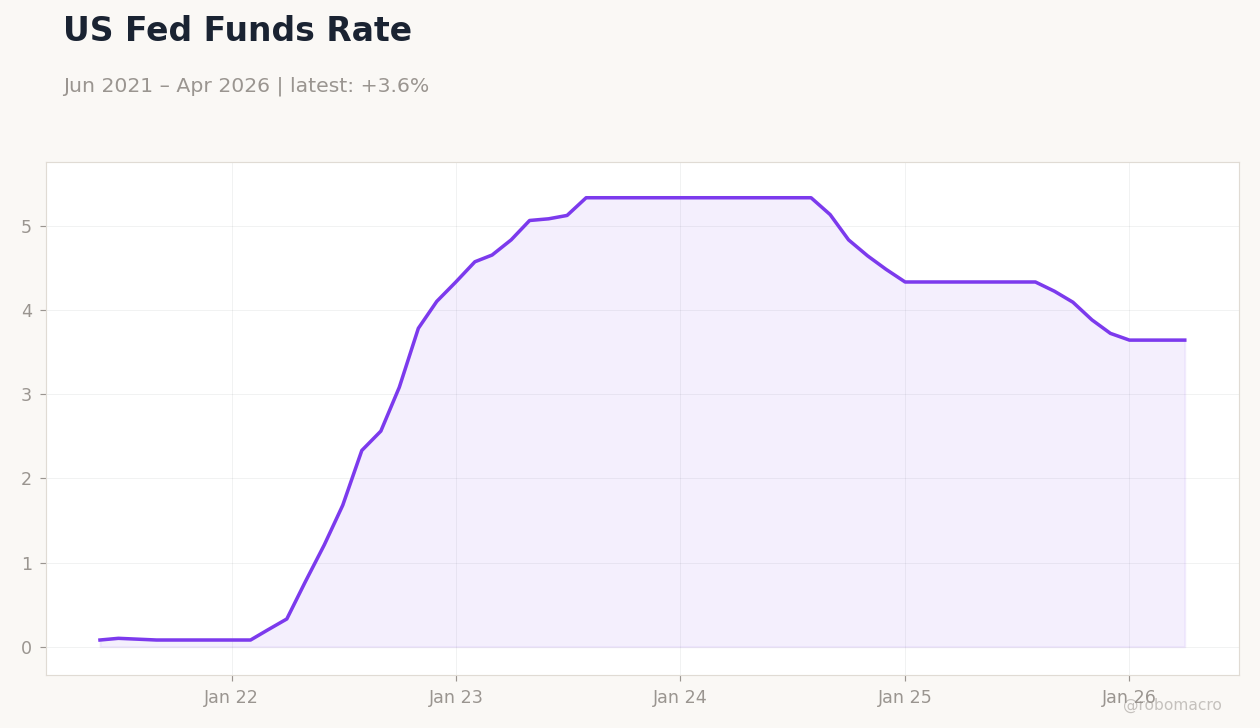
US Fed Funds Rate | Type: macro_line | Effective Federal Funds Rate (%): 3.64 (2026-04-01) | Range: 0.08–5.33 | Trend(5pt): 0.08,2.33,5.33,4.48,3.64
US Trade Balance | Type: macro_line | Trade Balance (USD Bn): -55.61 (2026-03-01) | Range: -58.11–105 | Trend(6pt): 44.8,-7.755,-14.27,51.75,-51.76,-55.61
Aramco vs Brent Crude | Type: market_hloc | Aramco Stock Price: 27 (2026-05-06) | Range: 24.65–27.78 | Trend(6pt): 25.18,25.48,27,27.54,27.78,27 | Brent Futures: 101.8 (2026-05-06) | Range: 67.42–118.3 | Trend(6pt): 68.05,77.74,99.94,94.79,109.9,101.8
GCC economies prioritize non-oil diversification through frameworks like Saudi Vision 2030 and UAE 2050, channeling investments into tourism, defense, and renewables to counter oil price swings. Fiscal challenges arise from geopolitical risks, such as Iranian attacks on UAE and Houthi threats, raising sovereign credit premia and disrupting energy flows. Advances in LNG projects, including Qatar's North Field expansion and UAE's defense hub, aim to strengthen export resilience and draw foreign capital.
Regional PMI trends show mixed non-oil activity, with Saudi growth offsetting contractions elsewhere, while foreign inflows signal investor confidence recovery.
Crude prices plunged, with Brent down 7.33% to 101.82 and WTI off 6.45% to 95.67, straining GCC oil-reliant budgets but possibly curbing global inflation. Geopolitical strains intensified from Iranian attacks on UAE, prompting GCC condemnations and pushes for a US-Iran MOU to halt strikes and foster energy trade, including LNG and LPG links. Gold rose 3.49% to 4,714.60 as a haven asset.
USD strength bolstered GCC pegs, with USD/SAR up 1.70% to 3.75, USD/AED up 0.03% to 3.67, and USD/KWD down 0.02% to 0.31. Bitcoin edged 0.21% higher to 81,100.19 amid crypto steadiness. OPEC+ eyes post-cut decisions to steady markets, while US LNG demand aids Qatar and UAE shipments, as seen in Adnoc's Hormuz exports and Pakistan's spot bids.
Broader shifts include US-Qatar jet deals and Japanese-UAE health partnerships, influencing regional alliances and trade.
GCC central banks align closely with Fed policy via USD pegs, keeping rates unchanged amid stable interbank rates like SAIBOR and EIBOR. SAMA, CBUAE, QCB, CBK, CBO, and CBB prioritize inflation management and capital stability, with robust FX reserves supported by inflow rebounds. Saudi's deficit prompts SAMA vigilance on fiscal impacts without imminent changes.
Qatar's QCB leverages LNG liquidity, while Oman's CBO and Bahrain's CBB focus on diversification against oil volatility. Kuwait's basket peg allows minor flexibility, as USD/KWD dipped slightly. Overall, synchronized stances limit divergences, with all monitoring Fed cues for potential adjustments.