GCC Macro Daily(Beta Mode)
Brent Spikes on Iranian Attacks, GCC Markets Mixed
Market Snapshot
| Asset | Level | Change |
|---|---|---|
| Saudi Aramco | 26.68 | +0.15% |
| MSCI Saudi | 36.79 | -0.35% |
| MSCI UAE | 18.83 | -1.31% |
| DFM General | 5,813.93 | +nan% |
| MSCI Qatar | 17.70 | +0.62% |
| MSCI Kuwait | 36.17 | -0.37% |
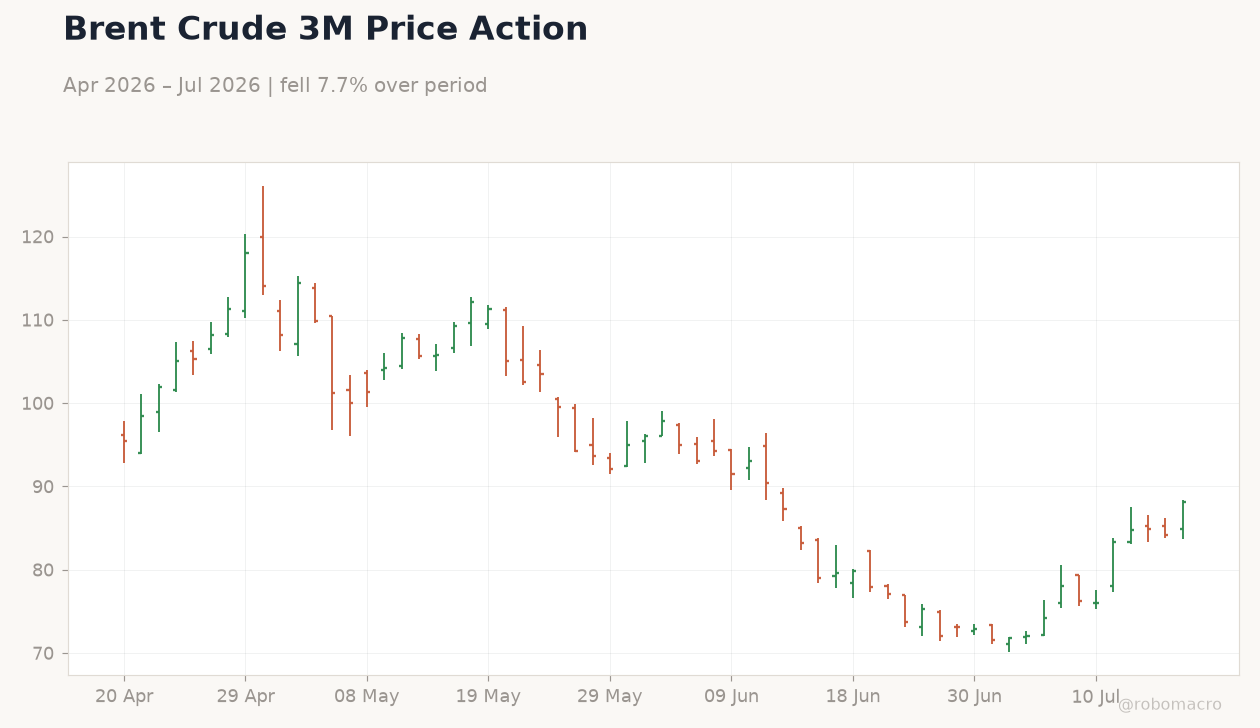
| Brent Crude | 88.10 | +4.59% |
| WTI Crude | 82.49 | +4.48% |
| Gold | 4,012.70 | +0.68% |
| USD/SAR | 3.76 | +3.53% |
| USD/AED | 3.67 | +0.03% |
| USD/KWD | 0.31 | -0.45% |
| Bitcoin | 64,786.40 | +1.39% |
Prior Economic Events
| Data | Prior | Cons | Actual |
|---|---|---|---|
| No events available | |||
 US 10-Year Treasury Yield | Type: macro_line | Percent: 4.57 (2026-07-16) | Range: 1.19–4.98 | Trend(6pt): 1.23,4.02,4.07,4.38,4.58,4.57
Today's Economic Events
| Data | Prior | Cons | Time |
|---|---|---|---|
| No events available | |||
- Brent crude jumps 4.59% to $88.10/bbl on Iranian strikes hitting Gulf states.
- Saudi POS spending stays above $3.8bn while Aramco opens first Philippine station.
- MSCI UAE falls 1.31% and MSCI Saudi slips 0.35% as regional equities turn mixed.
Yesterday's Recap
Iranian missile strikes targeted Gulf states including Kuwait, Bahrain, Qatar and Jordan, prompting flight cancellations between the UAE and Kuwait and forcing airlines to reschedule services. Saudi Arabia’s point-of-sale spending held above $3.8bn, underscoring resilient consumer demand. Aramco launched its first gas station in the Philippines, extending its downstream reach.
MSCI UAE declined 1.31% to 18.83 while MSCI Saudi eased 0.35% to 36.79; MSCI Qatar rose 0.62% to 17.70. Brent crude surged 4.59% to $88.10/bbl and WTI gained 4.48% to $82.49/bbl on supply-risk concerns. USD/SAR rose 3.53% to 3.76 amid heightened regional tensions.
Gold advanced 0.68% to $4,012.70/oz as investors sought safety. Saudi Arabia condemned the attacks and rejected strikes on vital infrastructure. Qatar confirmed a child was injured after an intercepted missile.
UAE Public Prosecution expanded its probe into a false Dubai explosion report.
The Day Ahead
Markets will monitor any further Iranian retaliation and its impact on Strait of Hormuz shipping. Kuwaiti authorities are expected to provide updates on infrastructure repairs and flight operations. Saudi non-oil PMI and UAE services data remain in focus for July readings.
Regional equity desks will track Aramco dividend flows and banking-sector liquidity. OPEC+ compliance reports and any fresh Saudi or UAE production guidance could move crude benchmarks. Sovereign CDS spreads across Bahrain and Oman will be watched for any widening on geopolitical headlines.
UAE residents face continued security alerts and flight disruptions amid US-Iran tensions.
Other Economic Notes
Saudi Arabia’s state revenue system continues shifting toward governance and sustainability metrics under Vision 2030. UAE and Qatar maintain fiscal surpluses supported by elevated energy prices, funding solar and hydrogen projects. Kuwait’s infrastructure vulnerability highlights exposure despite strong oil revenues.
Oman and Bahrain remain most exposed to any sustained rise in borrowing costs given higher debt ratios. <i>↓ p.2</i>