| Asset | Level | Change |
|---|---|---|
| Saudi Aramco | 26.68 | +0.15% |
| MSCI Saudi | 36.79 | -0.35% |
| MSCI UAE | 18.83 | -1.31% |
| DFM General | 5,895.93 | -0.26% |
| MSCI Qatar | 17.70 | +0.62% |
| MSCI Kuwait | 36.17 | -0.37% |
| Brent Crude | 88.53 | +0.49% |
| WTI Crude | 82.32 | -0.21% |
| Gold | 4,044.90 | +0.80% |
| USD/SAR | 3.75 | +3.16% |
| USD/AED | 3.67 | +0.03% |
| USD/KWD | 0.31 | -0.31% |
| Bitcoin | 65,409.79 | +1.11% |
| Data | Prior | Cons | Actual |
|---|---|---|---|
| No events available | |||
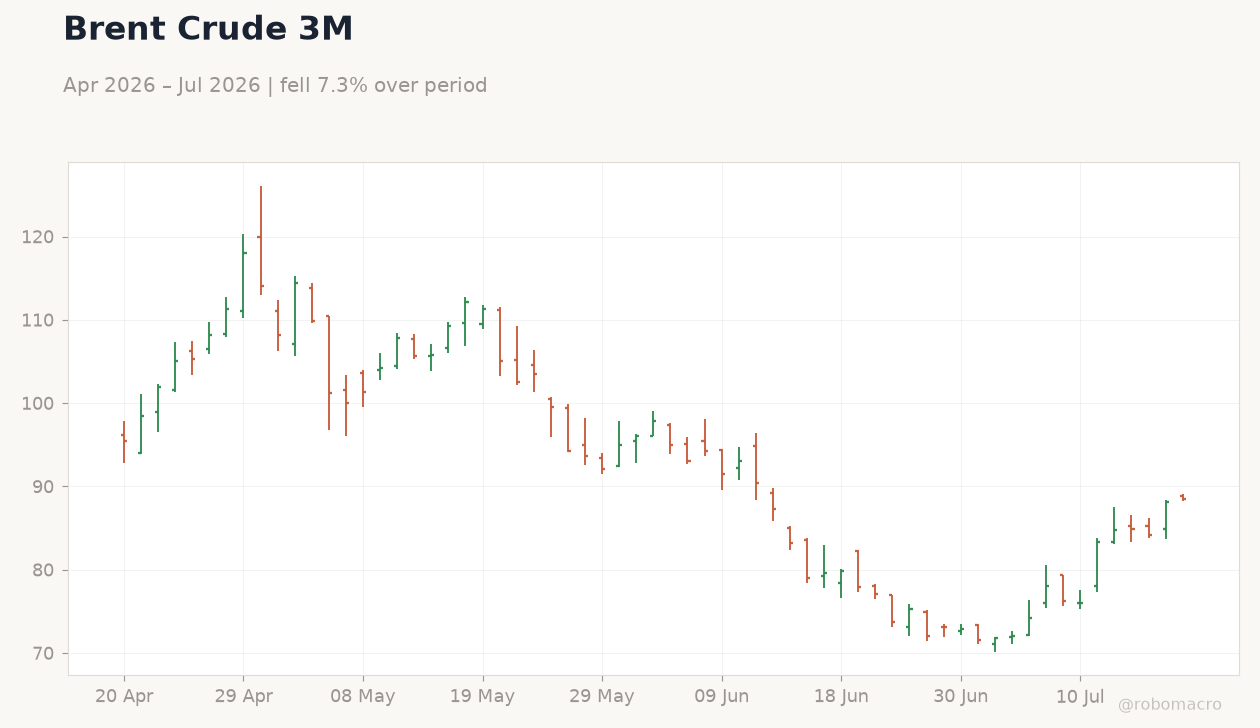
Brent Crude 3M | Type: market_hloc | USD/bbl: 88.53 (2026-07-20) | Range: 71.57–118 | Trend(6pt): 95.48,104.2,96,73.74,84.23,88.53
| Data | Prior | Cons | Time |
|---|---|---|---|
| No events available | |||
Iranian missile strikes hit a Kuwait power plant for the second time and prompted Qatar to confirm a child injured during an intercepted attack, triggering immediate airspace closures and widespread flight cancellations by Emirates, Etihad and Air Arabia across Kuwait routes. The UAE Public Prosecution expanded its probe into false Dubai explosion reports amid heightened security alerts, while the GCC and individual members including Saudi Arabia, Bahrain and Jordan issued strong condemnations of the Iranian actions. Saudi Arabia climbed to 13th globally in FDI inflows and reported POS spending holding above $3.8bn, supported by ongoing diversification.
UAE non-oil foreign trade jumped 13.1% year-on-year in the first half, reflecting resilient external demand despite regional tensions. Equity markets closed mixed with MSCI UAE declining 1.31% to 18.83, DFM General slipping 0.26% to 5,895.93 and MSCI Qatar rising 0.62% to 17.70, while MSCI Saudi eased 0.35% to 36.79 and MSCI Kuwait fell 0.37% to 36.17. Brent crude settled at $88.53 after a 0.49% gain on supply-risk premia.
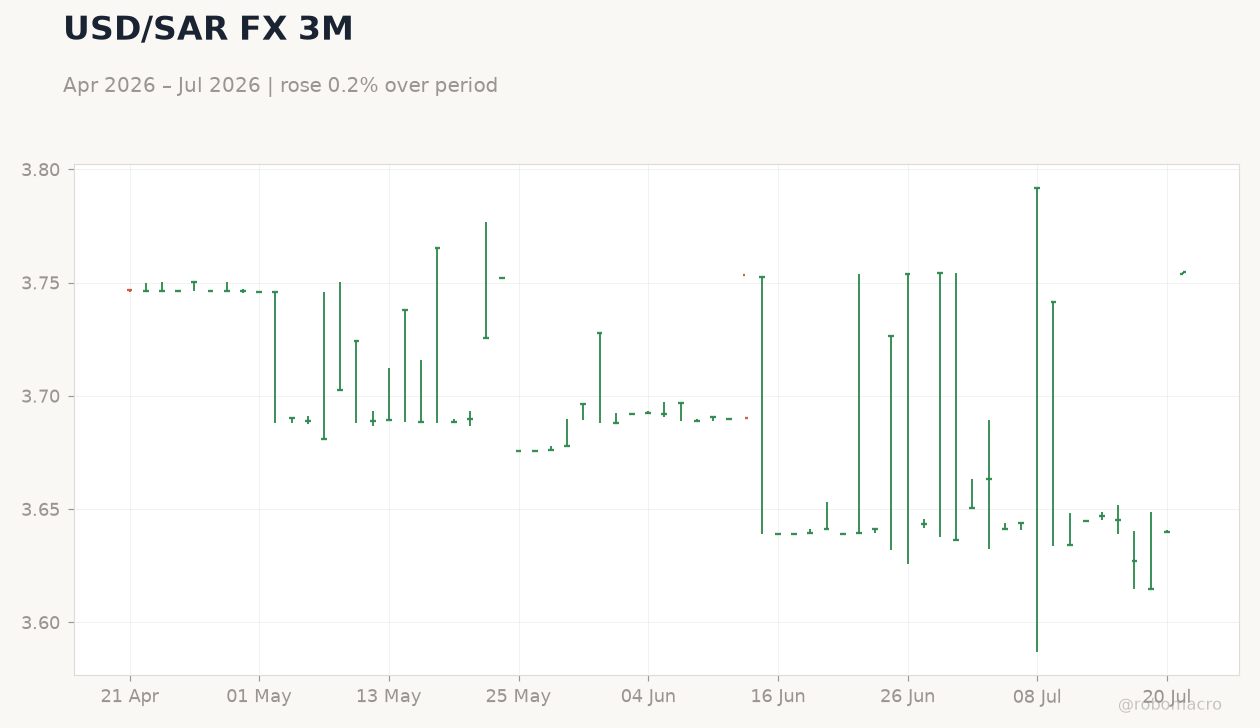
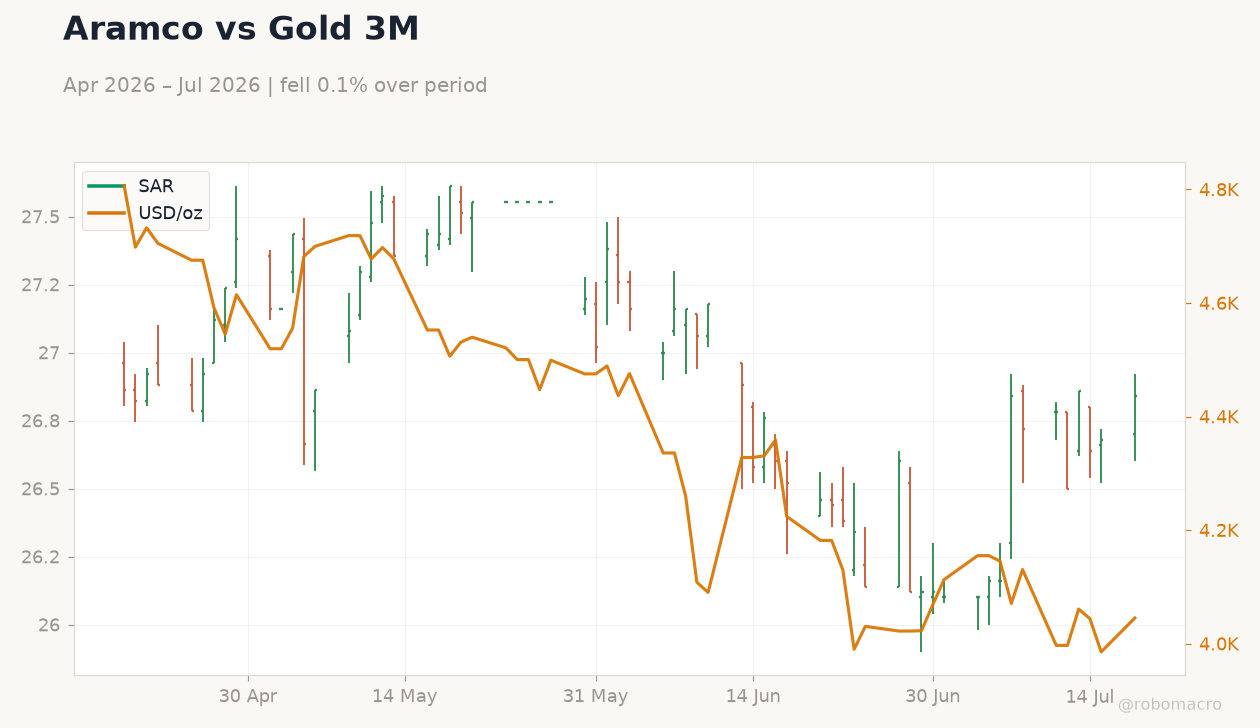
Saudi Aramco shares advanced 0.15% to 26.68 and gold climbed 0.80% to 4,044.90 as investors sought safe havens. USD/SAR held at 3.75 and USD/AED at 3.67, confirming continued peg stability. Houthis announced a maritime blockade of Saudi Arabia in response to port restrictions, while Aramco launched its first gas station in the Philippines.
Regional authorities will continue monitoring Iranian activity around the Strait of Hormuz and Red Sea following yesterday’s strikes, with Kuwait Airways and other carriers likely to issue further schedule adjustments. Saudi Arabia is expected to advance industrial and FDI initiatives under Vision 2030 while the UAE tracks non-oil trade momentum. No major data releases are scheduled across the GCC today, leaving focus on security updates and any OPEC+ compliance statements.
Markets will watch Brent for further reaction to geopolitical headlines and assess impacts on fiscal balances. Sovereign CDS spreads are likely to remain in focus given the elevated risk environment. Qatar resumes maritime navigation within seven nautical miles of its coast after the incident, and central banks across the region stand ready to defend currency pegs amid any further volatility.
Subscribe to GCC Macro Daily and get each new issue delivered to your inbox.
Already a member? Visit robomacro.com to log in and manage subscriptions, or use Forgot Password to set a password.
Aramco vs Gold 3M | Type: market_hloc | SAR: 26.84 (2026-07-19) | Range: 26.1–27.61 | Trend(5pt): 26.86,27.47,27.26,26.14,26.84 | USD/oz: 4045 (2026-07-20) | Range: 3986–4807 | Trend(6pt): 4807,4719,4489,3990,3986,4045
USD/SAR FX 3M | Type: market_hloc | USD/SAR: 3.755 (2026-07-21) | Range: 3.615–3.792 | Trend(6pt): 3.747,3.689,3.692,3.754,3.64,3.755
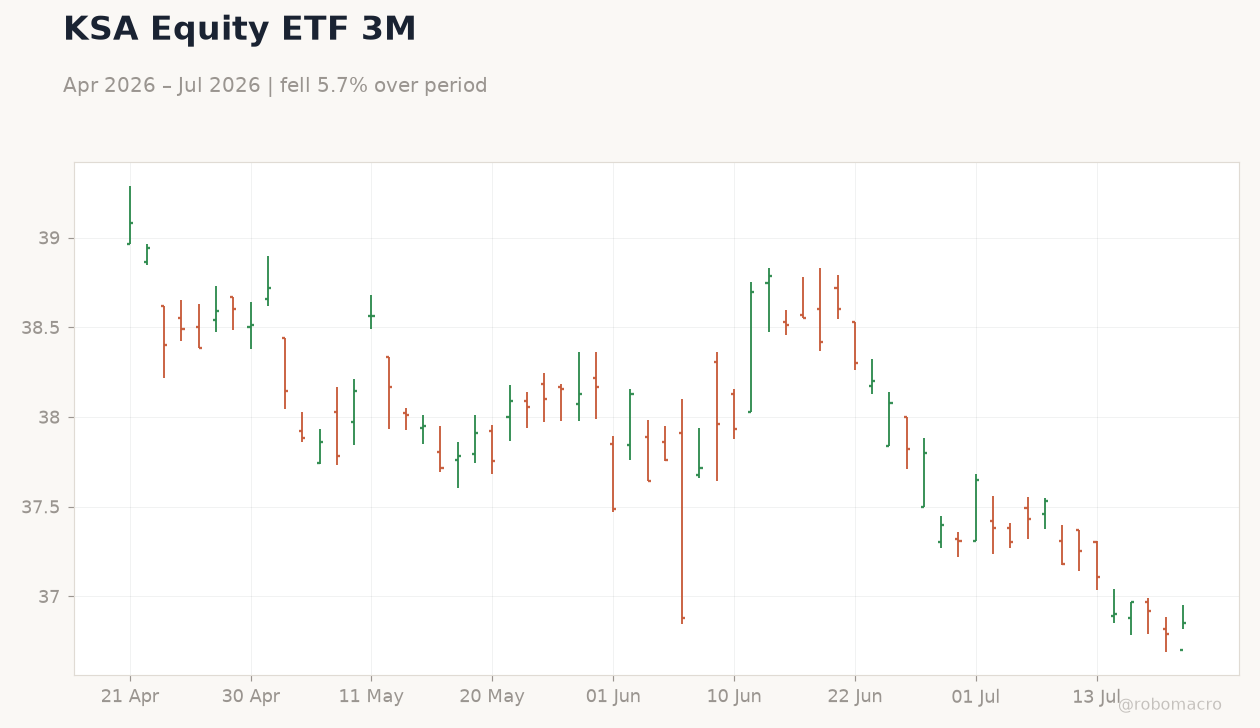
KSA Equity ETF 3M | Type: market_hloc | USD: 36.85 (2026-07-20) | Range: 36.79–39.08 | Trend(6pt): 39.08,38.17,37.64,37.82,36.79,36.85
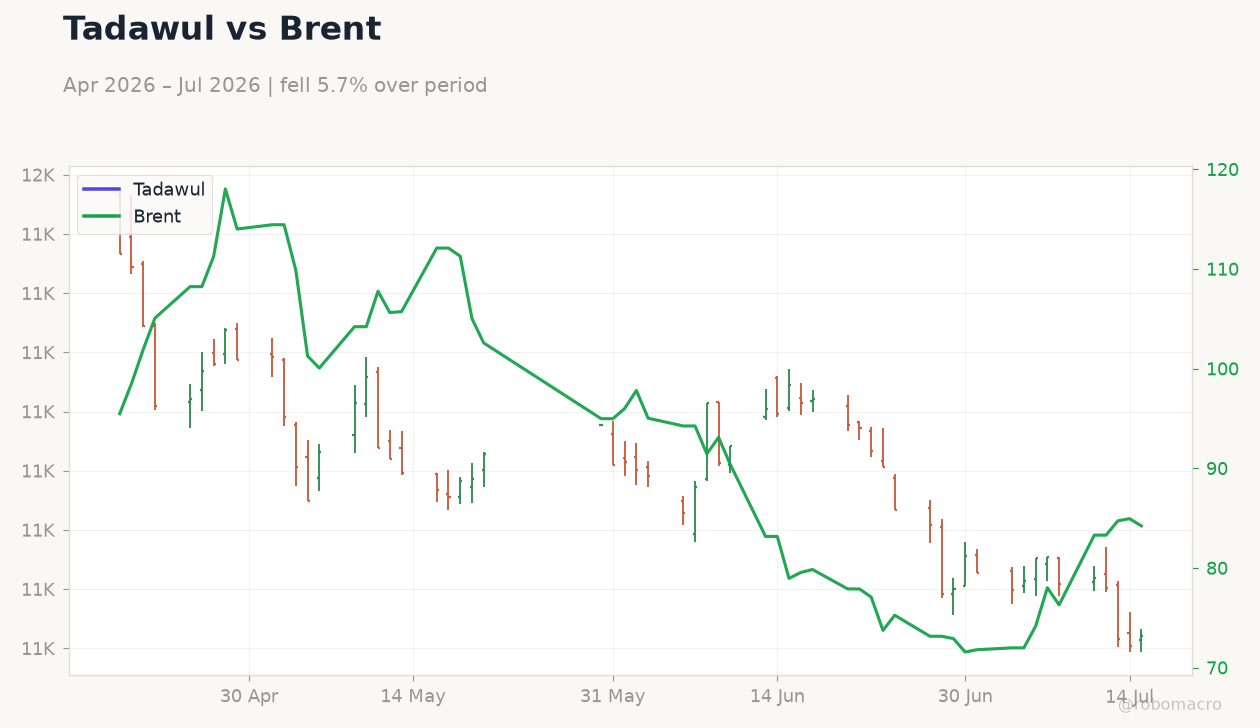
Tadawul vs Brent | Type: market_hloc | Tadawul: 1.072e+04 (2026-07-16) | Range: 1.07e+04–1.137e+04 | Trend(6pt): 1.137e+04,1.112e+04,1.099e+04,1.101e+04,1.072e+04,1.072e+04 | Brent: 88.53 (2026-07-20) | Range: 71.57–118 | Trend(6pt): 95.48,104.2,96,73.74,84.23,88.53
Saudi Arabia’s A+ rating underscores economic buffers that have shielded activity from regional conflict, supporting continued non-oil growth. UAE non-oil trade expansion highlights successful diversification away from hydrocarbons, aligning with longer-term 2050 targets. Elevated oil prices near $88 provide fiscal headroom for all six GCC members but also raise imported inflation risks that could pressure consumer spending.
Aramco’s entry into the Philippines signals expanding downstream reach beyond traditional markets. Uzbekistan and Saudi Arabia discussed expanding cooperation across key sectors, while a new generation of leaders emerges as the kingdom builds its industrial future. POS spending resilience above $3.8bn reflects steady domestic consumption even as external risks rise.
Chinese importers are actively seeking alternatives to Qatari LNG supplies amid ongoing Strait of Hormuz disruptions that have delayed the expected 2028 global glut. Central banks worldwide are preparing for renewed inflation pressures from the energy price surge triggered by Middle East tensions. Turkey’s BOTAS is expanding LNG storage capacity as buyers diversify routes away from vulnerable chokepoints.
Broader risk sentiment has lifted gold and supported Brent while pressuring equity markets in exposed regions. US-Iran frictions continue to influence global shipping and insurance costs, with potential spillovers to GCC current accounts. Damage to Qatar’s Ras Laffan complex has further tightened near-term supply, keeping JKM LNG prices elevated.
All six GCC central banks maintained policy rates unchanged in line with the Fed, preserving USD peg credibility across Saudi Arabia, UAE, Qatar, Oman and Bahrain. Kuwait’s dinar basket peg showed no deviation as USD/KWD remained near 0.31. Interbank rates including SAIBOR and EIBOR stayed stable, reflecting ample liquidity and coordinated liquidity management.
FX reserve levels remain adequate to defend pegs even under current geopolitical stress, with no signs of reserve drawdowns. No divergences emerged among the six central banks, underscoring continued monetary alignment despite varying exposure to Iranian actions.