GCC Macro Daily(Beta Mode)
Houthi Blockade Lifts Brent, Targets Saudi Ports
Market Snapshot
| Asset | Level | Change |
|---|---|---|
| Saudi Aramco | 26.68 | +0.15% |
| MSCI Saudi | 36.79 | -0.35% |
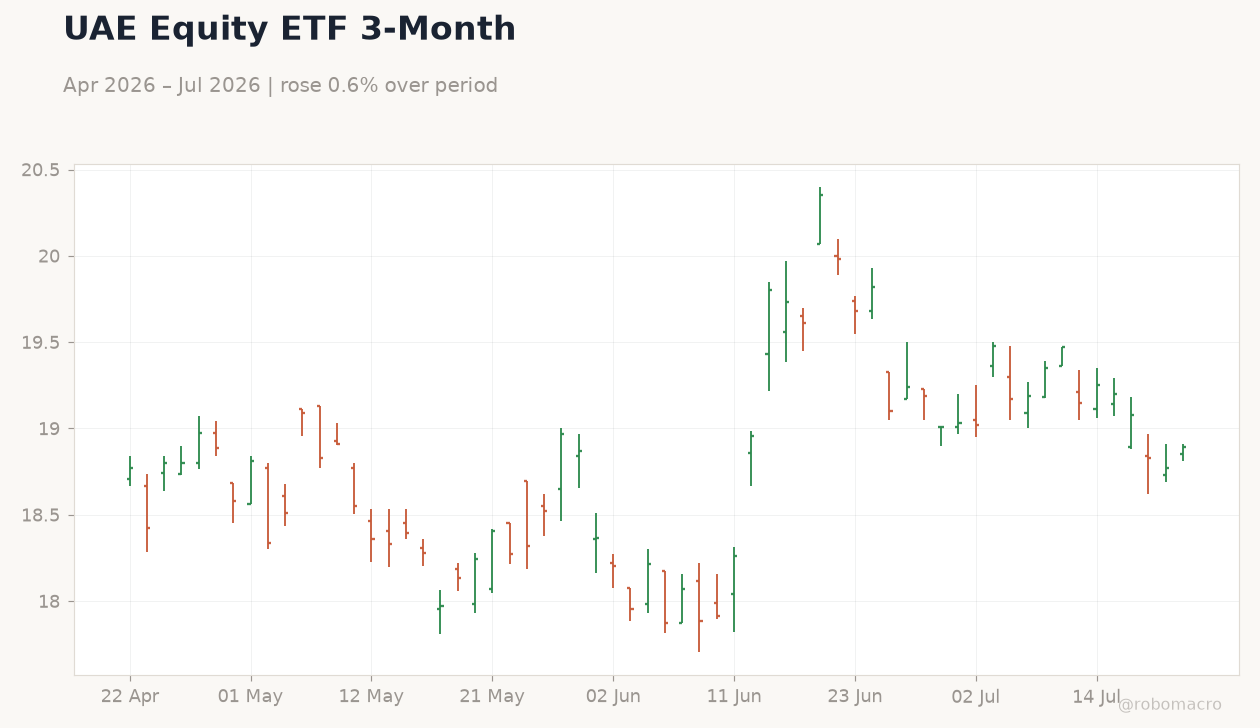
| MSCI UAE | 18.83 | -1.31% |
| DFM General | 5,895.93 | -0.26% |
| MSCI Qatar | 17.70 | +0.62% |
| MSCI Kuwait | 36.17 | -0.37% |
| Brent Crude | 91.99 | +3.10% |
| WTI Crude | 85.14 | +2.29% |
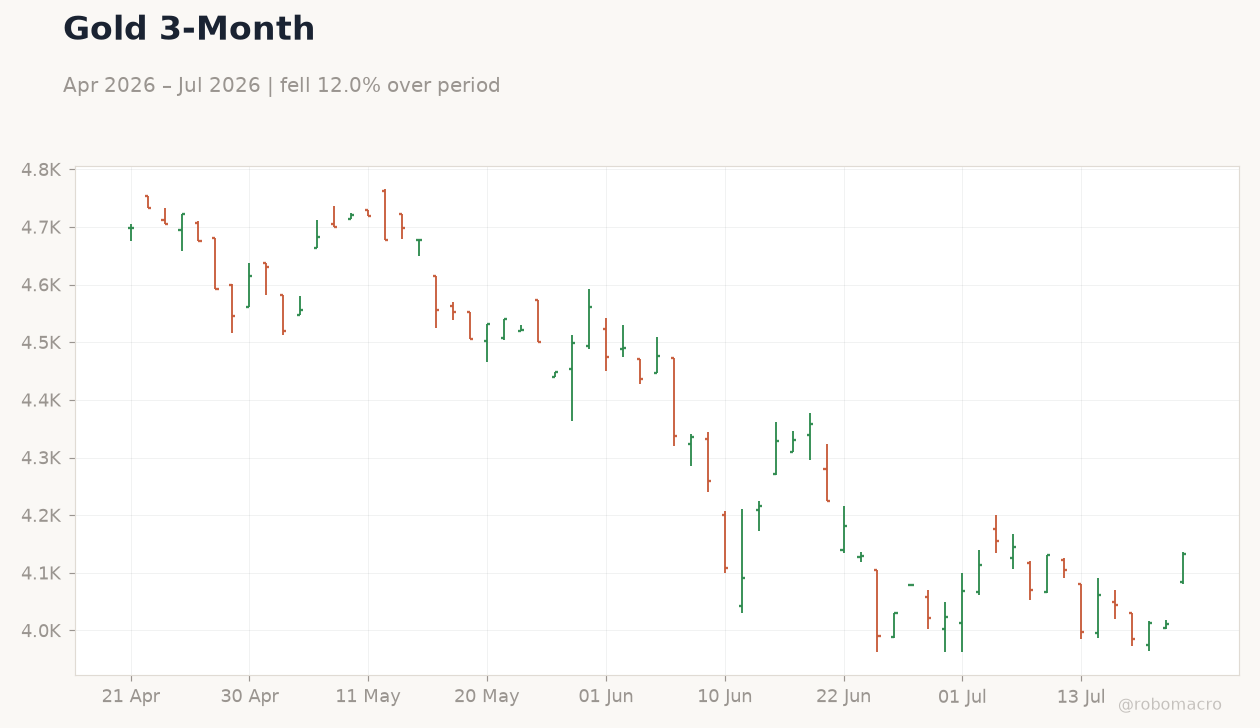
| Gold | 4,131.20 | +3.01% |
| USD/SAR | 3.75 | +3.11% |
| USD/AED | 3.67 | +0.03% |
| USD/KWD | 0.31 | -0.53% |
| Bitcoin | 66,317.68 | +1.67% |
Prior Economic Events
| Data | Prior | Cons | Actual |
|---|---|---|---|
| No events available | |||
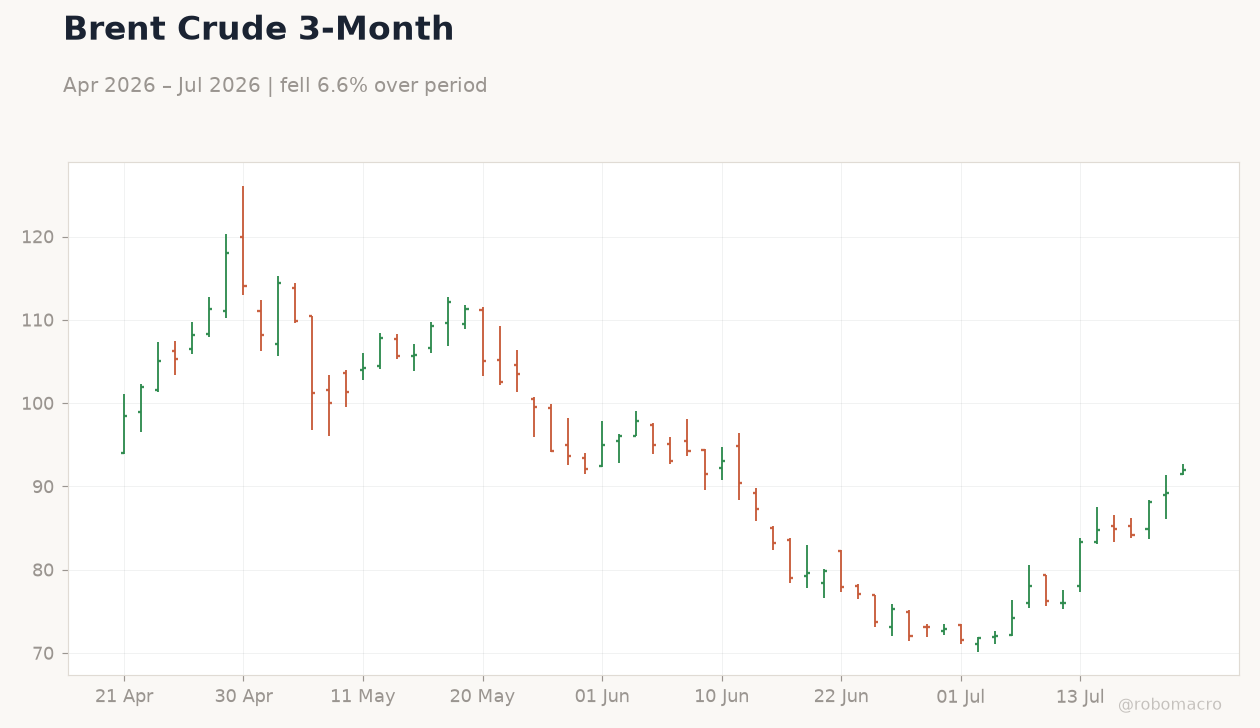 Brent Crude 3-Month | Type: market_hloc | USD/Barrel: 91.99 (2026-07-21) | Range: 71.57–118 | Trend(6pt): 98.48,107.8,97.81,75.26,88.1,91.99
Today's Economic Events
| Data | Prior | Cons | Time |
|---|---|---|---|
| No events available | |||
- Houthis impose immediate maritime blockade on Saudi Arabia in response to port restrictions, driving Brent crude up 3.1% to $91.99.
- UAE non-oil foreign trade rises 13.1% YoY in H1 while Saudi Arabia advances to 13th globally in FDI inflows amid Vision 2030 execution.
- Regional equities mixed with MSCI UAE falling 1.31% and DFM General down 0.26%; Aramco edges 0.15% higher on oil strength.
Yesterday's Recap
Yemen’s Iran-backed Houthis declared an immediate maritime embargo on Saudi Arabia, citing Saudi restrictions on Yemeni ports and airports, with threats framed as “port for port” retaliation. The announcement triggered sharp gains in oil benchmarks as traders priced in supply disruption risks through the Red Sea and Strait of Hormuz. Brent crude settled 3.10% higher at $91.99 while WTI rose 2.29% to $85.14.
Saudi equity performance remained resilient, with Aramco closing 0.15% firmer at 26.68 even as MSCI Saudi slipped 0.35%. UAE markets weakened, MSCI UAE declining 1.31% and DFM General easing 0.26% to 5,895.93 amid flight cancellations to Kuwait by Etihad, Emirates, Air Arabia and flydubai. Qatar bucked the regional trend, MSCI Qatar advancing 0.62%.
Saudi Arabia’s FDI ranking improvement to 13th globally and ongoing Vision 2030 shift toward project execution provided underlying support for longer-term sentiment despite the security flare-up. Gold climbed 3.01% to 4,131.20 as investors sought safe-haven assets amid the maritime tensions.
The Day Ahead
No major statistical releases are scheduled across the GCC tomorrow. Markets will continue to monitor Houthi enforcement actions and any Saudi or coalition responses that could affect tanker traffic. Regional airlines are expected to adjust Kuwait routing further if tensions persist.
Saudi authorities may issue additional statements on port security and oil export continuity. Investors will also watch US, UK and Canadian travel advisories for any escalation language covering Saudi Arabia, UAE, Kuwait and Bahrain. Broader attention remains on whether OPEC+ members signal any production flexibility in response to the price spike.
Dubai airports continue operating near full capacity despite the tensions.
Other Economic Notes
Saudi Arabia’s climb in global FDI rankings reflects sustained execution momentum under Vision 2030 as the kingdom transitions from planning to large-scale project delivery across industrial and tourism sectors. UAE non-oil trade expansion of 13.1% underscores successful diversification away from hydrocarbons, supported by logistics and re-export growth. <i>↓ p.2</i>