GCC Macro Daily(Beta Mode)
Saudi GDP Contracts 4.8% as Oil Output Falls
Market Snapshot
| Asset | Level | Change |
|---|---|---|
| Saudi Aramco | 26.48 | +0.76% |
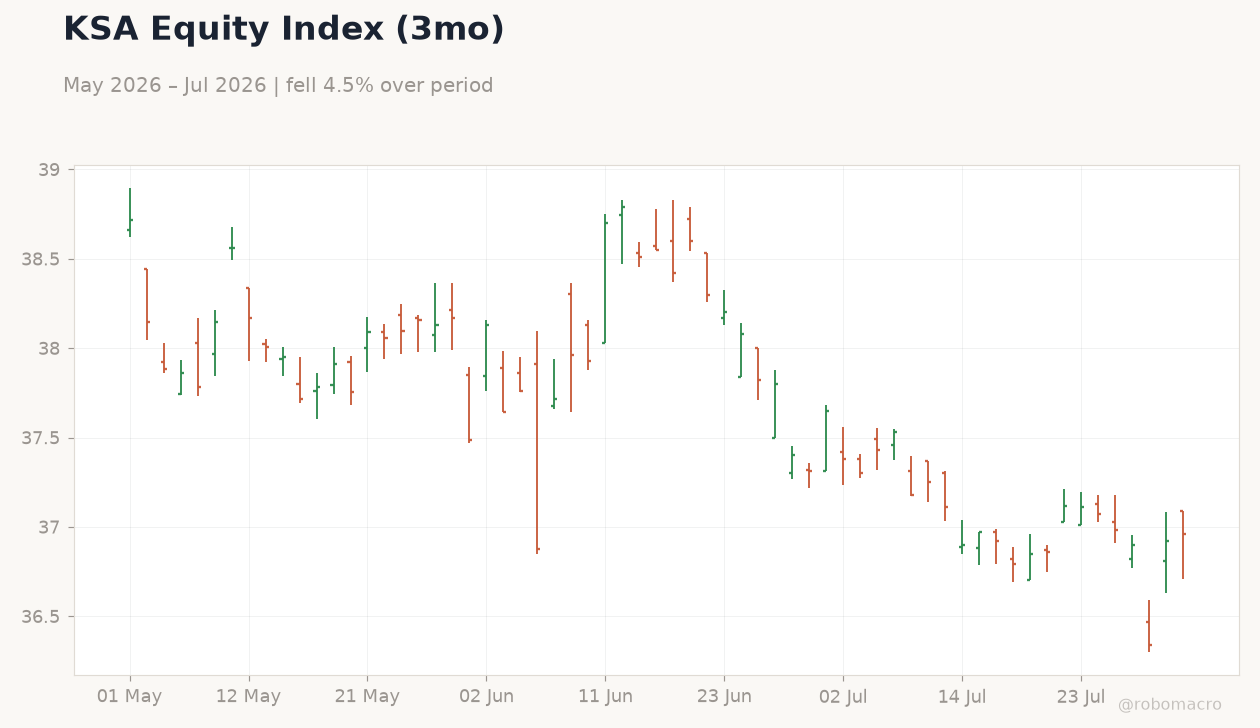
| MSCI Saudi | 36.96 | +0.11% |
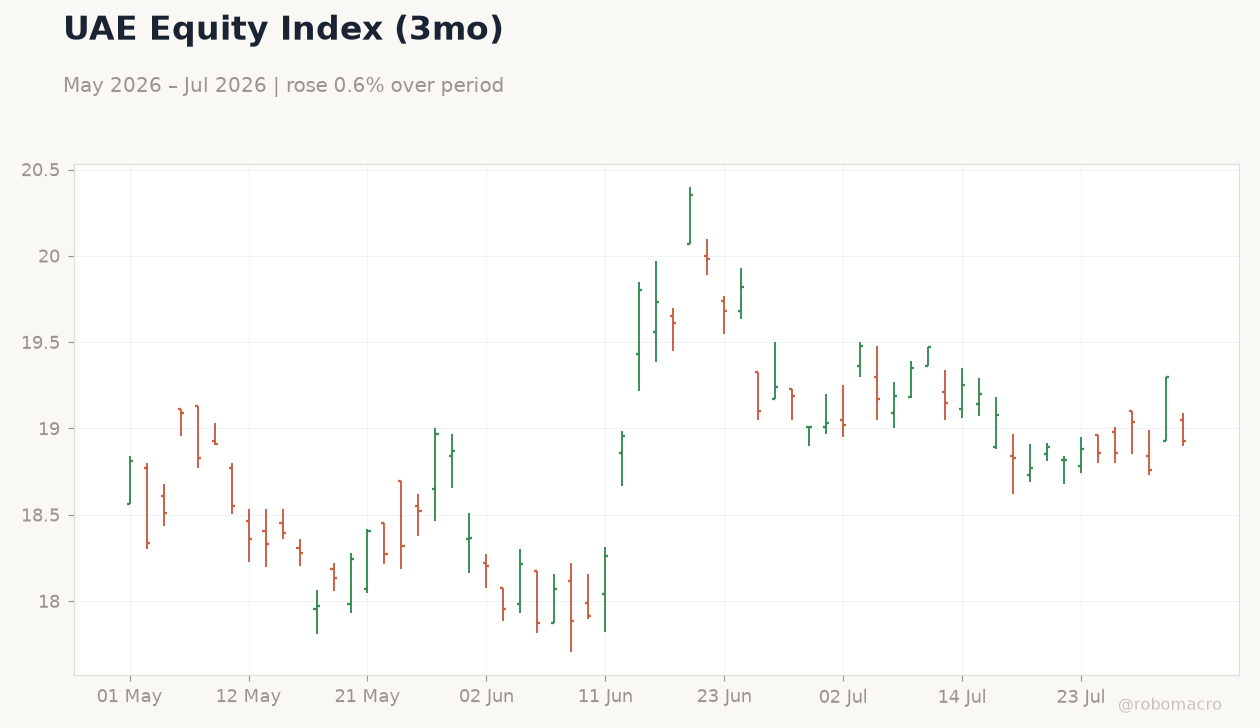
| MSCI UAE | 18.93 | -1.92% |
| MSCI Qatar | 17.38 | -0.46% |
| MSCI Kuwait | 36.70 | +0.81% |
| Brent Crude | 90.12 | +1.22% |
| WTI Crude | 79.84 | -5.70% |
| Gold | 4,120.00 | +1.75% |
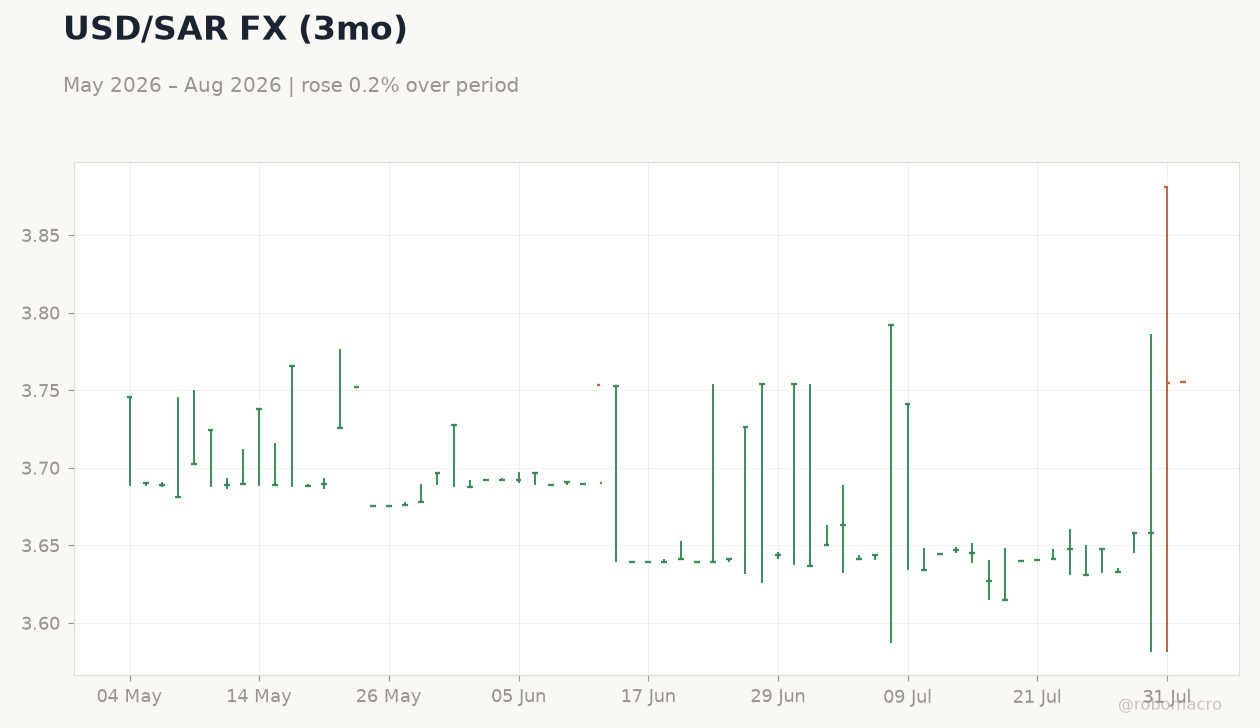
| USD/SAR | 3.76 | +0.01% |
| USD/AED | 3.67 | +0.03% |
| USD/KWD | 0.31 | -0.53% |
| Bitcoin | 63,079.20 | +0.50% |
Prior Economic Events
| Data | Prior | Cons | Actual |
|---|---|---|---|
| GDP Growth Year-over-Year Preliminary | 3 | - | -4.80 |
 Brent Crude (3mo) | Type: market_hloc | USD/bbl: 90.12 (2026-07-31) | Range: 71.57–114.4 | Trend(6pt): 114.4,99.58,78.96,76.3,89.03,90.12
Today's Economic Events
| Data | Prior | Cons | Time |
|---|---|---|---|
| No events available | |||
- Saudi Arabia preliminary GDP shrank 4.8% YoY in Q2, hit by lower oil production and regional tensions.
- Non-oil GDP expanded 0.6%, showing modest diversification progress amid Brent strength.
- GCC equities mixed with Aramco up 0.76% while MSCI UAE fell 1.92% on thin volumes.
Yesterday's Recap
Saudi Arabia reported a sharp 4.8% year-over-year contraction in preliminary GDP growth for the second quarter, reversing the prior 3% expansion and reflecting reduced oil output plus spillovers from West Asia conflict. Non-oil activity posted a 0.6% gain, underscoring limited but visible progress under Vision 2030. Brent crude rose 1.22% to $90.12 per barrel while WTI dropped 5.70% to $79.84, highlighting divergent global benchmarks.
Saudi Aramco shares advanced 0.76% to 26.48 and MSCI Saudi gained 0.11% to 36.96, whereas MSCI UAE declined 1.92% to 18.93 and MSCI Qatar eased 0.46% to 17.38. MSCI Kuwait rose 0.81% to 36.70 and gold climbed 1.75% to 4,120 as investors sought safe-haven assets. USD/SAR held steady at 3.76 and USD/AED at 3.67, confirming unchanged pegs.
Regional equity volumes remained average outside Aramco, with no major central-bank moves reported across the GCC. Saudi Arabia unveiled plans for a multinational maritime defence coalition to protect export routes amid ongoing tensions.
The Day Ahead
No major data releases are scheduled for GCC markets today or tomorrow. Traders will monitor OPEC+ quota compliance signals ahead of the September ministerial meeting and any updates on Saudi production levels near 8.95 mb/d. Regional equity flows may react to Brent price swings and ongoing geopolitical headlines.
Analysts expect continued focus on non-oil PMI readings from Saudi Arabia and the UAE to gauge private-sector momentum. Sovereign credit spreads are likely to stay stable absent fresh risk events. ADNOC’s shift to Dubai benchmark pricing from November will also draw attention as Murban futures face scrutiny after recent disruptions.
Other Economic Notes
Saudi Arabia’s fiscal buffers remain adequate despite the GDP print, supported by IMF assessments of resilience amid Middle East conflict. Non-oil diversification efforts continue through energy-transition projects in the UAE and Saudi Arabia. Oil-price volatility directly affects all six GCC fiscal balances given heavy hydrocarbon reliance.
Regional maritime security initiatives, including Saudi plans for a multinational coalition, aim to protect key export routes. Broader policy flexibility has helped cushion external shocks without immediate pressure on currency pegs. IMF forecasts Saudi growth rebounding to 5.5% in 2027, while analysts highlight how this flexibility strengthens the kingdom’s shock absorption capacity.