GCC Macro Daily(Beta Mode)
GCC Equities Mixed on Iran Tensions
Market Snapshot
| Asset | Level | Change |
|---|---|---|
| Saudi Aramco | 26.48 | +0.76% |
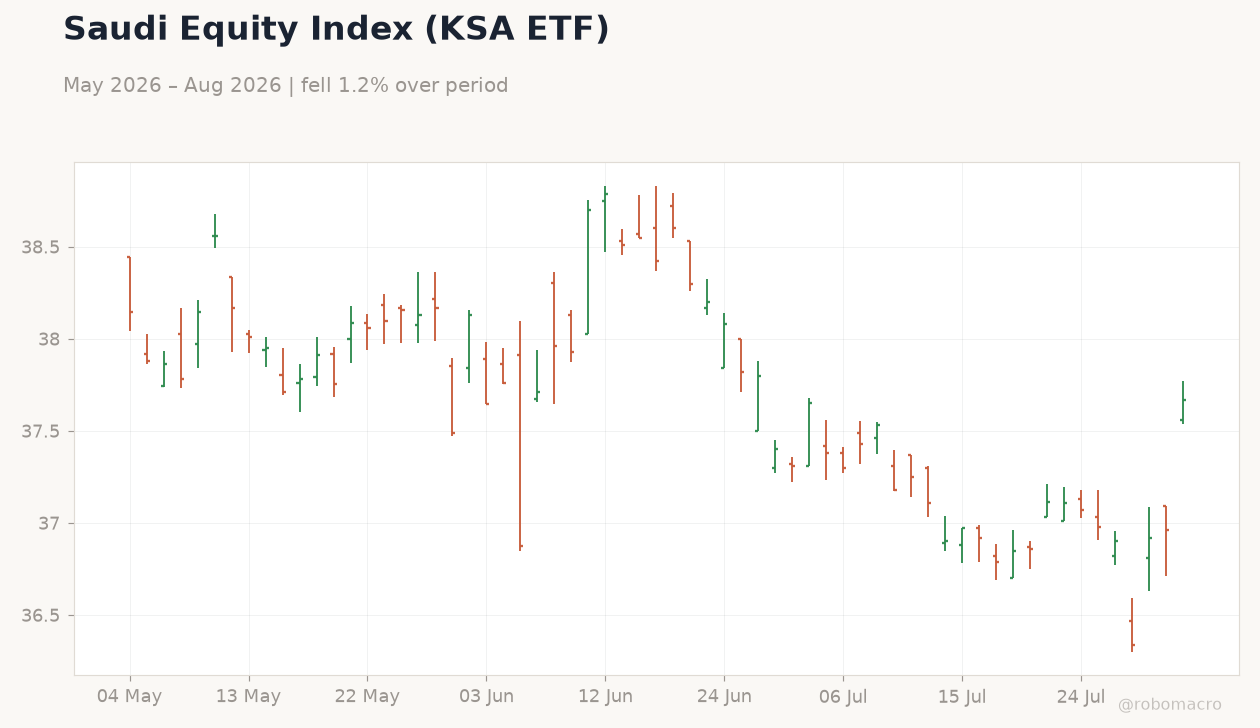
| MSCI Saudi | 36.96 | +0.11% |
| MSCI UAE | 18.93 | -1.92% |
| MSCI Qatar | 17.38 | -0.46% |
| MSCI Kuwait | 36.70 | +0.81% |
| Brent Crude | 84.81 | +nan% |
| WTI Crude | 81.17 | +nan% |
| Gold | 4,115.90 | +nan% |
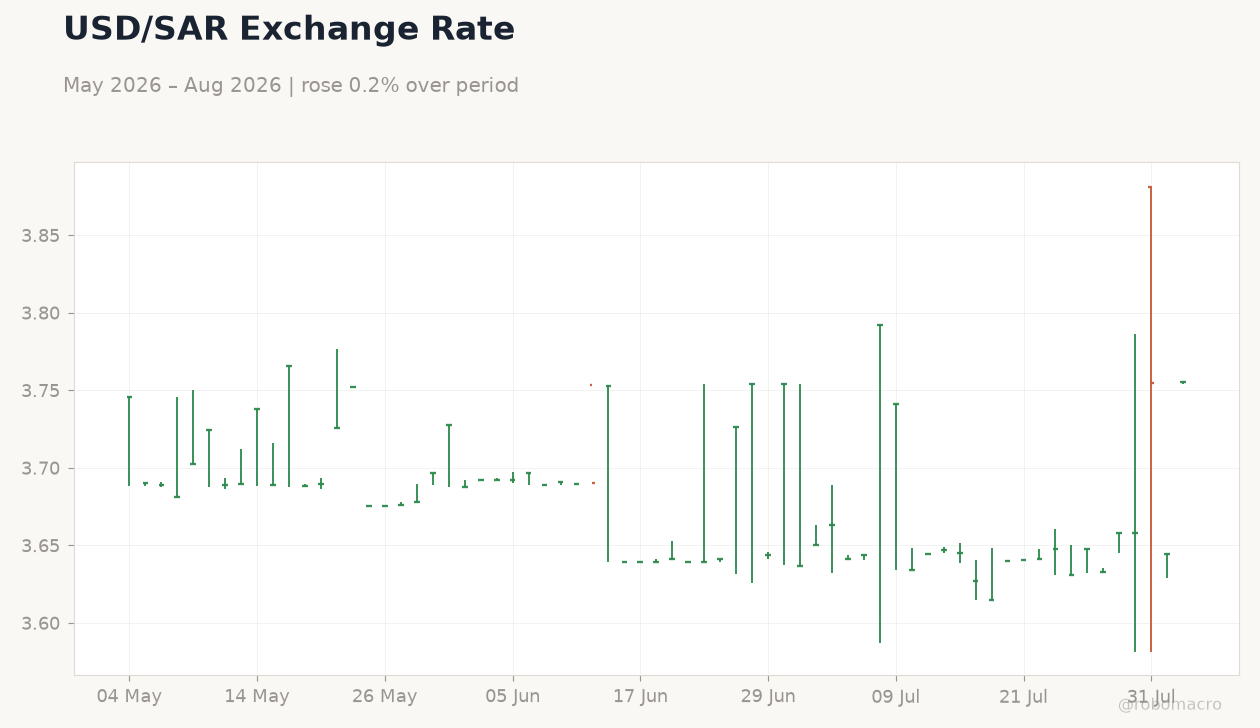
| USD/SAR | 3.76 | +3.05% |
| USD/AED | 3.67 | +0.03% |
| USD/KWD | 0.31 | -0.34% |
| Bitcoin | 63,708.66 | +0.36% |
Prior Economic Events
| Data | Prior | Cons | Actual |
|---|---|---|---|
| No events available | |||
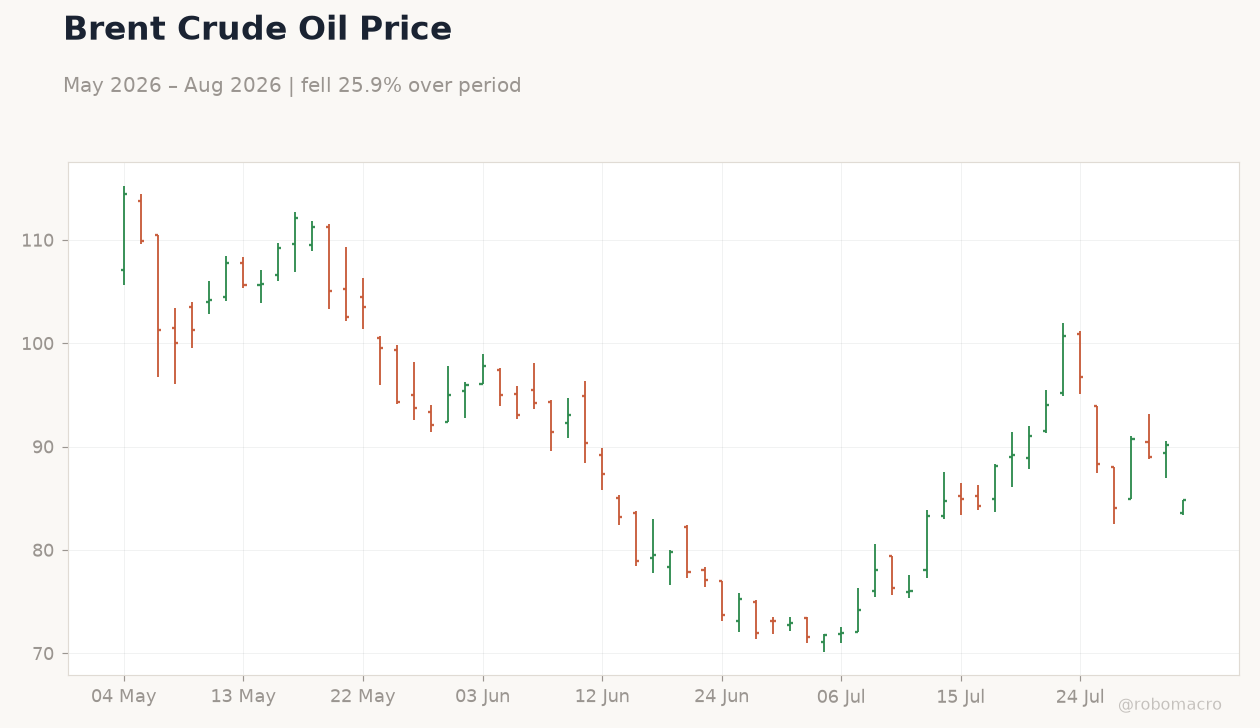 Brent Crude Oil Price | Type: market_hloc | USD per barrel: 84.85 (2026-08-03) | Range: 71.57–114.4 | Trend(6pt): 114.4,99.58,78.96,76.3,89.03,84.85
Today's Economic Events
| Data | Prior | Cons | Time |
|---|---|---|---|
| No events available | |||
- Saudi Aramco rises 0.76% while MSCI UAE drops 1.92% on regional risk.
- Brent crude holds near $84.81 amid Red Sea rerouting concerns.
- GCC FX pegs remain stable despite elevated sovereign CDS spreads.
Yesterday's Recap
Saudi equity markets edged higher as Aramco gained 0.76% to 26.48 and MSCI Saudi advanced 0.11% to 36.96, supported by steady crude prices near 84.81. UAE markets underperformed with MSCI UAE falling 1.92% to 18.93 amid reports of Iranian drone activity and ongoing Houthi threats to Red Sea shipping lanes. Qatar and Kuwait showed modest moves, with MSCI Qatar down 0.46% to 17.38 and MSCI Kuwait up 0.81% to 36.70.
No major macroeconomic data releases occurred across the GCC on August 2. Regional security remained elevated following Saudi participation in strikes on Iran-backed groups in Iraq and continued concerns over oil infrastructure exposure. FX pegs held firm, with USD/SAR at 3.76 and USD/AED at 3.67 showing minimal deviation.
Brent and WTI prices reflected supply risk premia without sharp daily swings. Gold reached 4,115.90 on safe-haven flows tied to Gulf instability.
The Day Ahead
No scheduled economic releases or central bank meetings are listed for August 3 across Saudi Arabia, UAE, Qatar, Kuwait, Oman or Bahrain. Markets will monitor developments in Gulf security and any updates on OPEC+ production compliance. Asian demand for spot crude from ADNOC tenders remains a focal point for price signals.
Regional central banks are expected to maintain existing policy rates in line with Fed guidance. Oil supply routes through the Red Sea and Strait of Hormuz will continue to influence sentiment. Sovereign wealth fund flows into energy transition projects may provide additional market color.
Elevated geopolitical risk has reinforced the centrality of oil revenues to GCC fiscal balances despite ongoing diversification efforts under Vision 2030 and UAE 2050.
Other Economic Notes
Non-oil PMI readings from earlier periods showed resilience in Saudi Arabia and the UAE, but fresh data is absent. High gold prices at 4,115.90 underscore safe-haven demand linked to regional instability. Crude rerouting away from Hormuz has highlighted capacity constraints on alternative pipelines and ports.
Broader energy transition spending by GCC sovereign funds continues at a measured pace. European safety advisories temporarily affected UAE airspace, though Dubai International Airport operations continued. Global investors appear to discount immediate oil disruptions, as Brent remains below recent peaks despite visible damage reports.