GCC Macro Daily(Beta Mode)
Oil Tumbles on Hormuz Reopening Hopes
Market Snapshot
| Asset | Level | Change |
|---|---|---|
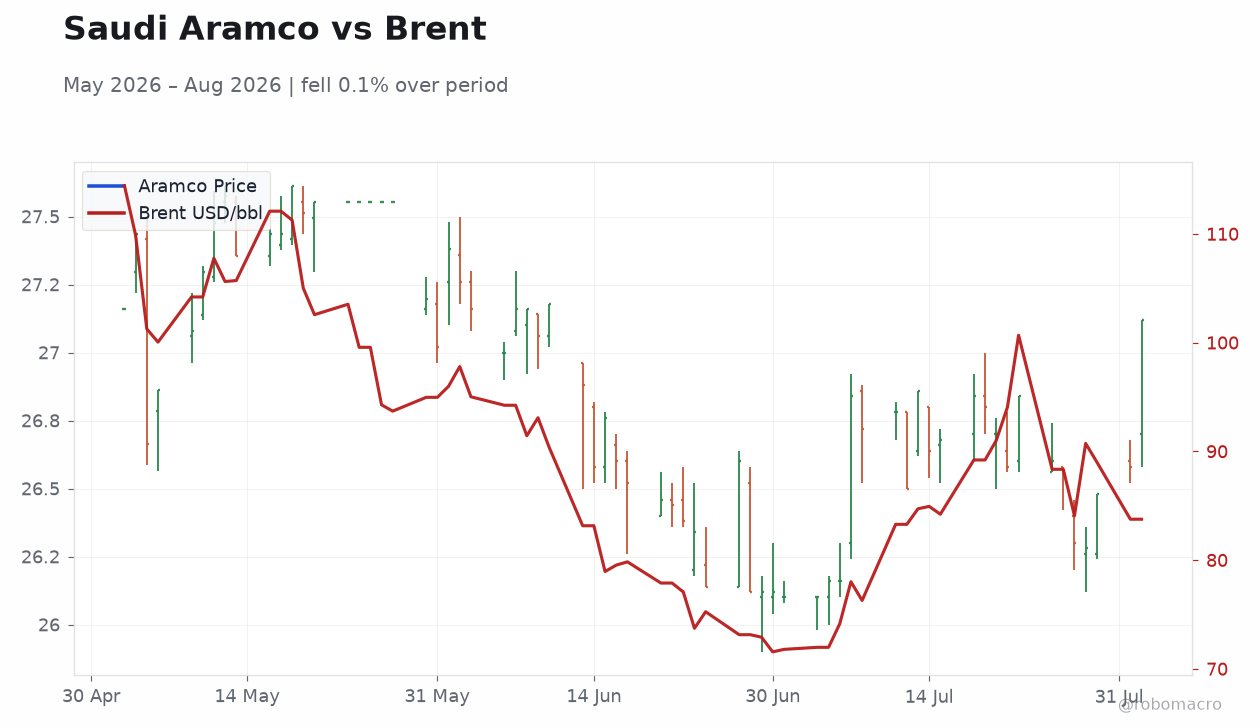
| Saudi Aramco | 26.90 | +1.20% |
| MSCI Saudi | 37.92 | +0.68% |
| MSCI UAE | 19.92 | +3.80% |
| MSCI Qatar | 17.66 | +0.09% |
| MSCI Kuwait | 37.01 | +0.26% |
| Brent Crude | 78.48 | -6.31% |
| WTI Crude | 74.67 | -7.06% |
| Gold | 4,184.20 | +3.73% |
| USD/SAR | 3.76 | +3.46% |
| USD/AED | 3.67 | +0.03% |
| USD/KWD | 0.31 | -0.61% |
| Bitcoin | 64,363.13 | +1.42% |
Prior Economic Events
| Data | Prior | Cons | Actual |
|---|---|---|---|
| No events available | |||
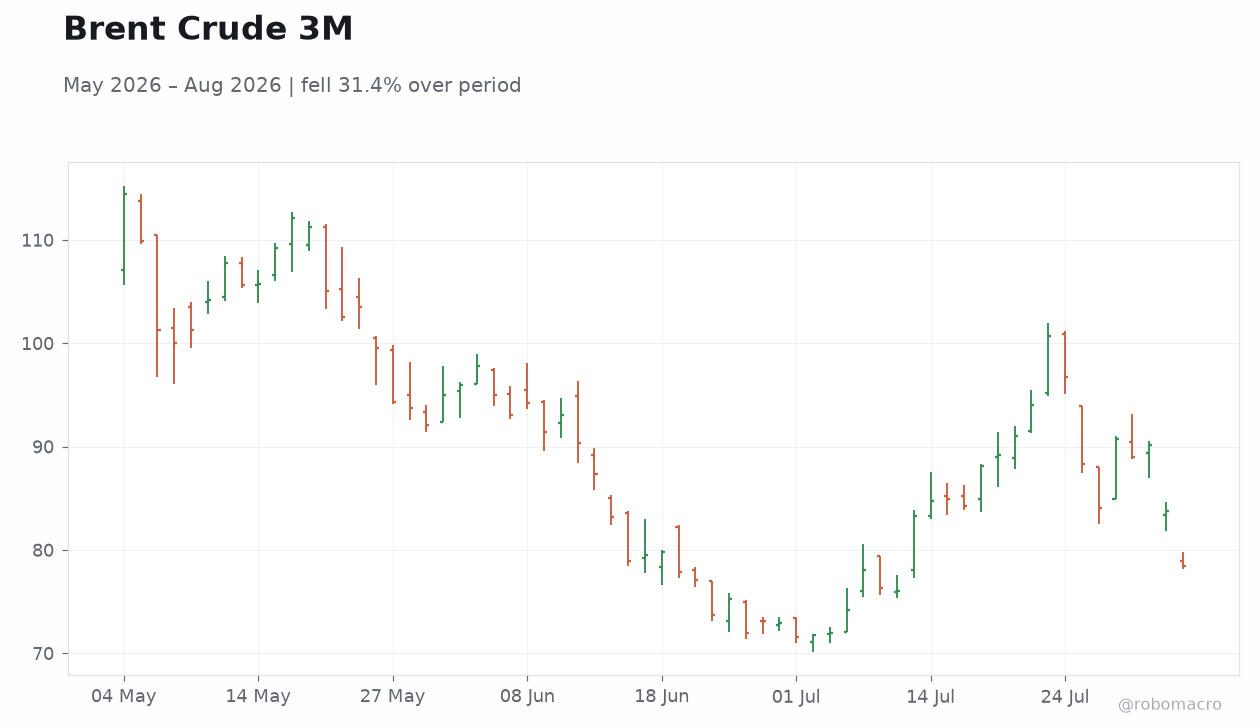 Brent Crude 3M | Type: market_hloc | Brent USD/bbl: 78.48 (2026-08-04) | Range: 71.57–114.4 | Trend(5pt): 114.4,94.29,79.85,84.73,78.48
Today's Economic Events
| Data | Prior | Cons | Time |
|---|---|---|---|
| No events available | |||
- Brent crude drops 6.3% as Hormuz talks advance
- Saudi Aramco shares rise 1.2% on Q2 profit surge
- MSCI UAE jumps 3.8% while gold climbs 3.7%
Yesterday's Recap
GCC equity markets advanced despite a sharp selloff in oil prices. Saudi Aramco gained 1.2% to 26.90 after reporting a 33-44% jump in second-quarter net profit, driven by elevated crude realizations from the Iran conflict. MSCI Saudi rose 0.68% while MSCI UAE surged 3.80%, supported by banking and real-estate names.
Brent crude fell 6.31% to 78.48 and WTI dropped 7.06% to 74.67 on progress toward reopening the Strait of Hormuz. Gold climbed 3.73% to 4,184.20 as investors sought safe-haven assets. USD/SAR strengthened 3.46% to 3.76 while USD/KWD eased 0.61%.
No major macroeconomic data releases occurred across the GCC on August 3.
The Day Ahead
Attention centers on US-Iran negotiations over the Strait of Hormuz, with officials indicating further progress could allow oil shipments to resume soon. No scheduled economic releases are listed for Saudi Arabia, the UAE, Qatar, Kuwait, Oman or Bahrain on August 4. Regional equity trading is expected to remain sensitive to any Hormuz updates and global crude price swings.
OPEC+ members continue to monitor compliance with voluntary cuts through September. Non-oil sectors in Qatar, which now account for 65.5% of GDP, may draw further investor focus amid diversification efforts. Shipping risk premia around Hormuz and Bab el-Mandeb stay elevated, prompting some exporters to maintain alternative routes.
Other Economic Notes
Saudi Arabia’s non-oil growth momentum remains intact under Vision 2030, with recent PMI readings above 56 supporting fiscal resilience. UAE diversification continues to attract capital into real estate and finance despite regional tensions. Broader GCC economies benefit from elevated gold prices and steady FX reserve levels that underpin currency peg credibility.
Qatar’s non-hydrocarbon sectors now account for 65.5% of GDP, driven by growth in construction, trade and tourism. Energy-transition spend continues across the region, with UAE’s Masdar and Saudi’s ACWA Power advancing new green-hydrogen projects. Shipping risk premia around Hormuz and Bab el-Mandeb stay elevated, prompting some exporters to maintain alternative routes.
Global Macro News
Hopes for a Hormuz reopening drove the steepest one-day oil price decline in months, easing immediate supply concerns for GCC producers. <i>↓ p.2</i>