| Asset | Level | Change |
|---|---|---|
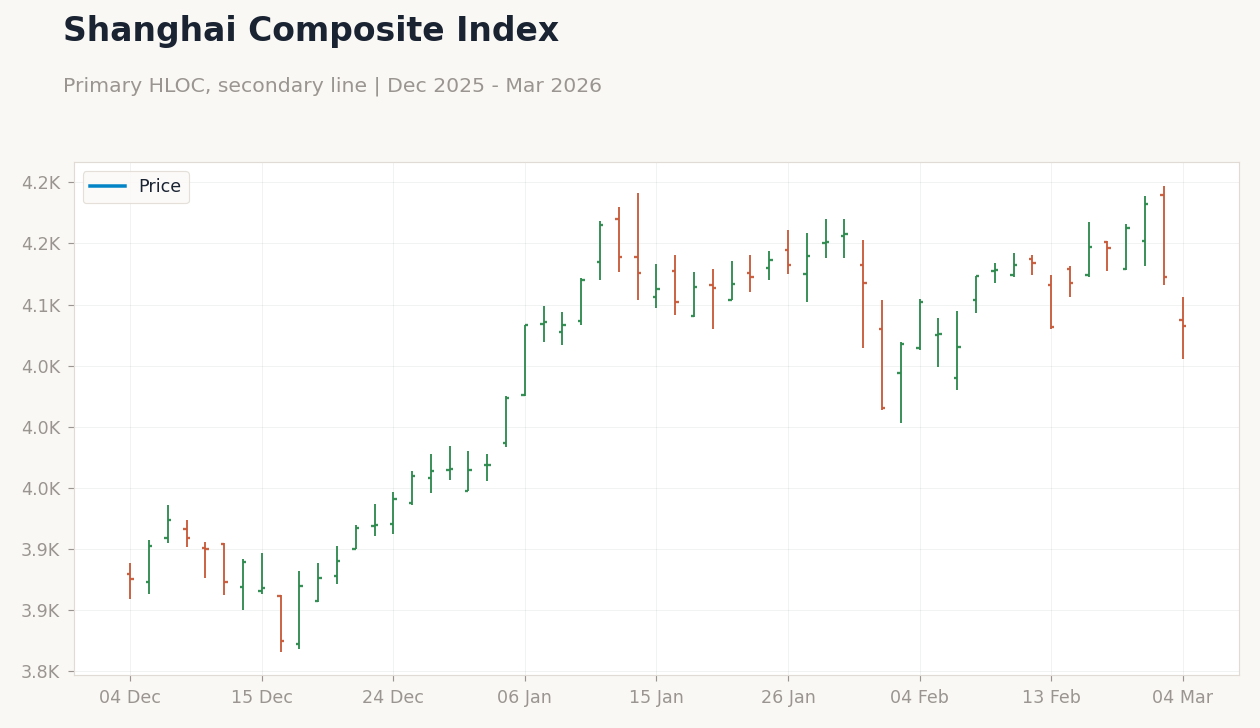
| Shanghai Composite | 4,078.82 | -1.06% |
| CSI 300 | 4,599.31 | -1.22% |
| Hang Seng | 25,249.48 | -2.01% |
| TAIEX | 32,828.88 | -4.35% |
| USD/CNY | 6.90 | +0.21% |
| USD/HKD | 7.82 | -0.06% |
| Copper | 5.90 | +2.25% |
| Brent Crude | 82.54 | +1.40% |
| Gold | 5,151.60 | +0.87% |
| Bitcoin | 72,667.55 | +6.40% |
| China 2Y Govt Yield | - | - |
| China 10Y Govt Yield | - | - |
| Data | Prior | Cons | Actual |
|---|---|---|---|
| NBS Manufacturing PMI | 49.30 | 49.10 | 49 |
| NBS Non-Manufacturing PMI | 49.40 | 49.80 | 49.50 |
| RatingDog Manufacturing PMI | 50.30 | 50.20 | 52.10 |
| RatingDog Services PMI | 52.30 | 52.30 | 56.70 |
| Data | Prior | Cons | Time |
|---|---|---|---|
| No events available | |||
Mainland China's economic data painted a mixed picture, with the official NBS Manufacturing PMI slipping to 49.0, below consensus of 49.1 and prior 49.3, indicating ongoing factory contraction amid weak external demand. The NBS Non-Manufacturing PMI came in at 49.5, missing expectations of 49.8 from prior 49.4, reflecting subdued services activity ahead of the Two Sessions. In contrast, the private Caixin Manufacturing PMI surged to 52.1, beating forecasts of 50.2 and previous 50.3, driven by stronger new orders and output, while Caixin Services PMI jumped to 56.7 against consensus and prior of 52.3, highlighting resilient domestic consumption.
Mainland equities reflected the uneven data, with Shanghai Composite falling 1.06% to 4,078.82 and CSI 300 dropping 1.22% to 4,599.31, pressured by property sector woes despite commodity gains. Hong Kong's Hang Seng tumbled 2.01% to 25,249.48, hit by tech and property declines amid rising air freight costs from Middle East disruptions. Taiwan's TAIEX suffered the steepest loss at 4.35% to 32,828.88, weighed down by semiconductor giants amid global chip demand concerns and cross-strait tensions.
With no major data releases scheduled for today in Greater China, markets will focus on ongoing Two Sessions discussions in Beijing, where policymakers are expected to outline economic targets, including GDP growth around 5% and fiscal stimulus measures. Hong Kong traders may monitor USD/HKD peg dynamics closely, as aggregate balance remains stable but could face pressure from U.S. rate expectations.
Taiwan's semiconductor sector could see volatility tied to global AI demand signals, especially after recent foreign minister warnings on Chinese military threats. Broader attention will turn to potential PBoC signals on yuan management, given recent reference rate adjustments to temper depreciation. Investors should watch for any updates on Middle East conflict impacts, such as air route suspensions affecting China export logistics.
Overall, a quiet calendar day may amplify reactions to geopolitical news and commodity moves.
Subscribe to Greater China Macro Daily and get each new issue delivered to your inbox.
Already a member? Visit robomacro.com to log in and manage subscriptions, or use Forgot Password to set a password.
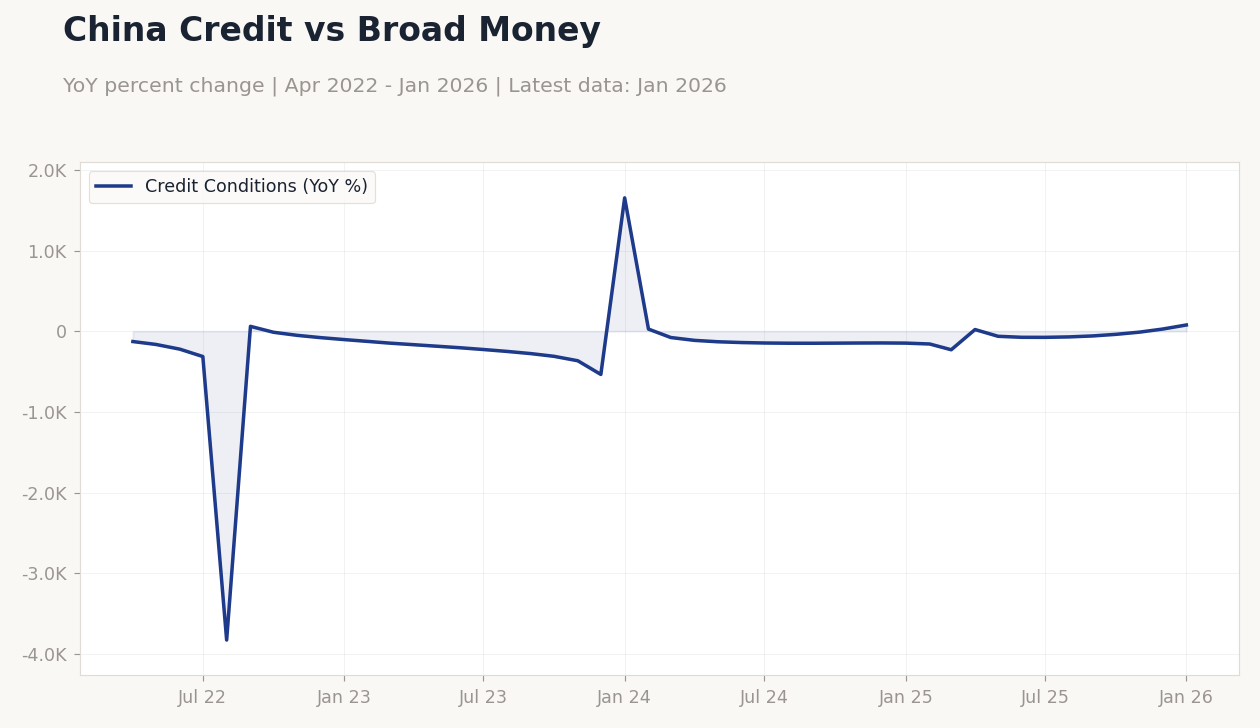
Mainland China's property sector continues to drag on growth, with recent data showing persistent deflationary pressures as CPI YoY stood at -0.10% as of 2025-04-01, underscoring the need for targeted stimulus at the Two Sessions. Hong Kong's economy faces headwinds from tourism revival efforts outlined in Budget 2026, but Middle East tensions are driving up air freight costs by up to 30%, squeezing exporters reliant on China supply chains. Taiwan's outlook remains linked to semiconductor exports, with global AI boom providing tailwinds despite risks from U.S.-China trade frictions and potential military escalations.
Escalating Middle East conflicts, including U.S.-Israeli strikes on Iran, are disrupting global supply chains, pushing Brent crude up 1.40% to 82.54 and raising air freight costs for China shippers by 30%, which could inflate import prices and pressure mainland inflation. The stronger USD amid widening geopolitical risks contributed to yuan weakness, with USD/CNY rising 0.21% to 6.90, though PBoC interventions via reference rate fixes at 6.9124 signal efforts to stabilize the currency. Global tech volatility, driven by U.S.
export controls and AI supply chain concerns, hammered Taiwan's TAIEX, as warnings from Taiwan's foreign minister highlight risks to the island's dominance in advanced semiconductors, supplying 90% of the world's needs. Copper prices climbed 2.25% to 5.90, buoyed by hopes for Chinese demand recovery, but broader commodity resilience contrasts with equity sell-offs across Greater China. Bitcoin's 6.40% surge to 72,667.55 reflects safe-haven flows amid uncertainty, potentially influencing Hong Kong's fintech initiatives like the new blockchain cargo platform with Shanghai.
Overall, these dynamics amplify Greater China's exposure to global instability, with Two Sessions priorities likely focusing on tech self-sufficiency and military readiness.
The People's Bank of China (PBoC) set the USD/CNY reference rate at 6.9124, a strategic fix to counter depreciation amid Middle East-driven USD strength, signaling a calculated shift to support export competitiveness without aggressive easing. PBoC commentary from the Two Sessions emphasizes stable liquidity operations, with no immediate MLF or LPR cuts announced, though RRR reductions remain on the table to combat deflation as CPI lingers at -0.10%. Hong Kong Monetary Authority (HKMA) maintained the USD/HKD peg at 7.82, with minimal intervention as aggregate balance held steady despite slight outflows; the authority's new blockchain initiative with Shanghai aims to enhance trade finance efficiency.
Taiwan's Central Bank of the Republic of China (CBC) stayed pat on rates, focusing on FX interventions to stabilize the TWD amid TAIEX volatility, while linking policy to semiconductor export outlooks threatened by cross-strait tensions. (cont...)
PBoC signals from State Council align with Two Sessions targets for balanced growth, potentially including targeted lending for property stabilization. HKMA's efforts tie into Budget 2026's push for AI innovation, supporting the peg through capital inflows. CBC remains vigilant on inflation and global chip demand, with no vote splits disclosed in recent decisions.