Greater China Macro Daily(Beta Mode)
China Trade Surges, TAIEX Soars
Market Snapshot
| Asset | Level | Change |
|---|---|---|
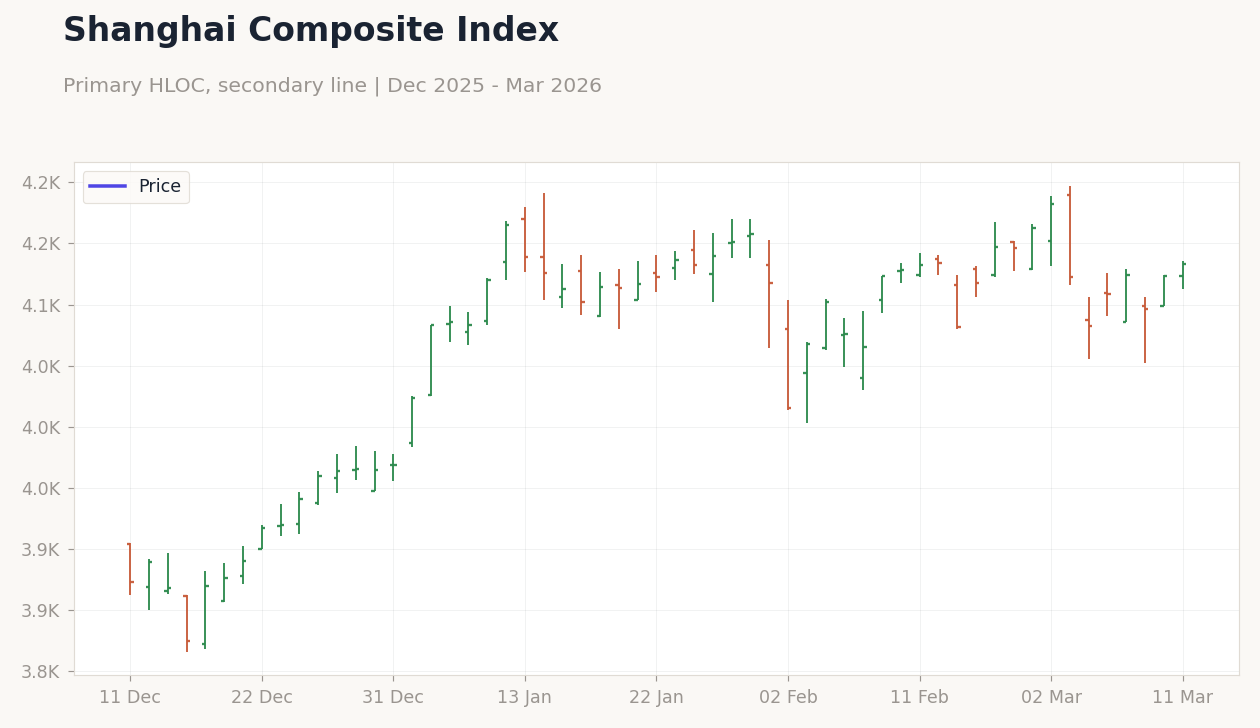
| Shanghai Composite | 4,125.88 | +0.07% |
| CSI 300 | 4,696.60 | +0.47% |
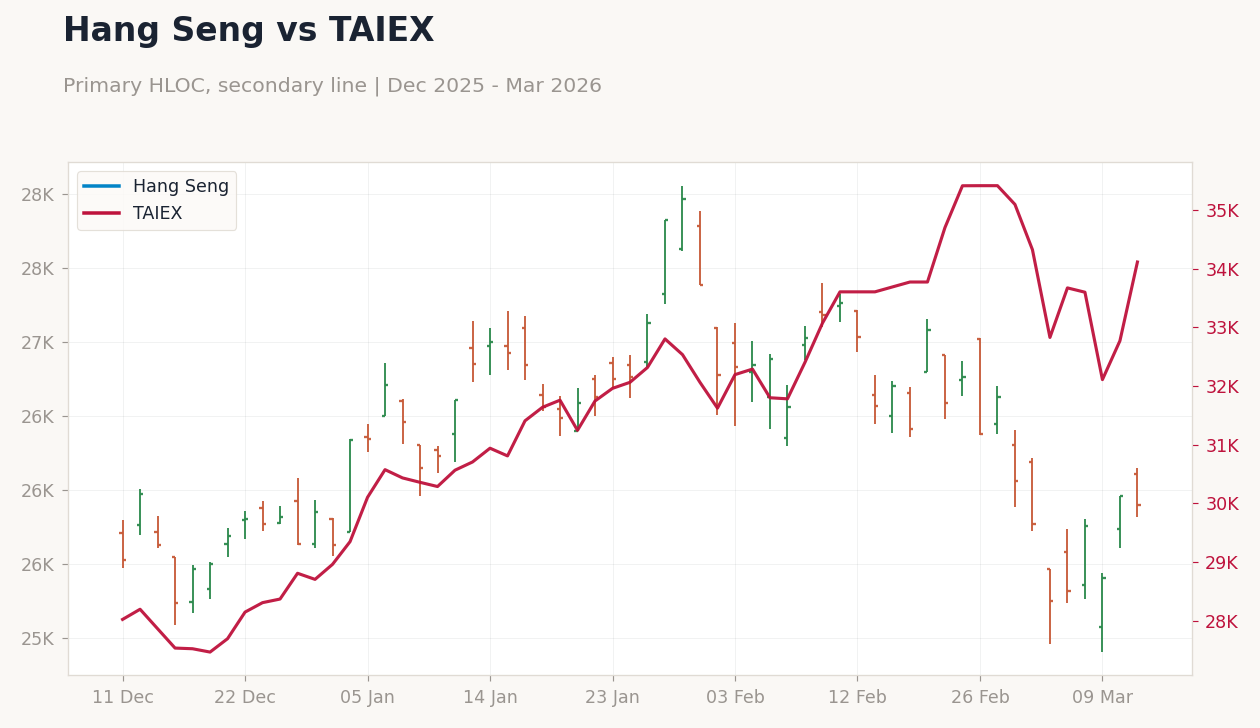
| Hang Seng | 25,898.76 | -0.24% |
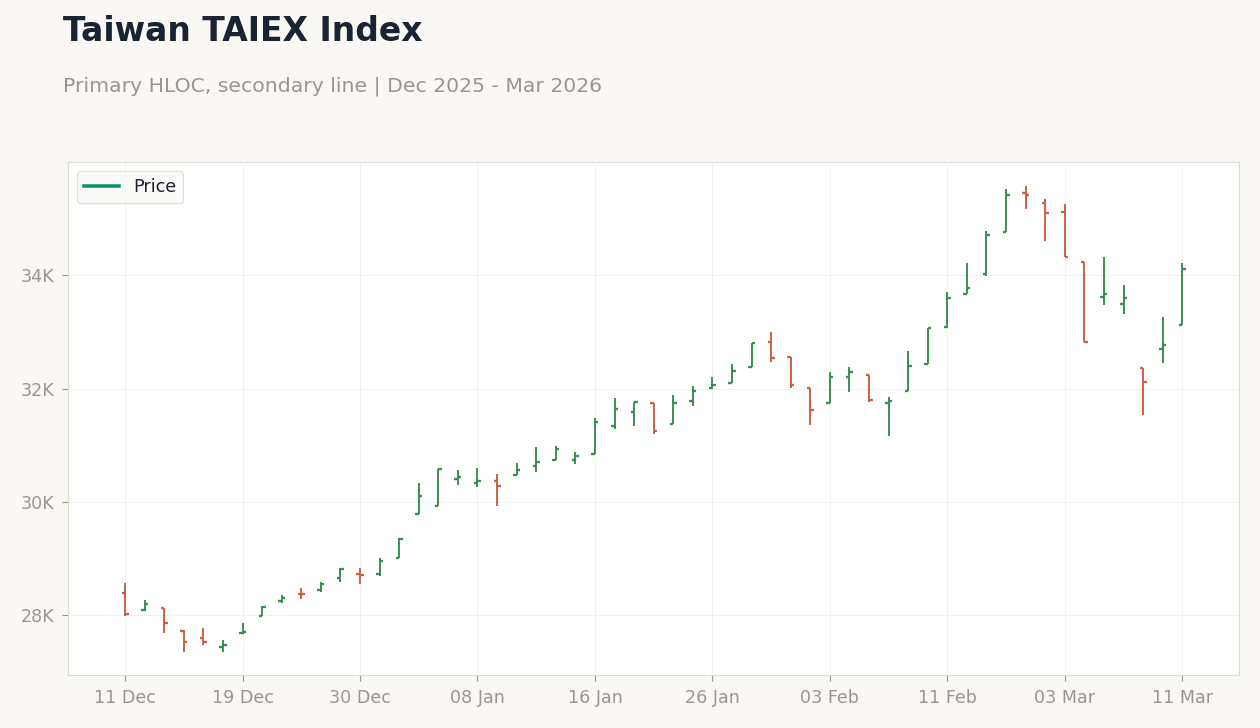
| TAIEX | 34,114.19 | +4.10% |
| USD/CNY | 6.86 | -0.67% |
| USD/HKD | 7.83 | +0.06% |
| Copper | 5.89 | -0.19% |
| Brent Crude | 93.84 | +6.88% |
| Gold | 5,172.30 | -1.10% |
| Bitcoin | 70,357.59 | +0.62% |
| China 2Y Govt Yield | - | - |
| China 10Y Govt Yield | - | - |
Prior Economic Events
| Data | Prior | Cons | Actual |
|---|---|---|---|
| Trade Balance | 114,110m | 179,600m | 213,620m |
| Exports Year-over-Year | 6.60 | 7.10 | 21.80 |
| Imports Year-over-Year | 5.70 | 6.30 | 19.80 |
 China Credit vs Broad Money | Type: macro_line | Credit Conditions: -1.642 (2026-01-01) | Range: -3.671–13.22 | Trend(6pt): 13.22,-3.432,4.15,-1.829,-1.558,-1.642
Today's Economic Events
| Data | Prior | Cons | Time |
|---|---|---|---|
| New Yuan Loans | 4,710,000m | 979,000m | 05:00 |
| House Price Index Year-over-Year | -3.10 | - | 21:30 |
| Industrial Production Year-over-Year | 5.20 | - | 22:00 |
| Retail Sales Year-over-Year | 0.90 | - | 22:00 |
| Fixed Asset Investment (YTD) Year-over-Year | -3.80 | - | 22:00 |
- China's February trade data beat expectations, with exports up 21.8% YoY and imports rising 19.8% YoY, yielding a surplus of CNY 213.62 billion.
- Mainland stocks gained modestly on stimulus hopes, Taiwan's TAIEX jumped 4.10% on tech optimism, while Hang Seng edged down 0.24%.
- PBoC kept benchmark lending rates steady, indicating tolerance for yuan strength amid economic slowdown signals.
Yesterday's Recap
China's February trade data outperformed forecasts, recording a surplus of CNY 213.62 billion versus consensus of CNY 179.6 billion, driven by exports expanding 21.8% YoY (against 7.1% expected) and imports growing 19.8% YoY (versus 6.3% consensus), highlighting strong external demand despite global challenges. This boosted mainland markets, with the Shanghai Composite rising 0.07% to 4,125.88 and CSI 300 climbing 0.47% to 4,696.60, fueled by expectations of policy aid for property and consumption. Taiwan's TAIEX advanced 4.10% to 34,114.19, propelled by semiconductor gains amid positive export prospects and reduced supply chain worries.
Hong Kong's Hang Seng declined 0.24% to 25,898.76, weighed by tech pressures and elevated U.S. yields affecting regional mood. Currencies saw USD/CNY drop 0.67% to 6.86, signaling yuan appreciation, while USD/HKD increased 0.06% to 7.83 within the peg.
Copper fell 0.19% to 5.89, slightly offsetting trade optimism, as Brent crude rose 6.88% to 93.84 on geopolitical tensions.
The Day Ahead
Attention turns to China's upcoming data releases. New Yuan Loans on March 14 are forecasted at CNY 979 billion after a previous CNY 4.71 trillion, providing clues on credit expansion and stimulus impact. On March 15, House Price Index YoY follows a prior -3.1% print, amid persistent real estate strains.
Industrial Production YoY, last at 5.2%, will assess manufacturing vigor post strong exports. Retail Sales YoY, previously 0.9%, may indicate consumer rebound. Fixed Asset Investment (YTD) YoY, from -3.8% prior, will reveal investment trends.
No significant events for Taiwan or Hong Kong, but cross-strait developments could sway sentiment.
Other Economic Notes
China's shift toward AI and robotics intensifies, with Midea committing US$8.7 billion to automation, addressing labor gaps and enhancing global edge. AI talent demand surges in China, exceeding postings in other new-economy areas, as firms accelerate tech adoption for efficiency. Hong Kong collaborates with Shanghai on blockchain for cargo data, linking electronic bills of lading to streamline trade finance and cut cross-border costs.
(cont...)