| Asset | Level | Change |
|---|---|---|
| Shanghai Composite | 3,957.05 | -1.24% |
| CSI 300 | 4,567.02 | -0.35% |
| Hang Seng | 24,382.47 | -3.54% |
| TAIEX | 32,722.50 | -2.45% |
| USD/CNY | 6.88 | -0.28% |
| USD/HKD | 7.83 | -0.01% |
| Copper | 5.49 | +2.70% |
| Brent Crude | 100.49 | -10.43% |
| Gold | 4,410.40 | -3.50% |
| Bitcoin | 70,891.51 | +4.49% |
| China 2Y Govt Yield | - | - |
| China 10Y Govt Yield | - | - |
| Data | Prior | Cons | Actual |
|---|---|---|---|
| No events available | |||
Brent Crude Oil Price | Type: macro_line | USD per Barrel: 101 (2026-03-16) | Range: 59.93–133.2 | Trend(6pt): 63.7,115.5,94.56,74.89,103.2,101
| Data | Prior | Cons | Time |
|---|---|---|---|
| No events available | |||
Greater China equities fell across the board amid global risk-off sentiment from the Iran conflict and volatile commodity prices, with mainland China's Shanghai Composite dropping 1.24% to 3,957.05, pressured by weak consumer sectors despite hopes for stimulus. The CSI 300 index eased 0.35% to 4,567.02, reflecting caution in financials and materials amid trade surplus debates. Hong Kong's Hang Seng plunged 3.54% to 24,382.47, dragged by tech and property stocks as police gained new powers to demand smartphone passwords in security cases, heightening investor unease.
Taiwan's TAIEX slid 2.45% to 32,722.50, weighed down by semiconductor export concerns linked to fractured supply chains from the Middle East crisis. Currency markets showed mild stability, with USD/CNY falling 0.28% to 6.88 on yuan strength from export data, while USD/HKD dipped 0.01% to 7.83 amid steady peg dynamics. Commodities provided mixed signals for China growth, as copper rose 2.70% to 5.49, signaling industrial demand resilience, but Brent crude tumbled 10.43% to 100.49, underscoring energy shock risks despite broader surges tied to the conflict.
Gold fell 3.50% to 4,410.40, while Bitcoin climbed 4.49% to 70,891.51, tracking selective risk-on flows. No major macro data releases occurred, but news of Pop Mart and Laopu Gold's strong 2025 earnings highlighted pockets of retail strength in mainland China despite broader slump.
With no scheduled data releases for Greater China, markets will focus on ongoing fallout from the Iran conflict, particularly its impact on oil prices and supply chains affecting mainland China's exports and Taiwan's semiconductor sector. Investors in Hong Kong may monitor any follow-up to new police powers on smartphone access, potentially influencing foreign investment flows. Attention turns to potential State Council signals on trade balancing, as Premier Li Qiang's pledges could shape cross-strait dynamics.
Broader commodity movements, including copper as a China proxy, will guide sentiment ahead of any unscheduled PBoC liquidity operations. Geopolitical developments, such as Taiwan's diplomatic honors to a Lithuanian MP, may subtly affect investor risk appetite in the region.
Subscribe to Greater China Macro Daily and get each new issue delivered to your inbox.
Already a member? Visit robomacro.com to log in and manage subscriptions, or use Forgot Password to set a password.
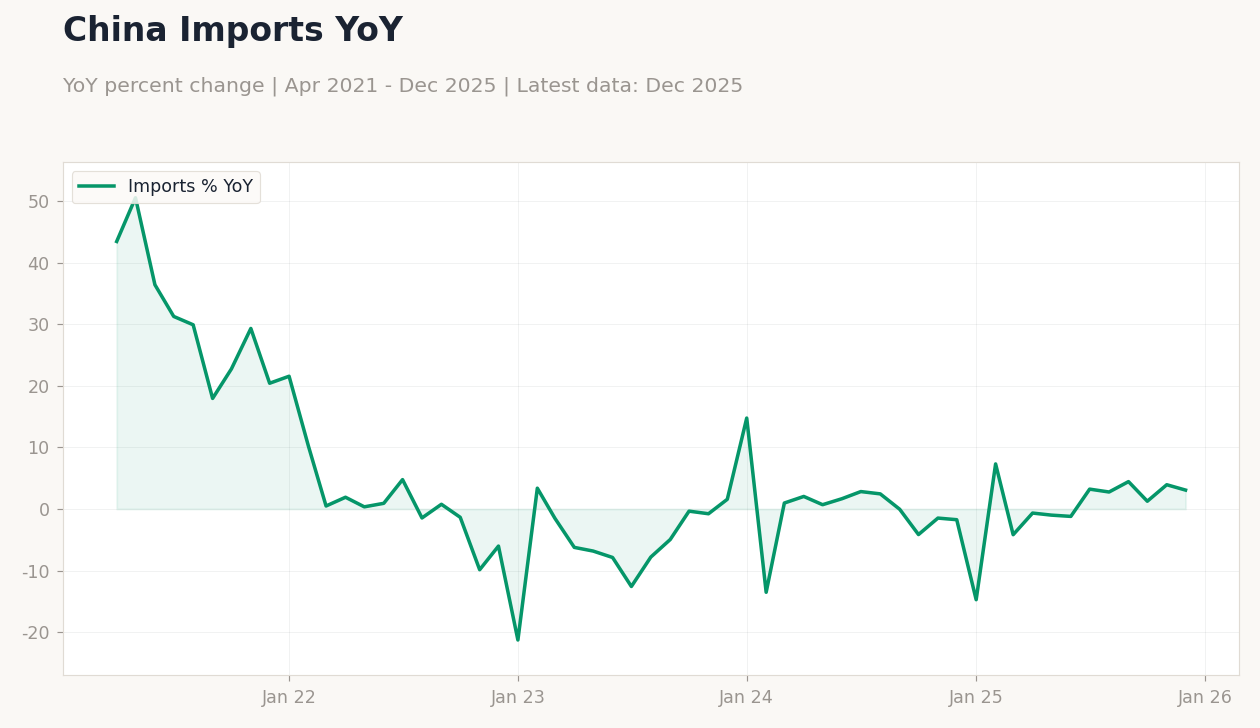
China Imports YoY | Type: macro_line | Imports % YoY: 3.066 (2025-12-01) | Range: -21.28–50.54 | Trend(5pt): 43.43,0.9165,-7.811,-4.153,3.066
China Exports YoY | Type: macro_line | Exports % YoY: 5.256 (2025-12-01) | Range: -14.55–31.45 | Trend(5pt): 31.45,17.35,-9.164,11.94,5.256
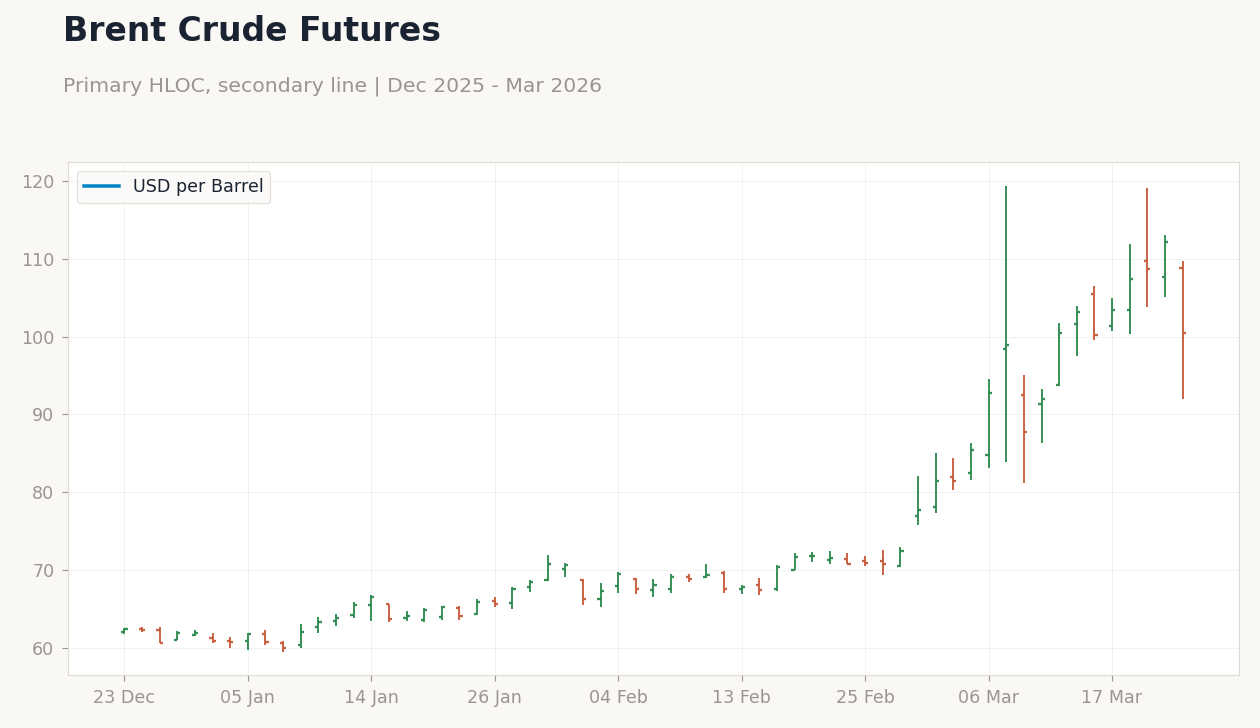
Brent Crude Futures | Type: market_hloc | USD per Barrel: 100.5 (2026-03-23) | Range: 59.96–112.2 | Trend(5pt): 62.38,63.76,68.05,77.74,100.5
USD/CNY Exchange Rate | Type: market_hloc | USD per CNY: 6.88 (2026-03-23) | Range: 6.841–7.041 | Trend(6pt): 7.041,6.973,6.938,6.869,6.873,6.88
Mainland China's record deflation streak appears set to end prematurely due to surging oil prices from the Iran war, with latest CPI YoY at -0.10% as of April 2025, though recent energy shocks suggest upward pressure on prices. Trade imbalances persist, as export surges create surpluses drawing scrutiny from partners, prompting pledges for more balanced flows and further economic opening. In Taiwan, the sale of Delivery Hero's food delivery business for €519 million underscores consolidation in consumer services amid slowing demand, while Hong Kong faces security-related headwinds that could deter tech investments.
Xpeng's revenue forecast shortfall highlights slowing EV demand in China, contrasting with standout earnings from Pop Mart and Laopu Gold.
The Iran conflict roils global markets, sending shockwaves through economies with energy price surges derailing rate cut expectations, as seen in the Fed's decision to hold rates steady amid economic turbulence. Wall Street banks have revised China inflation projections upward and delayed rate cut forecasts, citing oil-driven pressures that could foster stagflation risks. European central banks, including the ECB, grapple with fiscal constraints from the energy crisis, limiting flexibility in the euro area and indirectly affecting trade with Greater China, while Greek banks face loan challenges post-recovery.
In Asia, Korea's won weakens under Middle East shockwaves, contrasting with relative stability in Japan and Taiwan, while expanding youth microfinance to 300 billion won highlights domestic stimulus efforts. Brazil's finance minister delays tax plans ahead of elections, potentially stabilizing LatAm flows that intersect with China's commodity imports. The UK charts potential interest-rate hikes amid global trends, with energy surges impacting Bank of England policy and echoing deflation-cure dynamics in China.
India's bond struggles weigh on climate finance, adding to emerging market pressures that could influence cross-border investments into Greater China. Nigeria's reaction to CAF's AFCON decision adds to African economic narratives, though less directly tied to Greater China.
The PBoC remains vigilant on liquidity amid deflation's potential end from oil shocks, with no recent MLF or LPR adjustments but State Council signals emphasizing targeted support over broad easing to manage trade surpluses. Wall Street banks' pushback on rate cut timing suggests the PBoC may hold steady, prioritizing yuan stability as USD/CNY hovers at 6.88. HKMA maintains the USD/HKD peg near 7.83 with minimal interventions, as aggregate balance holds firm despite security law expansions that could indirectly affect capital flows.
(cont...)
Taiwan's CBC focuses on FX intervention to counter export weaknesses in semiconductors, with no rate changes but close monitoring of geopolitical ties, such as the Lithuania MP honor, amid supply chain fractures from the Iran war. Overall, Greater China's central banks adopt a wait-and-see approach, balancing global inflation risks against domestic growth needs without immediate policy shifts.