Greater China Macro Daily(Beta Mode)
Yuan Strengthens Ahead of PMIs
Market Snapshot
| Asset | Level | Change |
|---|---|---|
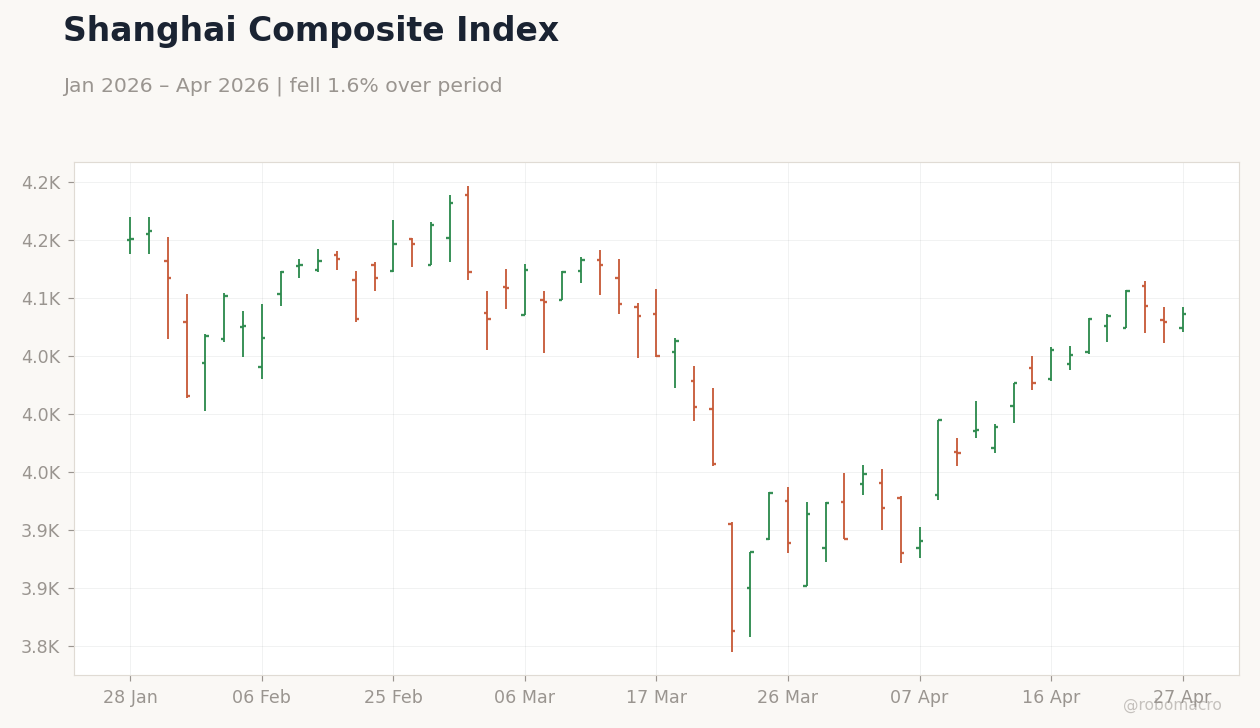
| Shanghai Composite | 4,069.36 | -0.42% |
| CSI 300 | 4,754.53 | -0.34% |
| Hang Seng | 25,925.65 | -0.20% |
| TAIEX | 39,616.63 | +1.76% |
| USD/CNY | 6.84 | +0.01% |
| USD/HKD | 7.84 | +0.02% |
| Copper | 5.98 | -0.69% |
| Brent Crude | 104.30 | -3.63% |
| Gold | 4,609.60 | -1.41% |
| Bitcoin | 76,370.01 | -1.29% |
| China 2Y Govt Yield | - | - |
| China 10Y Govt Yield | - | - |
Prior Economic Events
| Data | Prior | Cons | Actual |
|---|---|---|---|
| No events available | |||
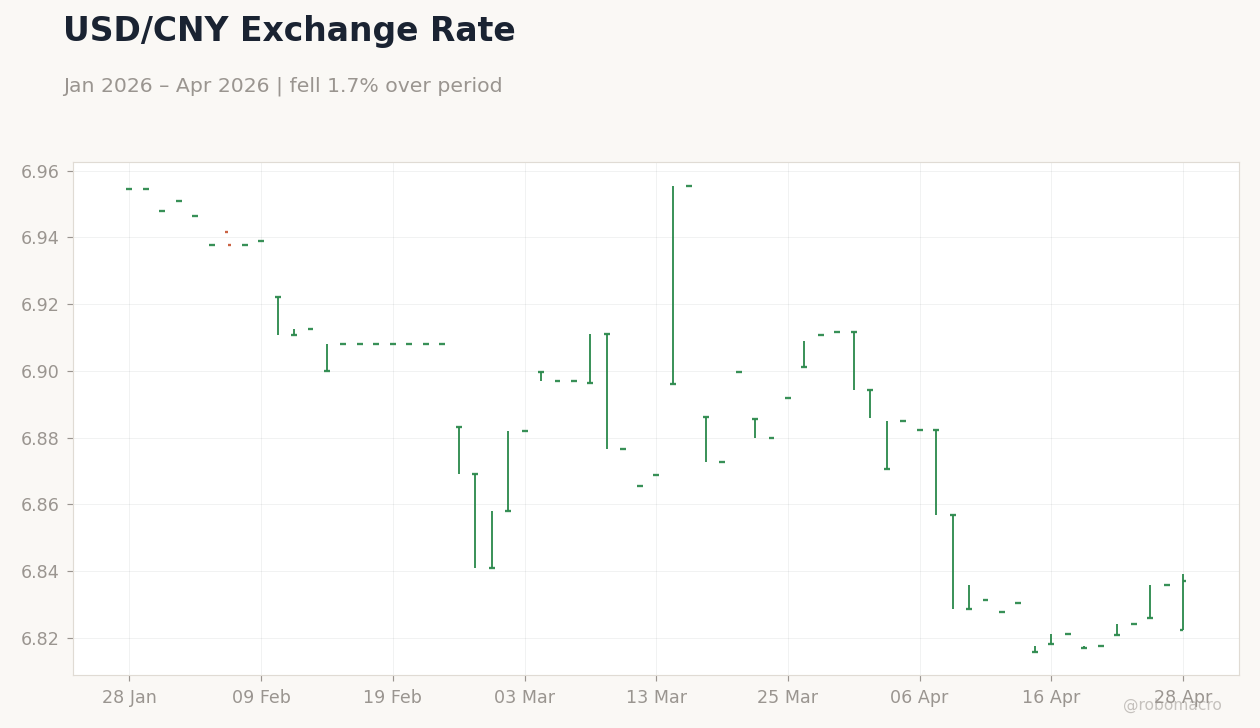 USD/CNY Exchange Rate | Type: market_hloc | USD/CNY: 6.837 (2026-04-28) | Range: 6.816–6.956 | Trend(5pt): 6.955,6.908,6.869,6.882,6.837
Today's Economic Events
| Data | Prior | Cons | Time |
|---|---|---|---|
| NBS Manufacturing PMI | 50.40 | 50.20 | 17:30 |
| NBS Non-Manufacturing PMI | 50.10 | 49.90 | 17:30 |
| RatingDog Manufacturing PMI | 50.80 | 50.50 | 17:45 |
- PBOC sets USD/CNY reference rate at 6.8579, bolstering yuan amid forex losses for firms and signals of policy tightening.
- Moody’s upgrades China’s outlook to stable, highlighting economic resilience despite challenges from the Iran war and domestic pressures.
- Greater China equities mixed: mainland indices ease, Taiwan climbs on tech gains, as commodities weaken on demand worries.
Yesterday's Recap
Greater China markets displayed mixed results on April 27, with mainland equities softening slightly due to profit-taking and yuan firmness impacting export-oriented sectors. The Shanghai Composite ended at 4,069.36, down 0.42%, while the CSI 300 declined 0.34% to 4,754.53, amid caution before key PMI data and persistent property market strains. Hong Kong's Hang Seng index fell 0.20% to 25,925.65, weighed by tech and property stocks despite steady banking performance.
Taiwan's TAIEX outperformed, gaining 1.76% to 39,616.63, driven by robust semiconductor demand and favorable AI-related export prospects. Currencies held firm, with USD/CNY at 6.84 (up 0.01%) and USD/HKD at 7.84 (up 0.02%), supported by PBOC's reference rate moves. China-linked commodities slipped, with copper down 0.69% to 5.98 on industrial demand concerns, Brent crude dropping 3.63% to 104.30 due to Iran war disruptions, gold falling 1.41% to 4,609.60, and Bitcoin easing 1.29% to 76,370.01.
No significant economic releases occurred, but Taiwan's tech sector benefited from stable cross-strait supply chains.
The Day Ahead
Focus shifts to China's April PMI data on April 29, with NBS Manufacturing PMI forecasted at 50.2 (prior 50.4) and Non-Manufacturing PMI at 49.9 (prior 50.1), which could reveal patchy recovery amid subdued global demand. The Caixin Manufacturing PMI, expected at 50.5 (prior 50.8), will offer private-sector perspectives, affecting views on factory activity and PBOC easing prospects. Hong Kong may monitor HKMA alerts on tokens linked to stablecoin issuers, following recent cautions.
Taiwan lacks major releases but will track semiconductor export trends amid geopolitical tensions. Potential State Council updates on property measures could influence mainland stocks. These indicators may spark volatility in CNY and assets if they signal deflation risks, with China's CPI at -0.10% YoY.
Other Economic Notes
Mainland China's recovery contends with yuan gains, amplifying forex losses for exporters and straining profits during a pivot to currency strength. The EV market sees escalating rivalry, as BYD's discounts highlight a deepening price war that may compress margins but aid exports amid domestic weakness. (cont...)