| Asset | Level | Change |
|---|---|---|
| Nifty 50 | 22,331.40 | -2.14% |
| Sensex | 71,947.55 | -2.22% |
| USD/INR | 94.36 | -0.45% |
| EUR/INR | 108.04 | -0.92% |
| Reliance | 1,343.90 | -0.31% |
| HDFC Bank | 731.55 | -3.26% |
| Brent Crude | 104.66 | -7.20% |
| Gold | 4,737.10 | +4.66% |
| Bitcoin | 67,894.56 | +1.80% |
| India Short-term Rate | 5.50% | +0.00% |
| India Long-term Rate | - | - |
| Data | Prior | Cons | Actual |
|---|---|---|---|
| Industrial Production Year-over-Year | 5.10 | 4.20 | 5.20 |
| Manufacturing Production Year-over-Year | 5.30 | - | 6 |
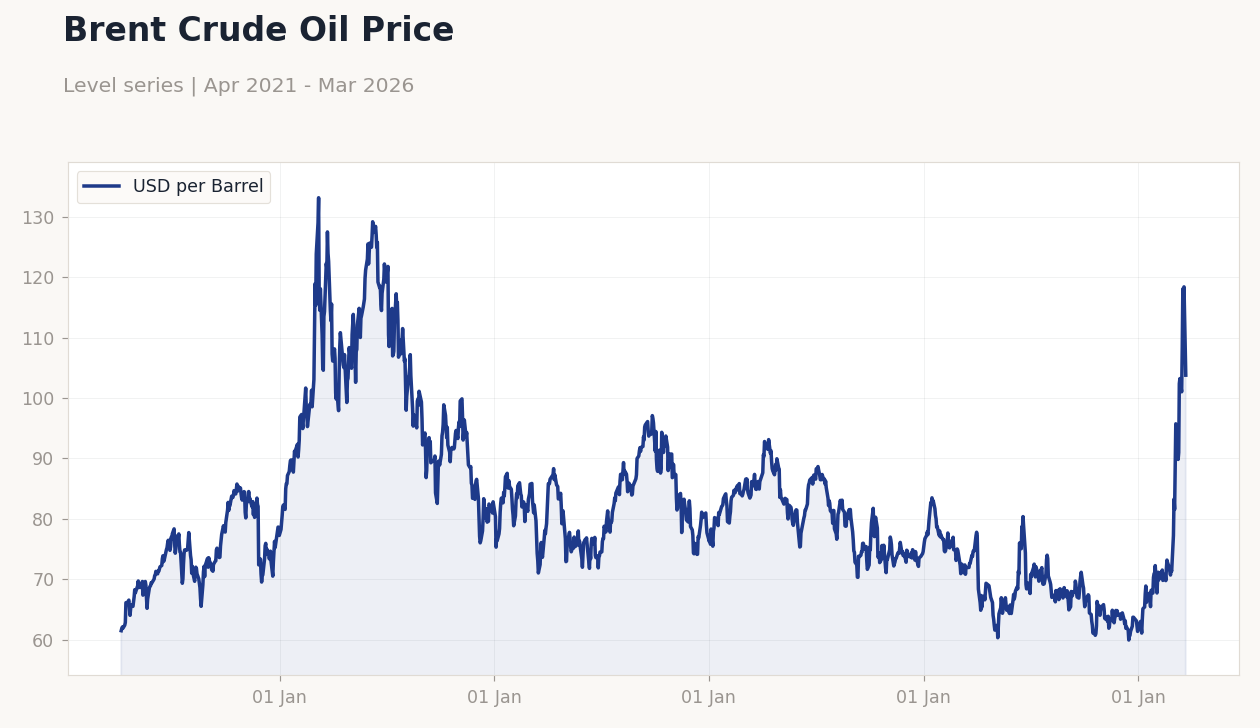
Brent Crude Oil Price | Type: macro_line | USD per Barrel: 103.8 (2026-03-23) | Range: 59.93–133.2 | Trend(5pt): 61.47,119.2,95.86,73.5,103.8
| Data | Prior | Cons | Time |
|---|---|---|---|
| No events available | |||
Indian equities closed sharply lower on March 30, 2026, as geopolitical tensions in the Middle East drove a global selloff, with Nifty 50 falling 2.14% to 22,331.40 and Sensex dropping 2.22% to 71,947.55. Key drags included HDFC Bank, which declined 3.26% to 731.55, amid broader banking sector worries over rising yields and potential mark-to-market losses. Industrial production data surprised positively, rising 5.2% year-over-year against a consensus of 4.2% and previous 5.1%, bolstered by manufacturing production accelerating to 6% year-over-year from 5.3%.
The rupee appreciated modestly, with USD/INR easing 0.45% to 94.36 and EUR/INR down 0.92% to 108.04, reflecting some safe-haven flows despite oil volatility. Brent crude fell 7.20% to 104.66, amid supply fears from the Hormuz crisis, while gold surged 4.66% to 4,737.10 as investors sought hedges. Reliance Industries edged down 0.31% to 1,343.90, holding relatively steady on its energy exposure.
Bitcoin rose 1.80% to 67,894.56. Overall, the session highlighted caution on inflation risks from elevated energy costs, with short-term rates steady at 5.50%.
March 31, 2026, features no major scheduled economic releases or events for India, allowing markets to digest yesterday's data and global developments. Focus will shift to any ad-hoc RBI announcements or liquidity operations, especially given recent yield spikes and rupee dynamics. Broader attention may turn to international news, such as updates on the Middle East conflict, which could influence oil prices and Indian import bills.
Without domestic catalysts, equity and bond markets might stabilize or extend losses based on global sentiment. Investors should monitor for any unscheduled policy signals from the RBI amid escalating geopolitical risks. Trading volumes could remain subdued ahead of the new fiscal year start.
Subscribe to India Macro Daily and get each new issue delivered to your inbox.
Already a member? Visit robomacro.com to log in and manage subscriptions, or use Forgot Password to set a password.
India Short-term Rate | Type: macro_line | Rate %: 5.5 (2026-02-01) | Range: 4.25–6.75 | Trend(5pt): 4.25,5.15,6.75,6.75,5.5
Nifty 50 Index | Type: market_hloc | Index Level: 2.233e+04 (2026-03-30) | Range: 2.233e+04–2.633e+04 | Trend(5pt): 2.594e+04,2.516e+04,2.581e+04,2.445e+04,2.233e+04
Brent Crude Futures | Type: market_hloc | USD per Barrel: 104.7 (2026-03-31) | Range: 59.96–112.8 | Trend(6pt): 60.85,65.88,67.75,98.96,112.8,104.7
USD/INR FX Pair | Type: market_hloc | Exchange Rate: 94.36 (2026-03-31) | Range: 89.86–94.78 | Trend(6pt): 89.96,91.56,90.56,91.79,94.31,94.36
India's macro fundamentals remain robust with strong growth indicators like the upbeat industrial production, but the rupee's recent movements raise questions about resilience to global shocks. Rising oil prices from the Hormuz crisis threaten to inflate import costs and pressure inflation, potentially derailing the brief Goldilocks phase of high growth and low inflation. Quick commerce expansion beyond groceries, backed by VC funding, and AI adoption in sectors like IT highlight innovation-driven themes, supporting long-term growth despite short-term market jitters.
Cyber threats are prompting enhanced defenses from CERT-In, RBI, and Sebi, while treasury losses loom for banks as yields exceed 7%.
Escalating tensions in the Middle East, including the US-Israeli war against Iran, have weaponized oil supplies, pushing prices higher and risking a petro-currency clash between the dollar and yuan. Raghuram Rajan warned of serious global economic trouble, with India vulnerable due to its oil import dependency, potentially weakening the rupee further and inflating costs. US commentary suggests high gas prices won't trigger Fed hikes and could lead to cuts, providing some relief to emerging markets like India through softer dollar strength.
Thunderstorms in the UAE and Saudi Arabia underscore weather-related disruptions to oil logistics, adding to supply uncertainties affecting India's energy security. DBS Bank's Radhika Rao noted inflationary pressures likely keeping RBI rates unchanged. Global equities sold off amid these fears, with Indian markets mirroring the downturn.
Pradeep Gupta from Anand Rathi views the Nifty correction as a buying opportunity, not a trend reversal, tied to geopolitical risks rather than domestic weaknesses.
The RBI has maintained the repo rate at 5.50% since February 2026, emphasizing inflation targeting amid global uncertainties, as per recent communications signaling caution on currency strategy shifts. New forex rules aim to place banks on the frontline for rupee stability, potentially supporting the currency without aggressive interventions, according to Livemint analysis. MPC forward guidance focuses on monitoring oil-driven inflation risks, with no immediate rate changes expected despite the end of the Goldilocks period, as highlighted in news on escalating Middle East conflicts.
Liquidity management remains accommodative, with short-term rates steady at 5.50%, helping buffer against yield surges past 7% that could amplify bank losses. Actual RBI statements underscore fundamentals determining rupee trajectory, resisting external shocks like the oil crisis. This stance implies markets may see continued rupee volatility but with policy tools ready to curb excessive depreciation.
(cont...)
Overall, the RBI's approach prioritizes growth support while guarding against imported inflation, influencing bond yields and equity sentiment.
