India Macro Daily(Beta Mode)
Indian Equities Tank on Oil Shock
Market Snapshot
| Asset | Level | Change |
|---|---|---|
| Nifty 50 | 22,331.40 | -2.14% |
| Sensex | 71,947.55 | -2.22% |
| USD/INR | 93.48 | -0.92% |
| EUR/INR | 108.11 | +0.07% |
| Reliance | 1,369.90 | +1.93% |
| HDFC Bank | 746.90 | +2.10% |
| Brent Crude | 99.89 | -15.60% |
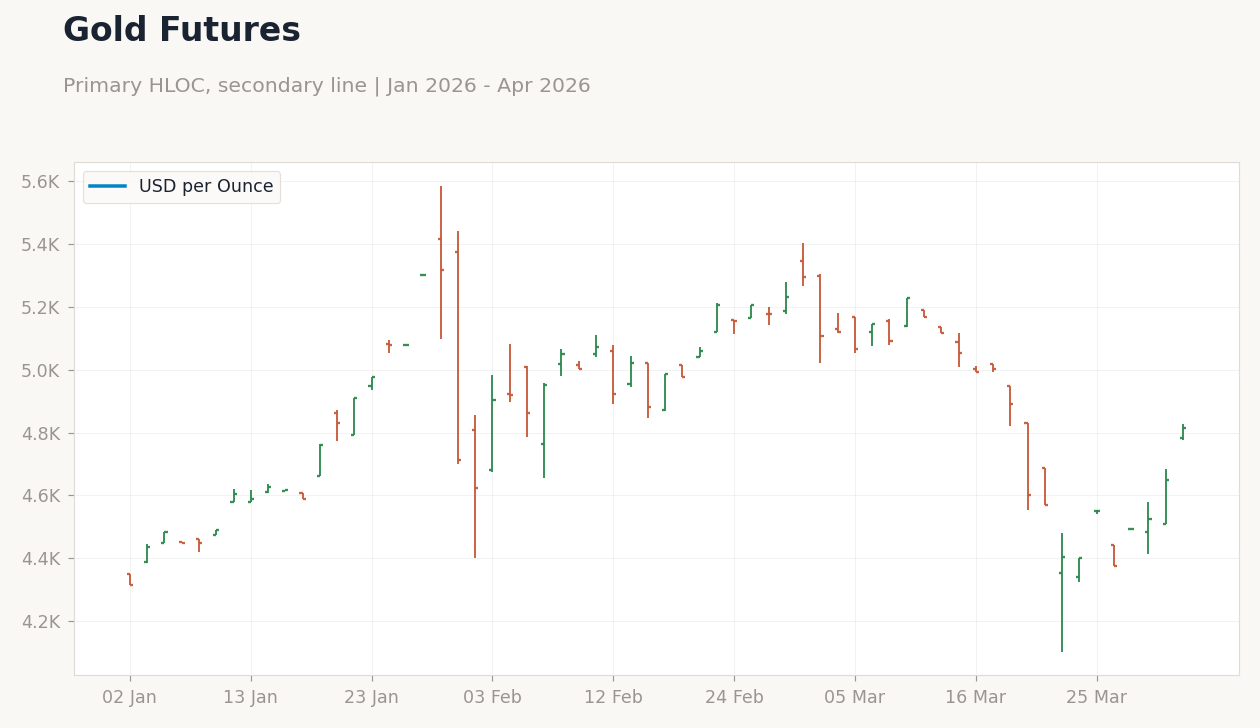
| Gold | 4,822.50 | +3.76% |
| Bitcoin | 68,223.93 | -0.01% |
| India Short-term Rate | 5.50% | +0.00% |
| India Long-term Rate | - | - |
Prior Economic Events
| Data | Prior | Cons | Actual |
|---|---|---|---|
| Industrial Production Year-over-Year | 5.10 | 4.20 | 5.20 |
| Manufacturing Production Year-over-Year | 5.30 | - | 6 |
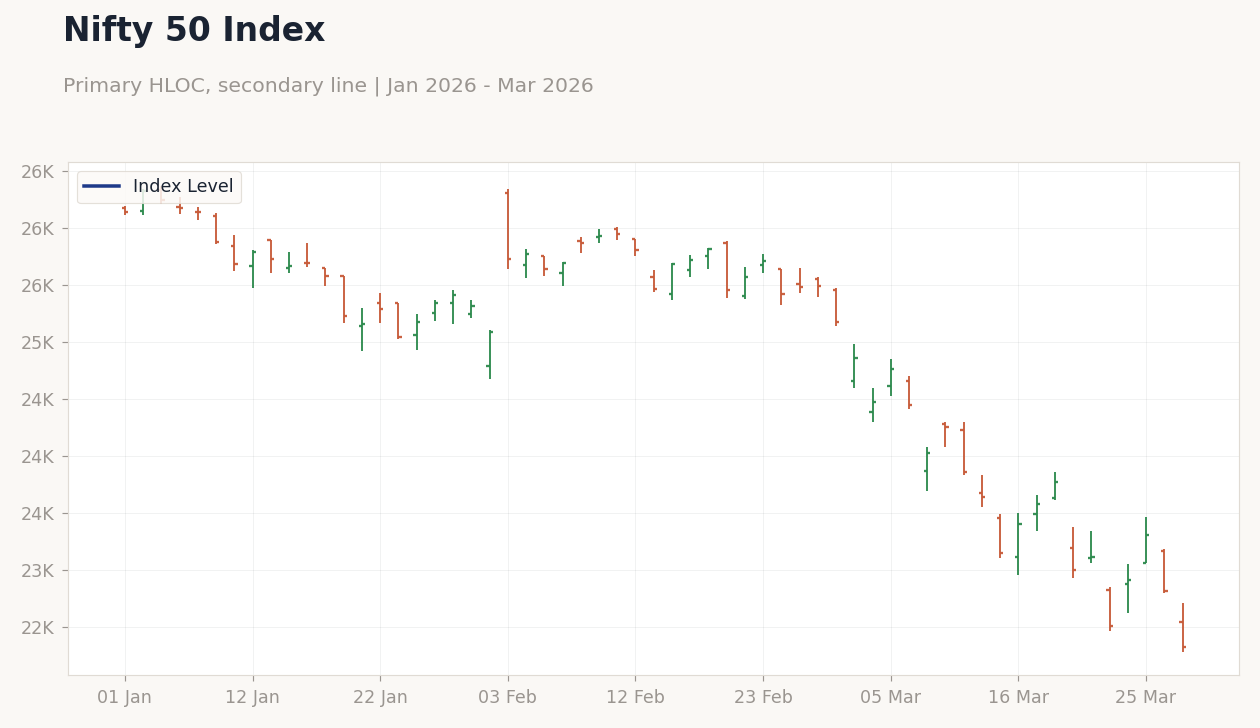 Nifty 50 Index | Type: market_hloc | Index Level: 2.233e+04 (2026-03-30) | Range: 2.233e+04–2.633e+04 | Trend(6pt): 2.615e+04,2.529e+04,2.581e+04,2.477e+04,2.331e+04,2.233e+04
Today's Economic Events
| Data | Prior | Cons | Time |
|---|---|---|---|
| No events available | |||
- Indian markets plunged over 2% amid escalating Middle East tensions and crude price volatility, with Nifty 50 down 2.14% to 22,331.40 and Sensex falling 2.22% to 71,947.55.
- Industrial production beat expectations at 5.2% YoY versus consensus 4.2%, while manufacturing output rose to 6% YoY, signaling resilient economic activity despite global headwinds.
- RBI extended trade finance leniency amid Iran conflict disruptions, as USD/INR weakened 0.92% to 93.48, reflecting rupee pressure from oil imports.
Yesterday's Recap
Indian equities suffered sharp declines as geopolitical tensions in the Middle East intensified, driving the Nifty 50 down 2.14% to close at 22,331.40 and the Sensex dropping 2.22% to 71,947.55, with banking and auto sectors leading the sell-off. Reliance Industries gained 1.93% to 1,369.90 amid selective buying, while HDFC Bank rose 2.10% to 746.90 on deposit optimism, bucking the broader trend. Brent crude plummeted 15.60% to 99.89, easing some market jitters over supply disruptions from the Iran conflict despite prior volatility.
Gold surged 3.76% to 4,822.50 as a safe-haven asset, and Bitcoin held steady with a negligible 0.01% decline to 68,223.93. The USD/INR pair depreciated 0.92% to 93.48, pressured by India's oil import bill, while EUR/INR edged up 0.07% to 108.11. Industrial production data surprised positively at 5.2% YoY against a 4.2% consensus, and manufacturing production accelerated to 6% YoY from 5.3% prior, highlighting domestic strength.
India short-term rates remained unchanged at 5.50%, aligning with RBI's steady repo rate stance.
The Day Ahead
With no major economic releases scheduled for today, markets will focus on global cues, including any developments in the US-Iran conflict that could influence oil prices and rupee dynamics. Analysts anticipate continued fragility in Indian equities, driven by pre-market setups highlighting energy costs and currency volatility in banking and IT sectors. Traders eye potential RBI interventions on liquidity amid trade disruptions, potentially impacting USD/INR movements.
Tomorrow also lacks key data, shifting emphasis to ongoing geopolitical updates and their ripple effects on India's macro outlook. Overall, subdued event flow suggests volatility driven by external factors rather than domestic indicators.
Other Economic Notes
India's macro fundamentals remain robust despite rupee depreciation, with strong growth offsetting global shocks from oil price volatility. (cont...)