India Macro Daily(Beta Mode)
Inflation Ticks Up, Rupee Weakens
Market Snapshot
| Asset | Level | Change |
|---|---|---|
| Nifty 50 | 24,231.30 | +1.63% |
| Sensex | 78,111.24 | +1.64% |
| USD/INR | 93.39 | +0.24% |
| EUR/INR | 110.18 | +0.31% |
| Reliance | 1,340.20 | -0.29% |
| HDFC Bank | 811.80 | +0.23% |
| Brent Crude | 98.03 | +3.27% |
| Gold | 4,811.40 | +0.24% |
| Bitcoin | 75,096.26 | +0.39% |
| India Short-term Rate | 5.50% | +0.00% |
| India Long-term Rate | - | - |
Prior Economic Events
| Data | Prior | Cons | Actual |
|---|---|---|---|
| Inflation Rate Year-over-Year | 3.21 | 3.48 | 3.40 |
| Trade Balance | -27,100m | -32,750m | -20,670m |
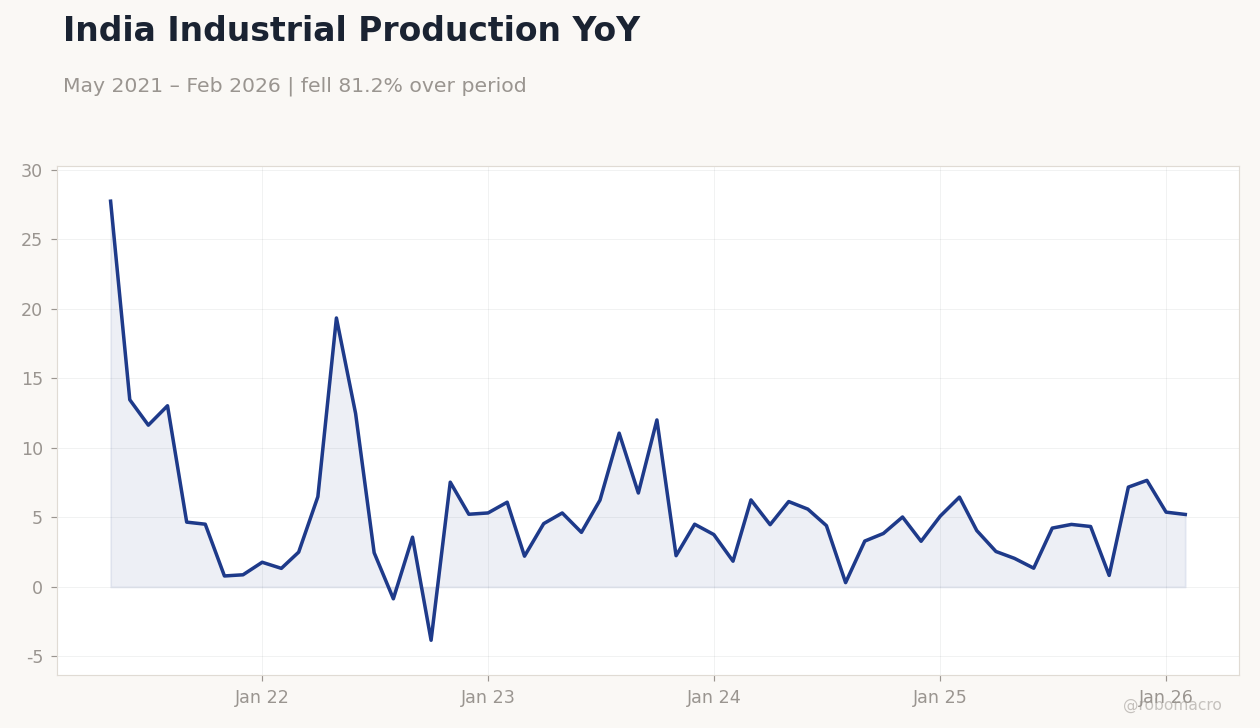 India Industrial Production YoY | Type: macro_line | IP % Change: 5.21 (2026-02-01) | Range: -3.835–27.73 | Trend(6pt): 27.73,2.457,6.752,5.026,5.376,5.21
Today's Economic Events
| Data | Prior | Cons | Time |
|---|---|---|---|
| No events available | |||
- India's YoY inflation rose to 3.4%, below consensus of 3.48% but above previous 3.21%, amid monsoon risks.
- Trade balance improved to -$20.67B, better than expected -$32.75B, boosting market sentiment.
- Equities rallied with Nifty 50 up 1.63% and Sensex up 1.64%, while USD/INR rose 0.24% to 93.39.
Yesterday's Recap
India's inflation rate for the year-over-year period came in at 3.4%, undershooting the consensus estimate of 3.48% but slightly above the previous 3.21%, reflecting ongoing price pressures in food and fuel despite potential monsoon disruptions. The trade balance showed a deficit of $20.67 billion, a significant improvement from the forecasted $32.75 billion shortfall and better than the prior $27.1 billion, driven by stronger exports in IT and manufacturing sectors. Equity markets responded positively, with the Nifty 50 climbing 1.63% to 24,231.30 and the Sensex advancing 1.64% to 78,111.24, fueled by gains in banking and energy stocks amid optimism over trade data.
The rupee depreciated modestly, with USD/INR up 0.24% to 93.39 and EUR/INR up 0.31% to 110.18, pressured by rising Brent crude prices at $98.03, up 3.27%. Key stocks were mixed: Reliance Industries fell 0.29% to 1,340.20, while HDFC Bank edged up 0.23% to 811.80. Gold prices rose 0.24% to 4,811.40, providing a hedge against currency volatility, and Bitcoin gained 0.39% to 75,096.26.
India's short-term rate held steady at 5.50%, with no change in long-term rates reported.
The Day Ahead
With no major economic releases scheduled for today, markets will focus on digesting yesterday's inflation and trade data, potentially influencing rupee trading dynamics. Attention may shift to global cues, including Brent crude movements and any updates on U.S. monetary policy that could impact capital flows into India.
Tomorrow also lacks key events, setting up a quiet period for domestic macro indicators, though traders will monitor corporate earnings from IT giants for export sector insights. Broader sentiment could be swayed by ongoing rupee management news from the RBI. Investors should watch for any ad-hoc announcements on liquidity or forex interventions.
Overall, the absence of data might lead to consolidation in equities and bonds.
Other Economic Notes
Broader economic themes highlight mounting pressures on the rupee from trade shocks and crude oil surges, as noted in reports from Commerzbank and DBS, warning of prolonged currency weakness that could erode India's global GDP ranking per IMF assessments. (cont...)


